Showing posts with label Mona Heights. Show all posts

September 14, 2016

Garvey's Ghost @ Sangster's, Jamaica

Geoffrey Philp

Feeling Irie right now.

Sangster's, my favorite bookstore from when I was a yute and where I would hangout after kicking ball with man like Latty from Standpipe (see Benjamin, my son) to catch the #22 bus to Mona, now has Garvey's Ghost.

One one cocoa...


Here's the link:http://www.sangstersbooks.com/products/featured/item/garvey-s-ghost


October 28, 2013

How my DNA Set me Free

How my DNA set me free


For the past fifty years, I have been living under the shadow of a lie. I think it has to do with the shape of my eyes. From the time that I was in primary school, my friends and classmates thought that I was part Chinese. In high school at Jamaica College, one of the boys in Cowper, the upper house to Murray, called me a “Tappa shop Chinee bwai.” The name calling didn’t bother me. Growing up in Mona Heights with Jamaicans of African, English, Chinese, and East Indian ancestry, I knew that Jamaicans of Chinese descent (especially our fathers) were just as crazy as everyone else.

Yet even after I graduated from Jamaica College and I moved to Miami, the mistaken identity followed me. I just smiled whenever someone called me, “Mr. Chin,” and went on with whatever I was doing. However, when a Chinese-Jamaican cashier at our local supermarket asked me how I was going to celebrate the New Year—she meant the Chinese New Year—I decided to research to create a family tree.

This was not as easy as it seems. My father was married four times and I have brothers and sisters living in Jamaica, Canada, England, and Switzerland. My mother’s family is even more complicated with cousins and aunts living in Jamaica, Cuba, Canada, and Panama. Piecing together a family tree under these circumstances was going to be a challenge.

With the help of my brother, Ricky, who lives in Canada and who had already begun putting together the Philp family tree, I began working on the Lumleys, my mother’s side of the family.

Using Ancestry.com, I created a family tree and traced my roots to the early nineteenth century when the Philp and Lumley males came to Jamaica from Great Britain and began marrying Jamaican women. Both Philp and Lumley males were also very religious and left behind family Bibles and other artifacts. My great-grandfather, Frederick Andrew Lumley, Sr. was one of the earliest founders of the Seventh Day Adventists in Jamaica and one of my grandaunts, Marie Evelyn Jones née Lumley, “is thought to be the first Negro to enroll at Loma Linda University.”

But then my research came to a halt. Using immigration records, the males on both sides of my family could be traced back to Scotland and England, but the females on either side ended up in slavery as property. I always knew I had African ancestry, but  after being called “Mr. Chin” for so many years, I wanted to know if there was even a trace of Chinese blood flowing through my veins. After collecting the email and snail mail addresses of my relatives, I asked the question, “Do we have any Chinese ancestry?”

All the answers came back negative. This I suspected could have been due to the prejudice that many Chinese Jamaicans have faced. I continued asking what could have been perceived by my relatives as uncomfortable questions, but I wanted to know the truth. Despite making connections with living first, second, third, fourth, fifth and sixth cousins, many of whom I had never known before, I kept hitting genealogical dead ends.

I was just about to give up when Ancestry.com introduced AncestryDNA, which promised an accurate reading of my DNA. I purchased the kit and within a few days, it arrived on my door step. After following the instructions, I returned the kit and waited for the results.

A few weeks later, I received an email from AncestryDNA. My ancestry was 51% West African and 49% European (36% Great Britain, 5% Scandinavian, 3% Ireland 3%, 2% Italy/Greece, < 2% Iberian Peninsula, and < 1% Finnish/Northern Russia.  

Scandinavian? I guess that’s where I got my "Chinee eyes" or the epicanthal fold found in Europeans such as Poles and Scandinavians.

The DNA test had lain to rest all the doubts about my so-called Chinese ancestry. But now a new set of questions opened up before me. Which part of Africa did my ancestors come from?


***


As a part of the Bob Marley: Messenger exhibition at Miami History,  Cedella Marley, Gerard Hausman and Geoffrey Philp will be reading Jamaican Tales at MiamiHistory on November 9, 2013

HistoryMiami, 101 West Flagler Street, Miami, FL


May 13, 2012

My Mother's Hands


My mother’s hands always fascinated me. She rarely wore a lot of make-up or nail polish, but like every boy growing up in a single parent home, I thought she was the most beautiful woman I’d ever known. In many ways, she resembled the mother in Lorna Goodison’s “For My Mother (May I Inherit Half Her Strength)”: “She could work miracles, she would make a garment from a square of cloth/ in a span that defied time. Or feed twenty people on a stew made from/fallen-from-the-head cabbage leaves and a carrot and a cho-cho and a palmful/ of meat.” But it was always her hands, plain and unadorned—a country girl’s hands--that told her life of struggle and triumph, and from which I’ve learned so much.

My publisher lists Struie, in Westmoreland, Jamaica, as the place of my birth, but it isn’t true. Struie is the birthplace of my mother, Merty Philp née Lumley. This biographical inaccuracy really doesn’t matter to me, for I would happily claim Struie—home of the Lumleys of Westmoreland--as my birthplace.

The Lumleys of Struie are a hardy lot. My grandfather, Andrew “Big Papa” Lumley, had homes in Jamaica and Cuba. In fact, one aunt, Hortensia Lumley-Hechevaria, lived in Cuba until she passed away a few years ago. Big Papa, a cook, baker, tailor, farmer, and shopkeeper, almost resembled the description of Stephen Dedalus's father in A Portrait of the Artist as a Young Man: “an oarsman, a tenor, an amateur actor, a shouting politician, a small landlord, a small investor, a drinker, a good fellow, a story-teller…a tax-gatherer.” Big Papa, also known as "Tailor," instilled in his nine children essential survival skills, many of which my mother passed on to me and they have had a profound impact on my life.

The first time my mother taught me to sew, it was by accident. She had been trying to thread a needle and she called me into her sewing room. I threaded the needle with ease and probably made some smug remark about her eyesight to which she answered, "Geoffrey, you ever hear this saying: ‘Hog ask him mumma, 'Mumma, wha mek you mouth so long?' And him mumma answer: 'Wait pickney, yu time a come.'”

After giving me this vital lesson by using a Jamaican proverb (she was also a primary school teacher who graduated from Mico), she showed me how to sew a button on a shirt. That evening she taught me a valuable skill that has served me well—like a few years ago when I was getting ready for an important interview, and wouldn’t you know it, the button popped off my shirt. I sewed on the button, got the job, but I was never able to thank that girl from Struie.

As with many country girls, if my mother’s hands weren’t cooking, they were planting. Something. She always had a garden wherever she lived. It’s part of the African folk tradition that has weathered slavery (and gentrification) and that many people from Jamaica and the Caribbean practice without thinking about the origins. Whether it was in Mona Heights, Carol City, or Sanford my mother always had a garden. 

And although she was not as obsessive about her garden as the main character in “The Day Mrs. Ho Lung Got Arrested” in Uncle Obadiah and the Alien, there were many times as a teenager (much to my embarrassment) that she sent me to gather cow dung from the open government lands in Mona Heights or Hope Pastures so that she would have fertilizer for her garden. Over time her garden grew and yielded an abundance of tomatoes, gungo peas, sorrel, mangoes (Julie, Number 11, Long Mango) sour sop, ackee, breadfruit, okra, and pumpkins in our backyard. And it wasn't because she had a "green thumb." Rather it was the tenderness she showed in everything that she did. Her generosity was evident at our Sunday dinners when we feasted on the bounty from her garden.

My mother loved cooking. It was her chance to share with us something that came from her hands—visible proof of her love for us. Now, I wouldn’t say she was a superb cook, but she taught me the basics of cooking meals such as curried goat, beef stew, and chicken soup. One of her specialties was a mean potato salad, which when I prepared it for my then girlfriend impressed her so much, she decided to give me a second chance. We’re now married.

And because I did not want to be a wutless son, I learned the lessons well. In turn, I have passed these skills on to my children. Learning how to cook, taught me how to be patient, and also to be resourceful—you’ve run out of milk, now what are you going to do? I’ve learned to provide for my family and sometimes, I’ve made a meal out of bare necessities. 

Learning to sew showed me that I needed to be tenacious and  no matter what kind of clothing emergency I faced—you never get a second chance to make a first impression—I could handle it. Finally, gardening always made me aware of my relationship with the earth under my feet—with the land itself, no matter where I've lived.

Today as my family and I celebrate Mother’s Day, I know the meal that I’ll prepare for my family would not have been possible had it not been for Merty Philp née Lumley from whose generous hands taught me how to live and love.

Happy Mother's Day!

***
First published: 2010-05-09 01:01
Eastern Daylight Time
Enhanced by Zemanta

April 9, 2012

Why I Donated to Crayons Count


My mother would have been disappointed with this post. For years, she donated to many charities and it wasn't until after her death when letters of condolence began flooding my mailbox that I discovered the names and stories of the many children from all over the world whom she had supported financially and in-kind. She believed in giving the way the Bible admonishes: "But when thou doest alms, let not thy left hand know what thy right hand doeth."


For the most part, I've followed my mother's example of giving without drawing attention to myself. But Crayons Count is different kind of charity and my sole purpose for writing this post is to spread the word as best as I can about this noteworthy cause. And Crayons Count is important charity for many reasons:


Child-centered charity
Educational: Book Based
Support for literacy
Non-Governmental
Homegrown
Building Civil Society


In my post about Mona Heights, I described the kind of community that existed in Jamaica before the undeclared civil war of the 70s. Crayons Count is a step in the right direction of restoring that kind of civil society. But it won't happen by a miracle. It won't happen unless we put our hearts, minds, and money into projects like these.


I also like that Crayons Count is book based. I hope it will expand to include local authors and build on the children's awareness of our regional literature. Our children need to know from an early age that there are storytellers in our midst. If this happens, I believe literacy rates would increase and we could broaden the children's appreciation of our regional literature.


A classic regional literature appeals to the moral imagination and accomplishes what George Lamming in his lecture "The Present Future of Caribbean Literary & Cultural Studies," describes as "the education of feeling": "Art is the most civilizing instrument or tool in the education of feeling…the nurturing of a consciousness to respond sympathetically to a world of people and customs that are different from your own… and to approach the Other with respect."


The last point is very important. Because of our history and geography, Jamaica and the other islands in the Caribbean are uniquely qualified to discuss Otherness and respect. For example, although the book is above the reading level of the target audience of Crayons Count, Dog-Heart by Diana McCaulay imaginatively recreates the distinct worldviews of two characters from both ends of the Jamaican social spectrum. I'm not saying the novel is a panacea, but it points toward a solution.


We can respond imaginatively to others who are seemingly different without fear or violence. By expanding the scope of the readings, Crayons Count may be one of the building blocks of extending our conversations about topics that are relevant to our culture. As Lamming explained further: "Books stay alive when they are talked about in a variety of situations by people who recognize that the books are talking about them and may have originated with them."


Crayons Count is a program that works toward unifying Jamaicans in the care of our island's treasure: our children. It may also become that necessary bridge between race and class, the past and the future, which keeps our cultural gifts in circulation. This is why I used the Amazon link to make my donation:


I hope my mother will forgive me.


***


If you enjoyed this post, check out my page on Amazon. I’d also be very grateful if you’d help it spread by emailing it to a friend, or sharing it on Twitter or Facebook.


Follow Me on Pinterest


Thank you!

March 21, 2012

Why Do I Write About Mona Heights?


Once upon a time, there was a place called Mona Heights…


In her review of Dub Wise, Mary Hanna called the collection "a gift." If she meant “a gift” in the way that Lewis Hyde in The Gift: Creativity and the Artist in the Modern World defined it as an "act of gratitude," then all of my books have been gifts because they attempt to return to the source the sensory impressions that have affected my life's work.


And certainly, Mona Heights has been a source. My earliest memories of Mona Heights are of growing up with my sister, Judith, my brother, Ansel, and a house full of cousins. Down the street, my childhood friends, Paul Chin, David Griffith, and Paul Smith and always trying to keep out of trouble with our parents and extended "uncles" and "aunts": Uncle Danny and Aunty Joan Morrison, Uncle Welly Chin, Uncle Michael Witter, Uncle Michael "Jah Mick" and Aunty Ann-Marie Mowatt. The happier days of our childhood were filled with playing cricket, exploring the "open lands, of Hope Pastures, and skylarking at the annual Christmas fair.


It was an idyllic time. Even the streets had paradisiacal names: Garden Boulevard, Anthurium Drive, Daisy Avenue, and Plumbago Path,  where I grew up and which I’ve used as the setting for many of the short stories in Uncle Obadiah and the Alien.


This is not to say that there weren't problems associated with race and class. But our parents did what all parents should do--they protected us from the harsher aspects of life. They realized that Mona Heights was the beginning of a civil society in pre-independence Jamaica, and, as one of the first attempts to create an open middle class enclave in St. Andrews, Mona became a microcosm of Jamaican society with all its dreams, fears, and conflicts.


As we grew older, however, we began to become aware of the divisions, but we didn't care who was black, white, Chinese, East Indian, or browning. We belonged to a community.


We were friends and continued to be friends during the so-called communist threat of the 70's and long after the undeclared civil war broke out...


II

So why do I write about Mona Heights?


I’m a wild golden apple
that will burst with love
of you and your men,
those I never told enough
with my young poet’s eyes
crazy with the country,
generations going,
generations gone,
moi c’est gens Ste. Lucie.
C’est la moi sorti;
is there that I born.


(from Derek Walcott, Collected Poems, 1948 – 1984, Noonday Press, 1986/1993; originally from Sea Grapes, 1976)


It was there on Plumbago Path with Long Mountain to my right, Wareika to my left, and a child's delight in dirt and green things that I first had a feeling of awe, of being part of something larger than myself. It's the place in Jamaica where I first fell in love and where I discovered the work of three artists who would have a profound effect on my life: Bob Marley, Derek Walcott, and Dennis Scott.


Watching the pouis blanket the lawn while listening to the whistle of the peanut man, or waiting for our gardener, Victor, to regale us with his off-color jokes about "toning" as the Nyabinghi brethren called out, "Broom, Broomie," gave me the time to think about what Lorna Goodison, speaking about her childhood in pre-idpendence Jamaica, has called, "a very complicated, complex, rich place."


Later in the interview, Lorna also revealed, "I can be a witness. I can say, ‘In my life I saw this, and I knew this about Jamaica. If it doesn’t exist now, believe me, it used to exist, and hopefully it can exist again."

I feel the same way, Lorna. I haven't given up.

March 16, 2012

Jamaica Observer: Checking in With…Geoffrey Philp


If this Mercury in retrograde stuff doesn't change the plans, on Sunday (3/18/2012), The Jamaica Observer will publish in the Bookends section an interview I did with Sharon Leach and one of my short stories, "The Meek Shall Inherit the Earth," which is set in Mona Heights, Jamaica.


I am also working on "Why I Write About Mona Heights," which I will be posting next week.


Stay tuned!


***


If you enjoyed this post, check out my page on Amazon. I’d also be very grateful if you’d help it spread by emailing it to a friend, or sharing it on Twitter or Facebook.


Follow Me on Pinterest


Thank you!

October 17, 2011

Howzat! Mid-Day Thoughts of a Late Cut Artist


By Geoffrey Philp

I love to play cricket. Sometimes I like to think I was born with a bat in my hand. Or at least it seemed that way when I was growing up in Mona Heights, Jamaica. Many of my holidays were spent playing cricket with David "Griffo" Griffiths, Paul "Pat Chow" Chin, Paul "Pablove" Smith, and our friends from Geranium, Orchid, or Daisy Avenue. In fact, you could substitute some of the characters from my short story, "The Day Mrs. HoSang Got Arrested"  in Uncle Obadiah and the Alien for Griffo, Pat Chow, Pablove, and me playing cricket on Plumbago Path.

We all had individual skills at which we excelled. David was a good pace bowler; Pat Chow had a wicked leg break, and Paul had a mixture of off-break, leg break, and googly. And when we had our version of test matches against teams from Hope Pastures, we'd call on Ian Carey, who was also a good spin bowler, to be our opening batsman. The competition was always a means to hone our skills in the three essential positions of a cricket team.

When you are fielding, you have to be aware of your surroundings by paying attention to the bowler and the batsman's reactions. A bowler has to confuse the batsman either by pace or spin, spotting his weaknesses or bowling him out by indulging his strengths. As a batsman, my favorite position, you must possess a combination of skill, patience, and confidence to master each shot. You have to focus on each ball to either play defensively or to create an opportunity for your team to make runs. My favorite shot was a late cut off the back foot for four runs between backward point and third man.

You also learn every ball is different. If, as a wise philosopher once said once said that you never step in the same river twice, then every ball is an opportunity for defeat--Howzat!; victory--six runs!, or a resounding truce--"Nooooooo!"

For nearly every summer until we graduated from primary school, Griffo, Pat Chow, Pablove, and I played cricket against different teams. Griffo went to Wolmers, Pat Chow to Ardenne,  Pablove and I went to Jamaica College. I was chosen for Murray House and Paul was inducted into Hardy House, our perennial rivals. Mid-way through our first term, Paul stopped playing cricket and started playing football. I, however, continued playing cricket, and as a first former, I was assigned to the "B" team. I thought I deserved to be on the "A" team, but the events proved me wrong.

I was the opening batsman in a limited overs match against Hardy House, so every ball counted. The pace bowler, who I think went on to play for our Sunlight team, had me pinned from the first ball. I was forced to make defensive plays: "Nooooooo!" Our housemaster, Mr. McLeod, didn't like what was happening. Didn't like it one bit.

After the second over, my partner and I had only scored four runs. Mr. McLeod walked over to me and said I needed to make runs or he would declare me out. I didn't think it was fair, but I couldn't protest or do anything about it, I was only a mere first former. Pressure was mounting on and off the field. I tried hard to remember the advice that Griffo's father had once given us, "Play the ball. Not the crowd."

The next ball came at a blistering pace, and I showed the bowler the face of the bat, "Nooooooo!" I looked over at Mr. McLeod. He looked me dead in the eyes and tapped his watch. Mr. McLeod was angry with me.

More pressure. The bowler delivered a ball that swung from the offside toward mid-wicket and I countered with another, "Nooooooo!" Mr. McLeod threw his hands in the air and pointed to another first former to get ready.

I was losing my cool and the bowler sensed it. He slammed a crushing bouncer at my head, and I tried to lift the ball over his shoulders for six runs, but it didn't work. He jumped up and caught the ball. I was out for three runs.

And then, the bowler laughed. I've never forgotten the smirk on his face or his raucous cackle.

I walked off the field with my bat under my arm and my head hung low. As I passed Mr. McLeod, I said, "I hope you're happy now."

"What did you say?" he screamed at me.

"Nothing, sir," was all I could say and sat on the sidelines. I didn't want to get a caning, so I kept my mouth shut for the rest of the game.

The worst was yet to come. Our team lost. My wicket had been sacrificed for expediency, and it was all in vain. My only comfort was I hadn't made a duck.

From that day, I made a decision that no one would ever force me to give up my wicket for any reason. As long as I could hold the bat between my hands, I would never give up my wicket for anything or anyone. I would dig in and if I had to play defensive strokes, then so be it. Either bowl me out or I would parry with "Nooooooo," for the rest of my life.

I've never forgotten that day or the bowler's derisive laughter. It has been the spur in situations that I've faced as a teacher and writer where the odds have been against me.

In fact, a few years ago when I worked as an English teacher in Dade County Public Schools, I was confronted with a situation where I had to be defensive. I was a young father and I needed every penny I could get. So, in addition to teaching English, I taught journalism and I was the yearbook/newspaper advisor and soccer coach. But that, sports fans, is another story.

There had been a change in the administration and I sensed that the new principal wanted to replace me so she could give the yearbook/newspaper job to one of her cronies. She tried every trick in the book to get me out, but I wouldn't budge. With every charge she delivered, my reply was "Nooooooo!"

When the situation became obvious to my coworkers, one of them said to me, "Why are you trying so hard? Why don't you just quit?"

My response? You guessed it. "Nooooooo!"

It is that kind of determination--my wife says stubbornness--that has also helped me as a writer. Every morning I get up to practice my writing as I had done with batting in the nets because it takes a special kind of perseverance to dig in when the rejections are coming from publishers: "Nooooooo!"  Call me Bartleby with a cricket bat.

During my writing apprenticeship, I went for years without making a run or taking a wicket. But I figured as long as I could hold my pen between my fingers--I still write by longhand--I would never be discouraged by anything or anyone. And whenever I saw an opportunity to transform the issues that plague my culture intopersonal stories, it would be a late cut off the back foot for six runs.

That's the kind of persistence that I've had to possess to continue writing, and I've never settled for expediency. A good writer, like an experienced batsman, has to have faith in his skills, which according to Malcolm Gladwell can take up to 10,000 hours of hard work todevelop, so he can get through those times when it seems as if you're facing Michael Holding at the peak of his powers, and it doesn't seem as if Mikey is going to tire any time soon.

But every now and then, I look at the scoreboard, the runs that I've made and I feel confident that even though the innings may not have been as spectacular as I would have liked, I still haven't lost my wicket.

I'm still batting.

October 12, 2011

Sunday Morning Delight


Sunday morning. Outside my window, a gentle rain falls on the grass and palms agree with the wind. The headlines of a newspaper announce: "Holness to be the next Jamaican PM." I yawn and turn the page. Behind the newspaper, steam rises from a plate of ackee and saltfish, boiled banana, two festivals, fried plantains, and boiled dumpling. John Holt croons in the background:

Time is the master
But time can be disaster, if you don’t care
You, young and gay
You, old and grey
Time is the master
But time can be disaster, if you don’t care

Easy rockers. I could be in Jamaica at my childhood home in Mona Heights. But I'm not. I am sitting behind a hand painted table at Irie Isle Restaurant for their new Sunday Brunch Medley.

I pick up the fork and dig into the ackee and saltfish. All the spices, remembrances of home, dance on my tongue. And the fried plantains, festivals, dumpling, and boiled banana round out my memories.

"Looks like this is the new Sunday spot," says one of the customers to the owner, Dean Nevins, who has come into the dining area to talk with the customers.

"All we need are some dominoes," Dean replies as he makes eye contact with the rest of the customers around the table.

Dean laughs, but I can see that the wheels are already turning in his head. Dean and his wife, Jamaican writer Andrea Shaw, have big plans for Irie Isle. One of their plans is to transform the dining area into a "cozy literary space" for book launches and readings. I can see it. It will be Irie.


Dean Nevins 954-822-2547.

Irie Isle Jamaican Restaurant
1480 S Palm Avenue
 Pembroke Pines, FL 33025 / 954-345-5070


July 10, 2011

Among the Saints: Mount Carmel Missionary Baptist Church


What happens to a dream deferred?

Does it dry up
like a raisin in the sun?
Or fester like a sore--
And then run?
Does it stink like rotten meat?
Or crust and sugar over--
like a syrupy sweet?

Maybe it just sags
like a heavy load.

Or does it explode?

This poem by Langston Hughes, the theme for your commencement, has always meant a lot to me. Coming from a single parent home and raised by my mother, I saw what broken dreams did to my family and what it has done to so many people that I've loved:

Destructive addictions
Repetitive cycles of procrastination
Crippling alcoholism

And so many more broken dreams.

Seeing as I'm in church, I going to take this opportunity to preach a little. One of the most famous dreamers in the Bible was Joseph, the son of Jacob. But what did Joseph dream and why were his dreams important? We also know that his brothers betrayed Joseph and we have to ask ourselves why they did that.

Joseph's dreams kept his tribe alive and his dreams saved the nation of Egypt. But why did his brother betray him? Sell him into slavery?

I think his brothers betrayed him because they stopped believing in their own dreams, and when they did that, they wanted to stop anyone else who had a dream. Joseph, the dreamer, became their enemy.

I know many of you, especially the children who are graduating from elementary school, are seeing that every day. You see the broken dreams, and you see the broken men and women all around you.

Langston Hughes saw this every day and that's why he wrote the poem.

But you have a better chance than Joseph and his brothers. You have an abundance of love in your church family that surrounds you at Mount Carmel .You have  brothers and sisters, aunts and uncles who only want the best for you.

My question is what are you going to do about it?

I believe every one of us is here for a reason; every one of us has a dream. Are you going to live up to your dream? Are you going to use "what's in your hand" to "put your dreams to reality"?

I know I have been living my dream, but it wouldn't have been possible without some of the people on whose shoulders I now stand.

I'll just mention a few of them

My teachers at Mona Primary: Mrs. Pennycooke and Mrs. Henry
My teachers at Jamaica College: Dennis Scott and James Carnegie
My teachers at Miami Dade College: Martha McDonough, Bruce Firestone, Angela Turner
My teachers at the University of Miami: Lester Goran, Evelyn Wilde Mayerson, O. R. Dathorne, and Isaac Bashevis Singer. 
My  family, who loves me and gives me the space to create and come back to them
My friends, who support my work in seen and unseen ways


And many, many more.

I'm standing here because of people who had faith in me. One is sitting right here in your church. Your sister, Lois Smith.

The Bible says, "Now faith is the assurance of things hoped for, the conviction of things not seen." The thing "not seen" is your future, but do you have to have faith that it can and will happen?

Do you believe?

I believed the words of my teachers and mentors that I could write a book. Up to today, I have published ten books and three more are one the way. If I could do it, so can you. I'm not saying your dream has to be to write a book. The fire in you is your dream. You have to follow your dream

The question is will you live up to your dreams?

I know you see evidence every day of your brothers and sisters, classmates who have stopped believing in their dreams and they want to drag you down. Don't let them. Never let them drag you down.

You are too precious, too worthy, too beautiful to be dragged down

And you have so many people who are praying for you, night and day. Day and night for you to succeed. Will you stand on the promise? Will you stand on the promise of all those who love you?

I hope and pray that you do.

For when you do, you praise the ancestors, all of those who fought for you to be free to have an education. All of then freedom fighters here in Miami who relied on God's promise for you.

Stand on the promise young graduates. Stand on the dream and you will be greatly blessed.


***


Mount Carmel Baptist Missionary Church, July 12, 2011.


June 19, 2011

Happy Father's Day (2011)


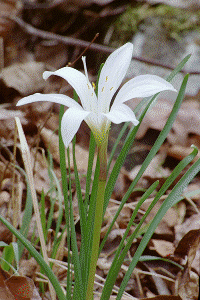
Yesterday as I walked down my driveway to pick up the Miami Herald, I noticed that rain lilies had once again bloomed after the long, dry season that we’ve had in South Florida. I’ve always regarded their appearance as almost miraculous for it seems as if they do not flower merely because they are watered (I do my fair share of lawn work), but only after rainfall. I am surmising that it takes the right sequence of events that include rainfall, humidity and other factors, and behold, Zephyranthes atamasco.

The appearance of the rain lily also has a special significance for me because it is associated with my father. I did not know my father, Sydney George Philp, very well. I was his tenth child from four marriages, so the time that I spent with him was always important to me. In the brief times that I spent with him (when I was conscious enough to understand), I realized that he was a charming, brilliant man and that combination with his “high brown” status in Jamaica must have made him irresistible to the ladies. He also had a great sense of humor. I found this out when I asked him about the name Philp (which no one can spell correctly—if I ever catch those guys, Geoffrey Philip, Geoffrey Philps, or Geoffrey Phillips, I am going to kick their collective asses for stealing my copy) and he told me about a trip to England where he met a certain young lady who told him..

Anyway, although our teenage years were difficult, our family started Philp get-togethers which were prompted (sadly) when we found out that our father was ill. We flocked to Jamaica to see the old man and to get to know each other as grown-ups. Some of my older brothers and sisters still think I haven’t grown up because I’m a writer, but that’s another story.

My favorite memory of that time was sitting on the verandah with my father and eating roasted corn, smelling the mixture of rain and earth before the showers came tumbling down Long Mountain, watching him fall asleep as the rain fell, and realizing in that moment that even though he might soon not be with us, that everything was irie.

All was not forgotten, but forgiven. For in a strange way, it had to be that way. The more I talked with my brothers and sisters, especially the ones whom I envied because they had spent so much time with him, I realized that I would not have become the man I am today if the events had not played out in that particular sequence.

My recollection of the rain lily, however, goes back to the time when I was leaving to the home of his fourth wife to go back to Mona Heights (the house that he and my mother bought), and as I was walking with him in the lane at the back of the house, he pulled up a rain lily, handed it to me, and said, “There, you can’t say I never gave you anything.” And he laughed. The old devil laughed. And all I could do was laugh and tell him that I loved him. He said, “I know.”

So, whenever the rain lilies bloom at my front door, I remember my father and those brief moments we had together—which were as brief and miraculous as the appearance of rain lilies—and I give thanks.

So, to Sydney George Philp, grand progenitor, I return the simple gesture of a rain lily.


One Heart
*
Previously posted as “Behold, the lilies of the Field.”

December 25, 2010

Christmas and Nostalgia


All men come to the hills
Finally…
Men from the deeps of the plains of the sea—
Where a wind-in-the sail is hope,
That long desire, and long weariness fulfills—
Come again to the hills.

“All men come to the hills” by Roger Mais

I had no intention of writing this morning. But then, old habits die hard, and when I could no longer stay in bed, I went downstairs as usual to check my e-mail. Was I surprised!

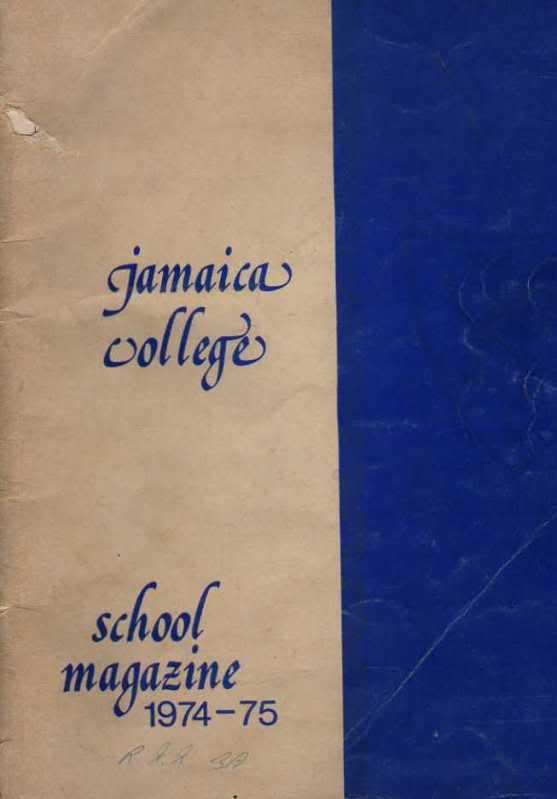
Sitting at the top of the list was an e-mail from Harold Mitchell, who had been searching the Net for the names of old friends, when he stumbled upon my blog. I hadn’t seen nor had I heard from him in years! In fact, had to dig through my copy of the Jamaica College ('75) yearbook, of which I was the literary editor, to recall his face.

A flood of memories of Jamaica at Christmas (including the poem by Roger Mais—it’s as if those old poets always knew we would be a wayfaring people) came back: football, the Mona Heights fair, and friends.

Yes, I know, memory is selective. But sometimes that is a good thing. In this case, I have used my memories of Jamaica to rebuild my life in Florida. I have taken the best that living in Jamaica has taught me to recreate a life here.

So, although I can no longer go to the fair nor do I play football, I still have a few friends with whom I can share some great memories. Here’s the post that Harold found:


***

May 26, 2010

Who's Your Don-Dadda?


I had never planned to become a Caribbean-American or Jamaican-American. The idea of being a hyphenated man did not appeal to me, especially since I grew up in post-Independence Jamaica and was weaned on the idea of reclaiming our national identity from the nightmare of our colonial past. I wanted to be true to the words of Dennis Scott who wrote, “these hot and coffee streets reclaim my love.” But this was not to be so. On April 30, 1979, I left Jamaica because my mother was worried about the rising level of violence in Jamaica and the close ties between gun-men and politicians. If only she could see us now.


It was a dread time. Even the music reflects the murderous mayhem that engulfed the island. Listen to the opening lyrics of "Burnin' and Lootin” to get a sense of what was happening in Jamaica.  What is happening now: "This morning I woke up in a curfew/ Oh God, I was a prisoner too/ Could not recognize the faces standing over me/ They were all dressed in uniforms of brutality." The horrors of slavery, which reduced our lives to entries in a ledger and we believed it-- haunts us. 


Still, I didn’t want to leave. But two incidents changed my mind: "The Orange Lane Fire" and The Green Bay Massacre. The violence out of which the Caribbean was born and which continued through slavery and colonialism that divided Jamaica by race, class, poverty, and allegiance to outside forces threatened to tear the island apart. So when my mother eventually sold our house in Mona Heights, there was a part of me that welcomed the inevitability, for I had become disillusioned with those whom I had considered my heroes. I left Jamaica and came to live in South Florida.


My first few years in South Florida were deeply troubling. I couldn’t find my rhythm. I couldn’t find my space. It was a time of prolonged introspectionOut of that introspection, two books about that "watershed period" were imagined: a collection of poems, Florida Bound and a novel, Benjamin, my son.


In the title poem of Florida Bound, I commemorated the two events that changed my life's trajectory:


I never want to tell my story this way,
for is the same old story of my island
losing the young, never growing old to stay
to Brixton and Birmingham, ghettos of England,
Bronx and Brooklyn, to the barbed streets
of Overtown, scattered like cotton chaff, driven
into restless cities by comrades who cut
electoral seat like they own the people til gun
man like bedbug crawl over the land and bite
them in the arse. And brigadistas screamed
'Deserter', for I couldn't bear their rule. Drought
furrowed the land, rankings wallowed
in democracy, and the idren that stay
get lash with scorn hotter than Orange Lane
drown in silence deeper than Green Bay;
lives poured into the earth in vain.


In Benjamin, my son, one of the first novels to explore the connections between garrisons and politicians/gun men/guns/drugs,  I wrote a semi-autobiographical story about a young man’s reluctant return to Jamaica after his father, a politician, is murdered. The novel was turned down for many years by several publishers because the plot and the incidents in the novel--a state of emergency, lock down and roadblocks thrown up by the residents of the garrison-- seemed farfetched. Perhaps, the book violated their dream of what the “islands” were and what they wanted to sell. Little did they know. Given the recent events in Jamaica, time has proven them triply wrong. Yet I find little solace in saying this.


For I now realize that I may never return to Jamaica. Yet I have also accepted that I have a place to fill here in South Florida with my hyphenated brothers and sisters. Out of that seeming misery of rupture and displacement, a strong community within the diaspora has emerged: "Rise oh fallen fighters/ Rise and take your stand again/ For he who fights and runs away/ Live to fight another day."  


We have also listened to other voices from the larger African diaspora such as John Edgar Wideman who has cautioned in Cattle Killing: "Do not fall asleep in your enemy's dream." 


The same conditions that led to the undeclared civil war in the seventies have come full circle. The origins of current crisis begin in Jamaica with a mixture of urban poverty and political ambition and extend America's hunger for drugs. The capture of one "don-dadda" or the replacement of a politician will only be a quick fix to a larger problem that only Jamaicans can solve. For Jamaica. From The Children of Sisyphus to Dog-Heart,  our dreamers have been asking us: Where have we come from? Who are we? Where do we go from here? 


Or as Brother Bob challenged us in "Exodus": "Open your eyes and look within/ Are you satisfied with the life you're living?"


We need to answer that question. Now.


***


Related posts:


Reblog this post [with Zemanta]