Showing posts with label Benjamin my son. Show all posts

May 26, 2010

Who's Your Don-Dadda?


I had never planned to become a Caribbean-American or Jamaican-American. The idea of being a hyphenated man did not appeal to me, especially since I grew up in post-Independence Jamaica and was weaned on the idea of reclaiming our national identity from the nightmare of our colonial past. I wanted to be true to the words of Dennis Scott who wrote, “these hot and coffee streets reclaim my love.” But this was not to be so. On April 30, 1979, I left Jamaica because my mother was worried about the rising level of violence in Jamaica and the close ties between gun-men and politicians. If only she could see us now.


It was a dread time. Even the music reflects the murderous mayhem that engulfed the island. Listen to the opening lyrics of "Burnin' and Lootin” to get a sense of what was happening in Jamaica.  What is happening now: "This morning I woke up in a curfew/ Oh God, I was a prisoner too/ Could not recognize the faces standing over me/ They were all dressed in uniforms of brutality." The horrors of slavery, which reduced our lives to entries in a ledger and we believed it-- haunts us. 


Still, I didn’t want to leave. But two incidents changed my mind: "The Orange Lane Fire" and The Green Bay Massacre. The violence out of which the Caribbean was born and which continued through slavery and colonialism that divided Jamaica by race, class, poverty, and allegiance to outside forces threatened to tear the island apart. So when my mother eventually sold our house in Mona Heights, there was a part of me that welcomed the inevitability, for I had become disillusioned with those whom I had considered my heroes. I left Jamaica and came to live in South Florida.


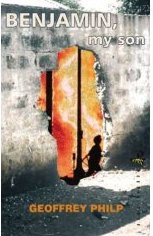
My first few years in South Florida were deeply troubling. I couldn’t find my rhythm. I couldn’t find my space. It was a time of prolonged introspectionOut of that introspection, two books about that "watershed period" were imagined: a collection of poems, Florida Bound and a novel, Benjamin, my son.


In the title poem of Florida Bound, I commemorated the two events that changed my life's trajectory:


I never want to tell my story this way,
for is the same old story of my island
losing the young, never growing old to stay
to Brixton and Birmingham, ghettos of England,
Bronx and Brooklyn, to the barbed streets
of Overtown, scattered like cotton chaff, driven
into restless cities by comrades who cut
electoral seat like they own the people til gun
man like bedbug crawl over the land and bite
them in the arse. And brigadistas screamed
'Deserter', for I couldn't bear their rule. Drought
furrowed the land, rankings wallowed
in democracy, and the idren that stay
get lash with scorn hotter than Orange Lane
drown in silence deeper than Green Bay;
lives poured into the earth in vain.


In Benjamin, my son, one of the first novels to explore the connections between garrisons and politicians/gun men/guns/drugs,  I wrote a semi-autobiographical story about a young man’s reluctant return to Jamaica after his father, a politician, is murdered. The novel was turned down for many years by several publishers because the plot and the incidents in the novel--a state of emergency, lock down and roadblocks thrown up by the residents of the garrison-- seemed farfetched. Perhaps, the book violated their dream of what the “islands” were and what they wanted to sell. Little did they know. Given the recent events in Jamaica, time has proven them triply wrong. Yet I find little solace in saying this.


For I now realize that I may never return to Jamaica. Yet I have also accepted that I have a place to fill here in South Florida with my hyphenated brothers and sisters. Out of that seeming misery of rupture and displacement, a strong community within the diaspora has emerged: "Rise oh fallen fighters/ Rise and take your stand again/ For he who fights and runs away/ Live to fight another day."  


We have also listened to other voices from the larger African diaspora such as John Edgar Wideman who has cautioned in Cattle Killing: "Do not fall asleep in your enemy's dream." 


The same conditions that led to the undeclared civil war in the seventies have come full circle. The origins of current crisis begin in Jamaica with a mixture of urban poverty and political ambition and extend America's hunger for drugs. The capture of one "don-dadda" or the replacement of a politician will only be a quick fix to a larger problem that only Jamaicans can solve. For Jamaica. From The Children of Sisyphus to Dog-Heart,  our dreamers have been asking us: Where have we come from? Who are we? Where do we go from here? 


Or as Brother Bob challenged us in "Exodus": "Open your eyes and look within/ Are you satisfied with the life you're living?"


We need to answer that question. Now.


***


Related posts:


Reblog this post [with Zemanta]

July 6, 2009

"Bad" Words & Storytelling

Geoffrey PhilpDuring a radio interview in the eighties, Peter Tosh said that there were no "bad" words and I believed him. However, to many in his listening audience this was a radical concept and another example of Rasta-speak. But to overstand what Peter meant, one has to realize that he, like many Rastafari, realize that words in themselves are not "bad," but they are merely the vehicles of an awakened or unawakened consciousness. Or to put it another way, if one's mind is "as clear as a hillside lake," as another of my teachers said when I was telling him about "bad" and "good" energy," one would be able to see through "bad" and "good" as merely events--without attaching limited judgment to phenomena.

What both these men were trying to teach me in less mystical terms was that every individual creates a context, largely defined by language, through which s/he perceives the world. If the contextual framework is removed or expanded, then the relative terms, "good" or "bad," begin to lose their meaning because of their limited relevance to reality. My teachers' worldview can be summed up in the Taoist story of the farmer.

Yet context (character, plot, setting) is at the heart of fiction and one of the guiding principles of my storytelling is to use only the words or sentences that will either advance the plot or reveal character. And since many of my stories are about working class or middle class Jamaicans with a patina of "sophistication," how the characters speak, especially when they are faced with conflict--the essence of storytelling--is vitally important. If a writer betrays his characters because s/he fears what the audience will think, the story will lose its soul and the audience even if they are amused by changes, will realize that the writer has been unfaithful. And that is a certain death of the story and perhaps the writer's career because trust--the willingness of the writer to speak the truth of a character and situation--is the element upon which all good stories are built. That trust is sacrosanct.

It was against this backdrop that one of the most embarrassing episodes in my writing career took place.

In July 2003, Colin Channer, Kwame Dawes, and I were invited to read at Jamaica College, an all boys' school, as part of the school's efforts to rebuild the library. I was very excited about reading Benjamin, my son, my coming-of age novel, because much of the action takes place at Jamaica College, my alma mater.

In Benjamin, my son, I use the framework of Dante's Inferno to challenge the illusion of Jamaica that is promoted by our tourist brochures and to illustrate the loss of moral vision in post-Independence Jamaica. The latter has had a corrosive effect on every aspect of culture, which extends to games such as dominos or cricket--two staples in the lifestyles of Jamaican men. One could even argue that mastery of these games is a male rite of passage in Jamaica.

As an alumnus of Jamaica College, Jason Lumley, the protagonist of Benjamin, my son, approaches women from a background of fear and hostility. But as he wanders through Standpipe, a neighboring community of Jamaica College, he encounters many different women who affect a change in his attitude, and by the end of the novel, he is reintegrated into the protection of the sacred feminine.

So, for my triumphal return to the school that was the setting of my bildungsroman, I thought I had chosen the perfect section from Benjamin, my son--the domino scene.

I chose that section to exemplify many of the social attitudes that are still prevalent in Jamaica: disrespect for women, homophobia, and machoism. For although dominos is largely a game of chance, in order to win, the players must possess certain skills to "read" the game. And like cricket, about which CLR James ruminated in Beyond a Boundary, there is a social contract that involves camaraderie, community, and playing by the rules of the game. All of these rules are violated in the domino scene.

Also by using the conventions of dominos, character can be revealed, as I've done in "Beeline Against Babylon" in Who's Your Daddy?, through dialogue that will also advance the plot. In other words, the "bad" words that appear the the text reveal the characters' attachment to their definition of what is means to be a "man." And when that definition is threatened, they spew out a torrent of hellish "bad" words--this is how demons squeal when they are faced with awareness.

After I read the excerpt, I had expected to be congratulated for accomplishing something akin to what Derek Walcott had done in Another Life: using the local Caribbean landscape to illustrate global themes, such as the loss of innocence.

Was I wrong.

One woman in the audience congratulated Colin and Kwame on their writing, but then started to curse me with a string of "yous"; "Why did you have to read that? You…you… you." She complained about all of the "bad words" that I had used in the story when I knew there were children present. To be honest, I hadn't seen any children, for if I had I would have read from the "resurrection" scene near the end of the novel.

But no matter how much I pleaded or argued about freedom of speech or artistic integrity, she would have none of it. I apologized.

She went back to her seat, confident in her victory.

Later that night, a friend of mine, a JC Old Boy, consoled me over a Red Stripe and I tried to figure out what had gone wrong. Were there children present?

That reading changed me. It hasn't changed how I write (my fidelity will always be with the story and the imagined characters), but it has changed the kinds of material I read for Jamaican audiences. I understand the context and given the deeply conservative nature of Jamaican society, I now choose my sections carefully.

So, even now when I'm still accused of the gratuitous use of the word, "B*mb*" (children may be reading this) at the beginning of Benjamin, my son, I realize that if the person could be more offended by this word than the material conditions that the novel portrays--the word symbolizes the Jamaican male revulsion to the feminine--then, I realize that my work, as a fishmonger once said to a friend of mine, "Ain't for everyone."

***

This post is part of Middle Zone Musings: What I Learned From Bloopers, Mistakes, and Embarrassing Moments


***

Zen teacher and writer Cheri Huber says, “Every time we choose safety, we reinforce fear.”


Reblog this post [with Zemanta]

March 31, 2009

New Book: "The Dead Yard" by Ian Thomson

The Dead YardJamaica used to the source of much of Britain’s wealth, an island where slaves grew sugar and the money flowed out in vast quantities. It was a tropical paradise for the planters, a Babylonian exile for the Africans shipped to the Caribbean.

Since independence in 1962, it has gradually become associated with a new kind of hell, a society where extreme violence has become ordinary and gangs control the areas where most Jamaicans live. Ian Thomson’s brave new book explores a country of lost promise, a country that most older Jamaicans in Britain cannot recognise as their own. Once a beacon of optimistic third world politics, the island is now sunk in corruption, hopelessness and drug wars.

Jamaica’s music was once the lilting anthem of idealists everywhere; now it is a repetitive glorification of homophobia and violence. Thomson walks the streets and rides the buses that most middle class Jamaicans, let alone white visitors, avoid like the plague. He describes poverty, the reality of gang rule and police brutality. He meets Jamaicans who are trying to make a difference, and astonishingly complacent members of the elite. This is an unforgettable portrait of a country that has had a huge influence on British culture, for good and ill.

Source: Faber & Faber


Ian Thomson – ‘a chronicler of formidable power’ (Guardian) - is the author of Bonjour Blanc, an acclaimed book about Haiti, and of Primo Levi (‘one of the best literary biographies of the year, Observer). He lives in London with his wife and children.

May 14, 2008

How To Use Allusions


One of the questions that I am asked by my students in creative writing workshops is "How do I use allusions in my work?" The first thing that I try to explain is that the use of allusions is not confined to literary work--they are parts of language and life and extensions of our linguistic imagination. Eavesdrop on any conversation (this is what writers do) on any street corner anywhere in Jamaica, and you will hear people making all kinds of allusions to the Bible, proverbs, and folktales. Sometimes they even spice up their storytelling with metaphors when they are telling jokes with sexual content. Songs such as "Ketchy Shuby" by Peter Tosh and "Stir it up" by Bob Marley are not just about children's games and cooking. In other words, allusions like any other literary device such as symbolism grow organically out of language and the writer uses these devices to heighten the effect of the work.

Most writers use allusions when they realize the similarity in theme or tone between the poem, short story, or novel that they are working on with another writer's work within a literary tradition. For example, the wandering of Leopold Bloom through the streets of Dublin in Ulysses by James Joyce is a direct allusion to the wandering of Ulysses in Homer's Odyssey. Several episodes such as Nausicaa and Calypso have given literary scholars enough material to keep them "busy for three hundred years."

In my own work as I was going through the pre-writing of the novel, Benjamin, my son, I realized that both my personal situation and the subject of my work mirrored that of Dante Alighieri. At the time of composition, I realized several parallels between my life and Dante's: we were in the "middle of life's journey" and because of the war between the "Whites" and the "Blacks," we were living in exile and remembering the moral outrages that plagued our homelands--the direct causes of the war. The situation seemed tailor-made for what was I was writing about--the purgatorial experiences of Jamaicans--and like Dante, I assigned several types of people, based on the moral universe of the Seven Deadly Sins, to a circle in my Jamaican hell.

As a cautionary note, I always stress with my students that the telling of the poem, short story or poem comes first. The Art of Fiction by John Gardner calls this "the creation of a vivid and continuous dream." The poem, short story, or novel must first adhere to the inherent craft of the genre and the dumping of metaphors or allusions into the text will not make them "better." I also remind them that the writer always has the option of playing with the allusion. In the case of Ulysses, Bloom is Jewish and Joyce is making a reference to the myth of the "wandering Jew." In Benjamin, my son, Virgil becomes the dreadlocked Rastafari, Papa Legba, drawn from the Vodoun pantheon, and whose antecedent is Eleggua or as we know him in Jamaica--Anancy.

Allusions, symbolism, and metaphors when used correctly expand the meaning of a literary work and depending on the reader's ability to understand these devices, adds depth to the story. It's not just a one time reading. The reader, engaging the text by thinking about the plausibility of the action, examining the complex patterns, making comparisons and contrasts to his or her life, and evaluating the text to determine if all elements come together seamlessly, keeps coming back for more. Think about songs by Bob Marley such as "I Shot the Sheriff" or the poem, "Mass Man" by Derek Walcott and you get an idea of what makes a work approach literary immortality. Every time you reread the story, you gain a greater understanding to the work, yourself, and how much you have grown with respect to the work and your understanding or yourself. It's a recursive activity hat not only adds richness to reading, but to life itself.

***


Reblog this post [with Zemanta]

November 26, 2006

About Geoffrey Philp's Blog Spot


My name is Geoffrey Philp, and I am a writer from Jamaica. I started this blog to provide readers with information about my writing and the work of contemporary Caribbean and South Florida writers.

Stories and poems about father-son relationships, Anancy (Anansi), and the effects of the Jamaican/Caribbean diaspora have always appealed to me and are the major themes that I've explored in my books--some of which are used as textbooks in many schools, colleges, and universities.

I am available for "Meet the Author" readings/lectures and creative writing workshops where I focus on the craft of writing short stories and poems.

If you'd like to contact me, here's my e-mail address: geoffreyphilp101 [at] gmail.com.

The Abbreviated Bio

Geoffrey Philp, an author from Jamaica, has written two children's books, Marcus and the Amazons, and Grandpa Sydney's Anancy Stories; two collections of short stories, Uncle Obadiah and the Alien and Who's Your Daddy?; a novel, Benjamin, my son, and five poetry collections, Exodus and Other Poems, Florida Bound, Hurricane Center, Xango Music and Dub Wise. A graduate of the University of Miami, where he earned a Master of Arts in English, Philp teaches creative writing at Miami Dade College. He posts interviews, fiction, poetry, podcasts, and literary events from the Caribbean and South Florida on his blog: geoffreyphilp.blogspot.com.


The Long Story

I was born in Kingston, Jamaica, and I attended Mona Primary and Jamaica College, where I studied literature under the tutelage of Dennis Scott. When I left Jamaica in 1979, I went to Miami Dade College and after graduating, I studied Caribbean, African and African-American literature with Dr. O.R. Dathorne and creative writing with Lester Goran, Evelyn Wilde Mayerson, and Isaac Bashevis Singer. Since then, I have attended workshops with Derek Walcott , Edward Albee, and Israeli playwright, Matti Meged. As a James Michener Fellow at the University of Miami, I studied poetry under Kamau Brathwaite and fiction with George Lamming.

In 1990, I published my first book of poems, Exodus and Other Poems, and four other poetry collections have followed: Florida Bound (1985), hurricane center (1998), xango music (2001), and Twelve Poems and A Story for Christmas (2005). I have also written a book of short stories, Uncle Obadiah and the Alien (1997), and a novel, Benjamin, My Son, which was nominated for the IMPAC Dublin Literary Prize. I've also written two children's books, Grandpa Sydney's Anancy Stories and Marcus and the Amazons.

My poems and short stories have appeared in Small Axe, Asili, The Caribbean Writer, Gulf Stream, Florida in Poetry: A History of the Imagination, Wheel and Come Again: An Anthology of Reggae Poetry, Whispers from the Cotton Tree Root, The Oxford Book of Caribbean Short Stories, and The Oxford Book of Caribbean Verse.


Follow me on Twitter @ geoffreyphilp

Reblog this post [with Zemanta]

July 6, 2006

Genesis (of Benjamin, My Son): Part 2

Benjamin, my sonAfter tossing and turning a whole night in bed, I woke up early the next morning and went to Lester Goran’s office in the Ashe Building He joked with me and asked if I had given up the notion of being a critic. I told him yes and he seemed pleased. He showed me how I could graduate from UM with a Master of Arts with a concentration in creative writing. I agreed to the plan. The only problem was I would have to write a dissertation. Goran asked me if I’d ever thought about writing a novel. I told him that I’d thought about it from time to time, but I’d never given it serious thought. He told me it was time to get serious.

I walked around the campus that evening waiting for the Coral Gables traffic to die down, so that I could get home. I sat under one of the beautiful banyans that grace the campus, and began thinking through my options. I thought about some of the characters in short stories that I’d written when Goran and Isaac Bashevis Singer team-taught our creative writing classes, but none of those characters had a crisis that would match the scope of a novel. In short stories, the protagonist faces a single problem that can be resolved within three to ten thousand words. A novel, however, is more complex and the protagonist has to confront a problem that is interesting enough to be sustained over ninety thousand words.

I didn’t want to write a historical novel about slavery and I didn’t want to write in the style of some West Indian writers whose novels were, to put it mildly, boring. It was as if they weren’t interested in writing novels in the way American authors such as Russell Banks, Phillip Roth, and John Irving, structured the narrative to engage their readers in the story. My model for writing was always Shakespeare and in most of his plays he had something for the groundlings and something for the literati. This seemed to be a rational way to look at writing because at their base, novels and plays are forms of popular entertainment. Novels can be transformed the way Joyce did in Ulysses or Aldous Huxley in Eyeless in Gaza, but those represented the high end of the form. If I was now embarking on a career of becoming a writer, then I would have to write novels that had some commercial appeal, and I didn’t think a Caribbean audience would read novels like Ulysses or Eyeless in Gaza.

As I envisioned the novel, it would be a Caribbean coming-of-age novel (George Lamming's, In the Castle of my Skin) with elements from James Joyce’s Portrait of the Artist as a Young Man, Robert Penn Warren’s, All the King’s Men, Dante’s Inferno, and Shakespeare’s Hamlet. The novel needed a murder at its core because these kinds of stories change one of the essential mysteries of the universe from why to who. Then, I started to ask myself a series of what ifs? based on my life, these books and the situation in the Caribbean. I wanted the novel to connect and find resonance in the lives of the readers, for I still believe a novel should give the reader an experience of meaning.

Drawing on my readings of Joseph Campbell, the protagonist’s mentor—his guide through the circles of a Jamaican Inferno--would have to be a mystical, yet human figure—a combination of Jah Mick, Bob Marley, Leghorn, and Seeco. Especially Seeco, who after getting frustrated with my many questions about Rastafari, said to me, “Benjamin, the questioner! Just let it go.” I didn’t know what he meant until I went to a Twelve Tribes of Israel meeting and asked one of the elders who told me that Benjamin referred to the month of March. I was born in March, but I’d never told Seeco when I was born and he never asked. He just proclaimed. I would call the mentor/psychopomp, Papa Legba, to give him a connection to Haiti like the Maroon Boukman, but also to connect him to the Yoruba religion: Eleggua in Cuba and Eshu/Anancy in other parts of the African diaspora.

I also wanted the novel to have the feel of Jamaica during the eighties—like the dread sound that Bob heard and put in the opening bars of “Burnin’.” It would open with the word, “Bumbo,” one of the ugliest curse words in Jamaican that would signal, like Marley’s guttural rumble or Carly’s signature “one drop,” that the reader had entered a new, yet profane world and in the act of doubling creation, the beginning and end of the novel would contain descriptions of the sea-- from which the purgatorial experiences of Black people in the New World began.

The plot, like Hamlet, would revolve around the death of a father/king/prominent politician, and the main suspect would be David (of the Psalms, a warrior/poet) Carmichael (almost like Michael Manley). The young protagonist would be renamed Benjamin by Papa Legba—a name he would reject because of his bourgeois background at Jamaica College and his leanings toward North American materialism. I gave him the name Jason because he would be on a quest. As an homage to my grandfather and the Scottish presence in Jamaica, I gave him the surname Lumley.

Jason, like Telemachus from the Odyssey and Iliad, would embark on a quest of self-discovery, and he and Telemachus would also be similar in one important aspect: they were brought up by their mothers. Jason, like Telemachus, would yearn to demonstrate within the world of action a “manhood gaining act.” For men in the Caribbean, this act takes many forms and in the ghetto/garrisons of Kingston, it takes a deadly turn as Laurie Gunst's, Born Fi Dead, proved to me. Writing the novel wasn’t just telling another story. The mystery of how so many of my classmates at Jamaica College—idren I used to kick ball with—who had now become hardened gunmen with their faces splashed over newspapers, haunted me for years. And the platitudes of “There, but for the grace of God, go I,” were unsatisfying. I was determined to find an answer in fiction. I would write a reggae novel, and I would call it, Benjamin, My Son.


Part One of Genesis (of Benjamin, My Son)

Benjamin, My Son: Caribbean Literature Textbook

Tags:


July 5, 2006

Genesis (of Benjamin, My Son): Part 1 of 2 Parts

Standing between Mahoney and Pearson Halls at the University of Miami, I watched the lights flicker in the apartments above my head, playing what seemed to be an ethereal game of tic-tac-toe over which I had no control. The tamarinds were motionless. Campus security, who regularly checked my friend Dennis Martin and I on our walks back from the Rathskellar, pulled up in a cruiser and drove away. But I was alone that night after class. Dennis had graduated while I continued as a teaching assistant in the Caribbean, African, and African-American Studies (CAAAS) and an adjunct at Miami Dade Community College. Changes were occurring all around us. Ronald Reagan’s administration had altered the political climate of the nation and the conservatism that he preached resulted in budget cuts in education. The University of Miami needing a fresh inflow of money turned to Tad Foote, who began eyeing programs like CAAAS that were becoming increasingly unpopular across the nation.

The budget cuts started coming and Dr. Dathorne began fighting. He was one of those men that institutions like UM fear. Fiercely intelligent and one who did not suffer fools lightly (he considered them all fools and racist fools to boot), Dr. Dathorne was formidable, physically and intellectually. And at that time when the smoking temperance campaign was just beginning to take root, he would often let many of the professors in the English Department know exactly how he felt when he had to stub his cigar before one of their tedious meetings. He was fearless and many of the football players who signed up for his classes would shout out to him as he crossed the bridge to the cafeteria, “All right, Dr. D! You show them.”

And Dr. Dathorne was always on the move which meant I was always trailing behind his frenetic schedule. As his teaching assistant, I was no more than his personal gofer. I would do rough edits on the Journal of Caribbean Studies, look over his revisions on some of his stories, or pick up his friends at the Miami International Airport. I loved it. He would throw me the keys to his monster Cadillac and I would have to maneuver through Miami traffic and the congestion at the airport to pick up some of his friends: Cheddi Jagan, Ivan Van Sertima, Selwyn Cudjoe, John Figueroa, or Sam Selvon. As an added bonus, he would also invite me to dinner at some of the most expensive restaurants in Miami or we would have catered meals at his home in South Miami. I was even part of Michael Manley’s entourage when he came to give a lecture and witnessed firsthand his charisma with the ladies and the respect he commanded among the men with his knowledge of sports, including American football.

But then Dr. Dathorne left under a cloud and many of us were left to fend for ourselves. The English Department was not exempt from the changes. A new set of scholars committed to deconstructionism (George Lamming called it “deforestation”) took over.

I switched from the program in CAAAS and despite the advice of Lester Goran, who was starting a fledgling creative writing program at UM, I decided to become a critic. An MFA to my mind just didn’t cut it and given my history with exams and literature, I wanted to prove myself. During my first year, I took classes in British and American literature and studied primarily Pope, Dryden, Hemingway, Fitzgerald, and Faulkner. I continued to publish poems such as “Exodus” in The Apalachee Quarterly, but I needed to break away from the style of “Exodus” because they were more imitations of Scott and McNeill. I’d also published a long poem, “Florida Bound” in Caribbean Review as answer to Derek Walcott’s “The Star-Apple Kingdom,” but that poem was not the kind of poem that I wanted to write. I had grown up with reggae and I belonged to the generation that invented dub poetry, so I had to find my own voice.

Goran had tried to persuade me to join the writers, but I was determined to become a critic because the prospects for employment seemed more promising. Besides, the rejections were also piling up. But I hadn’t yet learned the rules of graduate school which meant that students asked questions to which they already knew the answers and they were always be ready to genuflect to their professors. They were the authority on the subject they taught, so when some one from like me, “from the islands” suggested an alternate reading of Faulkner whom I saw as belonging to Plantation America—, well, I just didn’t know what I was talking about. And the more they tried to show me their genius by the fact that they spoke Latin or Greek, I remained unmoved. I knew real men of genius such as Jimmy Carnegie, Dennis Scott, and Rex Nettleford. In fact, I once told Professor Nettleford that even though many of my professors at UM were brilliant, I remained unimpressed because despite their intelligence, they couldn’t dance to save their lives.

As a critic, however, I wasn’t going to write dissertations as some of my colleagues had done on scatological references in Shakespeare’s plays and then annotate every reference to bodily functions. Nor was I going to find Christ images in every work of a Western author. Luckily, a friend of mime introduced me to Joseph Campbell’s, The Hero with a Thousand Faces, and I began reading all of Campbell’s books. I had also borrowed, The Signifying Monkey by Henry Louis Gates from Dr. Dathorne’s library before he left. I began re -reading Kamau Brathwaite and the African writers that I read under Dr. Dathorne’s tutelage and saw the Eshu/ Anancy/Trickster paradigm emerging. I also began to realize why we were fascinated consciously and unconsciously by men like Michael Manley and Fidel Castro because they embodied Shango/Xango--the warrior/poet.

I had found what I wanted to write and research, but it was all coming too late. My transition to graduate school was not as smooth as I had planned. I was newly married to Nadezka, the Colombian girl, and I was fighting the banks because of a mistake they had made in calculating my “grace period” before I entered graduate school. I had to get a job as an adjunct at Miami Dade and take graduate classes. I was falling behind. I earned two C’s in two semesters. Just before Valentine’s Day in 1985, I got called in to face the chair of the department who told me that they were not going to extend my contract for another year. I didn’t know what I was going to do. I didn’t have the money to continue paying for credits at UM, but I was too deep in credits with them to transfer to another school—I would lose a year. My stomach was churning when I left the Ashe Building. I was beginning to feel like Ralph Singh in VS Naipaul’s’, Mimic Men, and felt that no one was going to be surprised by my "inevitable failure."

Benjamin, My Son: Caribbean Literature Textbook


Technorati Tags:


Part 2 on Friday