Showing posts with label Mother's Day. Show all posts

May 13, 2012

My Mother's Hands


My mother’s hands always fascinated me. She rarely wore a lot of make-up or nail polish, but like every boy growing up in a single parent home, I thought she was the most beautiful woman I’d ever known. In many ways, she resembled the mother in Lorna Goodison’s “For My Mother (May I Inherit Half Her Strength)”: “She could work miracles, she would make a garment from a square of cloth/ in a span that defied time. Or feed twenty people on a stew made from/fallen-from-the-head cabbage leaves and a carrot and a cho-cho and a palmful/ of meat.” But it was always her hands, plain and unadorned—a country girl’s hands--that told her life of struggle and triumph, and from which I’ve learned so much.

My publisher lists Struie, in Westmoreland, Jamaica, as the place of my birth, but it isn’t true. Struie is the birthplace of my mother, Merty Philp née Lumley. This biographical inaccuracy really doesn’t matter to me, for I would happily claim Struie—home of the Lumleys of Westmoreland--as my birthplace.

The Lumleys of Struie are a hardy lot. My grandfather, Andrew “Big Papa” Lumley, had homes in Jamaica and Cuba. In fact, one aunt, Hortensia Lumley-Hechevaria, lived in Cuba until she passed away a few years ago. Big Papa, a cook, baker, tailor, farmer, and shopkeeper, almost resembled the description of Stephen Dedalus's father in A Portrait of the Artist as a Young Man: “an oarsman, a tenor, an amateur actor, a shouting politician, a small landlord, a small investor, a drinker, a good fellow, a story-teller…a tax-gatherer.” Big Papa, also known as "Tailor," instilled in his nine children essential survival skills, many of which my mother passed on to me and they have had a profound impact on my life.

The first time my mother taught me to sew, it was by accident. She had been trying to thread a needle and she called me into her sewing room. I threaded the needle with ease and probably made some smug remark about her eyesight to which she answered, "Geoffrey, you ever hear this saying: ‘Hog ask him mumma, 'Mumma, wha mek you mouth so long?' And him mumma answer: 'Wait pickney, yu time a come.'”

After giving me this vital lesson by using a Jamaican proverb (she was also a primary school teacher who graduated from Mico), she showed me how to sew a button on a shirt. That evening she taught me a valuable skill that has served me well—like a few years ago when I was getting ready for an important interview, and wouldn’t you know it, the button popped off my shirt. I sewed on the button, got the job, but I was never able to thank that girl from Struie.

As with many country girls, if my mother’s hands weren’t cooking, they were planting. Something. She always had a garden wherever she lived. It’s part of the African folk tradition that has weathered slavery (and gentrification) and that many people from Jamaica and the Caribbean practice without thinking about the origins. Whether it was in Mona Heights, Carol City, or Sanford my mother always had a garden. 

And although she was not as obsessive about her garden as the main character in “The Day Mrs. Ho Lung Got Arrested” in Uncle Obadiah and the Alien, there were many times as a teenager (much to my embarrassment) that she sent me to gather cow dung from the open government lands in Mona Heights or Hope Pastures so that she would have fertilizer for her garden. Over time her garden grew and yielded an abundance of tomatoes, gungo peas, sorrel, mangoes (Julie, Number 11, Long Mango) sour sop, ackee, breadfruit, okra, and pumpkins in our backyard. And it wasn't because she had a "green thumb." Rather it was the tenderness she showed in everything that she did. Her generosity was evident at our Sunday dinners when we feasted on the bounty from her garden.

My mother loved cooking. It was her chance to share with us something that came from her hands—visible proof of her love for us. Now, I wouldn’t say she was a superb cook, but she taught me the basics of cooking meals such as curried goat, beef stew, and chicken soup. One of her specialties was a mean potato salad, which when I prepared it for my then girlfriend impressed her so much, she decided to give me a second chance. We’re now married.

And because I did not want to be a wutless son, I learned the lessons well. In turn, I have passed these skills on to my children. Learning how to cook, taught me how to be patient, and also to be resourceful—you’ve run out of milk, now what are you going to do? I’ve learned to provide for my family and sometimes, I’ve made a meal out of bare necessities. 

Learning to sew showed me that I needed to be tenacious and  no matter what kind of clothing emergency I faced—you never get a second chance to make a first impression—I could handle it. Finally, gardening always made me aware of my relationship with the earth under my feet—with the land itself, no matter where I've lived.

Today as my family and I celebrate Mother’s Day, I know the meal that I’ll prepare for my family would not have been possible had it not been for Merty Philp née Lumley from whose generous hands taught me how to live and love.

Happy Mother's Day!

***
First published: 2010-05-09 01:01
Eastern Daylight Time
Enhanced by Zemanta

May 10, 2009

Mother's Day 2009

Merty Philp and family
She planted bulbs during the winter
When nothing it seemed would ever survive
The cold until early May when the first

Saplings pushed their green music into a noisy world.
For all the while, they had been growing
With the kind of stubborn faith that sends

Monarch butterflies reeling across continents,
Seeking a resistant patch of green covered
In milkweed. Yet under a punishing sun

With enough earth to spread roots and sky
To blossom, nurtured by egg shells and seaweed
Impossible colors that rivaled her neighbor’s garden

Greeted her as she opened the door to the back yard,
Each petal bursting like a prayer that had been answered
That grew from her hands, almost like her children.

***

June 6, 2008

"Mother's Day" by CM Clark

This week’s Video Friday features “Mother’s Day” by CM Clark.


C.M. Clark’s poetry has appeared in a variety of publications, including Gulf Stream magazine, the Florida Center for the Literary Arts anthology Write Here, and she is a frequent contributor to the online journal, Asili. She has also been involved in a number of multimedia collaborations with other artists, including “COMPLEMENT/Art Basel,” a video project, as well as “Now Taste This,” an annual event pairing poets and local gourmet chefs. Her work has been published in the recent collection The Blue Hour, and in the artbook Pillow Talk, a joint project with painter Georges LeBar. For several years running, she has appeared at the Miami Book Fair International as part of the Write Out Loud reading series. Clark lives in Miami, Florida, with her husband.


***

For next week's Video Friday, I'll be featuring a poem by Joe McNair

***


May 11, 2008

Happy Mother's Day!

Merty PhilpMy mother, Mirtygreen Synidia Philp nee Lumley, was born in Struie, Westmoreland. My grandfather, Andrew Lumley, had just built a house in Jamaica, and had it not been for the efficiency of the workers, my mother would have been born in Cuba, like many of my aunts and uncles--some of whom still live there.

From all accounts, she was a bright girl, but due to limiting circumstances, she went to Mico Teachers' College and trained as a teacher. While she was at Mico, she met and handsome man with a devilish sense of humor, Sydney George Philp, and although he had been twice married, she took a chance and married him. They would have two children, my sister, Judith, and I. Everything must have seemed wonderful when they moved into the new development called Mona Heights.

My mother worked as a teacher as Seaward Primary and I went with her until near the time for my Common Entrance Exams, and I transferred to Mona Primary where I won a scholarship to Jamaica College. My mother was so proud of me. She arranged with my uncle, Zamora, to get me a bicycle. It was an old bicycle, but it took me places. And I would always thank my mother.

But little did I know that her marriage was falling apart. My father left, but she managed to keep us together by studying to become a legal secretary and transforming what was once called the "maid's quarters" into a small cottage for medical students from UWI. Although I resented these strangers living with us, I now realize that they were the ones who made it possible for the many extra things I had in my life.

Then came the Manley years of scarcity. My mother, a country girl, had a strong attachment to Jamaica, but when my sister was attacked in our driveway, she had enough and moved to Miami. One of the most vivid memories my mother had of life in America was shortly after she had arrived and going to Publix at Thanksgiving and seeing a cornucopia of fruits and vegetables in the produce area: tears came to her eyes.

But she was never and overly sentimental woman. As a singe mother, trying to raise a boy to become a man hardens something in a woman. A woman sometimes has to give up the "soft, feminine" things to give a boy survival skills and a sense of the hard things that other men try to teach him. So, after being a teacher and a legal secretary, she started all over again in America by going back to school to study nursing--the career that she had always wanted.

With her salary as a nurse, she put me through school and bought a small house in Carol City, Florida. And when my sister needed help with her children, my mother moved to Orlando to be with her until she died a few years ago.

If there has been one regret in my life, it has been that she did not live long enough for me to publicly recognize her value in my life and to somehow give her some of the "soft, feminine things."

My mother instilled in me a love for reading and literature for which I am eternally grateful. Many things in my life would not have been possible had it not been for the love, care, and patience that she showed me and which I, I turn, have tried to show to others.

The sad thing is that I know that her story is not unique. It's the story of many Jamaican/ Caribbean women who find themselves in dire straights, yet they never give in to bitterness and still find the strength to raise strong men and women and never giving up her faith in the redemptive power of love.

So, this Mother's Day wish is not only for my mother, but also for my wife, the Lumley, Philp, Salazar, Patino, and Foster women, the Jamaican/ Caribbean mothers and for everyone who has been a nurturing presence in my life. Give thanks.

Happy Mothers Day!

***


Technorati Tags:

March 22, 2007

A Mother's Legacy: The Gift of Laughter

African-American writer Preston AllenIt had always been there, but I never saw it. Or perhaps I was too close. Although I can’t see why. No, a better answer is that I was focused so much on Preston’s talents as a writer and teacher, and it took a funeral for me to notice.


On Sunday, March 18, 2007, the funeral for Iris Eleanor Gale Allen, Preston’s mother (or Aunty Iris as her family called her) was held at Mount Pisgah Seventh-Day Adventist Church. Although she had been ailing for some time, her death came as a shock, for no one’s ever prepared for a parent’s death. It was especially hard on Preston’s son, Quinn, who had grown into a fine young man from the Yugio trading boy who had attended my twentieth wedding anniversary four years ago. Yet here he was, standing beside his father and three uncles, and when the time came for his reflection, a poem Preston had written, Quinn read with poise and eloquence beyond his twelve years. Although I never met her, I can say Aunty Iris (I am claiming this intimacy) would have been proud. For in a way, I did know her. She reminded me in many ways of my mother.


One of the main reasons for my friendship with Preston has been the remarkable similarities in our lives. Besides growing up in the Caribbean and trying to figure out our place in the diaspora, Preston and I were brought up by matriarchs who were grounded in fundamentalist religions. We both went to colleges in Florida, met our wives at Miami-Dade College, and we’ve both lived and worked as writers/teachers in Miami for the past twenty years. Sometimes when I stroll over to the English department, my former colleagues remind me of the afternoons when they’d eavesdrop on the conversations that Preston and I would have about O’Connor, Faulkner, Dostoyevsky, Joyce, Pushkin, and the Miami Dolphins.


We’d open the doors to our offices that faced each other, our brains still on fire from writing all morning, and grade papers, trade manuscripts, and crack jokes. In fact, that’s what I remember most about those conversations. Our laughter. Preston has a great sense of humor. He once told me about his starving student days (he still has to write about them) and how he “volunteered” to become a patient for some dentist interns on the condition that he would release the university from all indemnity. He signed the forms, got eighty dollars, and he’s been in pain ever since. Although he was describing a horrible experience, the way he told the story (I’m laughing even as I write this) was so funny, I had tears in my eyes from the laughter. We spent many evenings like this: telling jokes, trading stories, and laughing.


Late in the evening after the din and clamor, we’d settle into a pattern of quietly talking about our deepest fears and desires. Would we make it as writers? After so many rejections, should we try self publishing? Would we get a review in the Herald? Would we get promoted this year? Would we turn out like our fathers? For we wanted to be better than our fathers. We wanted to be generative, supportive, protective men for everyone in our lives.


Yet when I got the e-mail about the funeral at a Seventh-Day Adventist church, I was a bit hesitant. It had been a long time since I’d been to an Adventist meeting, and my wife, good Catholic that she is, had never ventured inside those Protestant doors. We sat in the pews and waited as the family and extended family filed in, and once the invocation was given, it seemed as if we were in a regular American church with readings from the Old and New Testaments. However, once the reflections began, it was clear that we were at a Caribbean/Honduran funeral with the requisite singing of every single verse of hymns such as “as “In Times Like These (You Need a Savior)” and sermon by fiery preacher--Jonathan Edwards with a West Indian accent.


As we sweated through the sermon that ended the service, what struck me more than the preacher’s exhortations was the deep sincerity and appreciation that the speakers and the audience had for Aunty Iris. Many had come from all parts of the world to honor a woman who had given assistance in any way that she could—sometimes opening her door to strangers who stayed days, weeks, months, or years in her home (another thing Preston and I have in common). Speaker after speaker commented on her kindness, and I couldn’t help but think, how many of us, as sophisticated as we are and locked away in the hermetic cells of academia, have touched lives in such as profound was as this simple woman from Roatan? How many people are going to show up at our funerals, not to talk about how our books, or ideas influenced their lives, but how we provided, food clothing, or shelter without thinking about the IRS deduction? And Aunty Iris went beyond that. The “fatherless boys" testified about how she drove around in her station wagon and took them to church on Sabbath. Many were thankful that Aunty Iris, despite the fact that they had sometimes fallen by the wayside, always loved them and stood by them in times of need: “Whenever she was in the room, we knew everything would be all right”.


And when the time came for Preston and his brothers to speak, in the midst of the congregation and although he was the shortest (“We got the height and he got the brains,” Cameron explained), Preston was slowly, before my eyes, assuming a gravitas that I had never seen before, and his wife, brothers, son, mother-in law, the entire congregation watched the transformation in awe. Preston spoke about his mother's legacy and her sense of humor. He reaffirmed the bond that a mother and son share, especially when a father is not present. He knew he could call her up at any time and talk to her about anything and she would listen. Even though she was a Christian woman, Aunty Iris would listen to everything because she, too, had lived. She knew about this world that breaks the heart of its lovers, and still she laughed. Whether she was in pain or nearly comatose, she taught him always “to be of good cheer.” It felt good to be in the midst of the congregation and to listen to Preston speak about the value of a life lived in the service of others and delivered with a gentle wit and compassion. Preston's homily had more of an impact on me than the preacher’s rant.


And when we came outside into the midday sun where the hearse waited to take his mother’s body to its final resting place, we could hear the laughter of Aunty Iris in the voices of her sons, grandsons and all the fatherless boys of Miami. Aunty Iris was probably smiling and laughing as we cried and laughed during the service. I know she was. I heard your laughter, Aunty Iris. I also saw your son transform into the man he always wanted to be--the man you knew he always was—that I and the host of witnesses now saw. And I knew you (and all the saints who were smiling and laughing) were proud.

***


Tags:

June 18, 2006

Why I Read

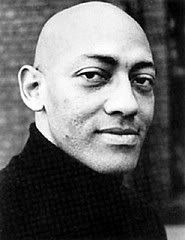
Geoffrey PhilpThe red, scowling Devil sitting on a brown rock over a lake of condemned souls where angels from afar hovered while being mocked by a scourge of howling demons frightened me. On those days when I thought my ten year old world was falling apart around me with the noise of my cousins playing under the mango tree and the thought that my father was never coming home again, I would go into my mother’s room, put the stool near the rack in her closet where she hid all her carouchies and find the book, probably written by Ellen G. White or some other Seventh Day Adventist writer, that she had tucked away because she knew the effect that books like that had on my hyperactive imagination. But, I guess, my mother hiding things was part of the game that we played as mother and son. She would hide things and I would find them. It worked the same way with things like her sinfully delicious chocolate fudge that she locked away in the China cabinet. I figured out a way to get to the fudge by learning how to pick locks--thus beginning my criminal career.


But it was always books that held a special place for me because they seemed to hold secrets in plain view. All you had to do was open the covers. The secrets held knowledge and knowledge was power. For if you could remember certain passages, especially from the book of books, that were common enough to be remembered, but obscure enough to defy placement, like Proverbs 15:1: “A soft answer turns away wrath, but a harsh word stirs up anger,” and then repeat the passages at the appropriate time, chapter and verse, teachers and the most fearsome looking, dreadlocked Rastaman, would nod-- you would have earned their respect. Books could do that.


So when my mother left her Seventh Day Adventist books behind and began reading the Watchtower and Awake! of the Jehovah’s Witnesses, I followed right behind her. Of course, by then I was living a parallel life (in more ways than one) that began with other books I’d been reading at the Tom Redcam library and at Jamaica College.


The library at Jamaica College changed me forever. It was an old fashioned library based on the Dewey Decimal System with the cards in the back flap. The names of all the people who had previously borrowed the books were written on the cards. So, by the time I was sixteen and the librarian at Jamaica College left due to health concerns, I volunteered to take over the running of the library. And they let me. I was a trustworthy young man who went to church every Sunday.


I was in heaven. I got to read all the books before they went on the shelf. I can still remember the smell of a box I opened and right on top was Future Shock by Alvin Toffler. I took it home and read it over the weekend--eager for more. And there was more. For I could now borrow as many books as I wanted and didn’t have to spend my lunch money buying books down at Sangster’s in Liguanea and facing the old lady who always thought we wanted to read Playboy. Okay, yeah. I was sixteen and horny. All I wanted to do was peek. I couldn’t carry them home or else I know my father would have come back home. But this time with a belt.


I began in the 800 section of Jamaica College’s library and began reading Jane Austen through Eliot and got as far as Trollope (we didn’t have much American literature). I would have gotten further, but I was held up by James Joyce’s Ulysses. I’d been following the reading patterns of my teacher, Dennis Scott, a JC alumnus, and borrowing all the books he had read by reading the cards stuck in the back of the book. Years later he would confess that he’s barely read ten pages of Ulysses while I had trudged through the whole thing.


Over the summer between lower and upper sixth form, I can still remember sitting out on the verandah at my home in Mona Heights reading The Myth of Sisyphus while waiting for my friends to call me to come and play football. They thought I was strange, but I was a good midfielder, so what the hell, they always called me. In time, I overcame the feeling of being strange when I learned Camus was also a football player. The hardest prejudice that I had to overcome, however, came in the form of concerned sneers of my mother and her friends. They would say, “To the making of many books there is no end, and much devotion [to them] is wearisome to the flesh, Ecclesiastes 12:12.”


I had to get past the communal attitudes fostered by a culture that ostensibly valued books and knowledge, yet feared and despised them at the same time. But the more I read, the more I realized that I wasn’t alone and that there were millions of people like me. I was relieved when I read Section 2 in Chapter Seven of Another Life: “I was seized by a pity more profound/ than my young body could bear,” and realized that I wasn’t mad. The fear of insanity “madness,” plagues the Jamaican psyche and reading too many books, according to many of my mother’s friends, filling my head with “the wisdom of the world in books” would drive me mad. Then they would tell me horror stories of UWI students, especially in law and medicine, who went mad from “book learning.”


But I kept on reading. I learned how to be with myself and that being alone wasn’t a bad thing. Some of my friends like Sonia Jones, Danny Morrison, Michael Witter, and Dennis Scott would lend me books that they thought I would enjoy. They were right. I would read Mervyn Morris for faith, Martin Carter for hope, and Derek Walcott for love. I would read Naipaul for humor. I was up in the tree with Man-Man when the people were throwing rocks at him and I was throwing rocks at him too. I learned more about tolerance and diversity from Edgar Mittelholzer’s, A Morning in the Office, than I did from any of my teachers at JC, especially my Bible knowledge teachers--who I now realize probably hated my guts because I was a bit of a showoff and would often parry scriptures with them. What can I say? I was young and they should have known better. Boys as they grow older will challenge the men in their lives about everything--it’s only natural.


I also read for pleasure. I loved stories with plausible plots that didn’t lead me to ask, as I do when watching television, “Now, why would they do that?” to which my son usually says, “Because it’s in the script, Dad.” I read stories with interesting dialogue between characters to whom I feel some attraction or characters whom I find reprehensible, yet they are so interesting that I want to find out what’s going to happen next.


It was this curiosity about things that were happening all around me that kept drawing me back to the books. Growing up in Jamaica, bombarded by the media on all sides, I wanted to know what was really “out there.” Growing up, too, in cosmopolitan Mona Heights where the flimsy façade of race was apparent—all our fathers and their father’s fathers from India, China, Scotland, and Africa were equally foolish after a game of dominoes and drinking a few rounds of Appleton.


Books took me away from my neighborhood. They added to my experiences and gave me a broader perspective on the lives that surrounded me. This is why I sometimes feel an immense pity for my North American friends who because of race cannot enter the full partnership of author and characters because they are bound by notions of race. It may smack of Walcott’s “parochialism,” but my reading and writing begin with the Caribbean. As an aside, when it comes to the people for whom I write, I always assume a Jamaican/ Caribbean audience. Writing a book is like telling a joke, and if you have to explain a joke, it loses its meaning. It’s also pandering. If you have to explain it, you’re telling it to the wrong people. Stand firm. If you tell it right, they will come.


And I keep coming back for more. My love for reading began on a small island in the Caribbean and has grown to encompass the small universe that I have created. The red, scowling Devil doesn’t scare me any more. For I realize that the demons and the angels are also part of our imagination and our existence. I have been one of those demons. I have also been one of the angels weeping at the waste: “I had not thought death had undone so many.” In my small world, my library, the wolf and the lamb lie down together: Omeros sits beside The Arrivants; Love in a Time of Cholera nudges Aunt Julia and the Scriptwriter, July’s People leans on Walt Whitman: A Study in the Evolution of Personality, and all is well.


***


Reblog this post [with Zemanta]

May 25, 2006

Chicken Soup and my Family

A week ago, everyone in my family had come down with a nasty cold/flu that has been going through Miami like those wildfires in the Everglades. We were walking around like sniffling, bleary-eyed zombies addicted to Kleenex and Theraflu. Pitiful. On Saturday after struggling all week with the over-the-counter medications, my wife turned to me and said, “You know what you have to do, don’t you?” I knew.

It wasn’t that I was dreading making the chicken soup, but my new responsibilities at the college were taking their toll, and I thought about the mountain of work that I had brought home. I was determined that not even a cold was going to stop me from finishing the job. I reluctantly told my wife yes with the secret hope that everyone would have forgotten by the next day. 


But by the next morning, my son, Andrew, was downstairs with a list for the supermarket and his stern admonition, “Don’t forget to make the dumplings.” Sometimes I have to remind Andrew and his sister that it’s called “chicken soup,” not “dumpling soup.” So, on Sunday evening after going to the supermarket, I pulled out my stock pot and made my famous chicken soup that my mother taught me how to make.


My mother, Merty Synidia Philp, nee Lumley, was a country girl from a small town named Struie in Westmoreland, Jamaica. According to my aunt, Norma Lumley, my great-grandfather, Andrew Lumley, came over from Scotland to build churches in Bethel Town which is two miles from Struie. My grandfather, Frederick Andrew Lumley, was a baker/shopkeeper/bartender/ farmer/ village reader of letters in Struie. He also worked as a cook on a ship that traveled between Jamaica and Cuba, and he taught my mother how to cook chicken soup the way my great-grandfather taught him. 

My great-grandfather and my grandfather are a part of a Scottish lineage in Jamaica. As youngsters at Jamaica College, we used to joke that when the teachers were taking roll, you could go outside, smoke a cigarette in the bathroom, come back, and they would only be getting to the McKenzies after going through the Mac Adams, McDaniels, McDonalds, and MacDougalls. The meeting of Scotland and West Africa (I will only vouch for those two--who knows what else happened in my grandfather’s bar on a Friday night?) down in Westmoreland tempered by the rigors of farm life and the daily chores of feeding the chickens, tying out the goats, and feeding the hogs produced a set of habits such as dependability, tenacity, and a certain fearlessness toward work and sacrifice that kept my mother’s family together.


For my mother’s family to survive in Struie, they had to be ready for any opportunity that presented itself. My aunts and uncles had careers in fields where opportunities were open: nursing, law enforcement, and teaching. They did well in these professions because they had learned firsthand about dependability and sacrifice in Struie. Everyone on the farm was expected to contribute something. There weren’t any exclusive boys’ jobs (except with the bulls and hogs) or girls’ jobs. You had to help in any way that you could. This tenacity and attitude towards work helped my mother throughout her life. She began as a teacher, and then she became a legal secretary to one of the top lawyers in Jamaica. When she left Jamaica, she started all over again and eventually became a nurse—the career she had always wanted. But she always stressed, if a job had to be done, someone had to step up to the job. If you couldn’t do the job, you could help. This is why she taught me how to cook and to iron my clothes because the last thing she wanted was a wutless man in her house. Everyone had to do something.


So, on Sunday evening it was my turn to do something that no one else could do as well. Whatever I brought home from the college had to be put aside for my family’s sake. I made the chicken soup from Jamaican-Miami recipe with a whole chicken (skinned and quartered by yours truly), thyme (of course), onions, butternut squash (they only had some fenke-fenke pumpkins and the kids prefer squash), dumplings (the kids used to help me make them when they were younger, but they’re teenagers now and way too cool for that. But they did help to carry the bags in from the supermarket), carrots, celery, parsnips (added since we’ve come to Florida—for a little sweetness), chayote (don’t make the mistake of going into the Latin supermarkets and asking for cho-cho, you will get hurt), turnips (I now have immense respect for the turnip since I saw the movie Last Holiday: “It’s not how you start, it’s how you finish”), and scallions added just before serving.


The soup may not have cured our colds, but it gave us a chance to sit down together and have a hearty meal with equally wholesome company. Well, not so wholesome. There was a revival of “The Dumpling War,” a family habit, which I hope our children will never share with their children.

***