April 26, 2026
Marcus Garvey on Mental Sovereignty | The Garvey Classroom


The Song We All Knew
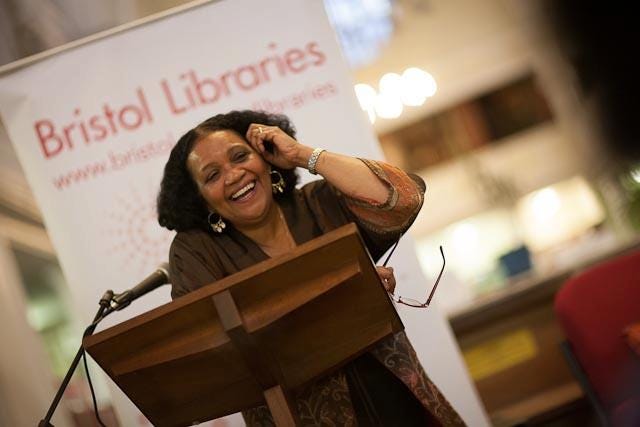
Lorna raised her hands.
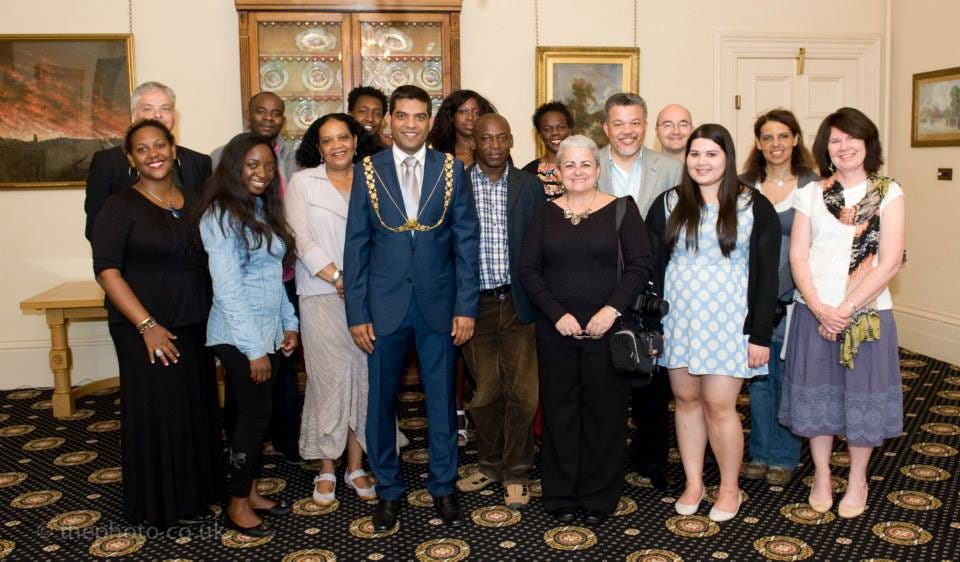
Not to silence the room. The room was already quiet in the way rooms get when people have run out of the language they share and are waiting for something older to arrive. June 30, 2013. Bristol. A small apartment, the last day of the Yardstick Festival, where writers from across the African diaspora, some of us carrying English, some French, some Kiswahili, spent four days trying to reach each other across the distance that colonialism had installed between us—carrying the same wound.
She raised her hands and began.
“Old pirates, yes, they rob I.”
And the room moved. Every mouth in that apartment opened, the English speakers, the French speakers, the Kiswahili speakers, because the song belonged to all of us before any of us had learned to explain why. Bob had seen to that. He had written “Redemption Song,” knowing, the way prophets know, that the people who needed it most would find it regardless of what language they conducted their daily lives in. The melody carried the argument. The melody was the argument.
I stood in that room and felt something I have been trying to name ever since.
We were not performing solidarity. We were not demonstrating Pan-African unity for an audience or a program note. We were a group of tired writers on the last afternoon of a literary festival, and the only thing left that was true for all of us at the same time was that song. “Emancipate yourselves from mental slavery; none but ourselves can free our minds.”
In French, those words carry the same weight. In Kiswahili, the melody reaches the same place in the body. Language is the house we live in. The song was the ground underneath every house.
Lorna knew what she was doing. She always knows what she is doing. The greatest poets understand that there are moments when the poem is not on the page. The poem is in the room, in the breath, in the collective act of people who have survived the same history choosing to name it together out loud. She raised her hands and gave us the only text that needed no translation.
I thought of Garvey. I always think of Garvey in moments like that. He had spent his life trying to build exactly this: a consciousness that could cross the linguistic and geographic divisions the colonizer had used to keep African people from recognizing each other. He built the UNIA across six continents, crossing French colonies and English colonies and Portuguese colonies, insisting that the divisions were administrative, not ancestral. He failed to hold it together in his lifetime. The movement fractured. The flags came down.
But in that apartment in Bristol, in 2013, Lorna raised her hands and we sang, and for three minutes and forty seconds the project held.
That is what Bob understood that the political organizers sometimes missed. You can draw a map of Pan-African unity. You can write the constitution. You can hold the conventions. Or you can write one song so true that a room full of strangers who cannot fully speak to each other will open their mouths at the same moment and mean it.
The festival had given us four days of panels and readings and careful, considered literary exchange. The apartment gave us the thing that no panel can produce. The moment when a people stop describing their freedom and practice it in the only language that was never taken.
Lorna lowered her hands when the song ended. Nobody spoke for a moment. The room held what had just happened the way good rooms do, without rushing to explain it.
That lesson—although Lorna never intended it to be a lesson (or maybe she did?) -- stayed with me. It travels with me now, into every classroom, every auditorium, every gathering where I stand to speak about Garvey and Bob. I end every presentation the same way. Not as a conclusion. As a charge.
“Emancipate yourselves from mental slavery; none but ourselves can free our minds.”
That is what Lorna gave us in that small apartment in Bristol. That is what Bob gave the world in 1980. That is what Garvey spent his life trying to build the conditions for. Three generations. One transmission. Still running.
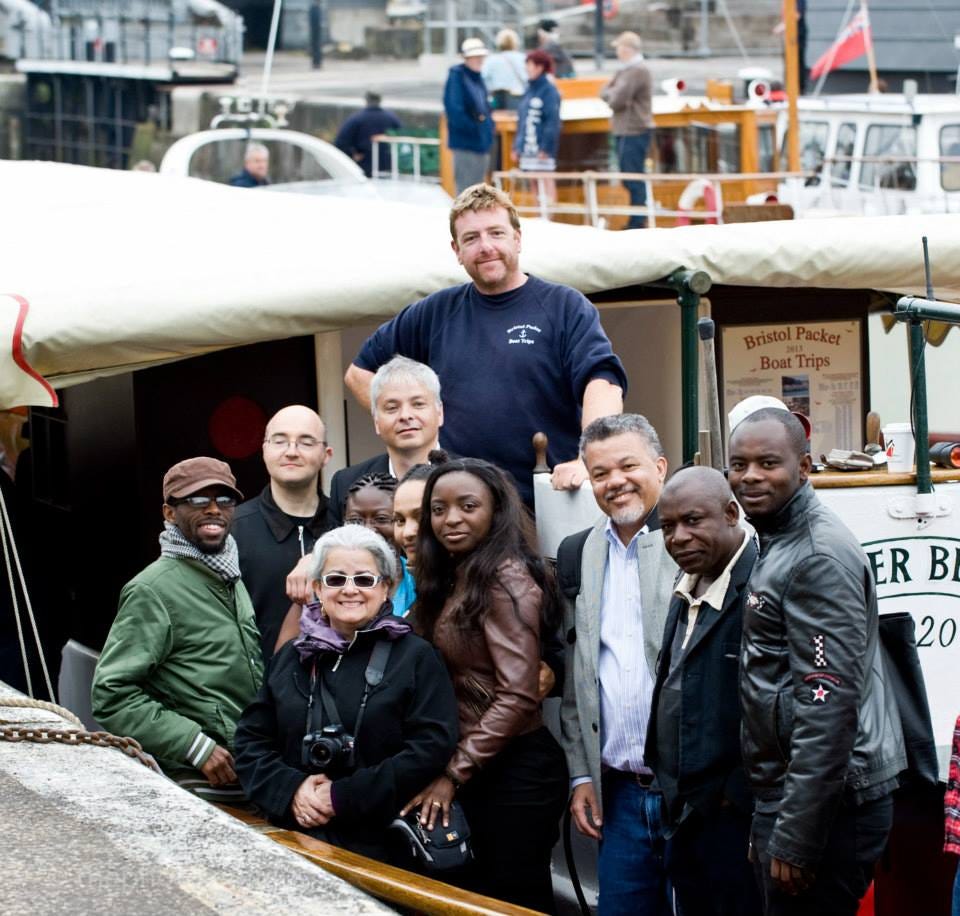
Give thanks to Asif Khan and Jon Craig for permission to use these photos: (12) Yardstick Festival yardstick.org.uk | Facebook
via The Garvey Classroom https://ift.tt/nP1kHfB Follow The Garvey Classroom on Substack for weekly lessons on mental sovereignty, Pan-African history, and the teachings of Marcus Garvey.
April 25, 2026
Marcus Garvey on Mental Sovereignty | The Garvey Classroom
Jamaica College, Tradition, and Violence

The violence, the bullying, was always there, but we called it a different name. Tradition.
When I was in first form at Jamaica College--a school so great they named the country after us--any older boy from second form to sixth form could walk up to you and say, “Eh, bwai, sing for me,” and you had to. Or else. They would hold you down and beat you up.
Then there was the candle waxing at the end of the school year, when older boys would hold you down and light a candle over your head, letting the wax drip into your hair. Many a good afro was ruined this way.
Then there was the caning. If a master, and yes we still used that word, decided you had committed a gross infraction against the school rules, he would send you with a letter to the caning master, some of whom took sadistic pleasure in asking you to choose your instrument of torture. The big fat bamboo cane or the thinner whippy one. There was even one master who, after caning, would say, “You may rub your buttocks if you wish.”
So in one way the incident at Jamaica College came as no surprise. And yet in another way it did.
Dr. Leo Gilling, in his essay When Violence Becomes Performance, watched the video and noticed what most viewers missed. The first slaps were measured, almost restrained. Then the boy delivering them glanced at the camera, and the intensity escalated. Another student held a belt, moving strategically, waiting for an opening. Others stood positioned around the scene in a way that looked like containment. Gilling’s word for what he saw was “performance.” The recording did not capture the act. The recording shaped it.
He is right. And he is reading one frame of a longer film.
The candle wax dripped onto one afro at a time. The phone drips the humiliation onto every screen in the diaspora. The technology changed. The pedagogy did not. The boy in the video learned what to do from somewhere. He did not invent the choreography. He inherited it.
These are forms of violence we’ve accepted as the norm.
Especially from the police. The boy who learned at JC that draping up the weaker was manhood becomes the constable who drapes up the youth on the corner in August Town. Same choreography. Same cultural permission. The video shocked the nation because it happened at Jamaica College. It does not shock anyone when it happens on Spanish Town Road.
The catalog does not stop at the school gate.
The belt on the kitchen counter. The switch from the guinep tree. The pastor who preaches obedience on Sunday while the deacon beats his wife on Monday. The uncle who terrorizes the household and is called “strict.” “Murder and murderer” are the signatures of Jamaican music on the internet.
Each has been accepted. Each is norm.
Dr. Leahcim Semaj, writing in response to the same crisis, says it plain in his title. “School Violence Is Not Indiscipline — It Is Distress Speaking Loudly.” He points to what happens inside the body of a child living in this catalog. The amygdala stays hyperactivated. The prefrontal cortex goes offline. The nervous system runs on survival. By the time the child reaches the classroom, the home has already failed to regulate emotion, the community has already normalized aggression, the nation has already modeled conflict without resolution. The school becomes the last pressure point where everything collapses.
Semaj is right. And his diagnosis stops one generation short.
The home that failed to regulate the child was raised by a home that failed to regulate it. The community that normalized aggression normalized it across centuries, not decades. The nation that models conflict without resolution was built on a plantation that resolved conflict with the whip and called it order. The nervous system Semaj describes is not malfunctioning. It is functioning exactly as the inheritance designed it to function. Survival mode is the plantation’s gift to the great-grandchildren of the people it owned.
This is what Marcus Garvey understood a century ago and what we keep refusing to learn. Mental emancipation is the work of recognizing that the violence we call tradition is the plantation continuing to operate through us. We are the institutions now. We are the masters with the canes. We are the older boys with the candles. We are the constables on the corner. The plantation does not need to come back. It never left.
I want to go back to the bully in the video. As Peter Tosh sang, “Yu cyaan blame di yute.” He is acting on what in his mind it means to be a Jamaican man. The violence he is enacting is endemic. To be a man means you can drape up a bwai if im do yu a ting, an bax im fi show im who is the boss. Yu is a man and im is a bwai.
I already hear the voices in my head. “We always know yu was saaf. Probably a battyman too.” Homophobia is part of the enforcement. It is one of the ways the inheritance polices itself. The boy who refuses to drape up the weaker is suspected of something the culture has decided is worse than violence. So the violence continues, partly because the alternative is unspeakable.
Forty-some years ago, our resident historian, assistant principal, and JC Old Boy, James “Jimmy” Carnegie, refused to cane any boy who had violated school rules. Amps, as we called him, invented other ways. He would assign tasks. Picking up bottle caps between the tuck shop and the bathroom. He said to me on one occasion, “Mister Philp, I want you to think about what you have done. And why you did it. Now I want you pick up all the bottle caps between Tucky and Tushy.”
It didn’t mean Amps was letting me off the hook. We are always accountable for our actions. But he also said something that stayed with me for over forty years. He wanted us to become Jamaican gentlemen.
I never quite figured out what he meant. I guess that was the beauty of it. We had to invent for ourselves what it meant to be a Jamaican gentleman, and what it meant to be a man.
Carnegie was doing decolonial work inside the classroom. He refused the cane because he refused the inheritance. He invented a pedagogy that made the boy think instead of bleed. He left the definition of gentleman open because a closed definition would have become another rule to transmit, another tradition, another form of violence we accepted as the norm.
Although he never publicly stated it, Amps understood what Garvey understood. The first act of mental emancipation is naming the thing accurately. Tradition is what violence becomes when we stop interrogating it. Tough love is what violence becomes when it travels through the bloodline. The renaming is how the plantation survived emancipation. The unnaming is where freedom begins.
The question is not only what is wrong with the boy in the video. The question is what we will refuse to transmit to the next first former who walks through the gates? What we will refuse to call tradition? What we will refuse to laugh about at the old boys’ reunion? What we will refuse to defend when our own sons reach for the belt?
Gilling is right that the recording changed the act. Semaj is right that the nervous system is in collapse. Carnegie was right forty years ago and is still right now. Garvey was right a century ago and is still right now.
The question revolves around values. What does it mean to be a Jamaican? What does it mean to be a Jamaican man? This is especially important because many graduates of Jamaica College have become leaders in our country.
But this isn’t only a JC problem. It is a national challenge that must be addressed until acts like these become unthinkable.
The boy in the video is not the problem. The boy in the video is the message. The message is that we have inherited a pedagogy of violence and we have agreed to call it Jamaican, which is reflected in our music and nearly every facet of our culture. The question that we refuse to answer and one that will never go away until we answer it.
Who are we?
Sources
Barrett, Livern. “Update | JC Student in Viral Assault Video Charged.” The Gleaner, 24 Apr. 2026.
Gilling, Leo. “When Violence Becomes Performance: The Jamaica College Video Reveals More Than Bullying.”
Semaj, Leahcim. “School Violence Is Not Indiscipline — It Is Distress Speaking Loudly.”
via The Garvey Classroom https://ift.tt/L89OzfI Follow The Garvey Classroom on Substack for weekly lessons on mental sovereignty, Pan-African history, and the teachings of Marcus Garvey.
April 24, 2026
Marcus Garvey on Mental Sovereignty | The Garvey Classroom
April 23, 2026
Marcus Garvey on Mental Sovereignty | The Garvey Classroom
April 22, 2026
Marcus Garvey on Mental Sovereignty | The Garvey Classroom
April 21, 2026
Marcus Garvey on Mental Sovereignty | The Garvey Classroom
April 19, 2026
Marcus Garvey on Mental Sovereignty | The Garvey Classroom
Garvey’s Map, Marley’s Music: Eight Stages to Mental Sovereignty
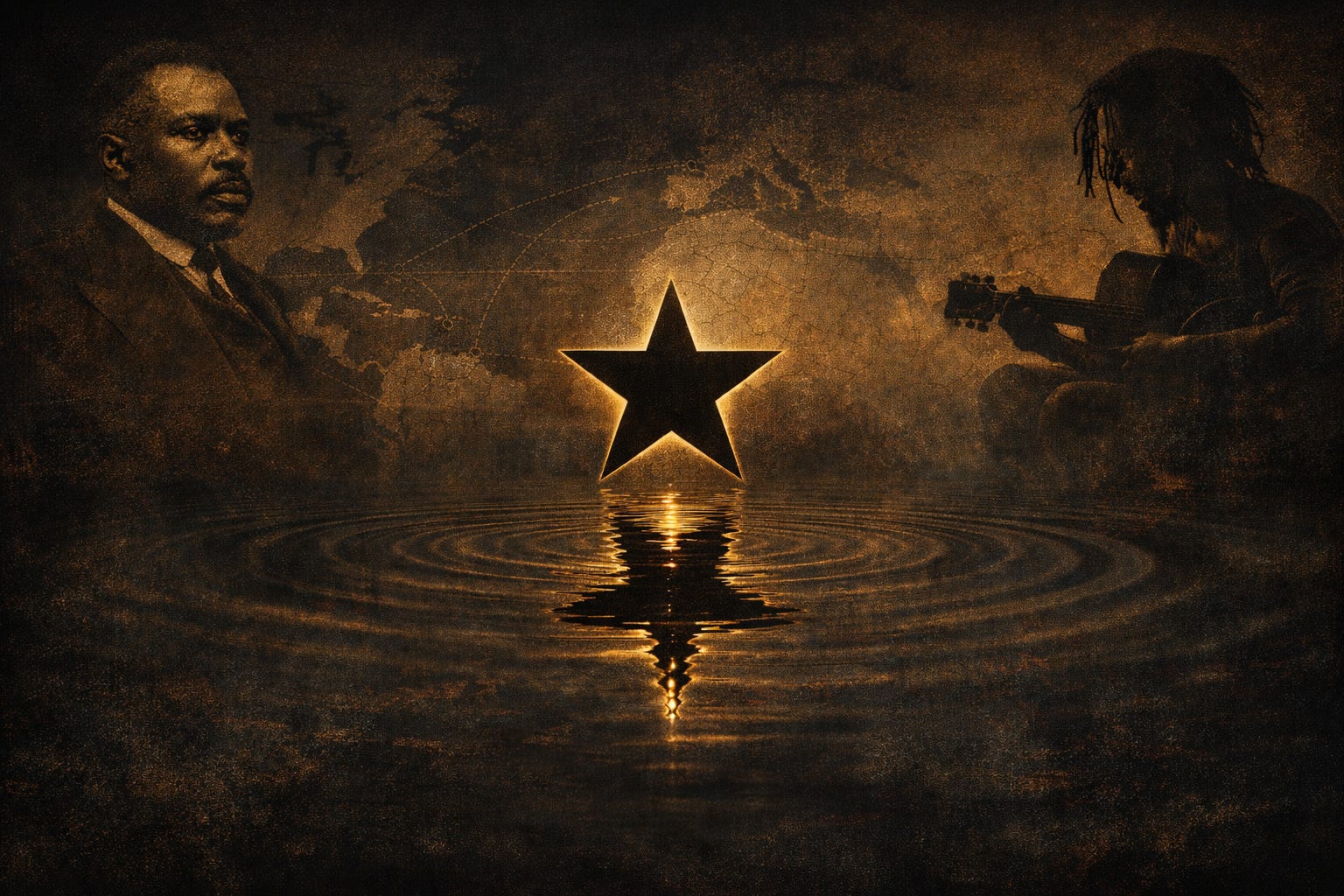
Somewhere between Toronto in 1937 and Trench Town in the 1960s, Marcus Garvey’s curriculum found a new teacher.
According to Mwariama Kamau, historian for the UNIA, Garvey’s work was a restoration of African consciousness, driven by what Kamau describes as “an ancestral imperative” to liberate his people from social, political, economic, and spiritual bondage (Kamau). In September 1937, Garvey assembled a small group of trusted organizers in Toronto and ran them through forty-two lessons with twelve hours of instruction a day for a month. He called it the Course of African Philosophy. The lessons mapped what I have distilled into eight stages of psychological liberation: Awakening, Confrontation, Reorientation, Continuity, Purpose, Discipline, Organization, and Individual Genius and Mental Sovereignty (Garvey, Message xv).
After Garvey’s death, the forty-two lessons survived in fragments that Tony Martin collected into Message to the People. But the transmission of Garvey’s teachings also ran through Jamaica. The herald was Rastafari. Bob was its voice.
Garvey had founded the UNIA in Jamaica in 1914, and his vision of African redemption never left the island. It moved into Rastafari, which took Garvey’s prophecy about the crowning of an African king as its founding theology. Bob was Rastafari. He did not encounter Garvey’s ideas as history. He absorbed them. Then, set them to music.
Across albums recorded between 1964 and 1980, Bob, like Garvey, transformed what was happening to us into what looks, in retrospect, less like coincidence and more like a mission. The two men never met. Garvey died in 1940. Bob was born in 1945. What passed between them was transmission, the kind that moves through a people who are still working out the same problem.
When Garvey’s words became music, four things changed. The reach expanded from twelve organizers in a Toronto room to every radio, every record player, every street corner on six continents. The access dropped from literacy and membership to nothing more than ears and a body that could feel rhythm. The memory deepened from intellectual retention to the cellular kind that outlasts everything the mind decides to forget. And the risk shifted: you can burn a pamphlet, you can arrest a man, but you cannot confiscate a song that three hundred million people already know by heart.
The curriculum grew roots when it became music. But the music also cost something. That reckoning comes at the end.
Stage One: Awakening
The first stage is the hardest. Garvey called the mental condition of colonized people a kind of enforced sleep. You cannot fight what you cannot see. His pedagogical project began with the insistence that seeing was possible, that the mind could be roused from the numbness it had been taught to call peace.
Garvey wrote in Lesson One of the Course of African Philosophy:
“Intelligence rules the world and ignorance carries the burden.” (Garvey, Message xv)
Bob answered that lesson with a command. In “Wake Up and Live” he sang: “Rise, from your sleepless slumber.” The instruction is identical. Only the instrument changed.
Stage Two: Confrontation
Noticing is not enough. Garvey was explicit: we had to look at the systems arrayed against us without flinching. He trained his organizers to analyze the methods of their opposition, and to understand the terrain. Confrontation in Garvey’s framework is an act of intellectual courage.
Garvey taught in Lesson One:
“Never swallow wholly what the white man writes or says without first critically analyzing it.” (Garvey, Message 1)
Bob enacted that instruction as refusal. In “Babylon System” he sang: “We refuse to be / What you wanted us to be / We are what we are / That’s the way it’s going to be.” Garvey teaches critical analysis. Bob makes it a declaration of identity.
Stage Three: Reorientation
Once a person has awakened and faced the structure built against them, the interior work begins. Garvey understood that the colonizer’s most durable achievement was the installation of the colonizer’s values, standards, and judgments inside the colonized mind. Reorientation means replacing that installed compass with one oriented by African history, African genius, and self-generated possibility.
Garvey named the colonizer’s method in Lesson One:
“Things that may not be true can be made so if you repeat them long and often enough. Therefore, always repeat statements that will give your race status and an advantage.” (Garvey, Message 1)
Bob named the return from it. In “Coming In from the Cold” he sang: “Why do you look so sad and forsaken / Don’t you know when one door is closed, many more is open.”
Garvey names the mechanism of mental colonization. Bob names the way back.
Stage Four: Continuity
Garvey diagnosed civilizational amnesia as a political tool. A people cut from their history could be given a replacement history designed to explain and justify their subjugation. The antidote was memory, specifically the recovery of a history long enough and deep enough to show that the current condition was recent, not eternal.
Garvey wrote in Lesson One:
“Read history incessantly until you master it. This means your own national history, the history of the world, social history, industrial history, and the history of the different sciences; but primarily, the history of man.” (Garvey, Message 3)
Kamau documents how Garvey enacted this stage inside the UNIA itself. At conventions, he hosted the Ancient Ethiopian Ceremonial Court Reception, inducted members into the Ancient Order of the Sphinx, and filled the hall with songs like the Universal Ethiopian Anthem. UNIA auxiliaries carried flags bearing West African Adinkra symbols. African royalty came and found sanctuary in what one member called “the African gospel” (Kamau). Garvey built institutions that practiced continuity with history.
Kamau makes a contribution here that the mainstream Garvey scholarship has not fully absorbed. He documents that the School of African Philosophy taught forty-two lessons, the same number as the forty-two declarations of Ma’at in the ancient Kemetic system. Garvey built that number in deliberately, connecting his curriculum to the oldest African tradition of moral and spiritual accountability on record. The School of African Philosophy was the oldest institution on record, restored.
Bob carried that same depth without naming it. When he sang about the mind, about judgment, about what we owe each other and ourselves, he was drawing from the same well Garvey drew from. The tradition was unbroken.
Stage Five: Purpose
Garvey argued throughout Message to the People that we had to stop drifting and claim a direction. He was relentless on this point. Purpose was a discipline cultivated against the grain of a world that had spent centuries telling Black people their ambition was dangerous.
He wrote:
“The greatest men and women in the world burn the midnight lamp.” (Garvey, Message xviii)
Bob declared the destination. In “Exodus” he sang: “We know where we’re going / We know where we’re from.” Garvey names the discipline of purpose. Bob names where that purpose points. “Zion Train” is the call to board. “One Love / People Get Ready” is the collective orientation toward a shared destination.
Stage Six: Discipline
Garvey had no patience for romanticism about liberation. He understood that sustained movement required sustained self-mastery. He wrote about character as the foundation of all else, the interior structure that determines what a person is capable of building (Garvey, Message 38). Discipline was the form that purpose takes in the body.
He stated plainly:
“The leader must strive to master his shortcomings.” (Garvey, Message xviii)
Bob translated that into street-level instruction. In “Simmer Down” he sang: “Simmer down / Control your temper.” Both men understand that the self is the first battleground. The battle outside cannot be won while the battle inside is lost. “War” is a declaration that the struggle requires total commitment. “Work” is unglamorous and necessary: “Every day is work.”
Stage Seven: Organization
Garvey understood that personal transformation had to become institutional. The UNIA at its peak had over six million members operating across six continents (Kamau). Six million members. Organization built that.
Garvey wrote in Philosophy and Opinions:
“The wonderful force of organization is today making itself felt in every branch of human effort. Whether in industry, society, politics or war it is the force of organization that tells.” (Garvey, Philosophy and Opinions)
Bob named both the force and the direction. When he sang “Africa unite / ’Cause we’re moving right out of Babylon,” he was in deliberate conversation with Kwame Nkrumah, whose book Africa Must Unite had been in circulation since 1963 (Nkrumah). Bob recorded “Africa Unite” in 1979. The title carries deliberate weight. Bob was reading the tradition and singing it back. “Zimbabwe” is the proof of concept. Bob recorded “Zimbabwe” before Zimbabwe was Zimbabwe. That is what organization in service of a vision looks like.
Stage Eight: Individual Genius and Mental Sovereignty
The final stage is the most radical. Garvey insisted that every person within the African world carried a genius specific to them, a capacity for contribution that the colonial system had been designed to suppress, deny, and punish. The recovery of that genius was the full destination of the curriculum. Mental sovereignty meant the absolute refusal to let another person’s assessment of your worth function as your self-understanding.
Garvey declared his ultimate aim in 1937:
“I am trying to make everyone a Marcus Garvey personified.” (Garvey, Message xv)
“Black Man Redemption” names what the journey has been building toward. “Forever Loving Jah” is faithfulness as practice. And then “Redemption Song.” An acoustic guitar. A voice stripped of everything except what it absolutely needs to say. The chains of the mind named and refused.
Bob recorded “Redemption Song” knowing that soon, he would not be with us physically He had already done the work. He was singing sovereignty from inside it.
Garvey had named the transmission long before it arrived. Writing from Atlanta Prison, he told his people: “Look for me in the whirlwind or the storm, look for me all around you” (qtd. in Kamau). Kamau reads that declaration as consistent with the ancient Kemetic belief that the spirit transcends death to continue the liberation struggle from within the forces of nature.
Garvey was always intentional. The forty-two lessons of the School of African Philosophy matched the forty-two declarations of Ma’at exactly. The curriculum drew its moral architecture from the oldest African tradition on record and carried it forward into 1937 Toronto, into Jamaican Rastafari, into Nine Miles, into every studio where Bob laid down a track. The tradition was unbroken across three thousand years. Kamau gives us the documentation. The continuity speaks for itself.
When Garvey became Bob, we gained the world and we lost the discipline. Bob carried the curriculum past every border Garvey’s deportation had drawn around him. He gave us the feeling of liberation before we understood what it meant. The melody got inside before the guard went up. That was the gift.
But Garvey’s lessons demanded something. Twelve hours a day. Examinations. Graduates sent out with specific assignments. The School of African Philosophy ran on rigor and accountability. When the curriculum became music, the urgency to build institutions softened. We received the Awakening and called it enough. We felt Stage One and mistook it for the whole course.
Bob never mistook it. He recorded all eight stages. He knew the distance between waking up and governing yourself. But we heard the music and stopped before the final lesson. We sang “Redemption Song” and went back to sleep.
Garvey would have failed us on the examination.
References
Garvey, Marcus. Message to the People: The Course of African Philosophy. Edited by Tony Martin, Majority Press, 1986.
---. Philosophy and Opinions of Marcus Garvey. Majority Press, 1986.
Kamau, Mwariama. “Marcus Garvey and the African Ancestral Sovereignty Imperative.” Unpublished manuscript, n.d.
Nkrumah, Kwame. Africa Must Unite. Frederick A. Praeger, 1963.
Marley, Bob. “Africa Unite.” Survival. Island Records, 1979.
---. “Ambush in the Night.” Survival. Island Records, 1979.
---. “Babylon System.” Survival. Island Records, 1979.
---. “Black Man Redemption.” Confrontation. Island Records, 1983.
---. “Buffalo Soldier.” Confrontation. Island Records, 1983.
---. “Coming In from the Cold.” Uprising. Island Records, 1980.
---. “Could You Be Loved.” Uprising. Island Records, 1980.
---. “Exodus.” Exodus. Island Records, 1977.
---. “Forever Loving Jah.” Uprising. Island Records, 1980.
---. “Guiltiness.” Exodus. Island Records, 1977.
---. “Heathen.” Exodus. Island Records, 1977.
---. “Jamming.” Exodus. Island Records, 1977.
---. “Natural Mystic.” Exodus. Island Records, 1977.
---. “One Drop.” Survival. Island Records, 1979.
---. “One Love / People Get Ready.” Exodus. Island Records, 1977.
---. “Positive Vibration.” Rastaman Vibration. Island Records, 1976.
---. “Rebel Music (3 O’Clock Roadblock).” Natty Dread. Island Records, 1974.
---. “Redemption Song.” Uprising. Island Records, 1980.
---. “Ride Natty Ride.” Survival. Island Records, 1979.
---. “Running Away.” Kaya. Island Records, 1978.
---. “Simmer Down.” The Wailing Wailers. Studio One, 1965.
---. “So Much Trouble in the World.” Survival. Island Records, 1979.
---. “Sun Is Shining.” Kaya. Island Records, 1978.
---. “Survival.” Survival. Island Records, 1979.
---. “Them Belly Full (But We Hungry).” Natty Dread. Island Records, 1974.
---. “Three Little Birds.” Exodus. Island Records, 1977.
---. “Time Will Tell.” Kaya. Island Records, 1978.
---. “Wake Up and Live.” Survival. Island Records, 1979.
---. “War.” Rastaman Vibration. Island Records, 1976.
---. “We and Dem.” Uprising. Island Records, 1980.
---. “Who the Cap Fit.” Rastaman Vibration. Island Records, 1976.
---. “Work.” Confrontation. Island Records, 1983.
---. “Zion Train.” Uprising. Island Records, 1980.
---. “Zimbabwe.” Survival. Island Records, 1979.
via The Garvey Classroom https://ift.tt/GMTpvEo Follow The Garvey Classroom on Substack for weekly lessons on mental sovereignty, Pan-African history, and the teachings of Marcus Garvey.
April 18, 2026
Marcus Garvey on Mental Sovereignty | The Garvey Classroom
April 17, 2026
Marcus Garvey on Mental Sovereignty | The Garvey Classroom
April 16, 2026
Marcus Garvey on Mental Sovereignty | The Garvey Classroom
April 15, 2026
Marcus Garvey on Mental Sovereignty | The Garvey Classroom
April 14, 2026
Marcus Garvey on Mental Sovereignty | The Garvey Classroom
April 13, 2026
Marcus Garvey on Mental Sovereignty | The Garvey Classroom
April 12, 2026
Marcus Garvey on Mental Sovereignty | The Garvey Classroom
Marcus Garvey on Mental Sovereignty | The Garvey Classroom
Riddim of Redemption
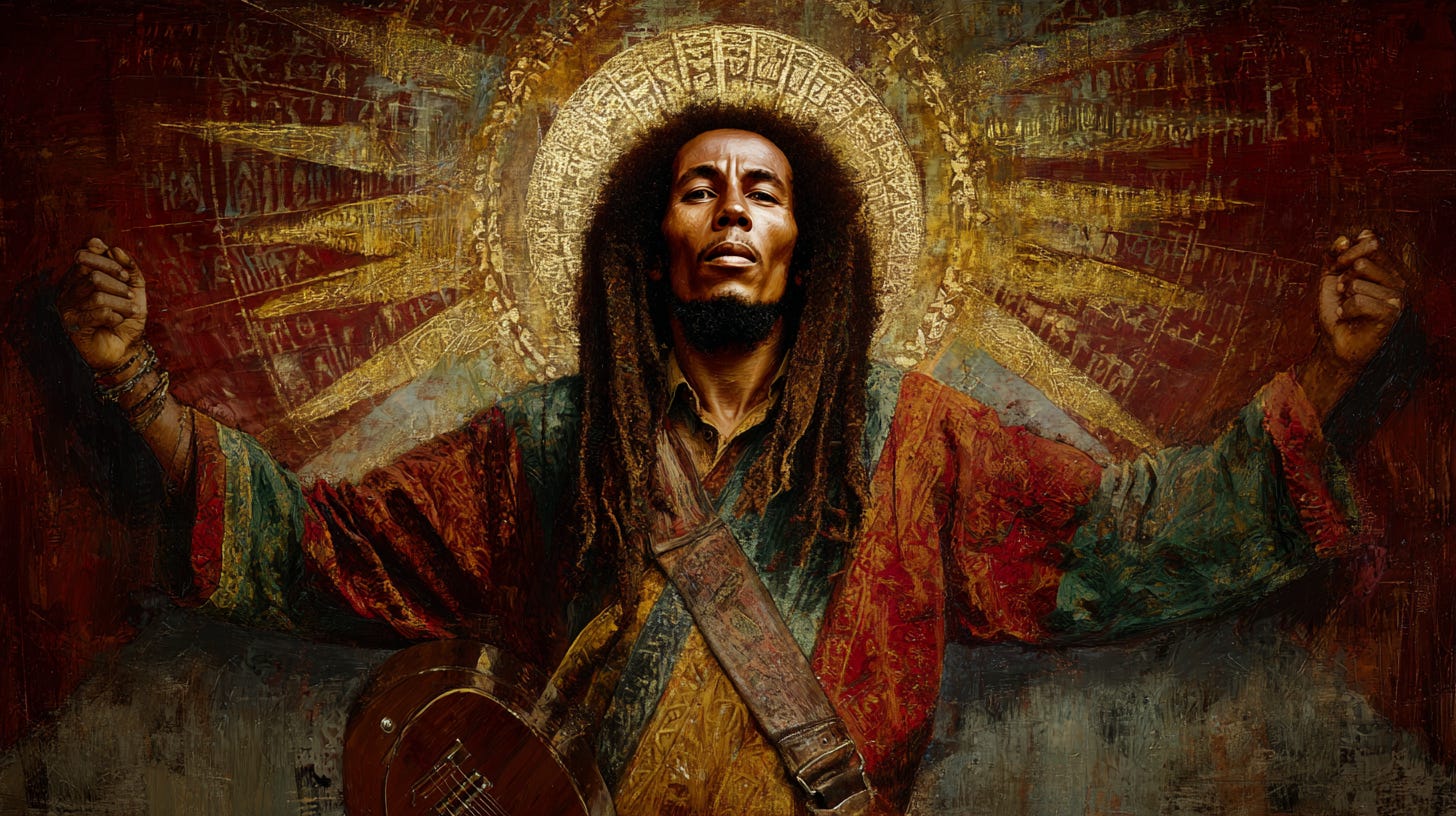
Before the song, there was the speech.
Marcus Garvey stood before crowds that numbered in the tens of thousands and told them something no one in power wanted them to believe. He told them the mind was sovereign territory. He told them that the first battle was interior, that a race schooled in shame could not build what a race standing in its own dignity could imagine. “Take advantage of every opportunity,” he wrote in Philosophy and Opinions, “where there is none, make it for yourself” (Garvey 18). The statement describes a people who must construct the conditions of their own freedom because no existing structure was built to hold them.
Garvey understood that political programs without a psychological grounding fail at the root. The Universal Negro Improvement Association was a counter-curriculum. It taught Black people to look at themselves differently before asking the world to look at them differently. The sequence mattered to him. Inner sovereignty first. Then the nation.
Bob Marley received this teaching the way the ocean receives rain.
He did not encounter Garvey as a historian encounters a subject. He encountered him as Rastafari encounter prophecy, as something already true before it was spoken aloud. What Bob did with that inheritance was not translation in the ordinary sense. He did not simplify Garvey’s arguments for mass consumption. He transmuted them. He moved Garvey’s program from the podium to the body, from the pamphlet to the marrow. A person who had never heard of the UNIA, who could not have located Kingston on a map, could stand in a field in Zimbabwe or a stadium in London and feel, in the music, the precise weight of what Garvey had written decades before.
The specific transformation is worth naming.
Garvey’s critique of colonial power was structural and documented. He named the systems. He identified the mechanisms. He argued from evidence, from economic analysis, from the historical record of the empire’s cruelties against weaker peoples (Philosophy and Opinions 18–19). Bob took that critique and gave it a sound.
In “Babylon System,” the colonial structure becomes a vampire that “suckin’ the children day by day” (Marley, “Babylon System”). Where Garvey wrote of systems, Bob built the word Babylon into something felt before it was understood. The concept passed through the ear before it reached the intellect. That is not a lesser achievement. It is a different instrument playing the same score.
The theme of African return demonstrates how the two men’s work interlocks.
Garvey’s “Africa for the Africans” was a political program with legal and economic architecture behind it. He wanted ships, land, governance, and sovereignty. He wrote in Message to the People that the race must build a nation as other nations are built, through organized effort and unified purpose (Garvey 9).
Bob heard that call and rendered it as spiritual yearning and cultural gravity. In “Africa Unite,” he declared the movement “right out of Babylon” and toward a father’s land (Marley, “Africa Unite”). In “Exodus,” the repatriation becomes the movement of a whole people, not a policy brief but a tide (Marley, “Exodus”). The political and the spiritual are not in competition here. They are different frequencies carrying the same signal.
And then there is “Redemption Song.” Bob sang, “Emancipate yourselves from mental slavery / None but ourselves can free our minds” (Marley, “Redemption Song”). Garvey had already said it. He had written that the greatest stumbling block in the way of progress was the mental lethargy of those who refused to think for themselves, who accepted the verdicts of their oppressors as truth (Philosophy and Opinions 18). Bob took that argument and stripped it to the bone. Two lines. No apparatus. Sung to an acoustic guitar at the end of a life. The simplest delivery is sometimes the most devastating.
What Garvey wrote in the early twentieth century, Bob sang to audiences in the late twentieth century who had never read a word of Philosophy and Opinions. And many of those audiences, having heard the music, went looking for the text. The song became the door. Garvey’s doctrine was what waited on the other side.
Bob was not a popularizer in the diminished sense. He was a maker working in a different form, bringing to his form the same rigor Garvey brought to his. The reggae cadence is not decoration. It is the argument. The space between the bass and the offbeat is where the meaning lives, in the pause, in the thing left incomplete because completion would be dishonest. Garvey’s speeches hold that same open space. He named the wound without pretending the healing was finished.
Two instruments. One doctrine. The liberation is still in progress.
References
Garvey, Marcus. Message to the People: The Course of African Philosophy. Majority Press, 1986.
---. Philosophy and Opinions of Marcus Garvey. Majority Press, 1986.
Marley, Bob. “Africa Unite.” Survival, Island Records, 1979.
---. “Babylon System.” Survival, Island Records, 1979.
---. “Exodus.” Exodus, Island Records, 1977.
---. “Redemption Song.” Uprising, Island Records, 1980.
via The Garvey Classroom https://ift.tt/UOwQdme Follow The Garvey Classroom on Substack for weekly lessons on mental sovereignty, Pan-African history, and the teachings of Marcus Garvey.
April 11, 2026
Marcus Garvey on Mental Sovereignty | The Garvey Classroom
April 6, 2026
Marcus Garvey on Mental Sovereignty | The Garvey Classroom
Marcus Garvey on Mental Sovereignty | The Garvey Classroom
April 5, 2026
Marcus Garvey on Mental Sovereignty | The Garvey Classroom
Marcus Garvey on Mental Sovereignty | The Garvey Classroom
Garvey and Easter
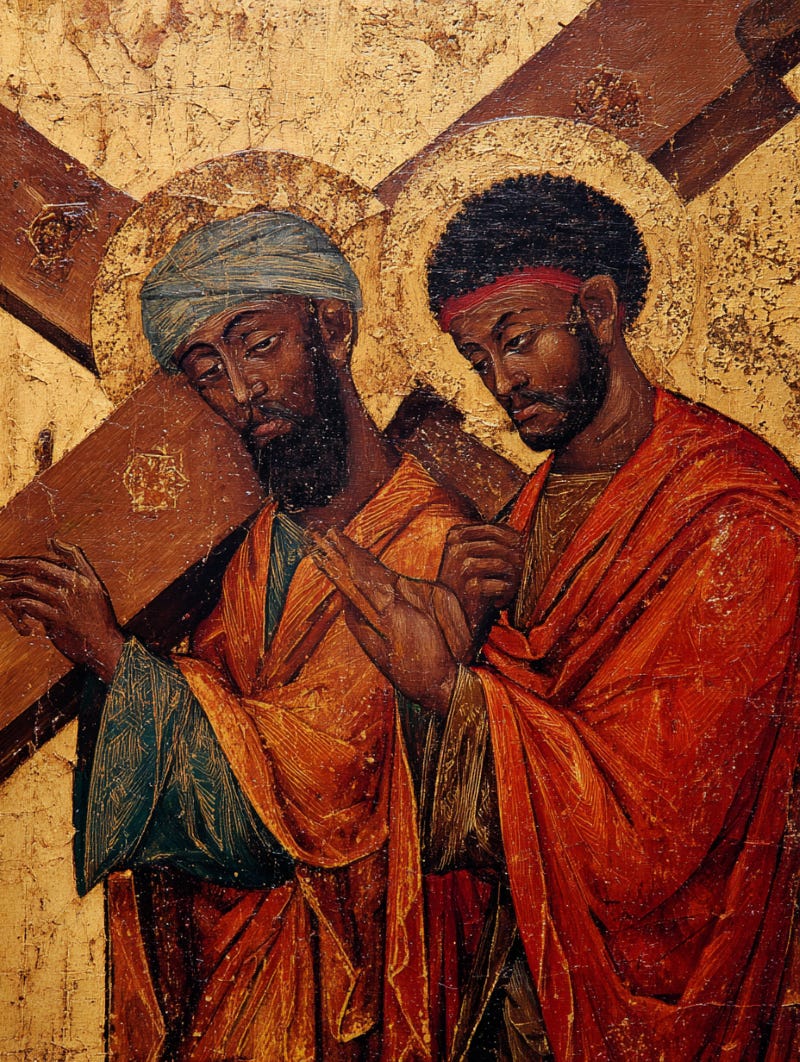
Today is Tuesday. I am raking leaves and thinking about Garvey’s Easter message.
Not Sunday. Not the day the church fills up and the choir lifts and the preacher earns his offering. Tuesday. The week already moving past the celebration toward something quieter and harder. Good Friday is three days away. The leaves are coming down regardless.
Garvey preached the resurrection as a racial program. A people buried under the weight of colonial history rising again. He believed that. He preached it from platforms in Harlem, in Kingston, in London, in the pages of the Negro World when he could not be in the room himself. At Liberty Hall in 1922, he told the congregation that the race needed “a resurrection from the lethargy of the past, the sleep of the past, from that feeling that made us accept the idea and opinion that God intended that we should occupy an inferior place in the world.” The resurrection was not a promise deferred to the afterlife. It was a demand made on the living.
But I keep coming back to the man before the resurrection. The man nobody preaches about on Easter Sunday.
Simon of Cyrene.
He was not walking toward the cross. He was walking away from somewhere, coming in from the fields, the text says, and the soldiers reached into the crowd and pulled him out. The Greek verb is ἀγγαρεύουσιν. Imperial conscription. The same word was used when Rome drafted civilians into military service. They did not ask Simon. They told him.
Carry this.
He was African. Cyrene is in what is now Libya. A Jewish diaspora community on the North African coast, present in Jerusalem for Passover. A man from the continent, grabbed by imperial soldiers, forced to carry the instrument of execution through the streets while the crowd watched.
The crowd that five days earlier had been throwing palm branches.
Garvey knew that crowd. He organized inside it for thirty years. He understood that the masses could fill the streets on Sunday and be absent on Friday. He called leading them martyrdom, not heroism. “Painful though it may be to be interfered with and handicapped in the performance of the higher sense of duty,” he wrote, “yet we must, martyr-like, make up our minds and our hearts to pay the price of leadership.” The work of liberation was not done by the crowd. It was done by the ones who kept moving when the celebration was over.
Simon kept moving. He had no choice. But he moved.
And something happened in that carrying.
Mark names his sons. Alexander and Rufus. He names them as if the community reading that gospel already knows who they are. The sons of the man who carried the cross are known to the early church. Whatever Simon was conscripted into, his sons built something from it that made their names worth writing down.
Garvey saw this too, though he approached it from the other direction. In the UNIA Papers, he wrote that “just at this Easter time it was the Negro that rendered the greatest assistance to His Master when the world rejected Him.” He did not cite the verse. He did not need to. He had absorbed it into his theology the way a man absorbs something he has lived rather than merely read. The Negro present at the center of the story. Not incidental. Not a stage prop. The one who carried when the world walked away.
I have stopped raking.
We were conscripted too.
Christianity did not come to Africa as an invitation. It came the same way the soldiers came to Simon. The Europeans on the Jesus of Lubeck arrived with the cross already assigned, the theology already written, the African’s place in that theology already determined. Servant. Sinner. Saved only by proximity to European grace.
The same cross Simon carried. Different terms entirely.
The cross handed to a people who had already been present at the crucifixion, already part of the story, but handed back now as proof of their own inferiority. Africa carried the cross and was told the carrying proved its unworthiness.
Garvey would not accept those terms. He claimed the cross on different grounds entirely. “The Roman Catholics have no rightful claim to the Cross,” he wrote, “nor is any other professing Christian before the Negro. The Cross is the property of the Negro in his religion, because it was he who bore it.”
Not borrowed religion. Property. Earned by conscription, yes. But property.
That is the wound and the claim in the same sentence.
The wound is not that Simon was conscripted. The wound is that the tradition born from that day was handed back to African people as their master’s religion, with Simon’s presence in the story acknowledged but never dwelt upon. His African origin noted in footnotes. His sons’ names in the text but absent from the sermon.
Africa carried the cross and was not told it had carried it.
Garvey’s Easter message was always this. Underneath the exhortation and the prophecy and the Pan-African program, we should learn to see events through the “spectacles of Ethiopia.” Decide what you will carry and what you will put down.
Mental emancipation is not the rejection of the cross. Garvey never preached that. He claimed the resurrection as belonging to the people who had been buried longest and deepest. But he insisted you could not rise until you understood what had put you in the ground.
Simon’s sons were named because they stayed. Because they built something inside the tradition that had conscripted their father. They did not disappear into bitterness or into accommodation. They found a third way that the text records but does not explain.
That is the inheritance worth examining.
It is Tuesday. The leaves are still coming down. Good Friday is three days away. The question Garvey’s Easter message always leaves me with is not whether the resurrection is real. The question is what you are carrying right now, and whether you chose it.
———
A note for paid subscribers
You have been walking with me.
Not as a transaction. As a community. And that means something I cannot fully put into words this Saturday evening as I finish (?) the final edits on this essay.
The Garvey Blueprint: Awakening to Mental Sovereignty begins tomorrow, April 6. Eight weeks. The work of deciding what you are carrying and whether you chose it.
If you are a paid subscriber, the course is yours. No charge. My gift to you for walking with me this far.
48 seats remain. Use code PAIDSUBSCRIBERS at checkout and come in.
Enroll here — The Garvey Blueprint
If you have been reading on the free tier and this essay moved you, today is the day to upgrade. Paid subscribers get the course free. The door closes tomorrow at 11:59 PM.
Until the next time, walk good.
via The Garvey Classroom https://ift.tt/v3VNfCz Follow The Garvey Classroom on Substack for weekly lessons on mental sovereignty, Pan-African history, and the teachings of Marcus Garvey.