Showing posts with label undeclared civil war. Show all posts

March 21, 2012

Why Do I Write About Mona Heights?


Once upon a time, there was a place called Mona Heights…


In her review of Dub Wise, Mary Hanna called the collection "a gift." If she meant “a gift” in the way that Lewis Hyde in The Gift: Creativity and the Artist in the Modern World defined it as an "act of gratitude," then all of my books have been gifts because they attempt to return to the source the sensory impressions that have affected my life's work.


And certainly, Mona Heights has been a source. My earliest memories of Mona Heights are of growing up with my sister, Judith, my brother, Ansel, and a house full of cousins. Down the street, my childhood friends, Paul Chin, David Griffith, and Paul Smith and always trying to keep out of trouble with our parents and extended "uncles" and "aunts": Uncle Danny and Aunty Joan Morrison, Uncle Welly Chin, Uncle Michael Witter, Uncle Michael "Jah Mick" and Aunty Ann-Marie Mowatt. The happier days of our childhood were filled with playing cricket, exploring the "open lands, of Hope Pastures, and skylarking at the annual Christmas fair.


It was an idyllic time. Even the streets had paradisiacal names: Garden Boulevard, Anthurium Drive, Daisy Avenue, and Plumbago Path,  where I grew up and which I’ve used as the setting for many of the short stories in Uncle Obadiah and the Alien.


This is not to say that there weren't problems associated with race and class. But our parents did what all parents should do--they protected us from the harsher aspects of life. They realized that Mona Heights was the beginning of a civil society in pre-independence Jamaica, and, as one of the first attempts to create an open middle class enclave in St. Andrews, Mona became a microcosm of Jamaican society with all its dreams, fears, and conflicts.


As we grew older, however, we began to become aware of the divisions, but we didn't care who was black, white, Chinese, East Indian, or browning. We belonged to a community.


We were friends and continued to be friends during the so-called communist threat of the 70's and long after the undeclared civil war broke out...


II

So why do I write about Mona Heights?


I’m a wild golden apple
that will burst with love
of you and your men,
those I never told enough
with my young poet’s eyes
crazy with the country,
generations going,
generations gone,
moi c’est gens Ste. Lucie.
C’est la moi sorti;
is there that I born.


(from Derek Walcott, Collected Poems, 1948 – 1984, Noonday Press, 1986/1993; originally from Sea Grapes, 1976)


It was there on Plumbago Path with Long Mountain to my right, Wareika to my left, and a child's delight in dirt and green things that I first had a feeling of awe, of being part of something larger than myself. It's the place in Jamaica where I first fell in love and where I discovered the work of three artists who would have a profound effect on my life: Bob Marley, Derek Walcott, and Dennis Scott.


Watching the pouis blanket the lawn while listening to the whistle of the peanut man, or waiting for our gardener, Victor, to regale us with his off-color jokes about "toning" as the Nyabinghi brethren called out, "Broom, Broomie," gave me the time to think about what Lorna Goodison, speaking about her childhood in pre-idpendence Jamaica, has called, "a very complicated, complex, rich place."


Later in the interview, Lorna also revealed, "I can be a witness. I can say, ‘In my life I saw this, and I knew this about Jamaica. If it doesn’t exist now, believe me, it used to exist, and hopefully it can exist again."

I feel the same way, Lorna. I haven't given up.

February 2, 2007

What May I Believe?

Although in a previous post, "Where we are now," I painted a pretty bleak picture of Jamaica, I remain optimistic. This is not a blind faith. It is a knowledge based on our history and traveling through the island, so my experience is not limited to Kingston or Kill-Some as the Rastaman would say. Slavery, colonialism, and our civil war should have crushed us, but we survived. We are a resilient people. It is this resiliency, our work ethic, and warrior spirit that have kept us going. But it’s time to turn it around before we kill ourselves and destroy the land.
For one day I believe we will:
Use our warrior spirit to useful social aims. We are “Stepping razors” and “Bad Boys.” But our rage has been turned against ourselves and we are suffering. We have to turn our sense of outrage into a positive vibration, and this can be done if we truly love InI.
Study Rastafari as a source of homegrown wisdom. Rastafari came out of us, and we should use the insights of Rastafari that InI—individual and the community is one. We are connected to everyone and everything--even the leaf on the pepper plant (I-pa) grown in the beleaguered Cockpit Country. We are that and that is us. If we can I-nitrate that wisdom, we will have come a long way.
“Shoot the Sheriff," name Bob Marley a national hero, and prove VS Naipaul wrong:“We lived in a society that denied itself heroes.” Bob is already a de facto national hero. If we can see a hero among us, then we can see ourselves as heroes. It’s almost as if we have made up our own Jante Law: You shall not think that you are heroic as we are.
Broaden our care giving skills for the uplift-mant of the country. Our nurses are well known here in Miami and all over the world. Some of the sweetest, kindest people you will ever meet. Jamaican nurses care for their elderly patients as if they were family, and the elderly know it. There have been so many conversations that I've I overheard in my doctor's office, outside Publix, and at my favourite Chinese restaurant on a Friday evening between Jamaican nurses and their patients, and there is always real care and concern. Imagine if we used this talent to build a string of retirement homes in places like St. Thomas with First World amenities and infrastructure to support retirees from the diaspora—“Bring my children from the ends of the earth.”
Learn from America and our experiences in the diaspora. America has a lot to teach us. Whenever I’m in New York, I love to look at the Brooklyn Bridge and marvel at the unity that it took to build the bridge. I also think about how Americans put a man on the moon with computers that had less memory than an X-Box. But the one achievement that blows my mind is the I-95. Think about all the corruption that is in the construction business, and yet from Houlton, Maine to Miami, Florida, if the architects said the clearance had to be 15’ 6”, it was 15’ 6". And even if you got the job through your uncle's sister's brother's best friend, when the Federal boys came, you had to answer for yourself. The system of checks and balances, even in these worrisome times, still works, but we have to work it.
Embrace our Anancyness, but use it in a positive way. Anancyness at its best embraces the irony and sometimes cruel parts of life—“We take bad things make joke.” Because we can do that, we turn the fear of the void into a moment of laughter. Instead of existential dread, there is awe and compassion. Because let’s face it, we know how to turn a bad situation around and enjoy life. When Bob sang, “One Love, one heart, let’s get together and feel all right,” he was singing from the depths of our common life. The songs didn’t come from nowhere. In the middle of a Jamaican hell, he could still sing with authenticity. That’s why people still go to Jamaica in these dread times because we have seen the depths and still live to sing.
Jamaicans have survived in the harshest environments, and we are also known for our work ethic, “Lazy Lima bean! You only have tree job!” What we lack in our country are the opportunities that will lead to sense of ownership and ultimately more optimism: “The preaching and talking is done, we’ve got to live up.” And then, watch out: “We [will] forward in this generation triumphantly.”
***
Today is Fred D'Aguiar's birthday and he is the Featured Caribbean Writer.
This Sunday, I'll be posting a great livication for John Hearne which was written by Fragano Ledgister.
***
Tags:
Related Posts:


Reblog this post [with Zemanta]

January 29, 2007

Where are we now?

Dear Mikey,

Greetings!

In the last few posts, I have been trying to answer your questions. And while it may seem like a roundabout process, I needed to give some context to my answers which are a modified form of a Kantian method that CLR James once used: What do I know? What can I do? What may I believe?

I’m also going link my answers to the comment you made: “These are things that keep haunting me, even more, as I approach middle age and beyond.” I, too, am haunted by these questions. I will be forty-nine this year, so we have much in common. I may just write a totally self-indulgent post about how these concerns have been reflected in my work, but we’ll see.

I also understand your impatience, but the process of decolonizing our minds, hearts, and bodies is a slow process to which, as Fanon has warned us, "Each generation must out of relative obscurity discover its mission, fulfill it, or betray it."

Think of colonialism and slavery as a virus that has infected the minds, hearts, and bodies of the colonized. Each generation must have the responsibility and presence of mind to administer the necessary dosage of self-scrutiny and change to keep the virus from taking over the body. If the generation fails, then the virus (which is very cunning and sometimes masks itself as part of the body’s natural defenses) mutates/replicates into more virulent forms to which the host finally succumbs.

What do we know?
Our leaders have failed us. I don’t think I am one of those Jamaicans in the diaspora to which Francis Wade alludes, but if ah so, ah so.

Unlike the leaders before Independence, our current leaders have not articulated a vision/mission that our artists, intelligentsia, and people can embrace. Instead they have embraced the status quo of thirty years ago while ignoring the new challenges. See Nicholas Laughlin’s exasperation with CARIFESTA this year.

I realize that it is difficult to lead a movement when there is no recognizable enemy, but that’s what leaders do. If you can’t do the job, don’t apply.
I also realize that while the issues of identity facing Norman Washington Manley’s generation were important, we have inherited them and many more challenges in defining our identity:
  • The breakup of our families and migration—the new Diaspora. This has disrupted the generational transmission/ affirmation of skills and values; lack of learning/mentoring/continuity within the culture.
  • The trauma of the civil war of the seventies: Michael Manley, Eddie Seaga, Democratic Socialism, Cold War, Communism Capitalism, Fidel Castro
  • CARIFESTA, CARICOM, and regionalism
  • Reggae
  • Rastafari
  • Dancehall
  • Drug trade: Dons, gangs and the murder/crime rate
  • The relationship with Africa
  • The relationship with Europe/UK
  • The relationship with the US
  • Generational identity: What is the mission of our generation?
  • Gender Identity and Homophobia
  • Language: The Queen’s English, Nation language, Patwa, Jamaican, Rasta Speak, American
  • Class, color and connections: Black, Brown and White in the Caribbean
  • The environment and our relationship to the land
  • Denigration (devaluation) of the local in favor of the foreign
  • Add yours, Dear Reader, in the Comments
The work of our leaders has also been complicated by the following challenges within the culture:

1. Conservatism of many Jamaicans (See B.Art: “Everybody is a closet right winger in Jamaica!”)
2. Our conservatism may be due to the history of colonialism and slavery which defined change on the same level with the death penalty. Humans don’t like change—we resist change. Add the natural human fear of change and the death penalty mentality about change, and you have patterns of behavior in Jamaica that has been woven into our ways of thinking and acting. Old habits die hard.
3. Religious Conservatism: Our religious leaders preach, “Change will only lead to chaos, slackness, and nastiness.” If you disbelieve me, read the Gleaner.
4. Lack of education and miseducation. Once the British left, there should have been an overhaul of the educational system. This does not mean tossing out the Dead White Guys. Because we have not reformed the system, individuals and their children who are versed in the ways of the “Old Massa” have continued the policies of control and the eradication of individuality. The result is that many have embraced (without thinking) Jante Law (Thanks, Professor Zero):
  1. You shall not think that you are special.
  2. You shall not think that you are of the same standing as us.
  3. You shall not think that you are smarter than us.
  4. Don't fancy yourself as being better than us.
  5. You shall not think that you know more than us.
  6. You shall not think that you are more important than us.
  7. You shall not think that you are good at anything.
  8. You shall not laugh at us.
  9. You shall not think that anyone cares about you.
  10. You shall not think that you can teach us anything.
Ask yourself, I-dren, how many of these “laws” have you unconsciously adopted into your life? And if you, who are relatively free, have believed some of these in the past, imagine the downpression of those who don't have enough time as you do to stop and think about these things. Now click on your mp3 of Sparrow’s “Dan is the Man in the Van” or Peter Tosh’s, “You can’t blame the Youth,” and you will see how far we have slipped.

*“Old Massa” does not have to white person as Frantz Fanon showed us. Worse, when he exists in your own mind, and you follow the “Jante Laws” without thinking, you are heading for a showdown.

5. Social promotion/ economics over questions of identity—“No money nuh inna it!” Because there isn’t any “reward” for asking these questions, many think there is no need to pursue these questions. This, again, is a human impulse. (Read Mathew Arnold’s excoriation of British Philistines.) To almost every “negative” human impulse add “black” and “colonialism” and you will have an idea of what we have to overcome. And it’s not just a matter of “getting over it” as some have suggested. Nor is it dwelling on the past to project oneself as a victim.

BTW, as Keith Nurse has pointed out, there is money in it, but because we continue to devalue the local in favor of the foreign (by 5 to 1), we don’t see the material benefits.

6. Lowered expectations. We don’t see ourselves as thinkers—leave that to white people or those who know and “run tings”—the “us” of Jante Law. We continue with the “Likkle Man Syndrome” and this has been disastrous in our national life and in the arts.

What can we do?

1. Elect leaders who have articulated a generational mission/identity. If we elect someone to the highest office, s/he should have these qualities:
  • Be able to articulate a generational mission that reflects our identity
  • Have a track record of encouraging/ creating/ greater ownership
  • Protection of the weakest members of society by promoting individual, human rights: (“Help the weak if you are strong”)
  • Adherence to law and order. Any politician who is tied to gun violence has forfeited his/her right to lead.
  • Have a track record of creating opportunities in the economy, education, and the arts, which will lead to greater optimism
The last part is very important, and if this seems a bit facile, it is not intended to be. The importance of the arts cannot be underestimated. And while I am not suggesting that culture alone is a panacea for the ills of a country (the Nazis played Wagner and Bach as they marched Jews into gas chambers), neglect of the arts points to a serious deficiency in a culture.

The arts are an invaluable part of the emotional and psychological education of a culture. As John Baker norms of feeling.” pointed out in a recent post, “Art affects life because it teaches us how to see, how to hear, how to feel; because it has the capacity to create for us what we might term
This occurs because the production of a work of art comes from various sources:
  • The artist's probing into his/her unconscious as a representative of the culture's unconscious tendencies
  • Events in the life of the artist or the life of the community and how they relate to the artist’s perspective on the history of his/her culture
  • The artist’s work in relationship to the work of other artists inside and outside the culture
The work of the artist is not to provide a solution. Sparrow in "Dan is the Man in the Van" merely showed us how miseducation could be dangerous. The examination by the artist brings the issues up to a conscious level so that they don’t remain in the festering darkness of the unconscious.

2. Support the work of those who are articulating generational mission(s).
*Two simple proposals to create opportunity, optimism, and ownership of the arts in Jamaica and the Caribbean.
Since we value money so much, any leader who talks about cultural development should immediately adopt this proposal:

1. Regional prizes of $50, 000 (TT dollars) each for the best novel, best book of poetry, choreography, etc). This money can be raised by a combination of public and private contributions following models that have been developed in the UK and US.

2. Contract negotiations for any textbook adoption for CXC exams or at any grade level by any Ministry of Education must be tied to promote the publication of living writers. The contracts with the publishers would be on a sliding scale depending on the size of the business. Small publishers could publish one or two titles per year while large publishers could publish ten or fifteen titles per year. The governments wouldn’t have to spend a penny because they are providing the market—the impressionable minds of our children.

It’s that simple.

So, here are my answers your questions, Mikey.

Why do we allow others to define us? Why are we still thinking as if we are on a plantation and have to wait for others to do/think for us?
  • Many of us have not thought about our identity, and our failure to act has led us to accept the definitions by others which are outdated and unhealthy. This discussion of identity must take place on a community and national level so as to create a critical mass/synergy.
  • Our leaders have failed to offer us a coherent vision of ourselves and have failed to manifest the creation of models that will sustain development in education, the economy and the arts.
  • We have failed ourselves by not questioning ourselves and having lowered expectations of ourselves and our leaders.
  • Failure to support those who may be offering answers to questions of identity and mission.
  • Still suffering from the trauma of slavery/colonialism and the civil war of the seventies.
  • Lowered expectations based on color, class, and connections. “Likkle man Syndrome.”
And why bother with these questions?
  • Wholeness of our minds, hearts and bodies. A feeling of ownership, opportunity and optimism in our own land.
  • Slowing the flow of diaspora because sometimes, it dread in America.
  • Money inna it. Imagine if all the money we spent on foreign books, music, etc. stayed in Jamaica and the Caribbean.
  • We can resist false claims to our identity individually and collectively. It’s easier for a nation to have a collective purpose/identity when these skills are being practiced on a individual level.
  • We better start thinking about these issues because whether by will or default, we (the majority of those born in the fifties) will soon hold the reins of power.
I know I have painted a bleak picture, but I am still optimistic. The next few posts will give a few reasons for my optimism.

Next post: What may we believe?
***
Related Posts:
***

January 26, 2007

A Terrible Beauty is Born: Jamaica in the Seventies


Ten years after Jamaica gained independence, the island seemed poised for success. A newly elected Prime Minister, Michael Manley, (nicknamed “Joshua,” but more like Xango) was increasing opportunities and ownership among the formerly disenfranchised, largely black, populace. We were talking loud, “bigging up” ourselves, and walking with a swagger, like Ivan incarnate. 


When we stood still, we realized that we were standing at the crossroads of the Caribbean with our arms akimbo. We had every reason to be optimistic. There was so much happening:

  • We were witnessing before our very eyes the birth of Reggae—from ghetto music to World music. And there were always performances by Big Youth, U-Roy, I-Roy, Peter Tosh, Bunny Wailer, Bob Andy, Judy Mowatt, Lloyd Parks, Rita Marley, Cynthia Schloss, Marcia Griffiths, and Jacob "Killer" Miller.
  • Bob Marley had grown from a local star to an international superstar.
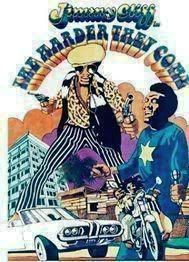
  • Perry Henzell’s, The Harder They Come, had opened to popular and critical acclaim.
  • Rastafari and the Twelve Tribes of Israel, proponents of Black dignity/pride and the Caribbean connection to Africa, were changing the Jamaican story by questioning identity and introducing a new vocabulary, Rasta speak, with its emphasis on the individual and his/her connection to the indwelling God with the use of I-man and InI.
  • Radio DJs were giving up their American accents, and trying to sound more Jamaican every day. They all wanted to be Errol “ET” Thompson.
  • Trevor Rhone, Dennis Scott, Norman Rae, Buddy Pouyatt, Paul Metheun, Trevor Nairne, Louis Marriott, Tony Gambrill, and Alwin Bully were opening plays at The Barn, Little Theatre, Creative Arts Centre, Garden Theatre, and Centre Stage.
  • Poets in Unity were in full swing all over Kingston.
  • Honor Ford-Smith and Sistren were performing in Jamaica and abroad.
  • Third World was not only creating great music, but they were also staging Explanitations.
  • Attendance at Reggae Sunsplash proved that Reggae could be marketed successfully.
  • Rex Nettleford and NDTC staged Court of Jah and other visually stunning and complex choreography.
  • Karl Parboosingh, besides creating great art, was making trouble at the Olympia.
  • Jamaica School of Drama students such as Stafford Harrison, Noel “Godfather” Walcott, and Malachi Smith were growing from students into directors, actors, and performers.
  • Inspired by Kamau Brathwaite, writers such as Mutabaruka, Mikey Smith, and Oku Onuora started a new genre of writing: dub poetry. I remember going to the first reading that Oku Onuora gave at the Tom Redcam Library after he had been released from jail due to the intervention of Mervyn Morris and PEN.
  • John Hearne was at the Extra Mural and publishing Creative Arts Review.
  • Dennis Scott had won the Commonwealth Poetry Prize for Uncle Time.
  • On any given day, you could see Kamau Brathwaite loping across the UWI Mona Campus, Mervyn Morris driving his white Peugeot, or Eddie Baugh strolling across the Mona Commons.
  • Add yours, Dear Reader, to the Comments section.

And then, Manley playing on the theme of exploitation and control of our destiny, tried to levy a bauxite tax. He also said the word, the totally unnecessary word, that no Caribbean leader should ever say in a post-McCarthy era: socialism.

Did he have the right? Yes, he had every right.

Should he have had the right? Yes, he should have had the right.

Should he have known better? Yes, he should have known better.

Manley knew the US history in Haiti, Chile, and Cuba.

And with all of that, with all that he knew, he said the word.

Henry Kissinger, who was Secretary of State, did not like that word. Henry Kissinger hated that word. That word made Henry Kissinger stay awake at night. That word gave Henry Kissinger hives.

Henry Kissinger, who knew how to use the CIA to destabilize even far more stable economies than ours, merely glanced at Jamaica, and we started to crumble. And, of course, there was also internal resistance.

Every Jamaican is born a Maroon.

And Manley should have known that too. He should have known that sometimes a leader, especially a Caribbean leader, needs more Anancy and less Xango.

Then, the bangarang started.

The politicians who had been in bed with the gunmen turned their boys loose and they’ve never been able to control them.

We lived through Orange Lane, Green Bay and other horrors.

The violence crept from downtown over Torrington Bridge and came uptown.

“Everywhere was war.”

The only solution was escape. We were back at the harbor with the slave ships and we weren’t waiting for the Black Star Liners. We began leaving to the Cayman Islands, New York, London, and Miami, and another diaspora began. We left for Miami on the famous “five flights,” and we left a hole in the economy and in the life of the country. A few of us have gone back, but most of us are still leaving.

“Everywhere is war.”

We’ve never really recovered from the war. It’s still going on. It was a blow to our minds, hearts, and bodies and we’re still staggering.

It’s like we were being punished in the slavedom days, and old habits die hard.

We started doing what we did during the colonial past. We’ve put social promotion and economic interests ahead of authenticity and questioning anything because on national level, we’re afraid to promote anything that will assert our collective identity.

“We don’t need no trouble.”

We’ve stopped talking. We’ve become voluntary mutes.

We’re afraid of saying anything that will upset the Big Massa because if he comes back, who knows what he’ll do this time?

***
***
Reblog this post [with Zemanta]

January 24, 2007

A Funny Thing Happened on the Way to Independence


On the night of August 6, 1962, when the Union Jack was lowered and the Jamaican flag was raised, many people woke up the next morning looking at the auction blocks of the slave trade from slightly different perspectives. Not all whites were on the European side, and not all blacks were on the African side. And within the region, the status of so-called “brown” people, who were always held suspect by both sides, brought to the fore the idea of “hybridity.” The political climate was changing and by the late sixties, and the relationship between blacks and whites was beginning to fray despite the fact that multiracial coalitions had fought for independence in many Caribbean nations.


During this period, the work of Kamau Brathwaite and Derek Walcott dominated the literary discussions of the relationship of Europe and Africa in the Caribbean. Although both poets used imagery that was drawn from the Caribbean landscape and they were consciously involved in restoring the value of the local, they held differing views on the question of "hybridity." For whereas Brathwaite’s poetry made a direct link between the Africa and the Caribbean--the Atlantic as "bridge" rather than barrier--Walcott preferred the ambiguity inherent in the question, is a West Indian black or white?

The signature poem of Walcott that illustrated his uneasiness with a monolithic racial identity was “A Far Cry from Africa,” with the confessional line, “How choose/between this Africa and the English tongue I love?" which Heather M. Bradley discusses in “Conflicting Loyalties in "A Far Cry from Africa." For Walcott, the question of a fixed racial identity in a multiracial region could never be resolved. This is not to say that the question was resolved in Brathwaite’s work. In “New World A Coming” the speaker asks, “Whose/ brother now, am I?...Whose ancestor am I?”. 

It seems obvious now, but at that time when many academicians were spouting theories about the Middle Passage and the deep "amnesiac blow" to the consciousness of New World Africans, Brathwaite staked his reputation as a poet, scholar, and historian on the connection between the Caribbean and Africa. Because of the racial tensions surrounding these writers, and what Maureen Warner-Lewis in “Africa: Submerged Mother” describes as “negrophobia,” Brathwaite’s work in “re-integrating Africa into the paradigm of Caribbean history, culture, and academic concern," was regarded as the polar opposite of Walcott's. And although both writers were involved in the issues of exploitation, resistance, control and their relationship with the community, Brathwaite was seen as more Afro-centric and "relevant." Nothing could have been further from the truth. The work of Brathwaite and Walcott exists in a continuum within the body of Caribbean literature and viewed against the writings of their contemporaries such as Eric Roach or Andrew Salkey, the patterns become clearer. 

But there are also distinct differences. Brathwaite’s experimental use of African history, myth and Jazz rhythms in The Arrivants was groundbreaking and markedly different from Walcott’s more formal explorations. But Walcott’s, Another Life which explored the birth of an artistic career, the relationship of the writer and the community, and his metaphorical use of the “amber light” of the Caribbean had its own grandeur. The similarities between their works can be seen now, but at that time, the relationship of Africa and Europe to the West Indies was perceived as a binary opposites and poets, politicians, members of the intelligentsia and the populace were taking sides.

Yet while the heady literary and racial battles of the late sixties were being raged, a Jamaican poet, Mervyn Morris, was steadily putting together a remarkable body of work. In the poem, “To An Expatriate Friend,” he describes the tensions that surrounded relationships across the racial divide.

To An Expatriate Friend

Colour meant nothing. Anyone
who wanted help, had humour or was kind
was brother to you; categories of skin
were foreign; you were colour-blind.

And then the revolution. Black
and loud the horns of anger blew
against the long oppressions; sufferers
cast of the precious values of the few.

New powers re-enslaved us all:
each person manacled in skin, in race.
You could not wear your paid up dues:
the keen discriminators typed your face.

The future darkening, you thought it time
to say good-bye. It may be you were right.
It hurt to see you go; but, more,
it hurt to see you slowly going white.

Certainly, there is humor, and ambiguity in Morris’ poem. But here is also a sense of integrity which pervades Morris’ poetry. In both tone and style, Mervyn Morris’ poetry displays a sense of fairness and authenticity and his was a much-needed voice when others it seemed were ready to plunge headlong into racial warfare.

The poetry and fiction that came out of Jamaica and the Caribbean during the late sixties/early seventies reframed identity in the context of race and many of the other concerns were subsumed into this paradigm. The question of identity was becoming more complex and the binary oppositions of white vs. black which had also alienated many Indo-Caribbean writers would be further complicated in the revolutionary seventies.

Next post: “A Terrible Beauty is Born: Jamaica in the Seventies.”

***

January 17, 2007

An Open Letter to Mikey Jiggs

Super PerrosDear Mikey Jiggs,


Greetings!

Mikey, you may be wondering what this picture has to do with anything, but on December 15, 2006, you asked me some questions that have bothered me into 2007. I’ll try to answer some of the questions in a way that I’ve always used to figure things out. I’ll tell you a story. This picture is part of the story.

Last year when my daughter, Anna, graduated from FSU, our tribe (my wife, our three children, abuela, and three aunts ) visited a little Colombian restaurant in Tallahassee, Florida. I’d told my daughter that we wanted to eat in an inexpensive restaurant, but the food had to be good. Anna said, “I know just the place that you’re looking for,” and she took us to Super Perros.

As we pulled up to the restaurant, it wasn’t exactly the kind of place I’d thought about celebrating my daughter’s graduation, and Anna sensing my trepidation said, “Don’t worry, Dad. It will be all right.” I trusted her judgment, but I wanted to know some more about the restaurant. I asked her how she had discovered Super Perros, and she told me that whenever she and her friends wanted a place to sit, eat and enjoy some music, they always came to Super Perros. She also thought it was a good place for her abuela, who is from Colombia, to try some of the dishes such as papa criolla, empanadas, and arepas made Colombian style. Abuela loved the idea.

We parked the cars and walked inside the restaurant and it was like we had been transported to a small restaurant in Colombia: the sights, sounds and smells overwhelmed us. The owner, Alex, talked with us as we ordered the food, then escorted us out to the patio, and then asked us if we’d like to listen to any special music. My wife suggested the Carlos Vives CD that we had in our car, and Alex put it on his stereo system.

By the time Alex came back, we had already started eating, abuela asked about the papa criolla—it didn’t taste like the ones she’s had in Miami, but tasted more like the kind she’s eaten in Colombia. Alex told her that many restaurants used either the canned or bottled papas (potatoes), but he imported most of the ingredients from Colombia. She was impressed and asked him about the cost and how he got started. Alex was only too willing to share his story.

Super Perros started as a dream in Alex’s head. He sold hot dogs and hamburgers outside his house and soon ventured to other locations. Every day as he passed by a pizza store where Superperros now stands, he told himself, “One day. One day.” He said he worked like a dog for six months pushing the cart and nothing was working, and he thought of giving up. His wife said one word, constancia (consistency). He went back to work and redoubled his efforts.

Soon word spread about the great food that this Colombian guy was selling from a hot dog stand. Two customers became four; four became eight and so on. Soon Alex had enough money for a down payment to buy the pizza store and give up the hot dog stand about which some of his friends had teased him. Alex is from Cali, Colombia, and there is a joke that if you go to the middle of the desert, you will find a Caleno with a stand selling something.

Alex redecorated the store with photographs of Colombia, Botero prints, and indigenous ceramic sculptures. He also sold T-shirts with Hecho en Colombia (Made in Colombia) on the front and Super Perros on the back. Abuela bought a T-shirt that she now wears proudly. Alex is proud of his accomplishments and that pride is extended to other Colombians and is reflected in the way he advertises his business. In addition to the marquee, Alex has Super Perros signs on his car, a small sign at the entrance, and the web site.

And, of course, the food was scrumptious. We devoured the papa criollas, arepas, drank Colombia beer and soft drinks while we listened to Carlos Vives.

As I sat there listening to the vallenatos, I asked myself why can’t we do this in Jamaica? Of course, I knew people like Albert Lee and several other entrepreneurs had done this in Miami, but why couldn’t these results be replicated in Jamaica?

As I was wondering about this, my thoughts were interrupted by a group of Colombians, Anna’s friends, who had come to Super Perros to celebrate their daughter’s graduation. I had to stop slouching, thinking, and drinking beer. People from Bogota, Colombia are very formal. When I was in Bogota, the man who cut the lawn took off his shirt and jacket to cut the lawn, and when he was finished came back to the front door in his shirt and jacket.

Abuela greeted them and after the introductions, my sister in law talked with one of the parents who had just come back from Colombia about life in their country, the drug dealers and the continuing effects of La Violencia. They exchanged stories, gossiped and laughed. When they left, I went back to slouching and thinking about the Philps and the Patinos who have been united by histories of civil wars, drug dealing, spiraling murder rates, and creativity. And I thought about your questions, Mikey. I wondered how I could translate this “event in consciousness” into language.

Of course, I’ve chosen to blog about it and this is one way about talking about your questions, which are really questions about identity.This story is merely to set the groundwork for the discussion, and an example of how a choice in creating an identity can have a positive result.

In the next few posts, I’ll try to answer these questions from the perspective of the three subjects that have shaped my life: my family, my country, and my writing. Your questions are also similar to the concerns raised in Olivier’s post: Who are we? Where have we been? Where are we going? Why have we stopped asking these questions?

***
Tags:

Reblog this post [with Zemanta]

January 12, 2007

In My Own Words: Olivier Stephenson

Moon on a Rainbow ShawlThe Caribbean and Its Cultural Arts: When Will We Begin To Recognize It?

“ When I was asked in 1977 to contribute a piece to the souvenir journal by my dear friend, the late Valerie Mullings of the Jamaica Progressive League, she wanted me to write something and wanted it, like, yesterday! I didn’t know what I was going to write, and then I was forced to think about what was one of my peeves or major concerns regarding the so-called cultural arts in the Caribbean. I then sat down at my old manual Olympia typewriter and wrote this piece in one sitting in a fit of passion. It is, however, a subject that I still feel very strongly about.” – Olivier Stephenson

This article is not meant to be a detailed discourse on the failure of the Caribbean to give greater focus and recognition to its cultural arts, but to point out briefly and illustrate once again, this pressing need. Indeed, this is a subject that for many, many years has been crying out for attention – only to fall, it seems, repeatedly on deaf ears.

We all know that the Caribbean is a vibrant place, a well- spring of cultural wealth. We know this. We seem to accept this with aloof, casual grace. Our cultural experience has from time to time been co-opted and exploited from abroad and we nervously chuckle or become profusely angry at the affront. We see these images quite often in the cinema, TV, radio and trendy magazines.

The image, of course, is a stereotype.

The most common stereotype is of the kind willing, happy, singing, dancing, limboing, lovable “natives.” There are those of us who feign anger, jump up and down and carry on for a while then forget about it. These are quite often our bourgeois – intellectuals – they love to make empty noises.

Yes, indeed, we are born noise-makers, shouters and complainers; it is said that the reason why some West Indians are so argumentative is because of our atavistic link with slavery and certain tribal behavior patterns. It is also said of West Indians that when we are abroad we are “aggressive” and “pacesetters.” Is this another stereotype? Back home it seems, we are procrastinators oozing with nonchalance. “Cho, dat can wait till tomorrow”; “Me soon come, yah.” How often have we all heard that? Quite often.

Our politicians are born “sweet talkers” who never seem to quite fulfill the dreams they fill our heads with. Is it the hot sun that drains us of our impetus that makes us appear to be lackadaisical? It is for certain we positively do not lack stimulation in our creativity. We seem to abound in producing naturally talented and creative people; we are probably one of the most creative set of people in the world!

Go anywhere in the Caribbean and one will witness our cultural arts in full swing, in the streets, in bars, seemingly everywhere! One can witness theatre, song, dance, paintings, musicians, people we know have never been formally schooled in their talents.

The tragedy, however, is that these talents are often negelcted by our wider society – this includes also our artists who have attained formal training and who have also achieved levels in their work par excellence. They go ignored till they die – then we typically eulogize them for their greatness.

The question is, when will we start to recognize the power and wealth in our cultural arts? Hasn’t history taught us anything? How long are we going to dwell on “a prophet is never appreciated in his own lifetime?” Indeed, our artists are truly the visionaries,, of any society.
How much longer are we going to dwell solely on bauxite, tourism, cigars, rum and ganja as our mainstay? There should really be no excuse for any talented West Indian to be wandering the streets of Port-of-Spain, Kingston, Georgetown, Kings Town or Port-au-Prince neglected.

An initial incentive must be given to the cultural arts for our artists and would-be artists. Not just a shoddy cultural arts program, not lip-service, but something solid and tangible that one can actually experience in its reality. Scholarship programs should be offered by foreign investors, like the scholarship programs that some bauxite companies offer to those interested in engineering and chemistry. The same should be done for the arts.

In Jamaica, it is true that there is a new cultural arts center where people are being trained in dance, music, drama and painting, but then where do these people go with their acquired skills after they have left the institution? Where do the musicians, singers, dancers and playwrights go? They either take the sheet of paper that they have received to try and find your standard 9-to-5 job, or they go abroad.

We in the Caribbean treat our cultural arts with such condescension that it is not only heart rending, but pathetic. Our artists in the Caribbean suffer whether we want to accept this or not, it is fact.

In the prologue to Dream On Monkey Mountain, Derek Walcott speaks despairingly yet eloquently on the condition of the arts, in running a theatre company, teaching drama and the tedious politicking that he’s had to put up with just to accomplish something positive and beautiful. He was writing about this just seven years ago – recently, Derek Walcott resigned from the Trinidad Theatre Workshop.

Right after the triumph of the Cuban revolution in 1959, it was Fidel Castro who approached that country’s prima ballerina, Alicia Alonso and asked her in just what way saw sees herself and her dance company fitting into the scheme of the new order in Cuba. What is so striking about this act was that with all that was going on around him at the time, Castro seemingly had the sensitivity and consideration to wonder about a dance company. It is only to say that Fidel Castro realized that art, like anything else is as much an integral part of our daily lives.

Quite a few of us would like to refuse an act such as Castro’s by saying he would only use art as another form of propaganda for his own political use; but art and the level of art that is coming out of Cuba today, as we understand it, is not only innovative but of an increasingly high standard. We in the rest of the Caribbean seem to be either chasing away or stifling our creative wealth.

Question: Why is it that so many of our writers have left the Caribbean over the past 20 years? And some of the best we boast: Andrew Salkey, V.S. Naipaul, Roger Mais (who died in England), Orlando Patterson, Evon Jones, Errol Hill, Michael Abbensetts, Lennox Brown, Samuel Selvon, Wilson Harris, Edgar Mittelholzer (suicide in England), the list is almost endless. Why?

Answer: (a) no monetary incentive, (b) no incentive period. Or, (c) lack of appreciation. There are a number of variables to this answer.

Yet, however, we unabashedly proceed to hail these people as our own and proudly stick by it. What an affront. What baldfacedness! We literally chase these people from our shores to go abroad and fend for themselves and as soon as they achieve some recognition and are rewarded by foreigners, we immediately stake our claim in to them. We were not with them when they had to endure body and soul with blood, sweat and tears, the pain of their achievements. We just want to edge our way on to the rostrum with them to receive some of the acknowledgement, “Oh, yes! This is a child of West Indian soil!”

In a strange way, though, there is really nothing wrong with that; probably, if we didn’t force that writer to leave and achieve such worldly acclaim we would probably never get the chance to praise and stake our claim in him/her.

We should also consider ourselves very fortunate that these same authors did not forget from whence they came and wrote about the Caribbean so sweetly and poignantly from afar. Thank them. Be grateful to them. We can now boast of having our own true-to-life official West Indian – or Caribbean – literary experience to speak about.

Long live Roger Mais! A man castigated in his own country for telling the British government exactly where to go. What did we do? We threw him in jail for sedition – speaking out against “the Crown of England.” They said Roger Mais died of cancer; however it would be a little more accurate if it were said that Roger Mais died of a broken heart as well as cancer. Shame on us!

Long live Carl Parboosingh! He eventually resorted to drinking himself to death after realizing over a long agonizing period of time, that being an artist (painter) in Jamaica was an act of sheer futility.

It was Parboosingh who brought forth the idea of creating an artists colony in Jamaica where painters and sculptors alike could go and be free to create. It’s a dream that shall remain for a long time – unfulfilled.

We should truly thank our lucky stars that quite a number of our good, talented artists have chosen to remain in the Caribbean and work. Very lucky, indeed.

Oh yes, we love to brag about our Caiso (calypso) and Reggae, our dance and our theatre and how we have such a rich cultural heritage.

What are doing to maintain these people and their function is a completely different matter entirely. What we really do is to cheat, rob and deny them a proper right to make a decent living. We should really stop to reassess and re-analyze our whole position on the creative arts.

In New York City, Caribbean people are striving to maintain their cultural heritage; it is being done with music, theatre, dance and remote facsimile of Carnival. This is very healthy indeed; and what is beginning to happen is a gradual process of appreciation from New Yorkers for West Indian culture. We already have our radio and television programs going with time and room for improvement – efforts toward this improvement have already been initiated.

We all know quite well that everybody in is entitled to the right of earning a decent living. The same thing applies with art. Many of us however, have a tendency to look upon the arts as something of a luxury, a thing one does in their spare time.

We also know quite well that in the Caribbean any child that tells his/her parents that they want be a playwright, poet, novelist, singer, painter or dancer is usually looked upon with considerable displeasure and is encouraged to think more along the lines of something more prestigious like that of a doctor or lawyer.

Certainly, we will agree that an individual that has chosen the arts as his/her profession, has assumed a very heavy burden. It is one of the hardest avenues anyone could choose to make a living, yet more and more people still choose it. Sometimes one doesn’t choose art, but that art has chosen them. Some of us are born with a natural talent to be an artist and there are others who work at being one. Artists are primarily a giving breed of people. Their gifts are usually that of a pure, honest, beautiful and healthy nature and oft’times we never seem to receive these gifts with a similar heart. What we like to do seemingly is back in the darkness of the audience snicker, sneer and destructively criticize that gift.

That quite often is our thanks. We love to be entertained. What we seem to believe is that the process of thinking is something that is left purely to scholars and academicians. Once the artist assumes a more serious visage, we become irritable and uncomfortable, look to either wing of the stage and then say to the artist at center stage, “Next!”

Finally, it must be said that and repeatedly said, that we must stop ignoring our cultural arts and face up to the fact that it is an exceedingly vital organ to the anatomy of our society. Our governments in the Caribbean must really once and for all wake up and stop pussyfooting and paying only lip service to that which is not only important to one, but all.

They surely can implement not just piecemeal programs to the arts but to creatively devise new methods that can benefit our artists so that they can not only be appreciated – while they’re still living – but also that they may be able to function adequately in their own country. This is a wish, alas, a dream, that can come true with some considerable effort.
Originally published in the Jamaica 15th Anniversary Independence Celebration Week of August 1-7, 1977 souvenir journal of the Jamaica Progressive League, Inc.

Olivier Stephenson is a poet/playwright/screenwriter/journalist who was the first executive director and founding member of the Caribbean American Repertory Theatre in New York City and Los Angeles, California. He currently resides in South Florida. His manuscript, In Their Own Voices, a compilation of fourteen major English-speaking Caribbean playwrights is being edited by poet/ playwright/editor/professor, Kwame Dawes, for publication by Peepal Tree Press.
***
Related Posts: