Showing posts sorted by relevance for query In My Own Words. Sort by date Show all posts

October 11, 2006

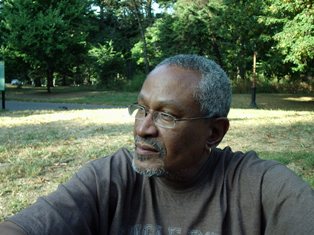
In My Own Words: Mervyn Taylor

For someone who started out with ambitions of writing fiction, I've remained loyal to poetry for a long time. I think I began looking at verse as a serious enterprise during my undergraduate days at Howard University. I had left Trinidad in 1964 and landed here in those hectic days when the “Black Power” slogan had begun to rage in American cities. It was my fortune to have the great folk poet Sterling Brown (Southern Road) as one of my teachers. In the same year Professor John Lovell taught an intense course on the poetry of Walt Whitman. For a young man who loved the English language, but only knew it as sternly taught at St. Mary’s, this was a double dose: poetry as instrument for political change and as celebration of ordinary life. Many years later, the tutelage of two poets from very different parts of the globe, Derek Walcott and Joseph Brodsky, would crystallize this schema into actual lines.

Meanwhile, as is the nature of poetry, it began to take a shape of its own, influenced by day-to-day experiences in America, my interaction with natives and with other “foreigners.” In New York through various workshops, I came into personal contact with such writers as Amiri Baraka, and the African poet Keorapetse Kgositsile, both of whom had some influence on my own work: Baraka’s for the pure nerve and music of it; Willie’s (since no one could pronounce his name) for the absolute freedom to sing in any language. Out of such meetings, grew my membership in a group called Bud Jones Poets, which boasted among members the late, incredible Fatisha and Wesley Brown, he of the wry wit and unshakeable commitment to the just cause. My own reading led me to the experimental fields of the Beats, through the remarkable retreats of Auden and Roethke and the clear-eyed imagery of Bishop and Olds.

All through this, I listened for my own voice. I wrote many poems, some good, some bad, many mediocre, reaching for an expression that would include a true idiom, its own “native tongue,” as Brathwaite would say, one that would go past the easy slang, the nostalgic geography of the place in the mind. I walked backward to be present at the death of those whose lives I’d missed. I put on the costume and took part in the Carnival, witnessing how hard it is to write with a bear claw, or half drunk in the town. I saw the fraud emerge at times and let him cry on my shoulder. I cried on her shoulder when love tapped me, and showed me her poem, the possibility of it, shining, outdone.

From it I’ve managed to winnow three books, An Island of His Own, The Goat, Gone Away, and a CD, Road Clear, done in collaboration with bassist David Williams. In them are poems that go back and forth between the big city and the island, that note the human condition and effort in war and in peace time, that seek to find the part of the bell that resounds most sincerely, that move toward the kind of forgiveness that asks only, in the words of my father, that we try “not to let it happen again.”

*
Mervyn Taylor was born in Trinidad. He is the author of three books of poetry: An Island of His Own (1992), The Goat (1999), and Gone Away (2006), and a CD, Road Clear (2004), done in collaboration with bassist David Williams. About the poems in his latest collection Debbie Jacob wrote in her column in the Trinidad Guardian, "Lost in the cold and unable to return home to the tropics, the West Indians of Taylor's poems reach as far as they can: Florida." Mervyn Taylor lives in Brooklyn, New York.


October 30, 2006

In My Own Words: Donna Weir-Soley

Donna Weir SoleyI come from a family of teachers, preachers, and storytellers, and they all told different types of stories. My father’s side of the family, farmers, teachers, and storytellers, told such scary ghost stories that after listening to them, I often wanted to make my bed right where I was sitting rather than risk walking home on a dark country night and running into rolling calf or some other bad duppy.

My mother’s side of the family, healers, entrepreneurs, and storytellers, told stories that would surely fall into the category Audre Lourde calls biomythography. This isn’t because my mother’s stories are fictional, but because her “true” stories are so incredible, the natural inclination is to think she’s making them up. My mother’s stories blended dreams and reality so seamlessly that often, as a child, I could not distinguish between what happened in my dreams and my waking life. Both were aspects of reality to which I had to pay close attention or risk losing important “messages” or life lessons that were important to my future path. My destiny was mapped out in dreams, omens, and signs.

My ancestors, long passed-on, were as important to my life as my living kin, and could appear in dreams or to some kinfolk who had the ability to see spirits, not just to warn me, but to stage intervention when necessary. So, I guess, you could say I come by storytelling quite naturally, and that is really how I think of my writing. Whether in poems, short fiction, memoir writing, even essays, I am always trying to find the true way to tell the story. Sometimes it is my story. Sometimes it is a combination of myth, legends, facts, fiction, and somebody else’s story, but always it is my truth, the way I understand it.

First Rain , my first book, is a collection of poems that blends myth, dreams, and family history with social and political commentary. Mostly, I hope that my love for my people and my roots shines throughout the work. And my roots are as much in rural St. Catherine, Jamaica, as they are in inner-city New York where I became a woman, and where my brothers went through trial-by-gunfire coming into black manhood in Cambria Heights, Queens. And I say love, not to be naïve or uncritical, but to let it be known that there is no shame in my game. I am a product of all of it, good, bad, indifferent.

My high school, Andrew Jackson, had as many metal detectors as Rikers Island prison. It was the first place I heard the term coke, short for cocaine. I was fresh out of St. Catherine bush and someone offered it to me in the girl’s bathroom. My answer was “Why are you selling coke (thinking Coca Cola) in the bathroom?” Who knows, perhaps my naiveté saved my life.

After I left Andrew Jackson, the school got progressively worse. Some of the most notorious drug lords of New York came out, excuse me, were kicked out of Andrew Jackson. The city closed it down a few years after I graduated, leaving most of the student population with no zone school. The neighborhood kids were only too happy to oblige by becoming high school drop-outs, courtesy of the city of New York. One thing I know for sure everything that I have been through has led me to this place. I don’t believe in luck, but I believe in God because I know I have been blessed, protected and highly favored. Sometimes, the writing goes down smooth like a cool Red Stripe on a sweltering day. Other times, it is jagged like broken glass bottles edging the high walled homes of the wealthy, keeping out prowlers, keeping in the rank smell of fear. Ragged or fluent, my writing represents my reality, and I respectfully submit that I have a right to write, to tell these stories (with my story woven into the tapestry) the best way I know how, and I won’t give up till I get them right. Until such time…

*

Donna Weir-Soley was born and grew up in Jamaica. She currently teaches at Florida International University. She is a poet and critic and has been widely published in journals such as Macomere, Caribbean Writer, Sage, The Carrier-Pidgin, Frontiers and in the anthology, Moving Beyond Boundaries. She was recently awarded a Woodrow Wilson National Fellowship for career enhancement.
*

This Wednesday (11/1/2006): Results of Poll/Survey on Bob Marley and Rastafari.

Friday (11/3/2006) Five Questions With Sandra Castillo, author of My Father Sings to my Embarassment.

Monday (11/6/2006) In My Own Words: Shara McCallum, author of Song of Thieves.

*
Filed under give thanks and praises: The vivacious Maud Newton for linking to Marlon James' interview and expanding on it, and the gracious Georgia Popplewell for continuing to spread the word. Of course, there are many, many people to thank and they are listed in the links. The most recent addition is Cherryl Floyd Miller who has been compiling an impressive list of African American literary sites. BTW, for the most up-to-date information on African American/Caribbean/Black literary information, check out Kalamu ya Salaam's e-drum: http://lists.topica.com/lists/e-drum and subscribe to it. Kalamu, despite the tragedy in New Orleans, has remained undaunted. To all, Rispec'.

***

Caribbean , Americas , poetry blog, Jamaican author, Jamaican writers, Caribbean writers, Miami , Miami Dade College, Miami Book Fair International, Caribbean authors, Caribbean literature, Books, Poetry, South Florida writers, Jamaica,

September 3, 2008

In My Own Words: Cyril Dabydeen

Cyril DabydeenPoetry has always been closest to me: it’s what makes up my inner being, my consciousness expressed through the images and the rhythms; and, in a sense, it wasn’t totally surprising to be told that “Easter Poem” in my new book, Uncharted Heart, has echoes of T.S. Eliot’s “Ash Wednesday.” In my youth I’d read a fair bit of Eliot, and the deeper resonances of the spirit in Eliot’s poems and plays have stayed with me in unexpected or just amorphous ways.

But I’m not a religious poet, though religious contexts have always interested me. See, I wrote “Easter Poem” (for two dramatic voices) over twenty-five years ago; and, later, came poems such as “Remember the Light” and “Things We Are,” in this new collection which have religious reference points; and maybe it’s what burgeoned in me growing up in Guyana, South America, where religion and the lack of religion are central, though ours was, and still is, a secular state. In my early novel The Wizard Swami (Peepal Tree Press), set in a 1950's Guyana, religion forms a backdrop to the overall irony and parody: a work fundamentally about the little man’s struggle in a colonial setting as everything is couched in the central character’s odd or idiosyncratic, if not just picaresque, ways.

In Uncharted Heart I’ve tried to capture internal climates (an epigraph from Mallarme adumbrates this); and, essentially, it’s about trying to find meaning in order to make sense of our complex world. The poet as “maker,” or “myth-making” has always been uppermost, even crucial, I believe; and words, meanings and inferences are about what’s deep in the spirit and expressed in symbols and metaphors oftentimes pulled together–yoked--in the longing for wholeness, or oneness. A transcendental element too informs everything (yogic, maybe: I’ve been reading recently a lot more about Buddhism and Hinduism, if subliminally to find some deeper connection with my forebears, all with Vedic impulses linked into my composite western self).

In many of the new poems in this collection–some written over the past four or five years, and coming after Hemisphere of Love (TSAR) and Imaginary Origins: New and Selected Poems (Peepal Tree Press)--I’ve tried to link the deeply personal with the occasional, as everything is tied to history, geography, the sense of destiny and identity while living in North America, with memory being the mother of the muses. Shaping the poem–or simply “staging the poem” as has been said by Billy Collins, I think –is also integral to my overall poetic attitude and process. For me, how the poem appears on the page, and how words meet the eye and silent ear, and the rhythm of the lines and line-breaks (enjambment) in free verse (but not so free) are instinctual in me. It’s what I constantly dwell upon in composing the new poems (and in most of the poems in my previous books).

But in Uncharted Heart the process has frustrated me more than usual (angst all writers go through, no doubt). And maybe I’ve written my poems in not entirely dissimilar ways from how I write prose (my novel Drums of My Flesh does have a genuine poetic impulse; and the same goes for my Dark Swirl, recently reprinted by Peepal Tree Press).

A stream of consciousness aspect is inevitably present in trying to make sense of what’s around me: what I feel intimately; and always for me in the poems, the image is central. In Guyana in the 60's as a beginning writer I recall wrestling with imagism–the image being everything. Then I continually read the British and American poets: Eliot, Spender, Auden, Sitwell, Thomas, and others from east and west, local and international, eclectic as my taste already was. I was also imbued with Lawrence Durrell’s idea of making the image solid as diamond, going beyond loading every rift with ore, it seems, as everything kept impacting on my sensibility: in a tropical environment of jamoon and blacksage amidst birdcalls of the kiskadee and blue-sackie and simultaneously engaging, if only numinously, with Hopkins’ “God’s grandeur” with dialectal sprung rhythms nonetheless. One of the first poems I wrote in Canada was “Green Land”–which is pure imagism, I think; and in Uncharted Heart, I kept going back to images that have lingered on over the years while coming to grips with a changing self and changing perspectives, and adapting my feelings and emotions while not overlooking history and the sense of timelessness of things. Poems such as “The Visitors Have Come,” “Prehistory,” “New World,” and “Dancing with Girls from China” are counterpointed with their varied and particular echoic effects, I figure.

The new place and home and belonging, more than notional, even if seen in an individual experience of India impacting on the imagination, with a hint of drama, as in “ Burnt Offering” or in “Madurai,” no doubt conveying a hybrid self in the making. Geography, inevitably, is juxtaposed with changing climates, the temporal and spatial: as in “My Arctic Space,” where the persona comes to grips with a pioneering life and the “idea of the north” (Margaret Atwood). Precise language-use and expression seen in “Assault” (an epigraph from Eliot: about the poet’s aim being to “purify the dialect of the tribe”), is integral to the poetic process: the desire to invest language with aesthetic energy in writing that is free of cliches and bureaucratic shibboleth, especially for a poet like myself in Ottawa, where the federal government is located.

These new poems are essentially about formed and unformed spaces and changing tonalities, as I’ve tried to express my feelings without fancy image-making; but through the poems’ particular rhythms, I hope to extend boundaries to a wider, more intricate world. And I keep hoping for epiphanies that awaken to inherent mythologies in poems as diverse as “Praising You,” “My Own Tribe,” “Bear on the Road to Agra,” and “El Dorado.” Indeed, I will keep delving into the human heart, if only to discover what’s still uncharted: what’s just ongoing and is timeless.

***

Cyril Dabydeen’s books of prose and poetry include the novel Drums of My Flesh (a Guyana top prize winner in fiction) and a nominee for the International IMPAC Dublin Literary Prize; Imaginary Origins: New and Selected Poems (Peepal Tree Press, UK) and Play a Song Somebody: Selected Stories (Mosaic Press). His work has appeared in over 60 literary journals, such as the Critical Quarterly (UK), The Fiddlehead, Canadian Literature, Prism International, Grain, The Antigonish Review, Kunapipi (Australia), Wasafiri (UK), and World Literature Today (USA), and in anthologies such as the Oxford, Penguin and Heinemann books of Caribbean Verse. He has also edited A Shapely Fire: Changing the Literary Landscape (Mosaic Press)and Another Way to Dance: Contemporary Asian Poetry in Canada and the USA (TSAR). Cyril has done over 300 readings across Canada, the US, UK and Europe, Asia and the Caribbean (including Trinidad, Guadeloupe, Jamaica, and Cuba). His varied work experiences include activism in social issues; he currently teaches writing in he Department of English, University of Ottawa. He is a former poet laureate of Ottawa, Canada.


November 13, 2013

Interview with Ashley M. Jones: Official Poet of the Sunrise Little Free Libraries Initiative


Official Poet of the Sunrise Little Free Libraries Initiative


By Ellene Glenn Moore

The Little Free Libraries initiative is a national project that brings free library boxes to cities with no libraries or libraries with limited selections. In early 2013, still in her first year as an MFA student at Florida International University, Ashley M. Jones responded to a call for a poet to read at the City of Sunrise’s Little Free Libraries Ribbon Cutting Ceremony. In the following months, she has continued to contribute to the poetry community of Sunrise. Last month, we spoke over email about Little Free Libraries, the poetry community of the City of Sunrise, and her upcoming workshop for high school poets.

Ms. Jones is now in her second year at FIU, where she is a John S. and James L. Knight Foundation Fellow in Poetry. She is originally from Birmingham, Alabama, and her poetry has been published in Aura Literary Arts Review, Sanctuary Literary Magazine, and the Harvard Journal of African American Public Policy.

Ellene Glenn Moore: How did you become the Official Poet of Sunrise, Florida? 

Last year, there was an email sent out to the [Florida International University] MFA listserv from the City of Sunrise—the City needed a reader for their Little Free Libraries Ribbon Cutting Ceremony. Little Free Libraries is a nationwide initiative which provides free library boxes (à la newspaper distribution boxes) in areas in which there aren’t libraries, or in which there aren’t a lot of selections in the library.  The Sunrise Leadership Academy Class of 2013 initiated this project, and along with the help of Miami based artist GG, it all came together beautifully.  I responded to the call for a reader, and, after sending some of my work, I was chosen to read at the ceremony.  Not only did I get to read my poems alongside award-winning author Edwidge Danticat, but my work was put into a booklet that was distributed in each of the four Little Free Libraries in Sunrise. Since that ceremony, I’ve remained involved in the Sunrise community and, before my first free workshop, the lovely people in the Sunrise government office named me Official Poet of the program. 

EGM: What are the responsibilities of the position?

AMJ: Basically, as Official Poet, I’m involved in the City’s poetry initiatives. So, I provide free poetry workshops to local high schoolers every semester. My first workshop occurred in May 2013, and my upcoming workshop is scheduled for November 16th. Recently, I participated in the Word UP! Spoken Word Competition, co-sponsored by the Jason Taylor Foundation and the Omari Hardwick BluApple Poetry Network. I was originally a judge for this initiative, but ended up not being able to judge because I attended all of the workshops leading up to the slam to connect more with the students and witness the process of preparing for this event—I was just trying to have my cake and eat it, too, because I love being around the students so much

EGM: On a broader scale, what do you think are the responsibilities of poets to their communities? Why do we have Official Poets and Poet Laureates?

AMJ: I think it’s important for artists, not just poets, to stay grounded. It’s easy to get wrapped up in line breaks and word choice and just the right sprinkling of simile. Although the artiness of poetry is important, I think it's also important to do something with that talent and spread the joy of your art throughout the community. This not only shows the world what wonders are found in poetry (it’s more than stuffy wordplay to me, and I think if more people realized [this fact] the world might be more full of beautiful words than harmful ones), but it also provides an important outlet for people who don't know where to turn. This idea of writing as an outlet has manifested itself most frequently, in my life, through my work with high school students. Students find a way to channel their feelings and their passions into words, and that, I think, is a lot more helpful than channeling those feelings and passions into hurting themselves or others.

Taking poetry into the community can also be a useful tool for literacy training—showing students that they can play with language on the page makes them want to interact with words a lot more, which is great for their reading and writing lives. The task of an official poet or a Laureate is to reach people with poetry. However that might happen is up to the poet, but it must happen. Even if I never write a work of poetic genius or receive hundreds of prizes to stack on my CV, I will be perfectly happy—more than happy—to take poetry into my community and make a positive difference with words. Words!!

EGM: Is your role as Official Poet in dialogue with your own work as a poet and a student? Has the experience informed your work, or vice versa?

AMJ: That's an interesting question...I think my role in Sunrise is definitely in dialogue with my own work as a poet and student. Like I said before, it’s easy to get caught up in the brainiac world of poetry. When I read at the Sunrise Little Free Libraries ceremony, a lot of people came up to me afterward and told me how my poems made them happy, how they made them reminisce on their own childhoods, and even made them cry. They asked me—me, little old nobody Jones from Birmingham, to autograph my booklet of poems that was passed out to the audience. These and other real-life reactions I've received really give me the confirmation that what I'm writing means something to people. I write about my life and I communicate my emotions in the best way I can—through poems. It’s good to know that the communication I'm offering isn’t dropping off into the literary abyss—people are listening and they hear what I'm saying. I've been in the academic writing world for a while, and sometimes I get down on myself because I'm not always as “poemy” as other poets—I write about the way my hair curls and the way my mom taught me to make biscuits. I'm glad to know that real-life people respond to it well.

As far as learning from my Sunrise experience, my students teach me a lot about being fearless—just this weekend, a student wrote about what I think was her childhood rape experience. It took me 10 years to finally write about my own truth—and it’s not a gruesome truth. Seeing this 16-year-old get up on a stage and perform such a personal piece tells me that I should stop being so afraid of being me on the page. I've gotten a lot more honest in my writing, and I'm going to keep on doing it. 

EGM: How did you come to poetry?

AMJ: Well, I’ve always liked reading, writing, and inventing stories. When we weren’t reading books or watching public television, the siblings Jones would spend time playing make-believe or constructing complex, soap-opera style plots for our Barbies to act out. I bought composition notebooks and wrote notes on everything I saw—spy missions, a la Harriet the Spy. These missions sometimes engendered poems about my family—little, awful, rhyming things. I once got so angry about something that I wrote a poem about how everyone hated me, and I posted it in the hallway at my house. My mom was not pleased... […]

EGM: Who are you currently reading? Who do you keep coming back to, and why?

AMJ: Hmmm... a better question might be “who do you wish you were reading?” because I barely have time for recreational stuff anymore. I've got a huge stack of library books waiting, unread, and a few books I bought last semester that are waiting for my attention. The last non-required new book of poetry I've looked at was actually Denise Duhamel's Blowout. Denise is my professor, so I’m always excited to see what she’s writing. Blowout, like a lot of Denise’s books, is one about real life. She’s able to write in such an everyday tone while keeping her poetic muscle moving. It’s great—I’m glad to be learning from a professor whose writing style seems so close to my own.

As far as my old standards, Lucille Clifton and Kevin Young are in constant rotation—I’ve been reading them a lot lately as I prepare to guest teach in a friend’s creative writing class and as I prepare for my workshop in Sunrise. […] Lucille Clifton is my favorite poet of all time—I was first struck by her use of lowercase letters (cummings was a fave of mine in the early years for that reason, too—I used to write in only lowercase letters). Then, when I actually paid attention to her words, I was doubly struck.

Clifton’s ability to craft language into an effortless punch never ceases to amaze me. Her poem, “what the mirror said” is a constant mantra of mine—if you're in need of quick empowerment, check that out. Kevin Young is just the man. I loved him for Jelly Roll and the way he managed to make jazz on the page while still using poetic technique. His playful voice is one I always want in my ear. Terrance Hayes is a new addition to this rotation—I absolutely love his voice and the way he makes me swoon with his words. He’s basically in the Ashley canon now. But I return to these poets because they refresh me when I'm feeling lost—they remind me what good poems look like when I'm in a slump, and they speak to me when I need someone to spell out my pain/joy/confusion/anger.

EGM: If you weren't a writer, what would you be doing?

I used to want to be a counselor (in schools or otherwise), so maybe I’d do that. But I also have dreams of being a university president, so maybe I'd still be on that path, just minus the writing. I’d also love to be a personal shopper (the mall is my friend, and I love helping people express themselves—affordably—through clothes) or a restaurant owner (I love to cook). If I weren't doing the MFA right now, I would be in Birmingham, working in the Administration or Admissions department at my alma mater. I was a part of the Stewardship team and I was a tour guide as an undergraduate—both would have panned out into good careers if I hadn't hopped the crazy train and pursued my dreams to get an MFA. 

One interviewer at Redivider Journal likes to close interviews by asking the interviewee for a favorite recipe. I am happily aware that you are an excellent baker, so I will ask if there's a favorite recipe you'd like to share here—Biscuits? Cookies? Banana bread? The floor/ counter is yours.

Gosh, a favorite recipe! I’d LOVE to share my recipe for biscuits. Here it goes:

Ashley’s Biscuits

Ingredients:
2 cups all-purpose flour (If you're into it, you can substitute one of those cups of flour for whole wheat flour—it tastes just as good)
1 tablespoon baking powder
1 tsp salt
1 stick of cold, unsalted butter cut into cubes (No getting around this, folks. Butter or nothing)
3/4 cups of lowfat greek yogurt (Or buttermilk, or whole milk, or whatever milk you’d like)

*you can add herbs and cheese if you want to make these for fancydinner

Instructions:
-Preheat your oven to 400 degrees F-
1. Measure the dry ingredients into a food processor (or a bowl if you've got the muscles for hand-cutting). Add the cubed butter and pulse until the mixture resembles cornmeal and the butter is incorporated. If you're using a regular bowl and biscuit cutter, work it until you can't work it anymore!
2. Add your greek yogurt/buttermilk/milk and mix until the dough becomes a ball.
3. Dump mix onto your floured counter and flatten it.
4. Fold the dough onto itself and flatten again. Repeat a few times. 
5. Flatten dough to your desired biscuit thickness (an inch, at most)
6. Cut the biscuits using a biscuit cutter or some circular object. Put the biscuits into a greased pan. 
7. Bake for 15-20 minutes (start checking at 15) until the biscuits are tall and lightly brown and beautiful!

November 8, 2006

In My Own Words: Shara McCallum

Shara McCallumShara McCallum is the author of two books of poems from the University of Pittsburgh Press, Song of Thieves (2003) and The Water Between Us (1999, winner of the 1998 Agnes Lynch Starrett Poetry Prize). The manuscript of her third book, "The Shore," was recently completed. Her work has appeared in numerous literary journals and over twenty anthologies. Originally from Jamaica, McCallum directs the Stadler Center for Poetry and teaches at Bucknell University. She is also on the faculty of the Stonecoast Low Residency MFA program. She lives in Pennsylvania with her husband and two young daughters.

The Poem: Between Worlds.

I'm the mother of two young children (a 3-yr. old and 14-month old, as I write this); being in their presence daily has intensified my interest in language. If I had to define my greatest pleasure in parenting, watching my daughters acquire language would be just shy of seeing them growing into their own bodies and personalities. Witnessing my children learning to talk has also served me well as a writer, reminding me of why I engage in this business with words at all. My daughters' frustration at not being able to express their wants and emotions opens up the wound that is language: the slippage between desire and speech. Over the past dozen years of taking poetry seriously, I have written into and out of that space.

Inevitably, it seems what writers love best in the poems we read is what we hope to do ourselves when we write. More than any other form of verbal expression, a poem must make me experience the pressure the writer feels of not being able to fully say whatever he or she believes must be said. For me, poems are always elegies, the poem itself being testament to what is lost—whether an idea, a moment, or a lifetime.

If language is a wound, ironically it is also the best solace for the wound. With my children, I think of their radiance or self-satisfaction when they have effectively communicated something—and thus felt understood. I find inexplicable those poems that seem to throw up their hands altogether at the difficulty of saying what it is you mean. A poem that sounds only the plaintive note of loss, loss, loss—whether in its form or content—is neither redemptive (something I value in art) nor ultimately interesting in the long run.

In my poems, I hope to achieve some tension between the ineffable and expressible, between loss and recovery, as represented and experienced through words. In the three books of poetry I've written so far, I've drawn from the raw material of my life. My first book dealt with my relationship to my parents, particularly my mother, and to leaving Jamaica as a child. My second book continued the theme of immigration while also chronicling my father's mental illness and subsequent death. In my most recent book, personal experiences with mothering and marriage are set against historical narratives and myths. Still, writing autobiography is not what I am after as a poet. The details of my life are important to my poems but must be transformed to serve the poems' ends: they must enact the struggle for self-knowledge that is at the core of poetry.

In this quest, more than in the presence of a discernible landscape or cultural markers in our works, we writers from the Caribbean share fertile ground. I don't think it's an overstatement to say that Caribbean writers have a heightened sense of the existential condition of exile from a real or imagined "Eden.” Our language (creole/nation language/patwa/patois) is archival, recording a history of loss and resistance to loss. In retelling stories (personal, communal, and national), we are often searching for the thread between events of the past and ideas of who we are in the present and who we might become in future.

When I write, I often find myself grappling with issues of language and identity, as well as the interconnection between the two; but when I think about what I hope most for my poems, it is that they will approach these concerns (and any others) in a manner that is translucent. If I succeed in a poem, then words are a pane of glass between my present world and the one I sense is there, even if I can't reach or hold onto it.

***

Caribbean Crossroads - November 11, 2006 (Saturday) 6pm-7pm
Peppah! Topic: Caribbean Voices - Miami Book Fair International 2006
Guests: Mervyn Solomon, Geoffrey Philp , Deborah Jack, Christine Ho (online)
2828 W. Flagler St. across from Dade County Auditorium
Toll Free 877-825-1080
www.marlonhill.com
Email: info@marlonhill.com
Live online at http://www.wtps1080am.com

***
, , , , , , , , ,

November 3, 2006

Five Questions With Sandra Castillo

Sandra CastilloSandra M. Castillo was born in Havana, Cuba. She, along with her family, fled Cuba in 1970 on one of the last of President Johnson's Freedom Flights. She received her M.A. from Florida State University and is currently an associate professor at Miami-Dade College.


1. Which author and/or book has most influenced you?


Jack Kerouac once said, "I am made of loss," but he also said, "I accept lossness forever." I think about such profound sentiments a great deal, and I would have to say his work, particularly Visions of Cody and On the Road, his ability to render details, moments, to capture a place and time, as well as his sense of loss and displacement have always moved me, and in many ways have shaped my own work.
I think about exile literature in that same context, for it attempts to traverse those two points, establishing a dialogue, a living dynamic between two polarities. This is but the reality of being and living in exile. As a Cuban-American, I find that I vacillate between such profound sentiments though I do not think the notion of loss is exclusive to exiles. I do feel, however, that such thoughts capture what is at the center of exile literature, this complex persona struggling between the self and the other, between what was and what is, as well as what could have been. Kerouac, to whom English was a second language, never escaped his own sense of foreigness, and this regard, he, too, was a child of exile. French-Canadian by descent, American by geography, he was attempting to shape and define his world through his adopted language.

2. How has living working in South Florida shaped your work?


I was born in Cuba, and I lived there until I was eight years old. Though I have lived more than half my life outside of my homeland, I still feel connected to that island. In dreams, I walk the streets of Havana and see myself in a place I will never truly inhabit. Miami, however, by virtue of its geographical and cultural proximity, has always been a bridge to Cuba. As such, I would have to say that growing up Cuban in Miami intensified both my fascination with all things Cuban, as well as my sense of disconnect.
As a writer, I remain haunted by the weight of the past, this notion of home as an abstraction, an imagined place that I never knew.


3. "The act of writing is for me often nothing more than the secret or conscious desire to carve words on a tombstone: to the memory of a town forever vanished, to the memory of a childhood in exile, to the memory of all those I loved and who, before I could tell them I loved them, went away.--Elie Wiesel How does this relate to your poetry, especially the section about childhood.


This is a beautiful quote, and I have always thought this is exactly what Jack Kerouac was attempting to do—photograph everything and everyone before it changed, vanished, but I think it can also be said about my own work, particularly the poems in My Father Sings to My Embarrassment. I think about where I came from, the person I might have been, my ancestors before me, and yes, it keeps me writing.


When I was a child, my mother's brother, who was an avid photographer, lived with us. In his spare time, he documented the city and our lives in black and white stills. These photographs, which he developed and hung in the bathroom (which doubled as his darkroom), linger in my memory like ghosts. Over the years, I have come to realize that much of what I remember from those eight years of my life, the black and white of my childhood, are my uncle's photographs. These photographs have become the Cuba of memory and they remain a constant, my unreal city forever preserved in a still life. This has shaped my aesthetic, and I recognize that I am using language to create my own photographs, depicting a time and a place, as well as the spaces we inhabit.

4. Describe the process of coming to terms with your father's mortality or the subject of parenthood in "My Father Sings to my Embarrassment"?


My father was very inner-directed, danced to his own beat. I have to say he was quite brave, driven. He had, for example, this desire to re-invent himself, become a musician, a songwriter, and he never let go of that vision of himself—he took it with him. Growing up, my sisters and I were always mortified by his appearances in local venues, to which we, of course, were dragged. It certainly wasn't how we saw him, but he was not at all discouraged. I think, however, that my father was enamored with the notion of starting over—Miami as a metaphor, a new city, where you could be who you wanted to be. I often wish I were that brave. That being said, my poem, "My Father Sings to My Embarrassment" combines these two polarities my thoughts/feelings about my father in those early years when we first arrived in Miami, and his own sense of self.


5. How has visiting Cuba changed you and your writing?


Cuba greatly informs my work, not just as a place. Cuba is, in essence, my center. My mother first started talking about going back to Cuba in the early 1980s, when it first became possible for Cuban exiles to travel to the island. We spent ten years talking about it, dreaming about it, imagining it, as if daring ourselves. We finally went in 1994, and it was certainly a very emotional trip for both of us though I know it was much harder on my mother. I was looking for myself, who I was there. My mother was looking for her life, everything and everyone we left behind. I cannot tell you what I felt exactly, for it was a mixture of grief and loss, nostalgia for a place I never had the opportunity to truly know. Curiously, I found myself oddly at home.

Traveling back to Cuba enabled me to delve deeper into that which interests me -- issues of memory, history, gender and language, as filtered by a personal vision, tied primarily by history, personal and otherwise.

6. What makes you laugh?


In life, irony.

***

September 11, 2007

"In My Own Words"... Next Week

Words"In My Own Words” continues next week with two essays by Rabindranath Maharaj (9/17/07) and Anthony C. Winkler (9/19/07).


Rabindranath Maharaj is the author of A Perfect Pledge, which was short listed for a Commonwealth Writers' Prize, and the 2006 Rogers Fiction Prize. His two previous novels: The Lagahoo's Apprentice, was a Globe and Mail and Toronto Star notable book of the year; and Homer in Flight, was nominated for the Chapters/Books in Canada First Novel Award. He has also written two collections of short stories, The Book of Ifs and Buts, and The Interloper, which was nominated for a Regional Commonwealth Prize for Best First Book. Maharaj was born in Trinidad and now lives in Ajax, Ontario. He was the be the Writer in Residence at the Toronto Reference Library from September 2006 to December 2006. He now teaches at the Humber School For Writers.


Anthony C. Winkler was born in Kingston, Jamaica, in 1942. His first novel, The Painted Canoe, was published in 1984 to critical acclaim. This was followed by The Lunatic (1987), The Great Yacht Race (1992), Going Home to Teach (1995) and The Duppy (1997, Akashic 2008). A short story collection, The Annihilation of Fish and Other Stories, was published in 2004, and his latest novel, Dog War, will be published by Akashic in June 2007. He has also written two movies, The Lunatic (1991) and The Annihilation of Fish (1999). The Burglary, a play, was produced in Kingston, Jamaica, in 1993 and in Toronto in 2005. Another play, The Hippopotamus Card, was produced in 2005 by the German radio station WDR under the title Das Rhinozerossystem. Winkler lives with his wife in Atlanta, Georgia.


***

Previous "In My Own Words":


Shara McCallum

Andrea Elizabeth Shaw

Vicki Hendricks

Pam Mordecai

Opal Adisa Palmer


***

September 15, 2008

In My Own Words: Ian Jerome Mair

Ian Jerome MairThere Are No Yellow People is the story of my odyssey in Asia. My name is Ian Jerome Mair, a Jamaican American resident, and I’ve been a yoga practitioner/instructor for almost thirty years. I first arrived in the United States at age 20, and I have lived here for approximately eighteen years. I have traveled extensively – several times to Europe, Africa, Canada, and Central America. There Are No Yellow People tells the story of my encounters with the cultures of the Far East.

When I was sixteen years old, I was first introduced to yoga by an American public television program. At that time, the broadcast was aired on the only television station in Jamaica. The program, hosted by Richard Hittleman, an American yoga instructor, captivated me. Soon, I began practicing yoga asanas and I followed the program every Wednesday afternoon. Within a few weeks, I purchased a hard cover edition of Mr. Hittleman's book, Yoga: 28-Day Exercise Plan. In hindsight, the influence of this program on my eager, impressionable mind appears to have been a harbinger of the course that my life would follow.


In 1993, I moved to Miami, where I continued my practice of yoga and started teaching yoga to friends and small groups. In 1997, I met Duncan Wong, a well-known yoga practitioner, and he immediately became my friend. Wong would return to Miami periodically to do workshops, and on our last meeting in Miami, in April 2005, he invited me to China to teach yoga.


The people whom I met during a 6- month sojourn in China and India were the inspiration for There Are No Yellow People. It is an account of, among other things, the unique experience of a Jamaican, a black man, teaching yoga in the fabled, but not well known city of Hang Zhou, Zhejiang Province, China. I might very well be the first black man to teach yoga in China. This book is a travelogue of my 4 -1/2 months experience in Hang Zhou, and Shanghai, and 6 weeks in India. Here, I share my personal experiences about working with people from a culture who had never had any contact with anyone from my racial or cultural background.


There Are No Yellow People presents me with an opportunity to share the dynamics of my engagement with two ancient cultures as they surge, full speed ahead, into the twenty-first century. I wrote about the impact, as I saw it, of rampant capitalism on the most communist of countries in the world, China, and arguably, the holiest country in the world, India. The tentacles of globalization, from cricket to Big Macs and Starbucks coffee, track their way throughout the narrative as I observe the commoditization of the spiritual practice of yoga through American influence. The education received and insights gained by socializing with mainly Chinese women as well as several men are also registered. The illumination of chance encounters with strangers and the disenchantment of prejudice from people with whom I am familiar are reflected in my travelogue.


The refreshing and enlightening experiences that I shared with fellow travelers from around the world serve to enrich my memoir. I share with readers my engagement with the landscape, the arctic tundra from 30,000 feet above, the bamboo forests and tea fields of Hang Zhou, and the mighty, mythic river Ganges. Born and raised in rural Jamaica, I reconnect with the flora of my childhood in the bamboo forests of China, half a world away. And my education in urban planning gives me the latitude to comment in a lucid and poignant manner on the cities of Shanghai and New Delhi, two of the most populous cities in the world.


There Are No Yellow People is about us, mankind, inhabiting this lonesome planet wrapped up in our garments of ethnicity, religion, race, nationality, politics, and class. It is about stripping away these illusions of separateness and identifying the common thread that weaves us together. This thread, I discovered, is as luminous and vital as the one sun and moon that shines upon all of us. I revisit the trivial, the magnanimous, the mystical, and the ordinary in this account. It is about myself, my battles with my demons and my spiritual quest, as I remain fully engaged with the world that I live in - the material, the physical, and the sensual. It is about my passions, my foibles, and my constant self-discovery.

***

July 6, 2007

In My Own Words: Tobias S. Buckell

Tobias S. BuckellTobias S. Buckell is a Caribbean-born speculative fiction writer who grew up in Grenada, the British Virgin Islands, and the U.S. Virgin Islands. He has published stories in various magazines and anthologies. His first novel, Crystal Rain, came out from Tor Books in 2006. His second novel, Ragamuffin, is out now.

I loved science fiction as a kid. I read a lot of other stuff, but I always came back to the genre. When I'm deep in self reflection I come up with all sorts of reasons I got hooked, but mainly I loved thinking about the future. I loved thinking about our own world and its problems as if from a distance, and I loved getting strong doses of sense of wonder.

But the more I read, and the older I got, the more I realized that most science fiction came from a US or English set of assumptions about culture, language, technology, and just about everything. When I occasionally encountered the people and places I lived in as a kid (Grenada, the US and British Virgin Islands), they were more often than not portrayed as not much more than tourist destinations.

When I started writing my own science fiction in high school I often used common settings in SF, it seemed like that was what was expected. Even though I doodled spaceships with Caribbean town names, and thought up multi-racial characters with muddled identities like my own, it never occurred to me that anything science fictional with strong Caribbean flavor would be accepted. And since not many people around me shared my love of SF, I had no idea where I fit in any or all of this. I did see a few books (like Islands in The Net, by Bruce Sterling) that gave me flashes of hope. But I thought to myself that a whole science fiction book that remained in the Caribbean or was inspired by it is something that I really wanted to read in my lifetime.

The writing bug really solidified for me in college, and I was then living in Ohio after my stepdad moved my family there after Hurricane Marilyn in 95. I was missing the islands terribly, and there is nothing like leaving home to get a real appreciation of what you'd left. I started experimenting with adding the islands into the most solidly genre work I could write, and got encouragement from writers like Tim Powers, Mike Resnick, and others to do more as I attended science fiction workshops and started selling my short stories.

So I when I finally had gotten enough attention to start working on my first novel Crystal Rain, I took a bunch of my favorite and fun tropes from science fiction and chopped them up. Chopped them up like we always snag the Western stuff we see coming at us, chopped it up, reorganized it, and put it back out there for people. Why not have Caribbean descendants who get their own planet in the far, far future? Lost planet, lost technology, steampunk adventure, but with a cast of Caribbean characters.

And then for the second novel I wrote Caribbean Space Opera. It's like Star Wars where Lando Calrissian could blend into a crowd. Caribbean space merchants, plying the deep between stars, helping save human civilization.

I'm writing the novels that I would have loved to have seen on the shelf when I was a young, mixed Caribbean boy with a British mother and a Grenadian dad. Someone who loved all the forward looking genre that came from the West, but wanted to feel there was a place in the future for him. And I'm having the time of my life doing it.

***


October 23, 2006

In My Own Words: Pam Mordecai

Pam MordecaiThe Freedom Recipe

Over the years Martin (husband, who writes also) and I have talked about whether writing, all writing, was a unitary act. Is it the same thing to write a speech, a textbook, a critical article, a newspaper editorial, a reference work, a short story, a novel, a play, a poem, a tale for children, a rhyme for toddlers, a letter, a contract? For a long time, I didn’t see how it could possibly be. Now, having done all of these kinds of writing, I’m changing my mind, and I’m being persuaded for a whole bunch of reasons – “of which I’ll share with you”, as the Hon. Bob Nesta Marley says.

For one thing, what the writer wants from the reader, regardless of what is being written, is his or her attention, isn’t it? So whatever the form of writing that the writer is using to capture the reader, the intention is the same. The writer wants somebody to listen, to read, to keep on reading. The other side of the need to have the reader listen up, cric-crac, is the writer’s need to speak, to say something, something important, a thing that insists on being “said”, whether in the plain text or, if the writing must be subversive, in between the lines.

Two grounds, right there, notwithstanding what we write.

And I don’t know how it is for other writers, but when I write, regardless of what I’m writing, or how I approach the writing task, I’ve got this image or shape or feeling inside me somewhere, a sort of embroidery pattern, a sort of magic-pencil outline, a sort of distant melody, that knows how what I’m writing should look, that senses its right shape and sound, somehow. And I know that I have to have faith in this weird process, and that it’s best not to mind other people too much. Take their advice, yes, but not mind them too much.

Also, especially after writing my second book of poetry, de Man –a long performance poem about the crucifixion of Jesus Christ that is entirely in Jamaican Creole and that happened in an almost mystic way– the sound that I hear when I’m writing, no mind what I’m writing, is the sound of Jamaica Talk. The rhythms and word play of this language, its verbal sound clash, its shrill or low Anansi keh-keh laughing, this is the noise that drives my tap-tap-tapping on the keyboard. Some poems are out and out completely in this language, like “Last Lines” in Journey Poem, or “Jus a Likl Lovin” in Certifiable.

Some poems, like “My sister red” and “Elsie,” are conversations between English and Jamaica Talk. Some come right out and address the language issue, as in this excerpt from “Me de Man Munro” in The True Blue of Islands:

We control this
supposed English
language employ it
for our rites

our narratives
our sweet civilities

use it for celebration
for love for argument ­–

persuasion for we know
the cost of war.

When Martin and I were writing Culture and Customs of Jamaica, a reference work published by Greenwood Press in the USA in 2000, we argued strongly for a chapter on Jamaican language. I have always thought of Jamaican Creole as the first new thing that all the slaves made together in the island place to which they had been forcibly relocated. The chapter on language became a selling point for the book.

My collection of short stories, Pink Icing, which has just been published in Canada, came a cropper with one publisher in the US because many of the stories were in Jamaican dialect. And that’s too bad. Some other reason would have been okay, but not that one. It’s too bad in this age of languages crisscrossing each other, flying over borders and boundaries, because people will find ways to talk to one another, yes, bredren and sistren, they will. Which is another reason why all writing is the same –because it’s all part of a gigantic written-spoken conversation about everything in the world that people everywhere in the world are determined to have.

Uno, the number one pig, in my play “El Numero Uno or the Pig from Lopinot:” sings:

Compère Lapin, Compère Lapin

Depêche toi, depêche toi!
Uno need the recipe

Or he never going be free
Run like Donovan Bailey!

The recipe Uno needs is one that will undo a spell cast on two giants: it will turn them back into themselves. There’s a way in which we all need that recipe. One way to arrive at it is by using and delighting in our heart language, the language of home, the language that slides easily onto our tongues and that will find a way to communicate with other languages of heart and home. In this pleading song, our hero, Uno, he of the Spanish name, talks in three languages, French and English and Jamaica Talk, to his friend, Rabbit. And Rabbit understands and goes hopping off to find the freedom recipe which Uno needs.

The late Hon. Louise Bennett Coverley showed us better than anyone how to relish our heart language (a relishing that applies whatever language we speak), how to use if for our rites, our narratives, our civilities, our argument, in other words, how to celebrate it as the language of our lives. All writing is one for that reason too, because we write to affirm the value of our lives, to require that that value be recognized, to insist on all that follows from that recognition.

Even those who write to deny it, avow liberty. Writing is unitary because we write, always, our recipe for freedom.

***

Pamela Mordecai , author of Pink Icing, was born in Jamaica and wrote her first poem at the age of nine. She has published over thirty books, including textbooks, anthologies of Caribbean writing, children's books, four collections of poetry, and has co-authored a reference work on Jamaica. She has a special interest in the writing of Caribbean women. She lives in Toronto with her husband, Martin.

***

Next week Monday: In My Own Words: Donna Weir-Soley, author of First Rain.

This week Friday: Five Questions with Marlon James, author of John Crow's Devil.

***


April 5, 2010

In My Own Words: Garfield Ellis


I Shall Write

In January 1984 I wrote my future with the following entry in my diary:

I think I have come to an important decision in my life--I am going to write. I always thought of my engineering career as a stepping-stone and a foundation to fall back on – writing is now the horizon to which I march.

Looking at this now, after nearly twenty years, I am amazed that I could have been so bold.

It is a very difficult thing to want to be a writer in Jamaica; especially if you want to be great. It seems pretentious and ridiculously vain, a head-in the-air, pie-in-the-sky type of folly. Writing is not for poor people. It is for those of a lighter cast, white people, rich people, foreign people, but not people like me--ordinary people--for whom just growing up is a struggle. Besides, it is not something that you share with your friends. I knew no writers. There was no one to discuss it with. There was no precedent in my community, not for writing, not for any kind of success. Those who succeed, leave.

And yet it confirms to me that as melodramatic as it may sound, we write our own destiny. The moment I wrote that down and convinced myself of what I wanted to be and how I was going to do it, events were set in motion that would get me to where I wanted to go irrespective of the poverty in which I lived.

So I have taken it upon myself to be a writer, not a popular love or sex-on-the-beach writer, but a serious writer. Not obtrusively academic, but popularizing the archives of the Caribbean people with quality work. I longed to read stories about me and my people. No one was writing them, so I would. That was that. These stories must be told and Jamaicans will read them if they can identify with them. And whether or not they read them, still, the stories must be told and that is my calling.

And every story I write--no matter how short or how long it is--every story I write, I stop halfway through and question my sanity and whether anyone will want to read it. Or I ask myself why should anyone want to read it, or who do I think I am to assume this mighty role. Whatever…it consumes me and I cannot but do it.

Apart from my sense of mission, it is the writing that I love--the putting down of the words on the page--the shaping of thoughts to make them sing. I remember once writing a good line and leaving it to run around my housing scheme, jumping up and down as if I had won the lottery. And secondly I love to read it. Sometimes I write conscious of the rhythms of delivery--of the words resonating and dancing through my head. But still there is nothing to me like putting my heart on the page. It is this love, this passion that drives me.

Sometimes making a living gets so intense I have to leave the writing for a while. To get back to routine takes days of solitude. I used to feel guilty about these binges of empty days when I would go home from Thursday and not surface till Monday--sending my son to his mother and not taking any phone calls or talking to a soul.

But as I have grown, I have learned that these days of doing nothing are the most critical stage to my writing. They are the days when my mind is being prepared. When it is being emptied, like a field being cleared. By day two there is nothing on it and the soil is being tilled. By day three I am entering a stage, almost trance-like, when everything I see seems to be related to the story I am working on: a line from a movie; a headline in the daily papers or something flashing through my mind while walking or driving. (Long walks and movies are also acceptable during this time--but alone--no dates, no friends, just me.) By the night of day three or mid-day four, I am there and things start to emerge and flower and I am at the place and the story is before me refreshed. The ideas are clear and there is new life.

I start Thursday and I usually begin writing around Saturday night. By Sunday I am in full flow and in the place where I can begin the daily routine again. Now when people call me, I am not afraid to say I am writing, even though technically, I am doing nothing. But doing nothing is sometimes the most critical element of my process of getting back to the place where the words flow.

It is hard to keep going when every stage of the writing has its challenges. Before I was published, rejection slips and the feeling of worthlessness--no money—were my main demotivators. Now that I’m published, it is lack of marketing by the publisher, the booksellers not keeping my books on the shelves or not displaying them well. The fact that I have another profession helps because at the very least, it acts as a source of other rewards.

Sometimes when my writing gets me in the dumps, there have been moments when an incident at work picked me up. But I have to admit, I hate the fact that I have to work because I know if I could write full-time, I would be much more productive and would be much further along in my work.

Every now and then writing smiles on me by sending an award my way. Every now and then a book or story is published and I may get a great write-up.

Fame and riches may come. I don’t know and I don’t dwell on it.

Most of all what keeps me going is the fact that other writers go through the same thing. I have a little book that helps, For Writers Only by Sophy Burnham. It is like a little book of meditation. It has all these gems and anecdotes about some of our greatest writers. And I realize that my sufferings are not as great as some whose names we now mention with reverence. And what I am going through others have gone through, are going through, and will continue to go through as long as there are those who continue to take on this order of the word.

One of my favorite quotes by some great writer from somewhere that I cannot remember is:


I could not have written if I had not lived

And I could not live if I had not written.


As for me, I write because there is nothing else.


About the author:

Garfield Ellis grew up in Jamaica, the eldest of nine children. He studied marine engineering, management and public relations in Jamaica and completed his Master of Fine Arts degree at the University of Miami, on full scholarship as a James Michener Fellow.

He is a two-time winner of the Una Marson prize for adult literature; in the first instance for his first collection of short stories, Flaming Hearts (pub. 1997), and later for the still unpublished novel, Till I’m Laid To Rest. He has twice won the Canute A. Brodhurst prize for fiction (The Caribbean Writer, University of Virgin Islands) 2000 & 2005 and the 1990 Heinemann/Lifestyle short story competition.

Garfield is the author of four published books: Flaming Hearts , Wake Rasta, Such As I Have, and For Nothing at All. His work has appeared in several international journals, including; Callaloo, Calabash, The Caribbean Writer, and Obsidian III. A fifth book, Till I’m Laid To Rest is due in Spring 2010.

***