May 5, 2006

Portrait of the Artist as Brat


This morning as I was leaving home, I noticed that the Basquiat was playing on STARZ. Jeffrey Wright’s portrayal of Jean Michel Basquiat (he stole every scene as Peoples Hernandez in the remake of Shaft and he is perhaps one of the most underrated actors in Hollywood, but that’s another blog.)


Basquiat was a Caribbean genius who was exploring his identity through the medium of paint and whatever else he could lay his mind and hands on. Yet, in some ways, Basquiat also reminded me of Pollock, especially the scene where Pollock pisses in Peggy Guggenheim’s fireplace.


I was appalled at the scene. If Pollock or any other genius has pissed in my fireplace, I would have made sure he wouldn’t be able to do it twice.


My children tell me I’m getting old. But I don’t think age has anything to do with it.


And it has nothing to do with normality or intolerance. For as one of my most trusted friends always says, “If you can’t love the mad people, you can’t love yourself.”


So, it has to do with the kind of behavior that we should (?) expect from gifted people. Peeing in my fireplace is unacceptable.


But there is a broader question here of genius or artistic giftedness and society. There is always a danger in using generalizations, but we need to start somewhere. Artists are usually more sensitive to certain stimuli, and it is usually this provoking (Give thanks to Rex Nettleford for reminding us to use this word in the fullest Jamaican sense) that spurs creation. So given certain circumstances that would seem normal to everyone else, an artist may be a bit more agitated. And if by definition, a distinctive perspective/point of view is the mark of artist (s/he sees/hears and is able to convey this perspective/point of view that everyone is unable/unwilling to see/hear) then we should expect a certain amount of alienation from the rest of society while it clings to a notion of proper behavior and normality. Or until a new equilibrium is achieved. Witness how Bob Marley and Rastafari have changed the world to where dreadlocks are now fashionable.


But where do we draw the line? Should a line be drawn? Can a line be drawn? How do we draw a line when we haven’t defined the crease or boundary? And if South Park can draw a line, “Dude, you have sex with children,” why can’t I?


I suspect the line is being drawn individually, but we haven’t reached a cultural consensus. We’ll be flying blind until we reach a cultural consensus (hence a lack of synergy) because the universal artistic impulse is one of those things that is shaped by culture. A culture uses threats and rewards to encourage and discourage behaviors, and to say what’s good and bad. Culture also draws the line between the thinkable and the unthinkable. For example, the behavior of black shock jocks is different than their white counterparts. 


And black shock jocks, I don’t think, would ever approach the level of a Howard Stern (talent aside, who does?). But would we ever want a Caribbean Howard Stern? Is such a thing possible? Are we too conservative to think such things? Because if we don’t think about those things or refuse to think about those things, are we any less free? Ideas about freedom are not idle thoughts in the Caribbean.


Is there a bedrock of decency or ethics: how we are in the world, our internal integrity/values, and how we operate in the world? Do these values apply to the gifted people?


Genius will always obey by its own rules and will pay the price for following its own rules. That’s the price of individuality, vision, and courage. But how do we ask these important questions within the Caribbean while the culture is being changed so rapidly? How can we ask these questions when the European and African view of the body are so different, and we have not fully explored the philosophical implications of the works of the NDTC thrusting those black bodies through and against time and space? How do we ask these questions when the more conservative members of our culture remain locked into European ethics and aesthetics that see genius as something cloistered, locked away—a study in hermeneutics?


For the West African view of the poet/griot/artist is much different than the European. The expectations are different even though the poets in both cultures are playing with the same raw materials: perception and memory. The griot functions as the lightning rod for transmitting the invisible into the realm of the audible/visible. The role is also different. The word griot may derive from the French transliteration "guiriot" of the Portuguese word "criado," which in turn means "servant." In the West African tradition, the loner artist as a dysfunctional entity is unthinkable for he creates within a circle of call and response. The audience completes the circle that extends the discourse into infinity. Both audience and the poet and the poet and audience to come have been changed by the experience.


Our artists have been telling us for a long time that we are closer to Africa than we think/ or like to behave. Thinking is linked to well being, individually and culturally. And we still look to our artists for answers, “Though I try to find the answers, to all the questions they ask, I know it’s impossible, to go living through the past, I won’t tell no lie” (Natural Mystic). It’s how we know.


A Caribbean aesthetics (a branch of ethics) or a Caribbean/Creole epistemology for that matter will have to examine the actual behaviors in the Caribbean with the European and African models as guides. Again, these are not idle questions because they have real implications in the lives of artists. How do you evaluate a work of Caribbean genius? What criteria do you use to say this is good? What do you publish?


Certainly we can’t rely on the European, American or African models anymore than we can depend on editors in London or New York to define what is good in Caribbean fiction. Many of them have never lived in the Caribbean or if they have spent time, it was at an all inclusive club drinking rum and Coke and probably smoking a spliff to get a taste of the “the islands.” The rest have usually gone from high school to college in Oxford or Ohio where they got an MFA that made them supremely qualified to become gatekeepers of what gets published as Caribbean fiction. Meanwhile, there are those editors in the Caribbean who are still so preoccupied with European ideas of decency and Proper Subjects (Give thanks, Annie Paul) that they continue to publish work no one wants to read. There must be a meeting ground somewhere.


We know things and how we know things in the Caribbean has always been a mystery to me. But are our ways of knowing valid? I still don’t trust only raw data because I know no matter how much I study the information, there is always something undisclosed. And given the history of Anancyism in the Caribbean and the congenital distrust of authority these questions have implications because choices are being made for us and by us that affect our well being.


And how we validate our ways of knowing is also affected by racism and how much we trust ourselves. Caribbean Court or Privy Council? Do we trust ourselves to make these decisions that will affect generations?


There are wide open fields for our genius to flourish and for us to develop models/methods of evaluation that will fit our tastes of what is good and proper in life and art. For just as Jamaican tailors always have to make adjustments to our ladies dresses that come from foreign, so too the models we develop in the Caribbean should fit us, should take into account the shape of our minds and genius.


May 3, 2006

The Meaning(s) of Bob Marley's Songs


Recently, I have been getting many queries about the meaning(s) of Bob Marley’s songs. Or should I say the meaning(s) behind Bob Marley’s songs?


First, check the label at the bottom of the page, Bob Marley, to see the posts that I've written. 


I've also offered a breakdown of many of his songs at the end of the essay, “Bob Marley and the Seven Chakras.”


You can also check these books that I use as references:


Catch a Fire: The Life of Bob Marley by Timothy White
Bob Marley: Lyrical Genius by Kwame Dawes
The Complete Guide to the Music of Bob Marley by Ian McCann
and Bob Marley by Stephen Davis


Of course, Bob Marley's official site (www.bobmarley.com) has a complete index of the songs and the inspiration behind the songs.


Here are a few samples:


"One Love/People Get Ready" expresses the Rastfari credo, "One God, One Aim, One Destiny" which was inspired by Marcus Garvey and the UNIA. The song calls for peace and harmony through helping others, "Have pity on those who chances grow thinner," and also comes with a warning, 'There ain't no hiding place from the father of Creation."


"No Woman, Nuh Cry," is moving love song to the wives/mothers/sisters for all the sorrows they bear. In this song, Bob recalls the days spent in "a government yard in Trench Town," and "observing the hypocrites/As they would mingle with the good people we meet." In many of his songs, Bob has harsh words for hypocrites, people who say one thing and act in another way--the exact opposite of their words.


Trench Town was and is a violent place in Kingston. It's Jamaica's South Central. So Bob wasn't kidding when he sang, "Good friends we have, good friends we've lost, along the way." Yet because of his faith he can comfort his woman: "In this great future you can't forget your past/ So dry your tears I say/ No woman, no cry/No woman, no cry/Little Darling, please don't shed no tears/No woman, no cry."


In the next verse, Bob reminisces about the simple pleasures that despite the abject poverty of Trench Town bring back fond memories:


And then Georgie would make the fire light
Log wood burning through the night.
Then we would cook corn meal porridge,
Of which I'll share with you.


This song has one of my favorite lines by Bob. A poor man, he doesn't have a car or money for a taxi or bus fare:


My feet is my only carriage,
So I've got to push on through
But while I'm gone I say...
Everything's gonna be all right.


Part lament, part tribute, but always uplifting, "No Woman, Nuh Cry" is one of the best loved songs by Bob.


In "Buffalo Soldier," Bob shows his revolutionary side when he compares Rastafari to members of the U.S. 10th Cavalry Regiment of the United States Army who during the Civil War fought alongside the Union Army."


As a dreadlocked Rasta, Bob identified with the Buffalo Soldiers, which according to some legends, "Native Americans called the black cavalry troops "buffalo soldiers" because of their dark curly hair, which resembled a buffalo's coat." 


And just like the "Buffalo Soldier" who was also "stolen" from Africa and fought wars of resistance, so does Rastafari:


I'm just a buffalo soldier in the heart of America,
Stolen from Africa, brought to America,
Said he was fighting on arrival, fighting for survival;
Said he was a buffalo soldier win the war for America.


But there is also another side to Bob. In some cases, songs such as “Put it on,” “Guava Jelly,” “Stir it up” or "Lick Samba" have no more meaning other than a celebration of life and sexual prowess.


Of course, there’s also the attraction of the seductive language that’s involved in “Guava Jelly”: “Come rub in my belly like a guava jelly.” Or in “Stir it up” where Bob transforms the simple act of cooking a meal into a highly charged metaphor for a sexual encounter:
 
I'll push the wood 
I'll blaze your fire 
Then I'll satisfy your heart's desire 
Said I'll stir it, yeah, ev'ry minute, yeah
All you got to do is keep it in, baby
 
Bob was an artist/entertainer who made his living by writing songs that he thought would appeal to the widest audience while still maintaining his integrity: “I'm not a preacher, but I am calling” (“Lick Samba”). To eat or not to eat. To poet or not to poet. That is the question. Dead poets don’t eat.


You have to eat and you have to write. Sense man and higher man. But do you have the courage to declare as Bob did on “So Jah Seh”: “Not one of my seed/ shall sit on the sidewalk and beg your bread.”?


We live in Babylon. What to do? This is one of the reasons why I have always admired Rastafari.


In songs like "Get up, Stand Up," the Wailers insist that we can find the solutions to our problems within ourselves:
 
Most people think great God will come from the sky 
Take away ev'rything, and make ev'rybody feel high 
But if you know what life is worth 
You would look for yours on earth
And now you see the light 
You stand up for your right, yeah!
 
The promise that was stated in “So Jah Seh” is still there, but we have to want it for ourselves: “The preaching and talking is done, we’ve got to live up.” (Survival).


So, on the one hand, Bob wrote these songs that had commercial value (Could you be Loved?), but on the other hand, he had songs such as “Rastaman Chant” on Burnin’. “Rastaman Chant” doesn’t make any sense commercially, but it continues to be valued within the community.


As Christopher John Farley points out in Before the Legend: The Rise of Bob Marley: "The reggae star Bob Marley never sold out, but he understood the importance of selling well. He came to terms with the necessity of marketing at an early age."

How do I strike a balance?
This is the dilemma that all artists confront.


***


I’ve listened to Bob’s songs for nearly all of my life and they have had an enormous impact on my work. So much so that the biblically inspired lyric in “Exodus,” “Set the captives free,” from Isaiah 61:1 and Luke 4:18  has become my tagline. To put it plainly, Bob is one of my heroes.


Over the years, I’ve written many articles that have analyzed Bob’s songs. But in order to express the meaning of his work on my life in the only way I know how, I’ve written a story which I offer to you: Bob Marley and Bradford’s iPod.


I hope you will enjoy it.


PS. Bob Marley and Bradford's iPod is also available @Smashwords (Nook, iBook and most e-readers, including your computer) and Barnes and Noble.

May 1, 2006

Ricardo Pau-Llosa @ Casa Bacardi

Drawing on influences as diverse as Pedro Calderon de la Barca, Wallace Stevens, Federico Garcia Lorca, Pieter Bruegel, and Pablo Neruda, Ricardo Pau-Llosa gave an hour long reading at the Institute for Cuban and Cuban-America Studies on April 27, 2006.

Pau-Llosa began the reading with several poems within the tradition which he inherited from Jose Marti. One of the first poems, “Dos Rios” (Cuba) , a haunting remembrance of the elder poet set in Central Park South, summarizes the Pau-Llosa’s affinity with Marti:

In truth, you wrote about just
one subject: freedom and its monsters.
You went to your death on your first charge
shot from a bronze horse somewhere
between me, November and a few pigeons.

Marti, the bums are watching.

The “bums” one gathers are not merely the homeless in New York, but also Fidel Castro, one the frequent targets of Pau-Llosa’s satiric wit. The poem, “Ganaderia” (Cuba) begins in Camaguey during the Cuban Revolution and with the slaughter of cattle to “feed the campesinos. / Neither the industry nor the cattle ever recovered. / The guerilla leaders were educated men, / how could they not know you don’t eat breeding stock?” The poem then relates an anecdote about Ubre Blanca (White Udder):

Two decades later Fidel is in love with a cow
Ubre Blanca (White Udder). Before the cameras,
he explains each step of his gloved penetration,
bull semen dripping from his fist. Gently he lifts
Ubre Blanca’s tail after reassuring her
with a stroke on the rump. The forearm sinks
into the cow slowly and his face announces
the moment he opens his fist inside her.
One day the record breaking milk mother died
and a distraught Fidel ordered a monument be built
to White Udder, the revolutionary cow.

The poem then parallels Castro’s rise to power and the refrain from the first stanza:

They were educated men, how could they not know
what was coming? How could they not save Ubre Blanca
from the endless speeches, the cameras, and the fist?

Pau-Llosa’s poetry is riddled with paradoxes and he has a gift for recognizing the miraculous strangeness of the world. For example in the poem, “Kendall Gulls,” (The Mastery Impulse) these birds, which many of us take for granted as part of the South Florida scenery, are transformed by Pau-Llosa’s craft into emblematic icons: “They fight, or dance as if, for a morsel/ Someone’s dropped on the grass-bald line,” and in the final stanza, “So much metaphor makes of a simple world, /and of such makings need.”

Perhaps it is also his other life as an art critic that shapes Pau-Llosa’s poems. Many of his poems pay homage to artists such as Wilfredo Lam, and his themes of hunger and desire, of coincidence and design, and of human evil vis-à-vis the natural world are juxtaposed against the landscape. In “Flight to LA” , the speaker in the poem possesses an acute awareness not only of his monad consciousness (he is alone in a crowded aircraft with people sharing a similar journey), but also the historical forces that shaped the continent, yet despite these realizations, fails to connect.

Pau-Llosa’s sixth book of poems will be released by Carnegie Mellon next year, and his next reading will be at the Institute of Germanic and Romance Studies, University of London, School for Advanced Studies. His website is www.pau-llosa.com


April 29, 2006

Re-Found Tobias Buckell's Blog

I've been laying off the blogging on Saturdays (down to MWF--like being in school all over again) to pay attention to other things, like LIFE. But I re-found a great blog via Global Voices by Tobias Buckell. Global Voices was quite generous in mentioning my books and my blog, and so was Nalo. Give thanks, sis.

For all the writers who want to find out about writing and advances for novels, check out Tobias' blog about novel advances and writing @ : http://www.tobiasbuckell.com/wordpress/?p=1695and while you're at it, buy Crystal Rain, his new book.


April 28, 2006

Three New Poems in Asili


The latest copy of the journal, Asili, is now online, and they’ve published three of my poems: http://asilithejournal.com/ASILI/VOLUMES/Vol%20VI-2/Vol%20VI-2.htm


Asili also features new poetry and fiction from:

  1. Adam David Miller

  2. Rebecca "Butterfly" Vaughns

  3. Preston Allen

  4. Max Pierre

  5. Opal Palmer Adisa

  6. Leslie Biaggi

  7. Michael Hettich

  8. Eunice Tate

  9. Fred Wolven

  10. Akwasi Agyeman

  11. Adrian Castro

  12. Reginald Lockett

  13. Joseph McNair

  14. Quincy Troupe

  15. Eugene B. Redmond

  16. Al Young

  17. Henry Dumas

  18. Joanne Hyppolyte

  19. CM Clark

  20. John Hatch
Check out too this link: Asili Celebrates Black Writers From 1711 to the Present Go to Wall of Respect.


The journal is edited by Joseph McNair.


April 26, 2006

"Magdalen in the Garden" by Geoffrey Philp


Magdalen in the Garden


I went to the tomb with the other women
to do what women have always done,
our hands as limp as the rags
we carried to wash away the dried blood
from his eyes, ears, feet, and flesh,
to anoint his body with oils,
with prayers as final as the stone
we expected at the mouth of the cave,
with no one to help us,
not even the boy who laid him out,
blessed our brother with a threadbare sheet
to cover his nakedness until we returned,
but now he wouldn’t follow us
out of fear of those who have always
stood between us and our joy.
And then this man I mistook,
until he spoke the word,
who had never listened to us
when we called ourselves blind,
deaf, crippled, or leprous,
but always saw us as whole,
said, “I am leaving you at this tomb,
which is not an end, but a beginning.”


April 24, 2006

Lecture/Reading @ Davidson College, North Carolina

Geoffrey PhilpMy story begins with what the Barbadian writer George Lamming called “dynastic hubris”. It was a statement by Prime Minister Michael Manley, the son of Premier Norman Washington Manley, who declared in 1974: “Jamaica has no room for millionaires. For anyone who wants to become a millionaire, we have five flights a day to Miami,” and thus began what is now known as the Jamaican Diaspora.

But to borrow a phrase from the dancehall (which I am sure is no longer used and shows my age): “Haul and pull up! Rewind, my selector!”


***

My story really begins with me trying to write poems to a girl with whom I was head over heels in love and she was tiring of my fake Khalil Gibran poems. I had to look for inspiration elsewhere. At that time Bob Marley’s music was everywhere, and Dennis Scott had resumed teaching at my alma mater, Jamaica College. I began reading Uncle Time, then The Pond by Mervyn Morris, Reel from the ‘Life Movie’ by Tony McNeill, The Arrivants by Kamau Brathwaite and Another Life by Derek Walcott. I now wanted to write poems with the vision of Marley, the intelligence of Scott, the wit of Morris, the lyricism of McNeill, the experimentation and afro-centrism of Brathwaite, and the imagery of Walcott while maintaining the integrity of my own voice.

And then in 1979, my family and I left Jamaica to become millionaires in Miami.
So, there I was in Miami trying to write poems in a landscape that I could neither read nor understand. Yet, Florida in many ways resembled the rest of the Caribbean. It was history-less. In Florida, there isn’t a cumulative voice, a tradition that one sees in writers such as Hawthorne or Lowell who feel the burden of history, and their writing is an attempt to exorcise the past in order to tell the story of their generation. It’s almost as if they long for the kind freedom exemplified in Ginsberg’s Howl or Kerouac’s On the Road. For I had always been struck by Frantz Fanon’s statement in The Wretched of the Earth: “Each generation out of relative obscurity must discover their destiny and either fulfill it or betray it.”

What was the mission of my generation? Imagine the despair that I felt that I was in Miami wanting to be a writer and having neither the skill in dub poetry that Oku Onoura, Mutabaruka, Mikey Smith, and Malachi possessed, and feeling that I would be left out of telling part of the story because of an accident in geography.

I decided to be brave despite the obstacles and what I saw as my obvious limitations. I did not have the gifts nor the intelligence of the writers of the previous generation nor did I have the talent of the dub poets. I did what I could do. I began writing poems and stories about my experiences of moving from Jamaica to South Florida with the hope that they would find resonance.


But the questions still haunted me: What was the mission of my generation? Who were we? How did I end up here in Miami? Why did I end up in Miami? Was this a part of a larger pattern? How long had this been going on?

My answer to these questions came in the form of Exodus and Other Poems and Florida Bound which examined the following: How did we end up here? Was this part of a larger pattern? Uncle Obadiah and the Alien (the title story originally published in The Caribbean Writer was my initial foray into what is now known as speculative fiction) told the stories of Jamaicans at home and in Miami.

Then came Benjamin, My Son (the thesis for my Master of Arts from University of Miami, which wasn’t published until seventeen years later) where I examined characters, sounds and images that were uniquely Jamaican within the context of Christianity and Rastafari, West African archetypal deities, and the gun/political gang culture using the framework of Dante’s Inferno and the murder/ mystery genre which has now become the staple of South Florida fiction (James Hall, Edna Buchanan and Preston Allen).

As I settled into the Florida landscape I began to see the connections between Miami and the Caribbean and I wrote a sequence of poems, hurricane center, to mirror the yearly round and used the image of the hurricane (with its meteorological and metaphorical implications) and its impact on memory and the attempt to memorialize in a history-less environment. As I furthered my study of Carl Jung and Joseph Campbell, I realized the archetypal significance of West African deities such as Xango, Ọṣun, Ogun, Eshu/Anancy, and Yemoja, and I wrote xango music.

Recently, I have gone back to the question of memory in a novel, A LoveSong for Kathryn, about a woman Kathryn Coleman, a single mother, who is trying to raise her daughter, Jasmine (she belongs to the second generation of Jamaicans that Malachi calls the Jah-Mericans) in Miami. Jasmine, in order to resolve her identity issues, has run away from her mother’s home and joined a New Age cult. The action begins at the start of the hurricane season with the Everglades on fire.

The movement then has been outward in answering: What is the mission of my generation? My tentative answer on a personal level has been to write about the experiences of Jamaicans who have settled in South Florida (which is either first or the final stage of the journey to and from Jamaica). However, on a larger level, I think the mission of my generation is to record, preserve and institutionalize the intellectual and artistic legacy of writers and intellectuals such as Scott, Lamming, McNeill, Marley, Morris, Naipaul, CLR James, Selvon, Felix Morriseau-Leroy, Maryse Conde, Lydia Cabrera, and Fanon, for as Norman Washington Manley once said, “Tradition is something which we have to foster and create and it is a deliberate act of intelligence. It is one of the most powerful forces in the development of the character of a people”.

Recently, the Caribbean Beat blog had two posts about Caribbean genius and a Caribbean canon to which I added my two cents. The post about Caribbean genius asked: What is a genius? and offered some definitions. But I think we have to go a bit further. The appearance of genius is one thing—it’s almost a biological imperative for genius to appear to insure the survival of a population. A larger question remains: Will genius be allowed to survive? The biblical stories about Pharaoh, the Assyrians, and the Babylonians (written by people intent on survival, yet threatened at every turn) are about the preservation of Jewish memory and genius. I’ve added the biblical examples because we are a People of the Book (witness the latest examples of theocracy in Jamaica), but I also believe that be do not have to be bound by the stories in the Book (“Some say we’re just a part of it/ We’ve got to fulfill the Book”). We have the power and the imagination to write our own stories.

This is why I applaud Caribbean Beat, The Caribbean Writer, and the Calabash Literary Festival for their bravery despite seemingly insurmountable obstacles to publish and record the work of Caribbean writers. But does it stop here?

Steven Covey, author of The Seven Habits of Highly Effective People, in his latest book The 8th Habit: Moving from Effectiveness to Greatness, posits that there are four desires common to humanity: to live, learn, love and leave a legacy. Without getting into an argument about the validity of the statement or its correspondence to Maslow’s hierarchy, we still investigate the following: How will we live? How should we live? What are the things we love? What are the things we must learn and unlearn? What should we teach our children to love? What will be our legacy?

The answer to these questions affects our self-esteem and more importantly, the self esteem of our children. For slavery and colonialism have been woven into our hair, food, and language, and we have to ask ourselves: Are we worth anything? Are our children worth anything? How do we measure worth? Is value only measured by GDP and per capita? How do we demonstrate our worth? Are our stories/voices are worth preserving?

Caribbean culture, even as I speak, is being formed by HBO, cell phones, guns, reaggaeton, evangelical fundamentalists, AIDS, homophobia, and drugs, but the shaping of the culture—the work of the naming within the culture remains largely unfulfilled. We must respond to these questions for as Norman Washington Manley also said: “We must dig deep into our own consciousness and accept and reject only those things of which we from our own superior knowledge... (We) need to be the best judges”. Artists perform a vital function in a society because they translate on a sense/emotional level the ideas and aspirations of a people. As Colin Channer has noted, our musicians have done this with reggae and calypso, but as far as the sustained analysis of novels are concerned, there has been a noticeable silence.

The attempt to memorialize is also problematic for the Caribbean because of the yearly round of destructive hurricanes (on the physical and psychic level), the history-lessness which combined with the fact that the Caribbean does not have a surviving indigenous population (with the exception of Guyana and a few pockets) whose myths and stories have not been fully incorporated into the larger story of the region. Our philistinism (our attempt to measure our worth by the accumulation of personal wealth) has meant a neglect of the arts. As Caryl Phillips (part of the Black British writers which include Linton Kwesi Johnson, Zadie Smith, and Benjamin Zephaniah--part of the Caribbean Diaspora?) has said about the Caribbean, “It’s a literate society, but not a literary one”.

Some of this is understandable. The majority of books and movies still being produced are an insult our intelligence. This is why I sometimes get upset with writers such as VS Naipaul, who instead of using his prodigious talent to uplift has now turned to denigration of the Caribbean. I mean that in every sense of the word. And it’s not the diagnosis of a culture that is not welcome. Sparrow and Lord Kitchener skewered you alive. It’s Naipaul’s tone. It’s like when Black comedians use their talent against the weakest among us: Black, gay men. But c’mon. “Help the weak if you are strong.” And don’t get me wrong. I learned to write stories by reading Naipaul. But there is a world of difference between Miguel Street, The Suffrage of Elvira and A Bend in the River.

It comes back again to self-worth which is tied the Word: How do we speak about ourselves? How do we define ourselves? The issue of language is very important. The poorest among us speak only one language: Jamaican or in Haiti, Kreyol. A language, according to Norman Washington Manley, is an act of intelligence, but there are some who would look down on people who speak only Jamaican or Kreyol as unintelligent or “linguistically challenged”, whereas I see it as a lack of education/opportunities. In the Lent section of hurricane center, Jesus confesses to his mother that he was hurt when his friends called him “Joseph’s jacket”. I imagined a Jamaican Jesus (wasn’t he?) and what his friends would say using Jamaican. For the non-Jamaicans, a “jacket” is an illegitimate child. The phrase “Joseph’s jacket” keeps the allusion to Joseph with his famous Technicolor coat and the rumor that was present at Jesus’ time: “Is this not Mary’s son?” (Pagels)

Using Jamaican with its rich tradition of double entendre and Rastafarian worldview is one of the ways that I think that the legacy can be preserved, and I refuse to belittle my brothers and sisters just because they don’t know how to speak the Queen’s English. I also refuse to take on the burden of The Other (Said, Orientalism), for if you come to my country and ask for exotic fruit, I will offer you Canadian apples, strawberries or kiwi. The rest I won’t say because we are in polite company.

Luckily, as my Sabbath school teacher used to say, there are now a “mighty cloud of witnesses” in contemporary Caribbean writing: Robert Antoni, Junot Diaz, Ricardo Pau-Llosa, Claudia Rankine, Lorna Goodison, Ivonne Lamazares, Margaret Cezair-Thompson, Adrian Castro, Marcia Douglas, Marlon James, Christine Craig, Virgil Suarez, Patricia Powell, Dany Laferriere, Nalo Hopkinson, Opal Adisa, Kwame Dawes, Jennifer Rahim, Edwidge Danticat, Colin Channer, Brenda Flanagan, and many, many more. So, as Brother Bob would say, “The preaching and talking is done/we’ve got to live up.”
So, what will be our legacy to our children? Will we be able to say as Norman Washington Manley said at his retirement: "I say that the mission of my generation was to win self-government for Jamaica. To win political power which is the final power for the black masses of my country from which I spring. I am proud to stand here today and say to you who fought that fight with me, say it with gladness and pride: Mission accomplished for my generation." Will we be able to say the same?

***


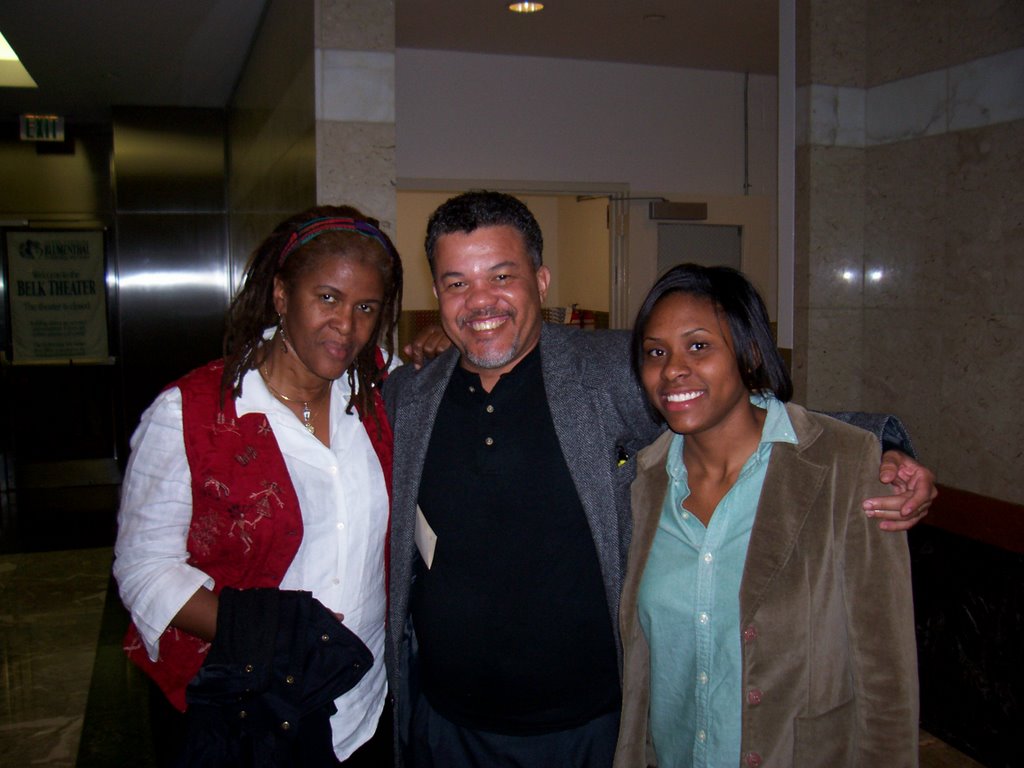
Geoffrey Philp and students

Geoffrey Philp at Davidson College


Geoffrey Philp


For more photos of Davidson College, follow this link: http://www.flickr.com/photos/51858402@N00/sets/72057594114278078/show/


Books by Geoffrey Philp

April 21, 2006

The Tony Soprano Leadership Method for WORLD Domination

Over the past three years, I have been attending various leadership conferences, and the conveners usually offer cute acronyms for leadership. I don’t buy any of them. The best method for leadership that I’ve seen is on The Sopranos, from which I’ve devised Tony Soprano Method for WORLD Domination © (Legal Disclaimer below*)

Tony Soprano Method for WORLD Domination ©


Whack your competition: Rule #1
Oversee all your underlings, yet give them freedom to be creative. If they stray, apply Rule #1.
Respect the difference between family and business, but always remember Rule #1.
Locate and confide with at one person you can trust—even if you have to pay for it. If they betray the trust apply Rule #1.
Demand loyalty and instill fear in underlings. If they betray the family or business, apply Rule #1.


This looks like US foreign policy, doesn’t it? Everything boils down to Rule#1.
In the next few weeks, (I wouldn’t be a good storyteller if I didn’t add suspense—See Benjamin, My Son) I will offer the Rasta method for VITAL Livity©.


*The information and reference materials contained here are intended solely for the general information of the reader. It is not to be used for illegal, immoral or unethical purposes (well, maybe), but rather for discussion with the reader’s consiglieri and/or goomar. 


All visitors to geoffreyphilp.blogspot.com agree to read and abide by the complete terms of this agreement. Void where prohibited. From the law firm of Screechy and Van Doolu, attorneys-at-law: “Sue ‘em, screw ‘em, or fuggedahaboutit!” (www.screechyandvandoolu.com)

***

April 19, 2006

Bob Marley and the Seven Chakras


For many, the name Bob Marley conjures up the caricature of a party-going, ganja-smoking Rastaman. For others, it evokes the image of a freedom fighter, dedicated to peace and brotherhood. During his brief but intense career, Marley was both. Even now, many years after his transition, his music is known and appreciated by people who couldn’t name another reggae musician if they had to. Perhaps that’s because Marley was more than just a pop singer. 

By the time cancer claimed him at the age of thirty-six, he had become a shaman whose medium was song. A devout Rastafarian whose faith cost him his life**—he refused surgery in order to keep his body, his temple, intact on his way to meet Jah (the Rastafarian name for God)—Marley used reggae as a means of proselytizing the unconverted. Through his restless devotion to his art, he transformed the pop medium of reggae into a means of conveying the timeless truths of humanity. But Marley was not born a Rastaman, and his growth from a scrappy street fighter to a peace-loving Rastaman follows the pattern of many mystics who preceded him.

In her book The Anatomy of Spirit, Caroline Myss outlines the seven chakras of the human body. According to Eastern tradition, these archetypal power points represent a form of “symbolic sight”, which I have found useful in tracing Marley’s career. They represent also a sort of spiritual shorthand to the power centers or challenges that every human will face: survival, sexuality, power, love, self-expression, wisdom or ignorance, and the acceptance of grace. These are universal issues: “There’s a natural mystic blowing through the air/ If you listen carefully, you will hear…/Such a natural mystic/ Blowin’ through the air,” (“Natural Mystic’). Marley accepted his role as a “natural mystic”, and would no doubt appreciate the correspondence the chakras. It is also worth noting that Marley belonged to the Rastafarian, Twelve Tribes of Israel—he belonged to the tribe of Joseph (See jacket cover of Rastaman Vibration LP) and in one concert (Legend DVD), he reminded his audience, “When you say Judah, you must touch the heart”—for each tribe had a function (state of being that had zodiacological origins/state of consciousness/ physiological centers), and Judah corresponded to the heart.

Whichever pattern you believe, the power behind our lives that the poet Dylan Thomas describes as, “The force that through the green fuse drives the flower,” is experienced on an intense level in the lives of these shamans/mystics (who are willing to open up to the experience) and propels that desire for one-ness/at-one-ment/connection to the divine that is expressed as Sahasrara, Kether, or Jah-Rastafari*, and often begins with what the psychologist Maslow calls, “an oceanic moment” or if you are a Catholic as an epiphany.

We all have different names for these states of being (and I know this is heresy to the true believers), but if as Campbell suggests that these states of consciousness are rooted in our biology—there is only one human central nervous system—then we can reasonably assume a certain similarity in the variety of human experiences for the chakras speak to experiences that are common to the human race. 


For sooner or later, we will all have to confront with our relationship to our tribe: Muladhara/Survival/ Tribal Power (What is my relationship to my tribe? Who are the members of my tribe? Will I be limited by the perceptions of my tribe? How will I survive?); Sexuality/ Svadisthana (How does wholeness and holiness fit in to this when I am so divided (mind/body split), and my sexuality makes me grasp for someone outside myself? How does my sexuality/creativity fit into the pattern of my life?); Manipura/ Power (Will I use my power/gifts/talents for my own ego concerns or will I use my power to help even those who are outside my tribe?); Anahata/ Compassion (Am I really one with you?); Vishuddha/Surrender/ Self-Expression (Is the universe hostile or benign? Is “every little thing gonna be all right”?) Ajna/ Wisdom/ Intuition (What is the truth of this situation? How does my truth balance against these other truths?); Sashara/ Grace (How do I make every moment a moment of total acceptance and awareness?).

Sometimes, depending on the level of our meditation, we get a glimpse of that oneness—a feeling that the mystics/shamans tell us they experience every day: or as Bob would say, “The brotherly love, the sisterly love, I feel this morning,” (“Top Rankin”) and his life was livicated to the relentless self-inquiry (Dawes 191) that these questions and states of being lead us to ask.


Like an ancient medieval alchemist, Bob lifted up (tikkun olam) carnal emotions (lead) and transmuted them into psalms of praise (gold). The difference between artists/mystics and the rest of us is not the raw material (we all have these power points/chakras), but their willingness (fearlessness?) to be open to new experiences and their transformation their woundedness into praises of joy.

From his earliest days as a rude boy in Trench Town, Marley recognized his community as his primary source of identity (Muladhara). Joseph Campbell’s Transformation of Myth Through Time defines this as, “land claiming… through naming the landscape, you read the land that you are living in as the holy land.” Bob returned to Trench Town many times to pay tribute to the place where he spent his formative years. “Trench Town Rock” (released in 1970) was the earliest indication of Bob’s land naming. Although Trench Town was and is one of the most wretched ghettos on the globe, Marley loved the people of Trench Town and pleaded for them: “Trench Town rock, give the slum a try / Trench Town rock, never let the children cry” (“Trench Town Rock”). Despite the deplorable conditions, Bob recognized the strength of community and loved and respected his origins: “They say can anything good come out of Trench Town? / That’s what they say, Trench Town / They say we’re the underprivileged people / So they keep us in chains / Pay, pay, pay, pay tribute to Trench Town / We come from Trench Town” (“Trench Town”). Intuitively, he knew the value of an old Akan saying: “Only a fool points at his origins with his left land.”

“You have to sing love songs”, said Bob Marley in a 1981 interview with Dermot Hussey (Talking Blues), and sing them he did. The second chakra, Svadisthana, represents sexuality and creativity. Campbell explains, “Sex is the aim of life. Everything is coming up roses. The birds are singing. The bells are ringing for me and my gal.” Pop music rarely rises above this level, and in songs such as “Kinky Reggae”, “Mellow Mood”, “Do It Twice”, and “Put It On,” Marley proclaims the joy of sex and procreativity. “Come rub it on my belly like guava jelly,” he croons in “Guava Jelly.” And “Stir it Up” is a lyrical celebration of sex filled with double entendres: “I’ll push the wood, I’ll blaze your fire / Said I’ll satisfy your heart’s desire.”

Bob loved women and weed. On Kaya (also Rastafarian for marijuana), Bob acknowledges the power of the weed and its effect on his creativity: “Excuse me while I light my spliff / Oh, God, I gotta take a lift / From reality I just can’t drift / That’s why I’m staying with this riff” (“Easy Skanking”). In Awakening the Heroes Within, Carol S. Pearson asserts that magicians are naturally attracted to hallucinogenic drugs such as marijuana (19). Maybe that is why Bob Marley celebrated it in song and made it part of his life. Or maybe it was a means of lessening the blows (of which he was painfully aware) to his self-esteem and personal honor.

Throughout Africa and the Third World, Bob is revered for his warrior status and no-nonsense stand on human rights. “Get Up, Stand Up” has become the anthem for Amnesty International. “I Shot the Sheriff”, and “Crazy Baldhead” are perfect examples of Manipura, the third chakra, “the will to power”. From his earliest days in Trench Town, Bob was known as a street fighter and earned the names “Tuff Gong” and “Hammer” (White 319). “If you are a big tree,” sings Marley in a perfect mixture of Rastafarian mythology and King James Bible lyricism, “we are the small axe” (“Small Axe”). Bob extended his sense of personal dignity to his community, his race, and ultimately the whole human tribe: “Every man got a right to decide his own destiny” (“Africa Unite”). It was this constant pushing against his limitations and weaknesses that led Bob to the fourth chakra, Anahata.

Joseph Campbell clarifies, “Anahata refers to the sound that is not made by two things striking together… Om…this is the Virgin Birth, the level of humanity that recognizes love as a divine power and is open to forgiveness, compassion, hope, and trust (Myth 219). Is it any wonder then why so many people around the world are drawn to “No Woman, Nuh Cry”? Set in Trench Town, Bob draws his mother, his sisters, and his friends—all of us—into a circle of grace and love, speaking to us in our deepest moments of existential terror, almost in a lullaby: “Everything’s gonna be all right.” Bob turned all the energies of the second chakra into a universal embrace of the divine.

“Not my will, but thy will” is the hardest challenge for anyone (especially an artist like Bob who fought for recognition all his life) to face and acknowledge, yet Bob was willing to give up many things, such as the acceptance of the tribe (“Unconcerned with the good opinion of others”), to make divine music. He was willing to move from loving to being loved, opening himself up to a sort of second birth to the true life—a personal surrender to the divine by following his dream and his destiny. This is the task of chakra five, Vishuddha (“purified”). Bob sensed this intimately and changed the lyrics of “Put It On”, from “I rule my destiny,” to “Jah rules my destiny” in his live performances (Legend)

Marley’s destiny was fraught with many challenges. As Joseph Campbell reminds us, “If what you’re following is your bliss, your passion—it’s so easy to tip over and fall into a torrent of passion that sweeps you away” (Myth 285) Passion can also lead to despair. At level six, Ajna, the Search for Truth, Bob sang some of his saddest songs: “Natural Mystic,” “Johnny Was,” “Time Alone Will Tell,” “War,” and “Concrete Jungle” are a few. The most harrowing of these, “Concrete Jungle”, describes the “dark night of the soul” in a contemporary urban setting: “Darkness has covered my light / And has changed my day into night / Oh where is the love to be found? / Won’t someone help me ‘cause I’ve got to pick myself from off the ground.”


The feelings of woundedness, feelings of unworthiness over one’s past, guilt that others (especially close friends and family) have not achieved a sense of equilibrium, afflicts the seeker at this point. Bob was no exception, and it drove him into exile from his homeland. He left Jamaica on self-imposed exile because of death threats and the noise that surrounded his life. He would return occasionally, “Coming in from the Cold”, but his life at this point belonged to humanity and he had accepted an expanded view of his homeland.

Bob was aware of divine grace in his life. From this state of grace, Sahasrara, the seventh chakra, he lived his life in the present moment and sang, “Jah Lives”, “Give Thanks and Praises,” “Forever Loving Jah,” “Rastaman Chant,” and “Thank you, Lord.” The Christian sacraments call this extreme unction: the ability to bestow grace to finish one’s unfinished business.” And herein lies the real challenge that Bob’s life has left for us: “Won’t you help to sing these songs of freedom? / For all I ever had… redemption songs, redemption songs / Sing along with me children.” (“Redemption Songs”)

Bob’s lyrics remain stuck in the conscience of our race. He struggled to overcome two of the most intransigent problems of humanity—racism and poverty—and to transform the events of his life into a vision of wholeness and holiness. This Bob did with grace and love, always questioning, always pushing himself (and us in the process) to a higher definition of himself. There are some who point to Bob’s many flaws to denigrate his accomplishments, but Bob wrote and sang from the “higher man,”: “We are the children of the higher man”, “Africa Unite.” In the West African tradition, a griot/shaman doesn’t have to be “holy”—his sole responsibility is to sing the truth of his tribe. Bob accomplished this task. So many after his death, his words remain in the consciousness of humanity, just as they did during the Mid-East peace negotiations over what seems a lifetime ago: “Cause puss and dog they get together / What’s wrong with loving one another?” (“So Jah Seh”).


Bob Marley and the Seven Chakras 

1. Muladhara: Tribal Power; Survival
“One Love”
“Trench Town”
“Africa Unite”
“Caution”
“Smile Jamaica”
“Survival”
“Zimbabwe”
“Trench Town Rock”

2. Svadisthana Creativity/Sexuality;

“Guava Jelly”
“Soul Shakedown Party”
“Stir It Up”
“Craven A Go Choke Puppy”
“Simmer Down”
“Nice Time”
“Put It On”
“Kaya”
“Back Out”
“Sun Is Shining”
“Do It Twice”
“Mellow Mood”

3. Manipura: Honor Oneself; Self-esteem; Personal Honor; Power

“Small Axe”
“Judge Not”
“Get Up, Stand Up”
“Burnin and Looting”
“Natty Dread”
“Iron Lion”
“Duppy Conqueror”
“Soul Rebel”
“Hammer”
“I Shot the Sheriff”

4. Anahata: Love is Divine Power; Forgiveness and Compassion; Hope and Trust; Grief and Anger; Resentment and Bitterness

“Waiting In Vain”
“No Woman, No Cry”
“Is This Love?”
“I’m Still Waiting”
“Stir It Up”
“Bend Down Low”
“Could You Be Loved”

5. Vishuddha: Surrender Personal Will to Divine Will; Following One’s Dream; 
Self-Expression

“Judge Not”
“Mix Up, Mix Up”
“Ride Natty Ride
“Babylon System”
“Real Situation”
“Bad Card”
“Why Should I?”

6. Ajna: Seek Only Truth; Intuition

“Concrete Jungle”
“Natural Mystic”
“I’m Hurting Inside”
“Who the Cap Fit”
“Crazy Baldhead”
“War”
“Running Away”
“Johnny Was”
“Rat Race”
“Keep On Moving”
“Exodus”
“Time Alone Will Tell”
“Coming In From the Cold”

7. Sahasrara: Live in the Present Moment; Ability to Trust Life; Ability to see larger pattern; Faith and Inspiration; Spirituality and Devotion

“Give Thanks and Praises”
“Rastaman Live Up”
“Rastaman Chant”
“Lively Up Yourself”
“Thank You Lord”
“Jah Live”
“Three Little Birds”
“Redemption Song”
“Easy Skanking”
“Smile Jamaica”
“One Drop”
“Forever Loving Jah”


Sources: Marley, Bob. Songs of Freedom. CD. Island. 1992.
Myss, Caroline. Anatomy of Spirit. New York: Three Rivers, 1996.


Works Cited


Campbell, Joseph. Transformations of Myth Through Time. New York: Harper, 1990.

Campbell, Joseph. The Power of Myth. New York: Anchor, 1991.

Dawes, Kwame. Bob Marley: Lyrical Genius. London: Sanctuary, 2002.

Marley, Bob. Songs of Freedom. CD. Island. 1992.

Marley, Bob. Legend. DVD. Island, 2004.

Myss, Caroline. Anatomy of Spirit. New York: Three Rivers, 1996.

Pearson, Carol S. Awakening the Heroes Within. New York: HarperCollins, 1991.

White, Timothy. Catch a Fire: The Life of Bob Marley. New York: Holt, 1989.
***

Originally published in Magical Blend #65

***
* The meaning of the word Rastafari is derived from the pre-coronation name of Haile Selassie, Tafari. Ras in Amharic means "chief," so we have Ras Tafari.

***

Reader Questions:

How did Bob Marley die?

Death is not a part of the Rastafari vocabularly, so to honor that knowledge, I'll put it this way.
According to the Babylon system, Bob Marley died from cancer--malignant melanoma--that began in his right big toe and then spread through the rest of his body to include his brain, liver, lungs and stomach.

Contrary to many myths, Bob did not die from a drug overdose nor from smoking too much marijuana.

His transition is a part of his myth/legend: "It's a foolish dog that barks at a flying bird" (Jah Live)

***

"You want come cold I up"--Trench Town Rock.

This is one of those brilliant turn of phrases that Bob popularized and it has a double meaning. "To cold up someone" can mean to dampen his/her hopes/dreams etc. But it can also mean to "kill someone"--"cold up" his/her body. Trench Town killed many hopes and dreams and many people died there. Truly, Bob could sing, "You want come cold I up" to match the brilliant lyric of, "One good thing about music/ when it hits you/ You feel no pain." This was real, this was true. It was also great poetry.


Reblog this post [with Zemanta]