On the weekend of Sept.4-7, 2003, Prof. Rex Nettleford, Vice Chancellor of the University of the West Indies was a guest speaker at First Annual Arts Festival at Broward Community College.
Known for his deeply insightful ruminations on just about every aspect of Caribbean life, Prof. Nettleford this time around spoke on cultural diversity and its impact on the political and economic development in the Caribbean basin. – Recorded and edited by Olivier Stephenson.
New Statue
I wasn’t quite sure what I as getting into when I was asked to be [a] part of this exercise, the Consul General has just informed me.
I was very pleased to hear [the Consul General, Ricardo Allicock’s] reference to the bit of sculpture, The Ancestors, it happens to be one of my favorite pieces and a part of recent work that was done by a sculptor … You’re quite right, I like your interpretation of it. I’d love to hear [your interpretation] of the two new statues [Redemption Song] which are now causing so much trouble in Jamaica.
Well, that, of course, is itself a signal of many things. For one thing people cared enough to bother about it. I myself, who was part of the selection committee, gave the edge to that particular work. Naturally, I have to be responsible for the furor. But, like you, my own interpretation of the monument I think it will hold up to muster. And, in fact, in due course, history will absolve us all.
It’s interesting, though, that there was such a furor. You can interpret it in many ways – certainly in one way: I think we need to be emancipated from the mental slavery Victorian hypocrisy, particularly among our men, and feminine prudery among some of our women.
And, the other thing, interestingly enough, which has come out very strongly is the criticism or comments on that monument, is that it is very strongly feminist in a particular kind of way. You have two people emerging from the healing stream, two people in their own right, not somebody who has been made out of the rib of somebody else. You see, I’m my mother’s son. My grandmother and my mother never made me forget that. And the thing of looking up, of course, is very important.
The university has been very, very central to this whole thing of the development of culture and the whole project of self-discovery and cultural definition, which I think is so important to the making of a people.
We remember the great artists – musicians, sculptors, painters or whatever – but we don’t often remember the politicians who are in power at the time, because it is what they produce, what comes out of the creative intellect and the creative imagination, which, finally, defines a people. And, while the people like us – not only in the
African Diaspora – but wherever Africa met what other culture on whatever soil this has been going on for a very long time.
Cross-fertilization
Because from ancient times, the antiquity which Europe has hijacked on to itself as its own – I refer to ancient Greece, ancient Rome – the presence of Africa was very important to the development of that particular culture.
And this is something that we have learnt: the Caribbean is a cradle of [our] own culture, not because we are so special, but because we have been the beneficiaries of certain things with special things that have happened to humankind time out of mind. We have time within mind, because I’ve referred to ancient Greece and Rome where old civilizations met – a great many civilizations met – and all great civilizations are the result of cross-fertilization. That’s the secret of the greatness of the Caribbean, it’s a cross-fertilized culture, one which is at the crossroads. It’s a crossroads culture.
The problem, of course, with Africa and its presence in it is because of the developments over the past 400 years, every African has been made to deny the existence of Africa in all of this, in the shaping of human culture. And, therefore, one has to spend time on bringing it back to the center where it belongs because it’s an iconic participant in the shaping of human civilization anywhere in the Western World over the past 500 years.
And, even so, that credit is being denied it. Hence the importance of efforts by people like us to insure the centrality of that particular catalytic impact of that particular presence is never forgotten. So I make the exaggerated claim for us in the Caribbean, I don’t even make exaggerated claims for Africa – qua Africa – but I do make claims and valid claims for the tremendously important role that the presence of African civilization or civilizations has played in the shaping of humankind over the past 500 years.
The next place where you have that kind of cross-cultural fertilization was in the Iberian peninsula from the Middle Ages up to 1492, with the fall of Granada, when the Spaniards and the Portuguese expelled the Jews and the Moors. And as someone put it rather quaintly, once they did that the Spaniards and the Portuguese lost their imagination and their intellect. And they tried to reshape that and restructure that in the Americas and that’s why the Americas – at least the Caribbean, is one part; and this culture, the United States, is only one part of the Americas. In fact, in a very scientific … and historical sense, we’re all Americans – we who live on this side of the Atlantic and have been the result of that cross-fertilization.
I’ve often said to my American friends of Caucasian stock, that when they can come to terms with the notion that they are as negrisized as I am Europeanized then everything will be … [laughter]. I know to think oneself to be negrisized for some people is a fate worse than death. It isn’t, rather, it is a marvelous strengthening. Again, trust the West Indians to think this way. Why, you know, in Trinidad, they cross the hybrid, biological result of an East Indian – as we refer to Indians – and a black African, is a “Dougla.” In Jamaica it is “Coolie royal” or Chinie royal.”
But the important thing is that people like us live in a crossroads culture, a crossroads civilization where movement, motion, dynamism are the order of the day. And that there is a kind of creative chaos which other people are discovering now which defines and determines how we live, how we have our being, how we move, and what have you. As a result of that, we are constantly negotiating our position in society, in life and, therefore, we are constantly like this … we’re switching all the time and we’re in constant motion.
Those parts are made while we are walking them and therefore we are resistant to anything which seems to be an imposition because we want to do the walking. We don’t want necessarily for somebody else to come and give us their aluminum and we trot along while they run [and] leave us behind. And this is very strong.
Silence
I could give you the problem of metaphors, the other one which certainly will be the theme of my next work is the theme of silence. People like us have been relegated to a position of silence. … [like] children [to be] seen and not heard. And it’s interesting, we in turn have used the silence in very interesting ways as people. It’s not peculiarly black, it’s not peculiar to the Caribbean, and anybody who is forced into a position of silence will find ways of using that silence. You can call it contemplation, you can call it revolution plotting, and, of course, you know we know in the Caribbean how to make things not work.
We have had three or 400 years of apprenticeship in sabotage. And we can burn down bridges without setting fire. We know how to use that silence. A good deal of that can be self-defeating and at this time of our history we have to be sorting these things out: What is good for us and what is bad; what occasion warrants this kind of solution and what doesn’t. A better solution for this occasion might not be right for the next occasion. We have to keep on thinking our way through renegotiating our space, constantly it’s a battle for space. Happily, the entire world now is becoming a crossroads and Creole.
Cultural Assertion
I’m just coming from London, and it’s fascinating to see how London has changed demographically. It’s a multiracial, multicultural, multi-whatever-it-is, city. It’s no longer a lily white, pure whatever – if ever it was – and they are very conscious of this, and the whole world is conscious of this. With the thing of globalization, the greatest threat to the negative aspects of globalization is cultural assertion.
And what is happening now, what is happening to the powerful North Atlantic is it’s pushing everybody into a homogenized whole and people are resisting. And how do you resist? You fall back, you retreat into areas over which you have total control. Religion is one of them, the Iraq situation, and what have you. Let’s not underestimate them; the terrorism which is supposed to be coming from elsewhere is part of a response. It didn’t start with [Osama] bin Laden, it’s something that has been going for a long time.
Ever since then Arabs were thrown out of the Iberian peninsula they have been fighting back. And at times they will come up – even Saddam himself. I heard him give an interview many, many years ago, before the first Gulf War, which I have never seen referred to, but I think it was on the BBC television, where he was reminding the West that the West is not the only civilization – valid civilization. After all, his civilization was – for whatever, even – had given to the West learning and branches of knowledge which are to their advantage.
And, you know, there is a kind of mutual Jihad from the time of the first Gulf War, I felt Mr. Bush, the elder, was a Christian fundamentalist touting the Islamic fundamentalist, because the notion that God is on my side and on nobody else’s – which is a very, very dangerous position to be at. And I find it on both sides, I find it in this country on the Right Wing of this country and I find it among the so-called terrorists. Those two polar divisions will never be reconciled. Somebody has to give and one to remember even quoting from Christian-based civilization: “In God’s House there are many mansions.” And God is on everybody’s side.
Now if you are able to come to terms with that then you will be able to realize that you are less than the angels and do not believe that everything that you do is right and everything that everybody else does is wrong. It’s the same kind of attitude that informed the old globalization which is imperialism and racism which came out of that. The notion that somebody is born looking a particular way, he or she is imperial to somebody else born looking a particular way. It just doesn’t make sense. And time and time again, it is proven that this doesn’t make sense, we never seem to learn from our history.
This is the kind of world in which we now live and I feel there ones of us within the United States of America and certainly in the Caribbean who are to understand and position ourselves that we don’t get caught up in other people’s battles. Because they are other people’s battles.
Many of these considerations are cultural, and by cultural, I’m referring to the only thing which really gives the human being power and that is the capacity to make decisions, definitions about oneself on one’s own term and be able to follow through with action on the basis of those definitions. This is what the artist understands. The creative person can be a creative intellect and a creative plumber, can be a creative carpenter. As long as he or she is creative, prepared to explore spaces beyond what one is able to see, one finds that one is in control of self which is the beginning of that emancipation or liberation for everybody.
That’s why, of course, culture, in terms of the artistic manifestations has been so important to the Caribbean. Of course, when I speak of culture it’s not a crying sin to a little bit of dance and little bit of music though these of course are clear manifestations of something which is much more complex and much deeper.
What you will see here tonight is largely music from The Mighty Sparrow – who, incidentally, is Dr. Sparrow, the University of the West Indies was wise enough – in fact many of our honorary graduates are people of the creative mind, because they are the ones who have said the most important things about our society and about humanity, generally.
The University Singers have been encouraged by the university because we feel very strongly that that side of our graduates have got to be encouraged. We have got to turn out people for the kind of world in which we live, people with the capacity to in fact cope with all the chaos, all the diversity, and what have we, out there, as they do in their ordinary lives.
For many people, a lot of them go to school and they turn fool. Some of our wisest people have been those who have not been formally schooled. A lot of formally schooled people have been made into fools. It’s very important for the educational system and certainly the university be part and parcel of escaping that particular trap.
Creole languages and religion
It’s not by mistake that the Caribbean is a living laboratory of Creole languages, native-born, native-bred languages. Jamaica Talk, the language in which I’m speaking to you now is not the language that most Jamaicans speak most of the time. There is Serantonga in Suriname, which is part of the Papiamento in Curacao; Creole in all the French-speaking territories from Haiti right through to St. Lucia, Martinique, Guadeloupe, all of these places. And there are variations of course, of standard English of many kinds.
The religion, old people want to know where they come from, they invent their Gods, their Creators, and what have you, and we in the Caribbean have opened more churches than – there are variations on the received orthodoxies, largely Christianity, but in fact, it’s very strongly African influenced. Santeria in Cuba, and I’m sure in Little Havana there’s a lot of Santeria right in this town. Voodoo in Haiti, Cumina, Pocomania in Jamaica, Zion Revivalism, Shango in Trinidad, Candomble in Brazil – which is Caribbean in terms of Africa meeting Europe on foreign soil.
Of course, we have ladies of quality, now, in their silk-pleated skirts rolling on the carpet at the Pegasus [Hotel in New Kingston], because they are into some New Age spirituality. People searching for things because the orthodox expression has not provided them with the answers to cope with the kind of world in which we live. We have a tremendous facility for finding our own God or worshipping two or three at the same time.
I had absolutely no difficulty going from Baptist Christian with my grandmother to Pocomania where she could grunt and jump like anybody else, although she was a pillar of the Baptist church.
Family, legitimacy and illegitimacy
The kinship patterns which is another important cultural index – very important. We have created interesting families who – politicians talk about family life – but it depends on which life or of the family your talking about. Jamaica, for example, certainly in 1976 – an idea that the percentage has gone up now – when we passed the Status of Children’s Act which has been replicated in all the English-speaking countries now. We could say there are no more bastards in Jamaica. Because up to that time, 70 percent of the people were considered illegitimate.
You know, it’s interesting, we have been very self-righteous about racial discrimination, say, in South Africa, but certainly people of my generation who are illegitimate, had to walk around [this] country with what was called a Declaration of Identity. Now, a lot of the younger people don’t know about this, but all official transactions became official only if you were able to show the Declaration of Identity where some JP or notary public had to sign it that you were born, because your father’s name was not on the birth certificate. Now this is nonsense, your father was not the one who carried the child for nine months, your mother’s name is on it but she doesn’t matter.
You see, all these things which we inherited which were definitely anti-feminine and the women, of course, suffered greatly because of this. All of these are cultural factors which had a tremendous effect, because our young men have grown up very confused. Very confused. A strongly patriarchal society where the woman really in fact rules.
So we love our mothers and our grandmothers, but we beat our sweethearts and our wives. The contradictions are fantastic. You get all this kind of cultural confusion because we were a numerical majority forced to function as a cultural minority and this has a terrible effect on us in Jamaica and the rest of the English-speaking Caribbean.
Less so in the Catholic countries, of course, they’re much stricter on the altar blessed minions. It didn’t by any means mean that if you were not born into a duly married family that you would necessarily come out any worse. Because that didn’t guarantee and still doesn’t guarantee the child the caring, compassion and the affection which is needed. This of course has led to lots of things … particularly in Jamaica and with the coming of drugs in all of the islands to some really serious problems that we are now having, particularly among the young male population.
We have no gunmen in Jamaica, it’s gunboys. If they pass age 24 they are lucky. They’ve either given it up by that time or they are dead. This is a very serious matter. Again, we don’t have nay gungirls or gunwomen, though we hear that some of the women – what we have them doing now is being mules to carry the drugs. Because they will tell you they have to work some quick money for their children.
In England, now, somebody has suggested that the British should build a prison in Jamaica for the Jamaican prisoners in England. It is that bad.
The creative imagination and the arts
One thing which has been a saving grace for us has been the retreat into an area where we can be free to create. We have produced more artists on the square inch in the Caribbean than is probably good for us. But it’s better that we have done this because the alternative is something else.
So the exercise of the creative imagination and the apparent thing of the creative imagination have been very strong. We have produced world class people undoubtedly. We need not be ashamed on that score. In my own view, it’s time that we get into the mainstream of it.
Do you know that up till recently, in the annual national economic report the arts and education were listed as non-productive? But [Bob] Marley has probably brought in more foreign exchange into Jamaica in the ‘70s than many entrepreneurs. And he did help a number of people and many of these artists are working the kind of money that nobody in here can ever dream of working because of the exercise of their imagination.
In the ‘80s they forbade – it was Government policy not to play reggae in the advertisement for the tourist industry. In the ‘70s there was a Rasta fellow who held a nice little white baby and one hotelier said, “What will the people in the mid-West think, this orangutan holding the child?” That’s the kind of problem we had in Jamaica, to a certain extent we still have some of that … That self-contempt and that self-doubt which has plagued us as a result of our history has been greatly countered by the exercise of the imagination and we have done a great deal with that.
I’m trying to give you the context of that, why this is so important to us. Because that’s all we really had. And we are now entering the knowledge economy which is how they describe the 21st century, and that is what you have in your head that’s going to matter.
Of course, a lot of people think being able to manipulate the computer and the Internet is the answer. I don’t think that that is it, what you put in to the Internet and the computer is really what matters.
In a knowledge economy the intellectual power of the arts has to be recognized, among other things, and the artistic power of the Internet has to be recognized. And people like us have to bring these things together, it is critical.
The artist – whether you see a bit of sculpture or a painting that is the result of serious research in terms of observation, distillation, selection and, finally, representation. That is exactly what the intellectual has to do when he or she produces a thesis or a book, or what have you. Their activities are a different kind, but going toward the same end. And we have to be very much part and parcel of this.
Lastly, we mustn’t get ourselves in the position where we feel because we are good dancers, good singers, that we are minstrels, that we are mainly there to entertain our betters. And there is, of course, the feeling which is still too strong among us and that real serious thinking cannot be done by people like ourselves. We have to put the lie to die. But, in fact, it is still very strong.
Norman Manley said “all human acts are acts of intelligence.” That’s where the future lies with the intelligent and the arts in the sense are no different. Some of us artists are partly responsible for that myth. We talk about enjoying privileged despair and not getting down to the business. I myself do not feel that arts academies and arts schools should be run by our own artists, but the artist must learn how to run these things.
Similarly, the intellectuals, too. They too have to do it.
Appropriate institutional frameworks
One of the things we are now urgently are trying to do is to insure that we deepen, heighten, strengthen the appropriate institutional frameworks which would in fact allow us full membership in the human family. This is critical and we have to think this way. We cannot allow ourselves to be eaten by inner rage. And that’s why the Mandela spirit is so important at this time, that the Gandhi spirit was at a particular time; and Martin Luther King fighting for the American. But that spirit that Mandela has brought into the spirit of the consciousness of the world about forgiveness: Fill them with kindness.
He did a thing recently, which, of course, has been quite controversial: He allowed his name to be attached to [Cecil] Rhodes. Now, Rhodes was a 19th century imperialist – robber baron. And this spirit of the 20th century and 21st century, Mandela said “let us close the circle.” Yet, Rhodes, a highly flawed character, did something which anticipated what the 20th century discovered, that the future really lies in the investment in the human resource, in the human intellect and imagination, and he left behind some money for that.
Now, interestingly enough, why Jamaica’s name was put on the list – he probably thought that Jamaica was an independent country – from way back, Jamaica was a brand name, and I think that’s probably why we got on that list.
With the recent development of the Mandela-Rhodes Foundation, I have to share this with you: The American Rhodes scholars have written a petition against the Rhodes Trust warden, who is a moving spirit behind that initiative, blaming him for taking too much of their money to South Africa. Can you imagine, where the money was made and they are putting back some money into that and the Americans Rhodes scholars – which is a real danger for a spirit in this country that many of us are worried about – want to rule the world and determine all the rules of representation and the rules of engagement. If you try to get a monopoly in that you’re in trouble, because people are going to fight against it.
When we had to fight colonialism we regarded ourselves as Freedom Fighters, when you have people fighting that kind of thing they are regarded as terrorists. Well, whatever is the thing, I think we have to understand – and I have discovered – that the cultural dimension is critical. Everybody is going that route now, the Inter-American Bank, I had discussions with them only recently. All the other initiatives that they have tried have not quite worked, they are now going to establish a cultural foundation because they feel that it would invest in the human being’s ability to imagine, to create [that] they are likely to build a better society.
So when you go and see Sparrow or you hear the University Singers and you enjoy a little titillation for an hour, regard it as a serious matter.
Quarrel over statues you don’t like. If their penises are too big, quarrel. If the breasts are too big, quarrel. The artist will love this because at least somebody is thinking.
But in this sense, despite the problems we have in the Caribbean with all the violence, and what have you, and the quote-end-quote, “poverty,” and the coarsening of sensibility, there is that thing which we can fall back on, the creative spirit is not dead. In fact, if we only get our act together, continue to create, and what have you, there is tremendous hope.
Our history has been one of struggle and to tremendous success, that’s why we’re here and hope is something we must never give up, and in the arts and in culture that is a tremendous source of meditation for us.
***
Photo: Douglas DaCosta
.JPG)


![Reblog this post [with Zemanta]](https://lh3.googleusercontent.com/blogger_img_proxy/AEn0k_uaPVhybNE8zmfty2FV_dsvVxzjfLjVXkZngNzTq0gG36EsazhxTEb907AOKDWRpcpdwvBHhy71kdB4M2LLvMvVM-R-l3OOXkub_N7cgZWgy73gqDDkRICk0sLxbg1dPM7q1sM_my-DSz7ogM6Sz7w=s0-d)

![Reblog this post [with Zemanta]](https://lh3.googleusercontent.com/blogger_img_proxy/AEn0k_vDHrRGiZK-WFycQZU5DTNnBPkDnrL7rSqztRvHzhYb1kvPTYiSKZqkbEe84QNTbIn81EmGaLHrO9QcSG1EgmSpTXKN8BWw-DwibNot8xCsqpNfq1ojXO7K3hepKESZ-Ap-q-pJ-T-D6K3L9sp-Ovqo=s0-d)
![Reblog this post [with Zemanta]](https://lh3.googleusercontent.com/blogger_img_proxy/AEn0k_t4EfVQDl-5KqxvmOHeW8wu9SG9yrRfmXb8DhBaVn7IwdawDCqIY1738omZ085_7mZJfys5sIjSiuPZRXWtq3O9gMLWrJSJUbRfFvpe589j-H0MQSoBrY9YdikNewbr4LYCabh6nihLnXtTuv2UMx24=s0-d)

![Reblog this post [with Zemanta]](https://lh3.googleusercontent.com/blogger_img_proxy/AEn0k_vJKgqtQMFjVdEvSr-hYcT5LMTbCLK9POtGy6A5UIAXq0bBgHNbT67eCDV2D8gtXK56uWyJvYp2RMcu3ajRvGhEJy5FiW_o7JIwYzWc3nmg1RZNJIoXDedq5ObCywFjJfQPLKaLUw2a7sG43KEOvV7-=s0-d)

![Reblog this post [with Zemanta]](https://lh3.googleusercontent.com/blogger_img_proxy/AEn0k_tcAWe_uG63Ss9eOSIprZpAN-wjA6KK_rsKD3r2FgrfJ_sewiUe7-CTBM9CArj4zXwa5cI615cvTErb3zARpgDV3kJJPFAdxw_lbjnsKHg8loBB5C0UgRDzsWC5if3NVt5bP_iElkO2K2UKdHwSnHKa=s0-d)

![Reblog this post [with Zemanta]](https://lh3.googleusercontent.com/blogger_img_proxy/AEn0k_u3uyQfT4jqStbrQbhBZwDQ_0Jctyo1HWtbJVww4VRgxZ7gX-AJhIMe3_b4zE1Uds_IPCRj-mc7CNlecWzkoadLTflrxErb__nGI_03CeBHA9IFY9QHGn4bFDdJCprTsvirxcx3L744-qHNYGbekBT5=s0-d)
 The Institute of Caribbean Studies and the Faculty of Social Sciences of the University of the West Indies, Mona announce an international conference on “Global Reggae: Jamaican Popular Music A Yard and Abroad.” The conference, to be held February 18-24, 2008, at the University of the West Indies, Mona, Jamaica and other venues on the island, is the third in a series focusing on Caribbean culture. The first, held in 1996, honoured the distinguished legacy of Professor the Hon. Rex Nettleford, Vice-Chancellor Emeritus of the University of the West Indies. The second, held in 2002, celebrated the work of the Barbadian griot/historian, Professor Kamau Brathwaite. This third conference, to be held in association with the Recording Industry Association of Jamaica (RIAJam), the Jamaica Cultural Development Commission, the Bob Marley Foundation, and the Jamaica Tourist Board, pays tribute to the generation of musicians who have created reggae – Jamaica’s distinctive contribution to world culture. Icons such as: Count Matchuki, Don Drummond, Count Ossie, Mrs. Pottinger, and Prince Buster.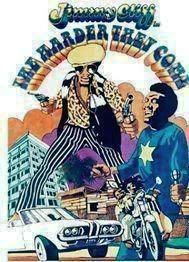
![Reblog this post [with Zemanta]](https://lh3.googleusercontent.com/blogger_img_proxy/AEn0k_tZUZtnBIIVpXof9UI_iRfe36Cdv3AqEofcTfFoYn1shyOB6Iki5c8tR8JGZCOrlZnzA2EPlLlWTof5mqYvDnQ3kBRo_ZHMWNI_L_to-0DYCF7MjeWzKT_WcMA8zZq9A-ZaiEJVn4fJ6VslKGfzxIAP=s0-d)

