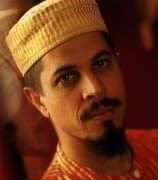
Showing posts with label Adrian Castro. Show all posts

July 22, 2013

"Death and Work" by Adrian Castro


For there to be a hero in any drama there must be an anti-hero. That which opposes the work, the fruition, the very essence of the hero. That which tries, and depending on whether a tragedy or a comedy, succeeds in eclipsing the ultimate goal of the hero. The resulting tension between the two opposing forces gives birth to the heroic act. The heroic act is to overcome that which is insurmountable-- be it evil, corruption, temptations, rain, drought, or storms. The anti-hero of our concern here is everyone's anti-hero-- death. It is more so evident in tragedies where our hero is the personification of an ideal man, a man of virtue and genius, in whose work and essence beauty is personified, and is alas overcome by death. Beauty is the river that separates this world from that world, or the above from the below. Truly man is incomplete without beauty. Beauty being bereft makes the hero's death all the more tragic.
Man can overcome vice, intolerance, tyranny, ignorance, but there is only one antagonist that man cannot overcome at least on this side of life. The belief in immortality and various forms of afterlife are a result of man's effort to overcome death. In response to this archetypal dilemma, human beings furthermore have cleverly devised casting death in a role which is not antagonistic or an anti-hero. Instead we have cast it as a great teacher, as the great leveler of man. This is itself a way of conquering the problem of death; simply by not making it a problem. If death is not fighting you, and you are not fighting it,  then it is not your enemy, but rather a teacher.  We see how it can be a teacher in the admonition, "set your house in order", for we never know when death will come calling. In this light, the fearful grasp that death has on the human psyche is no longer the dilemma to struggle against.

Death is the personification of impermanence. And the death's head and/or coffin is the archetypal symbol for it. Throughout many cultures in Latin America, Europe and the East (i.e. the religious iconography of Tibet, India) the prevalence of the death's head is a persistent reminder of the impermanence of life. These symbols appear again and again in rituals because, primarily, and despite our efforts to obviate the obvious, the struggle against impermanence and change is man's epic and archetypal struggle. It is constant and lurking at every corner. The struggle to not cling to the waves of desire and material attachments is daily. As long as man has a fear of death, he is not free.  It is through the vanquishing of the fear of death that we gain our liberation.

*

From the Yorùbá tradition we have a story where one of their most important heroes, a prophet by the name of Òrúnmìlà is in conflict with Death. As the story goes, Òrúnmìlà was once concerned about a dream he had the previous night. He dreamt that Death was going to visit his house dressed in all its terminal accoutrements and carrying his necrotic bloodied spiked club. When Òrúnmìlà woke that morning he immediately went to the Ifa divination oracle. Upon divination he was told that the wise awake and remain erect. That Fear and Death had also gone for divination wondering how they could have dominion over life. Òrúnmìlà was told that fear was actually what he needed to conquer. He was told to stay upright. He was told to sacrifice two hundred snails and thereafter tie the shells to a walking stick the length of his body. Òrúnmìlà was the only one of the three that did the sacrifice. He was to place this stick erect at the entrance to his house and everyday upon going to sleep and waking he was to bang the stick on the ground. The effect was a cacophonous clank that would scare the daylights out of anyone if not at least wake the dead. True to his dream, one evening Death (Ikú in Yoruba) came prancing down the front of Òrúnmìlà's house in full terminal regalia just as he was beginning to beat the sonorous walking stick. The song Òrúnmìlà was told to sing by the Ifá oracle was,

            "Oluwòwò ji odi ji Oluwòwò
            nba ri Ikú máà tè eee!"

which translates to, "The strong Ifá priest has woken, he has woken, when I see Death I will stomp him"

Death was not accustomed to hearing such defiance. And it never heard such a cacophonous sound accompanying the song. He thought to himself, "if this is Òrúnmìlà just singing before going to sleep, imagine what he will do to me when he sees me." Death immediately, and unbeknownst to Òrúnmìlà, made a turn back to his abode.

The crucial issue in the above myth is not the conquering of Death per se, but rather the subjugation of fear. It wasn't until Òrúnmìlà did the sacrifice with snails, a symbol of coolness and softness, that his heart was able to soften and cool and thus become fearless. This softness and coolness is in direct  contrast to the image we have of Death. Indeed in the story he has a rather rough and harsh demeanor. He is after all the anti-hero. It wasn't until Òrúnmìlà embodied the opposite characteristics of Death--  coolness, uprightness, fearlessness-- that Death was not able to prey upon him, that he was able to postpone his day of death.

The other interesting aspect of this story is the object with which Òrúnmìlà was able to scare off Death. It was a long (the length of Òrúnmìlà body), walking stick that made noise. It was to be used uprightly, that is, perpendicular to the ground, the abode of the dead. By ritually using the stick, which can be further understood to be a smaller version of a tree of life, or axis mundi, Òrúnmìlà declared himself, indeed imprints by the simple act of banging the ground, his presence on Earth.  He became the temporal opposite of sleep.


*

We are taught in so many of the ancient traditions, that it is through inner work (though usually it not called as such, in fact the work is usually deceptively materialistic) that we gain our freedom and hence our true rewards. This work must not be done with expectations, but rather for its intrinsic value. Through this arduous work, one of knowledge gained through initiation, purification, transformation we gain a gnosis of impermanence, of selflessness, we remain upright, vanquishing fear, and we are able to enter the center of our Self, the crypt of our Self. It is there where we get our rewards.

So what of the ordinary man? How can he/she do things which outlive him/her? The vast majority of great men/women throughout history are unknown. Many great men of profound depth and wisdom, who performed deeds that changed people, communities, that postponed death itself, died and not a word was uttered about them a month afterwards. Few gain accolades during their lives, and even fewer after death. By definition there are few Christs, few Buddhas, few Mohammeds. The Buddha himself was said to be the twelfth Buddha. So what of the other eleven? Who were they? The fact that we hear of few great men/women does not mean there have been few throughout human history. These are simply the destiny of each of these great figures, or providence of the Creator itself that chose to bring to the forefront of man's consciousness as symbols of man's greatness and possibilities.

"Behold now... I exhort you: All compounded things are subject to decay. Strive [towards enlightenment] with diligence!",  said the Buddha more than 2400 years ago. As human beings we are truly unique in our precious births as we uniquely have the opportunity to cultivate wisdom, virtue, seek truth, and so perform an active role in improving our lives. Of the myriad of living species there are no other on earth capable of doing this. Barring severe physical and/or mental hindrances, each human being has the capability of performing the “great work”.

In Yorùbá the word for person is ènìyàn. It is a compound word formed by è a possessive prefix, ni the verb to be, and yàn meaning to choose. Together it translates as "he/she that is chooses".  Choice is fundamental to the identity of a human being according to Yorùbá philosophy. Without going into too much detail regarding the creation of a human being, it is believed that humans choose their destinies in the spirit world before being born. It is one's Èlèdá, literally the owner of your creation, that spirit that resides in everyone, the seat of the divine within all of us, that chooses one's destiny. Once a person is born that record and memory is forgotten. Hence this is one of the central reasons followers of the Yorùbá tradition consult the Ifá oracle; as it is this divine corpus that has the ability to direct one in the direction consistent with the choices one made in the spirit world at any given moment. Of course everyone is free to follow the directives of the oracle or not. The fact that one can even choose to believe this theory is itself what makes one an ènìyàn. To choose is quintessentially human. To choose to perform is fruition.

Vocational work, when it is honest and truthful, is the seed of all societies and the root of its evolution. Just as the worker bees collaborate to build and sustain the hive, so it is through our various vocations and stations in society that it is built and sustained. Work facilitates the positive esteem of individuals.  A society whose members believe themselves worthy and productive and integral, is a society erected on a strong foundation. It is a society that will build its cultural, civic, and political institutions from the ground up. Ideally a society where a symbiotic relationship exists between the various strata, each nourished by the other. However, man cannot live by work alone!

Spiritual work, on the other hand , is performed in the most discreet, quiet, seemingly inactive way. No need to go somewhere to do it (though a sacred space helps to accomplish it). No need to wear a uniform (though regalia and iconography can help). No need to punch a time-clock (though discipline and effort are crucial). No need to have a boss (though Nature and all its laws are watching).

If a man acts only as if his father were watching him, and expecting a reward, well that man is in the end a child regardless of his age. Every action has a cause and a reaction. They say the bat of a butterfly's wing can cause a typhoon half-way across the world. What then of acts of kindness, charity, and love? There are many opportunities in life to express these qualities-- parenting, brotherhood, philanthropy, even vocational work. Many of us unfortunately fall victims to our own selfishness and expect rewards for these acts. Those of us who give to charity expect at least a government write-off. We work merely to make money, to pay bills, or at best amass a certain amount of wealth for relative comfort today or the far-off future; unaware death or impermanence can undo a lifetime's work in a day. We have many opportunities to labor, perform, act without fee or reward, simply for its own sake. Some would say it is because of  duty that we should perform such acts. But duty, when there is an expectation of reward attached to the action is no longer duty, but just what it is-- an action with an expectation of reward. In the end a selfish action predicated on a reward. This genuine attitude of duty and work are no doubt very difficult to achieve, but is nonetheless available to anyone, regardless of class, education, upbringing, etc., precisely because of our precious human birth.

We have to labor on many levels-- psychologically, spiritually, morally-- for work to be truly transcendent. But we must labor with the firm belief that our work will bear fruit in some way. We must make our labors equate a prayer. Laborare est orare! We must however be vigilant not to labor because it will bear fruit, but rather because it is best and moral and of benefit to others, ourselves, and family. There is a winding staircase that each and every one of us must climb. We can never be certain what, if death itself, is lurking around the bend on the next step. So we must be sure of our steps. Sure that they are honest and genuine. That they are of benefit in general. That they at least do not contribute to the baseness and demoralization of society. We must be sure our labors do not shred the fabric of society (unless of course it is corrupt, ignorant, and tyrannical), crumble the stones on which it rests. Most importantly we must be sure not to debase ourselves by acting callously, crudely or maliciously. We must work diligently in polishing our personal temples that others can emulate it, build upon it. So when the day arrives to call us back to our source, we can reflect back with a sense of accomplishment. It is arduous work but the best work.


About Adrian Castro


Adrian Castro is a poet, writer, and interdisciplinary artist. Born in Miami, a place which has provided fertile ground for the rhythmic Afro-Latino style in which he writes and performs. Articulating the search for a cohesive Afro-Caribbean-American identity, Castro honors myth on one hand and history on the other. He addresses the migratory experience from Africa to the Caribbean to North America, and the eventual clash of cultures. Castro creates a circular motion of theme, tone, subject matter, style, and cultural history, giving rise to a fresh illuminating archetypal poetry. 

These themes reach their climax in their declamacion – the call-and-response rhythm of performance with a whole lot of tun-tun ka-ka pulse. He is the author of Cantos to Blood & Honey,(Coffee House Press, 1997), Wise Fish: Tales in 6/8 Time,(Coffee House Press, 2005),  Handling Destiny, (Coffee House Press, 2009), and has been published in many literary anthologies. He is the recipient of a USA Knight Fellowship (2012), Cintas Fellowship (2008), the State of Florida Individual Artist Fellowship, NewForms Florida, the Eric Mathieu King award from the Academy of American Poets, NALAC Arts Fellowship, and several commissions from Miami Light Project and the Miami Art Museum. He has performed with many dancers and actors including Chuck Davis and African American Dance Ensemble, Heidi Duckler and Collage Dance, and Keith Antar Mason and the Hittite Empire. He has toured extensively through the U.S. and abroad. 

Castro has taught at University of Miami, Miami Dade College, and FIU as visiting professor, and/or guest lecturer. The New York Times Book Review selected Wise Fish as an editor's choice saying, "Sinuous, syncopated verses about the Caribbean melting pot." And "…even a cursory glance suggests his poems—which seem to be trying to dance off the page…would truly come alive on the stage. "Wise Fish" is a serious and seriously enjoyable contribution to our flourishing Latino literature." Adrian Castro is also an acupuncturist and herbalist.


September 6, 2012

Carolina Hospital, Adrian Castro and Geoffrey Philp @ USpeak


GET READY FOR OLD SCHOOL MIAMI!

The University of Miami’s USpeak Open Verse and Short Story Performance Series begins a brand­new year with Old School Miami Poets, featuring Carolina Hospital, Adrian Castro and Geoffrey Philp, on Thursday, September 6th, 8PM at the Oasis Deli at the Whitten University Center.

Carolina Hospital is a poet, essayist and novelist at Miami Dade College. To date, she has published five books, including the novel A Little Love (under the pen name C. C. Medina), and the seminal history work A Century of Cuban Writers in Florida. She participated with thirteen South Florida authors, including Carl Hiaasan, James Hall, Dave Barry and Edna Buchanan, in the New York Times’ best­selling novel Naked Came the Manatee.

Adrian Castro is a Miami­born poet, performer and interdisciplinary artist, whose Caribbean heritage has provided fertile ground for his rhythmic, distinctive Afro­Caribbean style. He is the author of Cantos to Blood & Honey (Coffee House Press), Wise Fish (Coffee House Press, 2005), and Handling Destiny (Coffee House Press 2009), and has been published in several literary anthologies.

Geoffrey Philp, author of the e­book Bob Marley and Bradford’s iPod, has also written two short story collections, several volumes of poetry, and two children's books. A multi­award winning writer, Philp’s work has the distinction of being published in both the Oxford Book of Caribbean Short Stories and the Oxford Book of Caribbean Verse.

In addition to our featured artists, USpeak spotlights audience members who share a page of their writing during USpeak’s Open Mic segments. Sign up begins at 7:30 when doors open.

USpeak events are free and open to the public, and are sponsored in part by the University of Miami's Creative Writing Program, Multicultural Student Affairs and the American Studies Program.

For more information, please visit http://www.miami.edu/uspeak, where you can also link to podcasts of previous USpeaks, prepared by our sound engineer, the author/musician/talk show host Matt Gajewski.

For further information, please contact: University of Miami Creative Writing Director, M. Evelina Galang at mgalang@miami.edu, or Patrick Sung at patrick.k.sung@gmail.com


***

Blog Disclosure Policy


Geoffrey Philp’s Blog Spot receives a percentage of the purchase price on anything you buy through links to Amazon, Shambala Books, Hay House, or any of the Google ads or Google Custom Search.


***

Disclaimer of Endorsement


The documents posted on this Web site may contain hypertext links or pointers to information created and maintained by other public and private organizations. These links and pointers are provided for visitors' convenience. I do not control or guarantee the accuracy, relevance, timeliness, or completeness of any linked information. Further, the inclusion of links or pointers to other Web sites or agencies is not intended to assign importance to those sites and the information contained therein, nor is it intended to endorse, recommend, or favor any views expressed, or commercial products or services offered on these outside sites, or the organizations sponsoring the sites, by trade name, trademark, manufacture, or otherwise.

Reference in this Web site to any specific commercial products, processes, or services, or the use of any trade, firm or corporation name is for the information and convenience of the site's visitors, and does not constitute endorsement, recommendation, or favoring by this blog.

November 13, 2011

Marcus and the Amazons Hits the Road!


Marcus and the Amazons, which was recently highlighted in the Miami Herald and the KART Kids Book List Middle School 4th - 6th (Ages 9 - 12), will be featured on Y-100's Here's Help next week Sunday. 

As part of the Teen/Tween program for the Miami Book Fair International, I will be traveling to four schools in the Miami Dade Public School System


The Zelda Glazer Middle reading will almost be a pilgrimage because Zelda was instrumental in the Poets in the School program in which Jeffrey Knapp, Adrian Castro, Jan Sebon, and I under the patronage of Mary Luft's TigerTail Productions visited many elementary and middle schools and taught the children how to write poems and stories. 

I will also lecturing at Nova Southeastern University, Rhythm, Metaphor, and the Practice of Poetry on November 15, 2011. 

On Saturday, November 19, 2011, Adrian Castro, Michael Hettich, John Dufresne, and I will be reading from I'm the One With the Blue Cap On, a celebration of the life and work of Jeffrey Knapp and later that afternoon, I will be introducing Marlon James, Da Chen, and Dominic Smith.

To round out my schedule, I'll be reading from Marcus and the Amazons on November 20, 2011. 

It's going to be a busy week of readings and I haven't even mentioned the writers I really want to hear: Harry Belafonte, Cedella Marley, Gerald Stern, Li-Young Lee, and Robert Pinsky. 

If you can make it to any of these events, give me a shout-out, nuh?


December 27, 2010

15 Miami Poets@ The International Literary Quarterly: Geoffrey Philp

Mangroves (B)
acrylic on canvas
48 inches x 36 inches
2007 
© Xavier Cortada

Sharing space with fellow comrades-in-word @ Interlitq:  Elisa Albo, Howard Camner, Adrian Castro, Denise Duhamel, Corey Ginsburg, Michael Hettich, Miriam Levine, Christopher Louvet, Jesse Millner, Barbra Nightingale, Laura Richardson, Alexis Sellas, Virgil Suárez, and Nick Vagnoni. The artwork was done by Miami-based artist, Xavier Cortada.

Here's the link: http://www.interlitq.org/

***

September 28, 2009

Riding the Big Destiny: Adrian Castro


Adrian Castro is a poet, performer, and interdisciplinary artist. Born in Miami from Caribbean heritage which has provided fertile ground for the rhythmic Afro-Caribbean style in which he writes and performs. He is the author of Cantos to Blood & Honey (Coffee House Press,1997), Wise Fish (Coffee House Press, 2005), and has been published in several literary anthologies including Conjunctions, Paper Dance: 55 Latino Poets, Little Havana Blues, A Century of Cuban Writers in Florida, Step Into A World: A Global Anthology of New Black Literature, Renaming Ecstacy: Latino Writings on the Sacred. He is the recipient of the State of Florida Individual Artist Fellowship, the NALAC Fund for the Arts Individual Fellowship, NewForms Florida, the Eric Mathieu King award from the Academy of American Poets, and several commissions from Miami Light Project, the Historical Museum of Southern Florida, and the Miami Art Museum.

He has performed throughout the country in venues such as the Taos Poetry Circus, Bumbershoot Festival, Miami Book Fair International, Nuyorican Poets’ Café, and several universities, as well as with many dancers and actors including Chuck Davis and African American Dance Ensemble, Heidi Duckler and Collage Dance, and Keith Antar Mason & the Hittite Empire. Adrian Castro is also a Babalawo, herbalist, and acupuncturist.

Riding the Big Destiny


Articulating the search for a cohesive Afro-Caribbean-American identity, I honor myth on one hand and history on the other. I am a poet, performer, and interdisciplinary artist. Born in Miami in 1967, just a few years after the city’s first large scale Cuban migration experience, it is a place which has provided fertile ground for the rhythmic Afro-Latino style in which I write and perform. I address the migratory experience from Africa to the Caribbean to North America, and the eventual clash of cultures. A characteristic of my work is a circular motion of rhythm, theme, tone, subject matter, style, and cultural history that gives rise to a fresh illuminating archetypal poetry. These themes reach their climax in their declamación – the call-and-response rhythm of performance with a whole lot of tún-tún ka-ka pulse.

In my first book, Cantos to Blood & Honey, many poems had a performance quality. They focused on the migration of Latinos to the U.S.: the music, language, and dissonance. During these years I focused on forging my performance skills. I toured extensively throughout the U.S. and collaborated with interdisciplinary artists, dancers, painters, and sculptors, including Eduoard Duval-Carrie, James Herring, and Charo Oquet for a grant winning poetry/performance installation titled Ogun: Iron, Conflict, and Creativity. I was also commissioned several times by Miami Light Project and the Miami Art Museum to write poems, direct workshops, and perform.

During this time till about 2003, I worked on poems that were included in my second book, Wise Fish: Tales in 6/8 Time. Most of the poems in this book concerned themselves with similar themes as in my first. However, the Caribbean takes the stage as the principle place and point of departure. The New York Times Book Review selected Wise Fish as an Editor’s Choice saying, “Sinuous, syncopated verses about the Caribbean melting pot…even a cursory glance suggests his poems—which seem to be trying to dance off the page…would truly come alive on the stage. “Wise Fish” is a serious and seriously enjoyable contribution to our flourishing Latino literature.”

In my latest book Handling Destiny (Coffee House Press 2009), many of the poems also map the diasporic triangle of Africa, the Caribbean, and contemporary North America, the migratory experience (forced or otherwise), and the geography of these experiences. However, in this one, the spiritual, physical, and psychological place is West Africa, specifically Nigeria. With Handling Destiny, we return to the beginning, the root of so much Caribbean and North American culture. In effect these three books form a trilogy.

Since 1994 I have been rigorously studying Ifá divinational poetry, and in 1998 I was formally initiated as an Ifá priest and herbalist, or Babalawo. Babalawo are priests who specialize in Ifá divination and philosophy.

Briefly, the Ifá literary corpus is divided into 256 sections called Odu Ifá. Each of these sections contains countless poems, narratives, incantations, medicines, and rituals. Babalawo are considered the elder priests in the Yoruba religion due to our many years of erudition. Babalawo also incorporate the use of herbs, stones, animals, and other elements from the natural world in our daily practice. Frequently, poems and incantations derived from the 256 Odu Ifá are chanted to activate the spiritual power of these ingredients. According to Afro-Cuban and Yoruba culture, words are also imbued with ashé, divine energy. Much of my work derives from this philosophy of activating power and change through poems and incantations.

In Handling Destiny the second section comprises of sixteen poems from which the book takes its title. Each of these poems articulate intrinsic aspects of one’s destiny—i.e. place of birth, parents, children, lovers, spouses, careers, legacy/inheritances (material, emotional, spiritual). These sixteen poems are inspired and evolve from the first sixteen Odu Ifá.

This last book, Handling Destiny, has been an effort to reconcile what I consider to be my destiny—the devotion to the word spoken, sung, written, and its spiritual, ultimate power.

***


USpeak: Adrian Castro

Open Verse and Story Performance is proud to feature Adrian Castro, who is what writer Campbell McGrath says is "fast becoming our foremost poet of the Caribbean, that crossroad of the Americas whose multiple cultures and languages he knows and speaks so fluently."

Castro debuts his newest book of poetry, Handling Destiny (Coffee House Press), as poets, writers and musicians of UM step up to the open mic on Friday, October 2, from 6:30 to 7:30 p.m. at the Oasis Deli Café at the Whitten University Center.

USpeak will be taped and broadcast by WVUM, UM's student radio station, and is sponsored by the Creative Writing Program, UM Citizen's Board and Auxiliary Services. The event is free and open to the public. For directions and/or more information, please call 305-284-2988 or visit our Web Site at www.as.miami.edu/english/creativewriting.

Host:    University of Miami Creative Writing Program
Date:    Friday, October 2, 2009
Time:    6:00pm - 8:30pm
Location:    Oasis Deli Cafe
Street:    Whitten University Center

September 7, 2009

Voices of the Floribbean Diaspora

What are the historic and cultural connections between Florida and the Caribbean? This was only one of the questions that Dr. Lillian Manzor and a group of Florida teachers considered during a seminar sponsored by the Florida Humanities Council on July 20-24, 2009, at the University of Miami.

Although it seems obvious, given the geographical proximity, this has been a question that has not received the serious critical inquiry that it deserves, and the seminar under the leadership of Ann Schoenacher also considered these issues:

What geographical, historical, economic, political, and cultural factors led to the formation of the Caribbean as a cultural space?

How do these factors connect the Caribbean to Florida?

What are the contemporary dynamics forging the Florida-Caribbean ties?

How do these play out in Miami specifically?

Is Florida the southernmost state of the United States or the northernmost space of the Caribbean?
The multi-disciplinary seminar engaged several scholars, including Dr. Heather Russell whose lecture, “Literature of the Caribbean Diaspora,” provided anexpansive overview of Caribbean Literature and focused on Caribbean themes such as “Great Time, the limbo imagination, magical realism, identity, race/ethnicity, language, colonialism/post-colonialism, feminism, and class/color paradigms,” which included a focused discussion of Florida Bound and Donna Aza Weir Soley's, First Rain in the context of the work of Derek Walcott, Antonio Benitez Rojo, Kamau Brathwaite, Earl Lovelace, and Edouard Glissant.

Dr. Russell guided the discussion of the Questions of the Day:

How are Caribbean identities expressed through literature?

What are the commonalities and differences within Caribbean literature of the diaspora?

How are gender roles portrayed in literature?

How are racial politics and racialization processes negotiated in Caribbean diasporic literature?

Is there a common Caribbean literary “language” that goes beyond the linguistic frontiers of the Caribbean?

Following a short break, Adrian Castro and I read from our work and we talked about how the “Floribbean diaspora creates a specifically unique cultural/linguistic/ethnic lens” through which we imagine and create our craft. In my work, I have sought to draw a distinction between the Windrush Generation and the Reggae Generation. There are some similarities between the two migratory movements, but geography, access to technology, and postcolonial consciousness have resulted in remarkable differences, which makes the Florida experience unique.

I began the discussion my reading “A Prayer for my Children,” that I’d written specifically for the seminar and livicated the poem to the teachers. I also read two selections from Who’s Your Daddy?: And Other Stories. Adrian read two poems from Cantos to Blood and Honey and Wise Fish, and then, we answered questions from the teachers. Based upon the feedback, it seems as if the workshop was a success and Dr. Russell, Adrian, and I were grateful to be a part of this seminar.

Give thanks to Dr. Manzor, Ann Schoenacher, Dr. Heather Russell, Adrian Castro, FHC, and especially the teachers whose questions and encouragement reminded me of the important work that we still have to do.

***

For more photos, please follow this link: Florida Humanities Council--Caribbean Literature

Reblog this post [with Zemanta]

July 18, 2009

Asili: Volume VIII-3 Online

Asili:the Journal

Volume VIII-3 of Asili: The Journal of Multicultural Heartspeak is now online and features fiction and poetry by the following writers:

Avotcja
Adrian Castro
Joseph McNair
Eugene B. Redmond
Preston Allen
CM Clark
Reginald Lockett
Rethabile
Al Young
Opal Palmer Adisa
Geoffrey Philp
devorah major
Quincy Troupe
Welvin Stroud

The editor of Asili: The Journal of Multicultural Heartspeak and the Asili: The Journal Blogspot, Joseph McNair, has also inlcuded the tribute poem for Michael Jackson "We Had Him" by Maya Angelou.

Here is the link to the site: Asili

***


Reblog this post [with Zemanta]

June 12, 2009

What does it mean to be Caribbean American?: Adrian Castro

What does it mean to be Caribbean American?

Do you consider yourself to be a Caribbean-American?

Yes. My folks are Cuban and Dominican, so I can’t really say I’m Cuban or Dominican. Add to the fact I was born in the Republic of Miami, a fine Caribbean city.

How does this affect your work?

It completely informs my work. It’s history, culture, religion, and roots.


When did you first realize that you were a Caribbean-American?

When I realized the Pan-ism of the Caribbean. By traveling thru the Caribbean and seeing the similarities in culture, geography, etc...


Is it important to celebrate Caribbean American Heritage Month?

Well, for one who is Caribbean, I think everyday/every month is Caribbean Heritage Day/Month. How do you escape where you’re from and who you are? Keep in mind the river the forgets it source will soon dry up.

***


Adrian CastroOne of the most vibrant Caribbean/South Florida poets, Adrian Castro's work scintillates with tonality, bilingualism, clarity of image and spirit. On the publication of his first collection, Cantos to Blood & Honey, Victor Hernandez Cruz wrote, “Reading [Castro]...is like ritual itself, like ceremony. Castro's criollo bipolarity and polyrhythmic versing approximate chant.

The poems are clear maps of migrations, from the indigenous Orinoco and island hopping, to the Spanish sailors who v
anished into Siboney maracas. The sounds of the Yorubas upon wooden vessels crossing the Atlantic, singing the first salsa into the stars. History is organized burglary.

Adrian Castro has realized his geophysical position in the spider web of Caribbean history as an individual and as a larger portion of blue space
.” Adrian’s work has been widely anthologized in publications such as Paper Dance: 55 Latino Poets, One Century of Cuban Writers in Florida, and Little Havana Blues. His most recent collection, Wise Fish, was published by Coffee House Press. He lives in Miami, Florida.

***

Reblog this post [with Zemanta]

November 14, 2008

Miami Book Fair International: My List of Writers

Miami Book Fair InternationalThis is another year when I will attempt to do the impossible—listen to all of these writers at the Miami Book Fair International.

I will also be introducing Sindiwe Magona (Beauty's Gift, Kwela Books), Cyril Dabydeen (Drums of My Flesh, TSAR Publications), and Dennis O'Driscoll (Stepping Stones: Interviews with Seamus Heaney, Farrar, Straus & Giroux; Reality Check: New Poems, Copper Canyon Press) at 12:30 p.m. on Saturday, November 15, 2008 in the Prometeo Theater.


You can click here to download the complete Fairgoer’s Guide:

Miami Book Fair International Guide.


Adelman, Robert: Mine Eyes Have Seen: Bearing Witness to the Civil Rights Struggle, Time Inc. Home Entertainment

Allen, Preston: All or Nothing, Akashic

Allen-Agostini, Lisa: co-editor, Trinidad Noir, Akashic

Antoni, Brian: South Beach: The Novel, Black Cat

Askowitz, Andrea: My Miserable, Lonely, Lesbian Pregnancy, Cleis Press

Atlas, James: publisher, Atlas & Co.

Baker, Phyllis: A Dreamer's Journey, Educa Vision

Banks, Russell: Dreaming Up America, Seven Stories; The Reserve, Harper

Bass, Rick: Why I Came West: A Memoir, Houghton Mifflin

Bita, Lili: Women of Fire and Blood, Somerset Hall Press

Blanco, Richard: contributor, The Portable Island: Cubans at Home in the World, Palgrave MacMillan

Bragg, Rick: The Prince of Frogtown, Knopf

Butler, Robert Olen: Intercourse: Stories, Chronicle

Campbell, Rick: Dixmont, Autumn House Press

Castro, Adrian: poet, CINTAS Foundation

Chen, Willie: contributor, Trinidad Noir, Akashic

Cisneros, Sandra: The House on Mango Street, Bloomsbury; Caramelo, Vintage

Clark, C. M.: The Blue Hour: Poems, Three Stars Press

Clarke, Austin C.: More, Thomas Allen Publishers

Corley, Linda: The Kennedy Family Album: Personal Photos of America's First Family, Running Press

Cruz, Nilo: Anna in the Tropics, Dramatist's Play Service; Two Sisters and a Piano and Other Plays, Theatre Communications Group

Dabydeen, Cyril: Drums of My Flesh, TSAR Publications

Davies, Carol Boyce: Left of Karl Marx: The Political Life of Black Columnist Claudia Jones, Duke University Press

Díaz, Junot: The Brief Wondrous Life of Oscar Wao: A Novel, Riverhead; La breve y maravillosa vida de Óscar Wao, Random House

Dufresne, John: Requiem, Mass., W. W. Norton

Flanagan, Brenda: Allah in the Islands, Peepal Tree; You Alone are Dancing, Peepal Tree

Garcia, Cristina: I Wanna Be Your Shoebox, Simon & Schuster; A Handbook To Luck, Vintage

Gassenheimer, Linda: Mix 'n' Match: Meals in Minutes for People with Diabetes, American Diabetes Association

Giovanni, Nikki: Hip Hop Speaks to Children: A Celebration of Poetry with a Beat, Sourcebooks Jabberwocky; Lincoln & Douglass: An American Friendship, Henry Holt

Grippando, James: Leapholes, American Bar Association;Last Call, Harper

Hall, James W.: Hell's Bay, Simon & Schuster

Hargitai, Peter: Millie, iUniverse

Hass, Robert: Time and Materials: Poems 1997-2005, Ecco

Johnson, Charles: Mine Eyes Have Seen: Bearing Witness to the Civil Rights Struggle, Time Inc. Home Entertainment; Middle Passage, Scribner

Lehane, Dennis: The Given Day: A Novel, William Morrow

Leonin, Mia: Unraveling the Bed, Anhinga Press

Manigat, Max: editor, Cap-Haitien Excursions dans le temps, Educa Vision

McGrath, Campbell: Seven Notebooks: Poems, Ecco

Medina, Pablo: translator, Federico Garcia Lorca's Poet in New York: A Bilingual Edition, Grove

Meeks, Brian: Paint the Town Red, Peepal Tree

Moore, Carlos: Pichón: A Memoir, Race and Revolution in Castro's Cuba, Lawrence Hill

Nunez, Elizabeth: contibutor, Trinidad Noir, Akashic

Pau-Llosa, Ricardo: Parable Hunter, Carnegie Mellon University Press

Philp, Geoffrey: Grandpa Sydney's Anancy Stories, Mabrak Books

Rushdie, Salman: The Enchantress of Florence: A Novel, Random House

Santiago, Esmeralda: El amante turco/The Turkish Lover, Alfaguara

Simon, Scott: Windy City: A Novel of Politics, Random House

Souljah, Sister: Midnight: A Gangster Love Story, Atria

Soyinka, Wole: author, Cities of Refuge Program

Standiford, Les: The Man Who Invented Christmas: How Charles Dickens's A Christmas Carol Rescued His Career & Revived Our Holiday Spirits, Crown

Strand, Mark: Blizzard of One: Poems, Knopf

Trelles, Emma: Little Spells, Goss 183

Walcott, Derek: Selected Poems, Farrar, Straus & Giroux; Omeros, Farrar, Straus & Giroux


Wish me luck & if you get a chance, drop by and see me , nuh?


***

April 14, 2008

"Prayer for Naming Ceremony" by Adrian Castro

Adrian CastroOne of the most vibrant Caribbean/South Florida poets, Adrian Castro's work scintillates with tonality, bilingualism, clarity of image and spirit. On the publication of his first collection, Cantos to Blood & Honey, Victor Hernandez Cruz wrote, “Reading [Castro]...is like ritual itself, like ceremony. Castro's criollo bipolarity and polyrhythmic versing approximate chant. The poems are clear maps of migrations, from the indigenous Orinoco and island hopping, to the Spanish sailors who vanished into Siboney maracas. The sounds of the Yorubas upon wooden vessels crossing the Atlantic, singing the first salsa into the stars. History is organized burglary. Adrian Castro has realized his geophysical position in the spider web of Caribbean history as an individual and as a larger portion of blue space.” Adrian’s work has been widely anthologized in publications such as Paper Dance: 55 Latino Poets, One Century of Cuban Writers in Florida, and Little Havana Blues. His most recent collection, Wise Fish, was published by Coffee House Press. He lives in Miami, Florida.


Prayer for Naming Ceremony

for my daughter Ajibo


Today we wake to touch forehead on Earth

Today we wake with brow burrowed into the richness of hope

Today early when dew feet

spread through the theater of daylight

we pray that

at the night of our lives you will

witness our last ritual


She is three days old today

& steps thrice on the dust of the world

Can we differ the foot of madman

from the print of prince?

(We have assembled herb bundles—


Odundun here called siempre viva

Tètè called bledo/wild spinach which

sprouts despite the pounce of man

Atèpe/Gbegi the grass that twines

through contorting obstacles


We have bundled on clay dish what you will taste:

kola nuts, bitter kola, sugarcane, honey, pepper,

dried fish, water, gin, red African-Grey feather as spoon)


Today we begin to sketch the verses

you will sing through life

Verses that you chose in the language of deities

when you kneeled in the other world

when I exhaled liquid fatherhood

& your mother embraced my breath

We pray that we may plant a flag

so you know where is home

even after the pounce of madmen

We pray that you are careful where to alight

that you fly forward while

looking back

That your verses do not scatter if

a storm tears your memory

That you understand the songs you will sing

And you remember the language you once spoke


Today is the opening chapter

of a crystallized prayer


***

Throughout the month of April, National Poetry Month, poets from the Caribbean and South Florida will be featured on this blog.


March 29, 2008

MiPOesias Magazine: The American Cuban Issue

MiPOesiasMiPOesias Magazine's newly released issue showcases the work of poets of Cuban descent who live in the U.S. The results are stories spun from highways and oceans, lyric meditations on love's rough edges and potent homages to deities and to the departed. No matter the subject, these poems blend the romance and sorrows of the past with a crisp view of daily life. Edited by Emma Trelles and featuring Richard Blanco, Rita Maria Martinez, Grisel Y. Acosta, Kemel Zaldivar, Rich Villar, Sandra Castillo, Achy Obejas, Hugo Rodriguez, Mia Leonin, Adrian Castro, Diego Quiros, Kristina Martinez, Caridad Mccormick, Virgil Suarez, Suzanne Frischkorn, Didi Menendez, and Elisa Albo.

Cover art by Diego Quiros.


Time: Friday, April 4, 2008 @ 8:00 p.m.

Location: Books & Books, Coral Gables


***

November 19, 2007

Mileposts & Caribbean Writers

I’m feelin’ Irie.

And for good reason. In December this blog will be two years old and since I started measuring visitor stats on April 6, 2006, this blog has had over 50,000 visitors. I never thought I’d get this far from those early days when only Rethabile, Stephen, Madbull, Professor Zero, and Anonymous were my only readers.


With the passing of the 50,000 visitor mark, I’ve also been reflecting on how well I’ve lived up to the mission of the blog: to provide readers with information about my writing and the work of contemporary Caribbean and South Florida writers.


Before I go any further (and especially since we are heading into the Thanksgiving season), give thanks to the readers and subscribers who have blessed these pages with their interest. I must also thank those readers who have bought copies of my books either directly from Lulu or from my online bookstore.


Give thanks also to the writers who have shared their stories and who continue to expand our understanding of life in South Florida and the Caribbean.


And, finally, give thanks to the many bloggers who have linked to this site and for increasing the visibility of this blog.


But to the matter at hand and the mission of the blog.


I started re-reading a post, “It’s All About Love” where I created a list of the Caribbean writers that I intended to showcase. Some were famous and some were still relatively unknown. Although I’ve covered many of the writers, I am reminded of the motto of my alma mater: “Fervet opus in campis.


Then, I began thinking about a post by Nicholas Laughlin over at Caribbean Beat, “The West Indian canon?” which was considering “a Caribbean equivalent of the French Bibliotheque de la Pleiade or the Library of America--a uniform series of definitive editions of our major literary works, edited by experts and produced to the highest physical standards.”


It could be done, Nicholas. It could be done. We need to preserve our literature. For what else is literature but memory and promise: who we thought we have been and what we imagine ourselves to be.


Here’s a starting point for a list of writers from Antigua, Bahamas, Barbados, Belize, British Virgin Islands, Commonwealth of Dominica, Haiti, Cuba, Martinique, Guyana, Jamaica, Trinidad and Tobago, and the most of the Caribbean:


A Few Caribbean Authors (Poets & Fiction Writers)

A.J. Seymour

A.L. Hendriks

Abdhur Rahman Hopkinson

Achy Obejas

Adisa Andwele (AJA)

Adrian Castro

Afua Cooper

Aida Cartagena Portalatin

Aimé Cesaire

AJ Seymour

Albert Gomes

Albert Helman

Aldo Alvarez

Alecia McKenzie

Alejo Carpentier

Alfred Mendes

Amryl Johnson

Ana Lydia Vega

Andre Alexis

Andrea Elizabeth Shaw

Andrea Levy

Andrew Jefferson-Miles

Andrew Salkey

Andy Taitt

Angela Barry

Annalee Davis

Anson Gonzalez

Anthony C. Winkler

Anthony Kellman

Anthony McNeill

Anton Nimblett

Antonio Benitez Rojo

Arnold Harrichand Itwaru

Assotto Saint

Astrid Roemer

Audre Lorde

Austin Clarke

Barbara Ferland

Basil McFarlane

Belkis Cuza Male

Beryl Gilroy

Brenda Flanagan

Brian Chan

Bruce St. John

C.L.R. James

Carl Jackson

Carolina Hospital

Caryl Phillips

Cecil Gray

Cecil Gray

Celia Alvarez

Cherie Jones

Chiqui Vicioso

Christine Craig

Churaumanie Bissundyal

Claire Harris

Claude McKay

Claudia Rankine

Clem Seecharan

Clyde Hosein

Colin Channer

Colin Robinson

Cynthia James

Cyril Dabydeen

Dale Bisnauth

Danielle Legros Georges

Dany Laferriere

David Chanderbali

David Dabydeen

Dawad Phillip

Deborah Jack

Delores Gauntlett

Denis Williams

Denise deCaires Narain

Denise Harris

Dennis Craig

Dennis Scott

Derek Walcott

Dionne Brand

Donna Weir-Soley

E. A. Markham

E. Mc.G. `Shake' Keane

E.A. Markham

E.M. Roach

Earl Long

Earl Lovelace

Earl McKenzie

Edgar Cairo

Edgar Mittelholzer

Edgardo Sanabria Santaliz

Edouard Glissant

Edward Baugh

Edward Lucie-Smith

Edwidge Danticat

Elaine “Jamaica Kincaid” Potter

Elisa Albo

Elizabeth Nunez

Eric Roach

Eric Walrond

Erna Brodber

Eunice Heath Tate

Faizal Deen

Faustin Charles

Felix Morriseau-Leroy

Frank Collymore

Frank Hercules

Frank Martinus Arion

Frantz Fanon

Fred D’Aguiar

Gabriel Garcia Marquez

Garfield Ellis

Garth St. Omer

Geoffrey Drayton

Geoffrey Philp

George Campbell

George Lamming

Gloria Escoffery

Gloria Wekker

Grace Nichols

Guillermo Cabrera Infante

Gustavo Perez-Firmat

Guy Tirolien

Gwyneth Wood

H. Nigel Thomas

H.A. Vaughan

H.D. Carberry

Harischandra Khemraj

Harold "Sonny" Ladoo

Harold M. Telemaque

Hazel Campbell

Hazel Simmons-Mcdonald

Heather Royes

Heberto Padilla

Helen Klonaris

Hollis “Chalkdust” Liverpool

Honor Ford Smith

Howard A. Fergus

Howard Pitterson

Hubert Harrison

Ian Bethell Bennett

Ian Craig

Ian McDonald

Ismith Khan

Jacqueline Bishop

Jacques Roumain

James Berry

James Christopher Aboud

James Ferguson

Jan Carew

Jan Shinebourne

Jane Bryce

Jane King

Janet Jagan

Jean `Binta' Breeze

Jean Brierre

Jean Goulbourne

Jean Rhys

Jeanette Miller

Jennifer Rahim

Jesus Cos Causse

Jesús J. Barquet

Jit Narain

Joanne Hyppolite

Joel Benjamin

John Agard

John Figueroa

John Hearne

John La Rose

John Lyons

John Robert Lee

John Stewart

John Wickham

Jos Knight

José Alcántara Almánzar

Jose Marmol

Joseph Polius

Juan Bosch

Juanita Ramos

Judaman Seecoomar

Judith Ortiz Cofer

Julia Alvarez

Julia De Burgos

June Henfrey

Junot Diaz

Kamau Brathwaite

Karen King-Aribisala

Kei Miller

Kendel Hippolyte

Kevin Baldeosingh

Kevin Everod Quashie

Kevyn Arthur

Kim Robinson-Walcott

Kwame Dawes

Lakshmi Persaud

Lakshmi Persaud

Lasana M. Sekou

Lawrence La Fountain-Stokes

Lawrence Scott

Lawson Williams

Laxmi Kallicharan

Lelawatee Manoo-Rahming

Lennox Honychurch

Leon Laleau

Leonardo Padura Fuentes

Leone Ross

Leon-Gontran Damas

Lillian Allen

Linton Kwesi Johnson

Lionel Seepaul

Lloyd Brown

Lloyd Searwar

Lorna Goodison

Louis Simpson

Louise Bennett

Lourdes Casal

Luis Pales Matos

Lydia Cabrera

Lynne Macedo

Lynton Kwesi Johnson

M.G. Smith

Mabel Rodríguez Cuesta

Maggie Harris

Mahadai Das

Makeda Silvera

Malachi Smith

Malik

Marc Matthews

Marcia Douglas

Marcus Garvey

Margaret Cezair-Thompson

Margaret Gill

Maria Arrillaga

Marie-Elena John

Marie-Therese Colimon

Marilene Phipps

Marilyn Bobes

Marina Ama Omovale Maxwell

Marina Salandy-Brown

Marion Bethel

Marisella Veiga

Mark De Brito

Mark Mathews

Mark McWatt

Marlene Nourbese Philip

Marlon James

Martin Carter

Martin Espada

Marva McClean

Maryse Conde

Matthew Young

Mbala

McDonald Dixon

Meiling Jin

Mercedes Cros Sandoval

Merle Collins

Mervyn Morris

Mervyn Taylor

Michael Anthony

Michael Ekweueme Thelwell

Michael Gilkes

Michelle Cliff

Mikey Smith

Milton Williams

Mirlande Jean-Gilles

Mirta Yanez

Moses Nagamootoo

Mustapha Matura

Mutabaruka

Myriam Chancy

Myriam Warner-Vieyra

N.D. Williams

Nalo Hopkinson

Nancy Morejon

Naomi Ayala

Narmala Shewcharan

Neil Bissondath

Neville Dawes

Niala Maharaj

Nicolas Guillen

Nydia Ecury

Obediah Michael Smith

Ochy Curiel

Oku Onuora (Orlando Wong)

Olive Senior

Oonya Kempadoo

Opal Palmer Adisa

Orlando Patterson

Oscar Dathorne

Pam Mordecai

Patricia Powell

Patrick Chamoiseau

Patrick Sylvain

Paul Keens Douglas

Paule Marshall

Pauline Melville

Pedro de Jesús

Pedro Mir

Pedro Perez Sarduy

Peggy Carr

Peter Kempadoo

Philip Nanton

Philip Sherlock

Phyllis Shand Allfrey

Polly Pattullo

R. Erica Doyle

Rabindranath Maharaj

Rachel Manley

Rajandaye Ramkissoon-Chen

Ralph de Boissière

Ralph Thompson

Ramabai Espinet

Rane Arroyo

Rawle Frederick

Raymond Ramcharitar

Reina Maria Rodríguez

Reinaldo Arenas

René Depestre

Rene Philoctete

Ricardo Keens Douglas

Ricardo Pau-Llosa

Richard Blanco

Rinaldo Walcott

Rob Leyshon

Robert Antoni

Robert Edison Sandiford

Roberto Fernandez Retamar

Robin Dobru

Roger Mais

Roi Kwabena

Rooplall Monar

Rosa Cuthbert Guy

Rosamond S. King

Rosario Ferre

Roslyn Carrington

Roy Heath

Rupert Roopnaraine

Ruth Behar

Ryhaan Shah

Saint-John Perse

Sam Selvon

Sandra Castillo

Sasenarine Persaud

Seepersad Shiva Naipaul

Shake Keane

Shani Mootoo

Shara McCallum

Sharlow Mohammed

Sharon Leach

Simon Lee

Stacey Anne Chin

Stanley Greaves

Sylvia Wynter

Tato Laviera

Tessa McWatt

Thea Doelwijt

Thomas Glave

Timothy S. Chin

Tobias Buckell

Tony Hall

Trefossa

Una Marston

Vahni Capildeo

Velma Pollard

Vera Bell

Verene Shepherd

Victor Questel

Virgil Suarez

Virgilio Piñera

Vishnu Gosine

Vivian Virtue

VS Naipaul

VS Reid

Wayne Brown

Wesley E. A. Crichlow

Willi Chen

Wilson Harris

Yvonne Weekes

Zee Edgell

Zoila Ellis


Other resources:

Caribbean Literature

DMOZ: Caribbean Literature

Russ Filman’s Caribbean Literature

Caribbean Review of Books

Peepal Tree Books: Author Search

The Caribbean Writer

Caribbean Tales

The Oxford Book of Caribbean Short Stories

The Oxford Book of Caribbean Verse

Stories from Blue Latitudes: Caribbean Women Writers at Home and Abroad

Her True-True Name (Caribbean Writers Series)

Iron Balloons: Hit Fiction from Jamaica's Calabash Writer's Workshop

The Faber Book of Contemporary Caribbean Short Stories

Talk Yuh Talk

Natural Mysticism: Towards a New Reggae Aesthetic

Caribbean Review of Books

Name Your Top Ten Caribbean Novels

Our Caribbean A Gathering of Lesbian and Gay Writing from the Antilles

Caribbean Dispatches: Beyond the Tourist Dream

Fifty Caribbean Writers: A Bio-Bibliographical Critical Sourcebook

New World Adams: Interviews with West Indian Writers