June 4, 2013
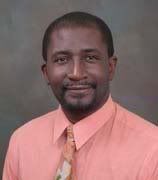
1 Minute Book Review: Every Boy Should Have a Man by Preston Allen
February 27, 2013
An Evening of Music, Poetry & Prose @ MDC, North
February 10, 2011
Black History Month: Miami Syle
Local black authors weave the tale of South Florida through the pages of their books. As communities celebrate Black History Month, the poetry and prose of black Miami are plentiful in bookstores and online.
“These are not just Miami stories,’’ said Jamaican author Geoffrey Philp. “They are the stories about our communities.’
South Florida offers a rich variety of black authors writing from a local perspective. Most of the books can be found on Amazon.com, or on the author’s websites. Here’s a small sampling of local offerings:
Michele Jessica Fievre, Her work appears in Haiti Noir, www.lominy.com
Edwidge Danticat, Award-Winning Author, Breath, Eyes, Memory, Krik Krak, Behind the Mountains” and Create Dangerously : The Immigrant Artist at Work
Geoffrey Philp, Uncle Obadiah and The Alien, Dub Wise, Grandpa Sydney’s Anancy Stories and Benjamin My Son , www.geoffreyphilp.blogspot.com
Preston Allen, Churchboys and Other Sinners, All or Nothing , Jesus Boy
Joanne Hyppolite, Seth and Samona and Ola Shakes It Up
Mamie Pinder, Let My American “Soul” Speak A Poem Tells A Story
Marvin Dunn, Black Miami in the Twentieth Century
Michelle Duplan, It’s A Deer Story, http://segur50.com
Donna Weir-Soley, Eroticism, Spirituality and Resistance in Black Women’s Writings
Andrea Shaw, The Embodiment of Disobedience: Fat Black Women’s Unruly Political Bodies
Read more: http://www.miamiherald.com/2011/02/07/2059914/local-authors-share-stories-of.html#ixzz1DZlKW5sv
Related articles
- 15 Miami Poets@ The International Literary Quarterly: Geoffrey Philp (geoffreyphilp.blogspot.com)
- Caribbean Writers on PULSE with Jessy Schuster (geoffreyphilp.blogspot.com)
- Interview on BBC: THE POETRY OF REGGAE - DUB WISE (geoffreyphilp.blogspot.com)
- VIDEO + INTERVIEW: Pam Mordecai (kalamu.posterous.com)
- Book Review: "Dub Wise: A Gift from Maker to Reader" by Mary Hanna (geoffreyphilp.blogspot.com)
April 30, 2010
PEN American Center - Short Stories: Past, Present, and Future
With Preston L. Allen, Alex Epstein, Aleksandar Hemon, Yiyun Li, and Martin Solares; moderated by Deborah Treisman
Free and open to the public. No reservations.
Co-sponsored by The American-Scandinavian Foundation
What virtues and challenges are unique to the short story? How flexible is the form? And why is it that, even now—after Poe, Chekov, Hemingway, O’Connor, Nabokov, and Munro—the short story often gets less respect, in terms of prizes and critical esteem, than the novel? Join acclaimed practitioners of the form from Bosnia, Israel, China, Mexico, and the United States, for a conversation with The New Yorker fiction editor, Deborah Treisman, about the past, present, and future of the short story.
Related articles by Zemanta
- Stray Questions for: Yiyun Li (papercuts.blogs.nytimes.com)
- Who's Your Daddy? in Brooklyn (geoffreyphilp.blogspot.com)
April 7, 2010
Jesus Boy @ Books & Books
Sometimes you think you know a person, but you really don’t. This was the impression that I got when I attended Preston Allen’s reading from Jesus Boy at Books and Books on Friday, March 19, 2010.
Wearing his now trademark hat, Preston read two chapters from Jesus Boy, his February-June romance about Elwyn Parker and Elaine Morrisohn. In the sections, “The Little Preacher” and “The Boy from Opa-Locka,” we were introduced to Benny, Elwyn’s half-brother, and Benny’s girl friend, Marie. The contrasts between the hyper-religious Elwyn and the secular Benny could not have been more distinct, and Preston’s reading clarified the differences in worldview of these two brothers-from-another-mother.
It was, however, when Preston opened the floor to questions that I was in for a shocker. One of the first questions was innocent enough: “How long did it take you to write the book?”
Preston gave the details: “I began the first drafts of Jesus Boy when I was about eighteen and finished it when I was closer to Sister Morrisohn’s age. When I began the book, I knew the character of Elwyn very well. By the time I finished the novel, I knew Sister Morrisohn a lot better.”
Fair enough. Then came a question that I thought I could have answered: “Who were your influences in writing Jesus Boy?”
When Preston said “John Cheever” I almost fell off the chair. John Cheever! How did a white New England writer come to influence a Black, Honduran writer who now lives in Miami?
Preston explained:
It was "The Country Husband" that inspired "The Leap," the first section of Jesus Boy that I wrote.
Francis Weed is in a plane that almost crashes, but doesn't. The plane emergency-lands safely in a field, and since no one is injured, the rescue workers at the site get the passengers home at almost the exact time they would have gotten home on a regular work day. Francis tries to tell his wife that he was in an extraordinary event, a plane that almost crashed, the same one being reported on the radio playing behind her, but she is too immersed in the petty day to day problems of the suburban middle class housewife to even listen to him. In fact, once he is sucked back into that routine, no one will listen to him about the plane or anything, except for the teenaged baby sitter, with whom he begins a troublesome affair.
I was married to my first wife at the time. And sucked into a middle class day to day routine of my own, I found that many of my near fatal crashes went ignored. Sister Morrisohn was my baby sitter, so to speak...I understood Cheever's story completely.
And I thought I knew Preston’s work! The audience questions made me aware of some aspects of his work of which I was unaware, and it’s one of the reasons why I like to attend author readings—I never know what extra stuff I’ll learn that will affect my reading of the text. And many times it takes an attentive audience to bring out the best in a writer.
When Preston talked about the relationship between Jesus Boy and Cheever’s “The Country Husband,” it suddenly changed how I saw both stories. I guess it was like what T.S. Eliot said in “Tradition and the Individual Talent”:
The existing monuments form an ideal order among themselves, which is modified by the introduction of the new (the really new) work of art among them. The existing order is complete before the new work arrives; for order to persist after the supervention of novelty, the whole existing order must be, if ever so slightly, altered; and so the relations, proportions, values of each work of art toward the whole are readjusted; and this is conformity between the old and the new.
Preston has changed how I read Cheever and I will certainly re-read “The Country Husband.” If I’d known about the relationship before the reading, I would have liked to follow up with certain clarifications.
But I guess that will be up to his audiences in New York at the PEN World Voices Festival where he will be reading at Joe’s Pub, 425 Lafayette Street, New York City on Thursday, April 29, 2010 @ 7–8:30 p.m. and at Scandinavia House, 58 Park Avenue, New York City, on Friday, April 30, 2010 @ 3:30–5 p.m.
It's worth looking forward to.
About the author:
Preston L. Allen, a recipient of a State of Florida Individual Artist Fellowship, is the author of the critically acclaimed novel All or Nothing (Akashic) and the award-winning collection Churchboys and Other Sinners (Carolina Wren Press). His stories have appeared in numerous magazines and journals and have been anthologized in Brown Sugar (Penguin), Miami Noir (Akashic), and Las Vegas Noir (Akashic). He lives in South Florida.
Related articles by Zemanta
- Book Review: Jesus Boy by Preston Allen (geoffreyphilp.blogspot.com)
February 28, 2010
Book Review: Jesus Boy by Preston Allen
At sixteen, I met my first great temptation, and I yielded with surprisingly little resistance, I who had proclaimed myself strong in the Lord. There had been, it seems, a chink in my armor, through which Satan had thrust his wicked sword (34).
As she sat down with a satisfied smile on her face, she knew she was being naughty. She shouldn’t have shouted like that, but she was trying to send him a message by shouting like she did during orgasm…She just wanted to rip off her clothes and fly to him. He was so tight and so fresh and so full of juice…he was a lean, strong fresh-tasting black boy—he looked good enough to eat (77).
God’s people have to be apart. They have to be different. Christians these days—I don’t understand them at all. They go to parties, they drink, they have premarital sex, they wear the fashions of the world. Even the music. These days you can’t tell the difference between a church song and hip hop (361).
Demons, I was certain, frolicked in my room after the lights were turned off. At night, I watched stricken with fear, as the headlights of passing automobiles cast animated shadows on the walls of my room. Only God, who I believed loved my singing voice, could protect me from the wickedness lurking in the dark. Thus, I sang all of God’s favorite tunes—hummed when I didn’t know the words—in order to earn his protection (13).
September 29, 2008
Writers of Africando

On Saturday, September 20, 2008, I had the honor of reading with several writers of African descent at Africando 2008 at Miami Dade College, North Campus. Besides listening to new work by Preston Allen (All or Nothing), we were also treated to the life stories of Chief Adedoja Aluko (Sixteen Major Odu Ifa from Ile Ife ), Sam Grant (The Opposite Sex), and Joseph McNair (O Se Sango).
Here are some pictures from Africando: Writers of Africando
And an excerpt from Joseph McNair reading from O Se Sango:
June 14, 2008
All or Nothing in the New York Times
|
June 13, 2008
Black Enough?
|
February 15, 2008
Showcase of African American Authors at MDC
One of the little known secrets of Miami Dade College (MDC) is the wealth of literary talent that we have. For the past thirty years, MDC has hired many writers to work in English departments or has been an incubator of talent through the Florida Center for Literary Arts and the Miami Book Fair International.
On Monday, February 6, 2008, I was privileged to introduce Joseph McNair, Sam Grant, and Preston Allen, during our Showcase of African American Authors at MDC. The Black History Month Committee had planned to highlight many more of our authors, but many of them had conflicts with their teaching schedules. (Did I also mention many are committed teachers?)
The standing room only event was held at the Carrie P. Meek Entrepreneurial Education Center, named after one of the great heroes of Miami life and politics, Carrie P. Meek, who was also present at our ceremony honoring another Miami legend, Garth C.Reeves, publisher of the Miami Times.
The truly inspirational evening of stories about rebirth and transformation, as Professor Joseph McNair rightly noted, began with a reading from Ose Sango. But before he commenced, Professor McNair gave an introduction to African cosmogony and the work of scholars such as Cheikh Anta Diop and Ivan van Sertima. Professor McNair then gave a brief history of his novel which began as a series of short stories about the way that Africans look at the world. The students listened intently as Joe read from his coming-of-age novel about a young man who wakes up one day to discover that he is a reincarnation of the Orisha Sango.
To view photos of the event, please follow this link: Showcase of African American Authors at MDC.
November 26, 2007
Preston Allen's Blog
Preston Allen has started a blog, Preston L. Allen's Ing and Bling Book Review: A blog for lovers of the printed word (novels, short stories, poems--the Ing so to speak), popular film, politics, and casinos (the Bling).In his initial offering, Preston is running a poll, "Do you support
For the literary, he has a video of Norman Mailer and a list of recent great reads: Johnny Too Bad Stories by John Dufresne; The Kite Runner by Khaled Hosseini; The Gambler by Fyodor Dostoyevsky; The Last Flight of Jose Luis Balboa by Gonzalo Barr, and Let It Rain Coffee by Angie Cruz.
If his eclectic mix of religion, literature, and gambling still doesn't tweak your interest, you can read "Interesting Gambling News" or check out Preston's latest novel, All or Nothing, about a hapless gambler, P., who lives in
I've already subscribed via Google Reader because I know his posts will always be interesting.
2008 is already looking up!
***
October 30, 2007
In My Own Words: Preston Allen
Maybe there's another way to look at it. It's hard to do, but I try to study people without judging them too much. I want who they really are to shine through without too much interference from me. Case in point, in my collection, Churchboys and Other Sinners (Carolina Wren Press 2003). The recurring characters are Elwyn and Sister Morrisohn, two born-again fundamentalists who share a secret and forbidden love. The thing that pleases me most about their story is the reaction I get from my fundamentalist friends who say: "You told a good story, a funny story, but without demeaning their Christian belief. How did you do it?" I am not exactly sure how to answer that, but I do know that when I wrote those parts of the book I tried my hardest to write it from inside their world. I became who they are, I believed what they believe, I tried to think like they do—and with no cynicism. To my way of thinking, that is the only way to get to truth without being condescending and/or cynical; and you still get to be funny—funny in the sense of how honestly funny (peculiar) people are.
Similarly, in my new novel, All or Nothing (Akashic 2007), I do not judge the protagonist, the profligate, wastrel, degenerate gambler P—though he is all of those adjectival things. I simply tell his story the way he would tell it, which allows it to flow to its logical conclusion. People who have read this book are saying things like: "The book is about addiction—any addiction that you or I may have—gambling just so happens to be this poor protagonist's chosen vice." I'm getting some pretty good reviews of this book and they all seem to be saying much the same thing—that the book is honest though over the top (and that is only because gamblers live an over the top life). This is the way it is. There is no other way to say it. All or Nothing is a just so book on gamblers and gambling.
***
All or Nothing: Review
Category: FICTION
A gambler's hands and heart perpetually tremble in this raw story of addiction. "We gamble to gamble. We play to play. We don't play to win." Right there, P, desperado narrator of this crash-'n'-burn novella, sums up the madness. A black man in Miami, P has graduated from youthful nonchalance (a '79 Buick Electra 225) to married-with-a-kid pseudo-stability, driving a school bus in the shadow of the Biltmore. He lives large enough to afford two wide-screen TVs, but the wife wants more. Or so he rationalizes, as he hits the open-all-night Indian casinos, "controlling" his jones with a daily ATM maximum of $1,000. Low enough to rob the family piggy bank for slot-machine fodder, he sinks yet further, praying that his allergic 11-year-old eat forbidden strawberries—which will send him into a coma, from which he'll emerge with the winning formula for Cash 3 (the kid's supposedly psychic when he's sick). All street smarts and inside skinny, the book gives readers a contact high that zooms to full rush when P scores $160,000 on one lucky machine ("God is the God of Ping-ping," he exults, as the coins flood out). The loot's enough to make the small-timer turn pro, as he heads, flush, to Vegas to cash in. But in Sin City, karmic payback awaits. Swanky hookers, underworld "professors" deeply schooled in sure-fire systems to beat the house, manic trips to the CashMyCheck store for funds to fuel the ferocious need—Allen's brilliant at conveying the hothouse atmosphere of hell-bent gaming. Fun time in the Inferno.
Author: Allen, Preston L.
Date: SEPTEMBER 15, 2007
Publisher: Akashic Pages: 280
Price (paperback): $14.95
Publication Date: 11/29/2007 0:00:00
ISBN (paperback): 978-1-933354-41-5
Kirkus
***
October 8, 2007
Festival of Authors: Miami Book Fair International 2007
Abani, Chris : Song For Night: A Novella, Akashic Books
Adisa, Opal Palmer, PhD: I Name Me Name: Lola, Peepal Tree Press; Until Judgment Comes: Stories About Jamaican Men, Peepal Tree Press
Allen, Preston : All or Nothing, Akashic Books
Baraka, Amiri : Tales of the Out & Gone: Short Stories, Akashic Books
Barrett, Lynne : A Hell of a Woman: An Anthology of Female Noir, Busted Flush Press
Bell, Madison Smartt: Toussaint Louverture: A Biography, Pantheon
Brock, James : Saints of Hysteria: A Half-Century of Collaborative American Poetry, Soft Skull Press
Brown, David : The Story of Little Haiti,
Bryce, Jane : Chameleon: Short Stories, Peepal Tree Press; Caribbean Dispatches: Beyond the Tourist Dream, Macmillan
Cezair-Thompson, Margaret : The Pirate's Daughter: A Novel, Unbridled Books
Daniels, Jim : Revolt of the Crash-Test Dummies, Eastern Washington University Press; In Line for the Exterminator, Wayne State University Press
Danticat, Edwidge : Brother I’m Dying, Knopf
Due, Tananarive : Casanegra: A Tennyson Hardwick Novel, Atria
Dufresne, John , Ed.: Best American Mystery Stories 2007, Houghton Mifflin
Duhamel, Denise , ed.: Saints of Hysteria: A Half-Century of Collaborative American Poetry, Soft Skull Press
Giovanni, Nikki : Acolytes: Poems, William Morrow
Hendricks, Vicki : Cruel Poetry: A Novel, Serpent's Tail Press
Hettich, Michael : Saints of Hysteria: A Half-Century of Collaborative American Poetry, Soft Skull Press
Kempadoo, Oonya : Tide Running, Beacon Press; Buxton Spice, Beacon Press
Lindsay, Jeff : Dexter in the Dark: A Novel, Doubleday
Maharaj, Rabindranath : A Perfect Pledge: A Novel, Farrar, Straus & Giroux
Nanton, Philip : Caribbean Dispatches: Beyond the Tourist Dream, Macmillan
Ondaatje, Michael : Divisadero, Knopf
Pau-Llosa, Ricardo , ed.: Hugo Consuegra, Ed. Universal
Phillips, Caryl : Foreigners, Knopf
Robinson, Kim : Out of Order! Anthony Winkler and White West Indian Writing, University of the West Indies Press
Schmitt, Peter : Renewing the Vows, David Robert Books
Suarez, Virgil : Saints of Hysteria: A Half-Century of Collaborative American Poetry, Soft Skull Press
Winkler, Anthony C.: Dog War, Akashic Books; The Lunatic, Akashic Books
To make your own list, follow this link: Miami Book FairInternational Festival of Authors.
August 14, 2007
Review of All or Nothing by Preston Allen
Allen’s dark and insightful novel depicts narrator P’s sobering descent into his gambling addiction. P, a Miami native, is a school bus driver and desperate gambler who spends his nights (and many of his days) in South Florida casinos.Both a surprisingly likable and an often despicable character, P is a perpetual loser with a $1,000-a-day habit who lies to his wife and scrounges in the seats of his bus looking for loose change the kids left behind. He takes the small amounts of cash that his destitute, dying mother offers him to support his obsession. P knows he’s sick, but he doesn’t want any help; he lusts for the next big score.
Finally, his luck begins to change, transforming him from a broke degenerate into a legendary professional gambler in a signature black cowboy hat. The well-written novel takes the reader on a chaotic ride as P chases, finds and loses fast, easy money. Allen (Churchboys and Other Sinners) reveals how addiction annihilates its victims and shows that winning isn’t always so different from losing.
From Publishers Weekly (August 13, 2007)
***
Preston L. Allen is the author of the novels Hoochie Mama, Bounce, Come with Me, Sheba, and the short story collection, Churchboys and Other Sinners. His stories have also appeared in several of the Brown Sugar series. Preston is the winner of the Sonja H. Stone Prize in Literature and a recipient of a State of Florida Individual Artist Fellowship in Fiction. He lives in Miami, Florida.
Preorder your copy of All or Nothing by Preston Allen
ISBN 978-1-933354-41-5
May 14, 2007
Forthcoming from Akashic Books: All or Nothing by Preston L. Allen
The one constant for P--who rises from wage-earner to millionaire and back again in his roller-coaster-ride of a life--is that he must gamble. That his son has died, that his wife is leaving him, that his girlfriend has been arrested, that he has no money, that he has more money than he could ever have dreamed--are all lesser concerns for P as he constantly seeks out new gambling opportunities.
While other books on gambling seek either to sermonize on the addiction or to glorify it by highlighting its few prosperous celebrities, All or Nothing is an honest, straightforward account of what it is like to live as a gambler--whether a high-rolling millionaire playing $1,000-ante poker in Las Vegas or a regular guy at the local Indian casino praying for a miracle as he feeds his meager life savings into the unforgiving slot machine. All or Nothing is the first novel to dig beneath the veneer to explore the gambler's unique and complex relationship with money. If you've ever wanted to get into the heart and psyche of a compulsive gambler, here is your chance.
All or Nothing
by Preston L. Allen
ISBN 978-1-933354-34-7
Fiction l 280 pages | $22.95
Forthcoming: November 2007
Preston L. Allen is a recipient of a State of Florida Individual Artist Fellowship and author of the thriller Hoochie Mama, as well as the collection Churchboys and Other Sinners. His stories have appeared in numerous magazines and journals and have been anthologized in Brown Sugar (Penguin) and Miami Noir (Akashic). He lives in South Florida.
***
Photos of Preston Allen & Vicki Hendricks: "Noir Night" @ Books and Books.
March 22, 2007
A Mother's Legacy: The Gift of Laughter
It had always been there, but I never saw it. Or perhaps I was too close. Although I can’t see why. No, a better answer is that I was focused so much on Preston’s talents as a writer and teacher, and it took a funeral for me to notice. On Sunday, March 18, 2007, the funeral for Iris Eleanor Gale Allen, Preston’s mother (or Aunty Iris as her family called her) was held at Mount Pisgah Seventh-Day Adventist Church. Although she had been ailing for some time, her death came as a shock, for no one’s ever prepared for a parent’s death. It was especially hard on Preston’s son, Quinn, who had grown into a fine young man from the Yugio trading boy who had attended my twentieth wedding anniversary four years ago. Yet here he was, standing beside his father and three uncles, and when the time came for his reflection, a poem Preston had written, Quinn read with poise and eloquence beyond his twelve years. Although I never met her, I can say Aunty Iris (I am claiming this intimacy) would have been proud. For in a way, I did know her. She reminded me in many ways of my mother.
One of the main reasons for my friendship with Preston has been the remarkable similarities in our lives. Besides growing up in the Caribbean and trying to figure out our place in the diaspora, Preston and I were brought up by matriarchs who were grounded in fundamentalist religions. We both went to colleges in Florida, met our wives at Miami-Dade College, and we’ve both lived and worked as writers/teachers in Miami for the past twenty years. Sometimes when I stroll over to the English department, my former colleagues remind me of the afternoons when they’d eavesdrop on the conversations that Preston and I would have about O’Connor, Faulkner, Dostoyevsky, Joyce, Pushkin, and the Miami Dolphins.
We’d open the doors to our offices that faced each other, our brains still on fire from writing all morning, and grade papers, trade manuscripts, and crack jokes. In fact, that’s what I remember most about those conversations. Our laughter. Preston has a great sense of humor. He once told me about his starving student days (he still has to write about them) and how he “volunteered” to become a patient for some dentist interns on the condition that he would release the university from all indemnity. He signed the forms, got eighty dollars, and he’s been in pain ever since. Although he was describing a horrible experience, the way he told the story (I’m laughing even as I write this) was so funny, I had tears in my eyes from the laughter. We spent many evenings like this: telling jokes, trading stories, and laughing.
Late in the evening after the din and clamor, we’d settle into a pattern of quietly talking about our deepest fears and desires. Would we make it as writers? After so many rejections, should we try self publishing? Would we get a review in the Herald? Would we get promoted this year? Would we turn out like our fathers? For we wanted to be better than our fathers. We wanted to be generative, supportive, protective men for everyone in our lives.
Yet when I got the e-mail about the funeral at a Seventh-Day Adventist church, I was a bit hesitant. It had been a long time since I’d been to an Adventist meeting, and my wife, good Catholic that she is, had never ventured inside those Protestant doors. We sat in the pews and waited as the family and extended family filed in, and once the invocation was given, it seemed as if we were in a regular American church with readings from the Old and New Testaments. However, once the reflections began, it was clear that we were at a Caribbean/Honduran funeral with the requisite singing of every single verse of hymns such as “as “In Times Like These (You Need a Savior)” and sermon by fiery preacher--Jonathan Edwards with a West Indian accent.
As we sweated through the sermon that ended the service, what struck me more than the preacher’s exhortations was the deep sincerity and appreciation that the speakers and the audience had for Aunty Iris. Many had come from all parts of the world to honor a woman who had given assistance in any way that she could—sometimes opening her door to strangers who stayed days, weeks, months, or years in her home (another thing Preston and I have in common). Speaker after speaker commented on her kindness, and I couldn’t help but think, how many of us, as sophisticated as we are and locked away in the hermetic cells of academia, have touched lives in such as profound was as this simple woman from Roatan? How many people are going to show up at our funerals, not to talk about how our books, or ideas influenced their lives, but how we provided, food clothing, or shelter without thinking about the IRS deduction? And Aunty Iris went beyond that. The “fatherless boys" testified about how she drove around in her station wagon and took them to church on Sabbath. Many were thankful that Aunty Iris, despite the fact that they had sometimes fallen by the wayside, always loved them and stood by them in times of need: “Whenever she was in the room, we knew everything would be all right”.
And when the time came for Preston and his brothers to speak, in the midst of the congregation and although he was the shortest (“We got the height and he got the brains,” Cameron explained), Preston was slowly, before my eyes, assuming a gravitas that I had never seen before, and his wife, brothers, son, mother-in law, the entire congregation watched the transformation in awe. Preston spoke about his mother's legacy and her sense of humor. He reaffirmed the bond that a mother and son share, especially when a father is not present. He knew he could call her up at any time and talk to her about anything and she would listen. Even though she was a Christian woman, Aunty Iris would listen to everything because she, too, had lived. She knew about this world that breaks the heart of its lovers, and still she laughed. Whether she was in pain or nearly comatose, she taught him always “to be of good cheer.” It felt good to be in the midst of the congregation and to listen to Preston speak about the value of a life lived in the service of others and delivered with a gentle wit and compassion. Preston's homily had more of an impact on me than the preacher’s rant.
And when we came outside into the midday sun where the hearse waited to take his mother’s body to its final resting place, we could hear the laughter of Aunty Iris in the voices of her sons, grandsons and all the fatherless boys of Miami. Aunty Iris was probably smiling and laughing as we cried and laughed during the service. I know she was. I heard your laughter, Aunty Iris. I also saw your son transform into the man he always wanted to be--the man you knew he always was—that I and the host of witnesses now saw. And I knew you (and all the saints who were smiling and laughing) were proud.
Tags: Caribbean Caribbean writers South Florida writers African American writers family personal