August 10, 2015
On My Bookshelf: Providential by Colin Channer
Channer’s debut poetry collection achieves an intimate and lyric meditation on family, policing, loss, and violence, but the work is enlivened by humour, tenderness, and the rich possibilities that come from honest reflection. Combined with a capacity to offer physical landscapes with painterly sensitivity and care, a graceful mining of the nuances of Jamaican patwa and American English, and a judicious use of metaphor and similie, Providential is a work of “heartical” insight and vulnerability.
No one, since Claude McKay’s folksy Constab Ballads of 1912, has attempted to tackle the unlikely literary figure of the Jamaican policeman. Now, over a century later, drawing on his own family knowledge of the world of the police, on the complex dynamic of his relationship with his father, and framed within the humane principles of Rasta and reggae, Channer has both explored the colonial origins of that police culture and brought us up to date in necessary ways. Here are poems that manage to turn the complex relationships between a man and his father, a man and his mother, and man and his country and a man and his children, into something akin to grace. Providential does not read like a novelist’s one-off flirtation with poetry, but an accomplished overture to what ought to be a remarkable literary journey for a writer of immense talent and versatility.
“…Written with pitch-perfect rhythm and a keen eye for supple, limber turns.” —Lorna Goodison, author of From Harvey River
“Channer writes with a moving vulnerability and much lyric grace, revealing new facets to familiar themes—home, family, history, and the evolving journey of self. A universal, timeless meditation.”
—Chris Abani, author of The Secret History of Las Vegas
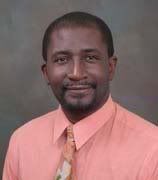
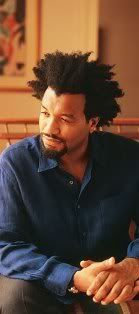
Born in Jamaica to a pharmacist and cop. Colin Channer is named by Junot Díaz calls him “one of the Caribbean Diaspora’s finest writers.”
October 4, 2013
Jamaican Authors Connect with Home
June 4, 2013
1 Minute Book Review: Every Boy Should Have a Man by Preston Allen
October 9, 2012
Open Registration for 2012 Miami Writers Institute
Geoffrey Philp’s Blog Spot receives a percentage of the purchase price on anything you buy through links to Amazon, Shambala Books, Hay House, or any of the Google ads or Google Custom Search.
Disclaimer of Endorsement
The documents posted on this Web site may contain hypertext links or pointers to information created and maintained by other public and private organizations. These links and pointers are provided for visitors' convenience. I do not control or guarantee the accuracy, relevance, timeliness, or completeness of any linked information. Further, the inclusion of links or pointers to other Web sites or agencies is not intended to assign importance to those sites and the information contained therein, nor is it intended to endorse, recommend, or favor any views expressed, or commercial products or services offered on these outside sites, or the organizations sponsoring the sites, by trade name, trademark, manufacture, or otherwise.
Reference in this Web site to any specific commercial products, processes, or services, or the use of any trade, firm or corporation name is for the information and convenience of the site's visitors, and does not constitute endorsement, recommendation, or favoring by this blog.
June 1, 2012
1 Minute Book Review: Kingston Noir
Geoffrey Philp’s Blog Spot receives a percentage of the purchase price on anything you buy through links to Amazon, Shambala Books, Hay House, or any of the Google ads or Google Custom Search.
Disclaimer of Endorsement
The documents posted on this Web site may contain hypertext links or pointers to information created and maintained by other public and private organizations. These links and pointers are provided for visitors' convenience. I do not control or guarantee the accuracy, relevance, timeliness, or completeness of any linked information. Further, the inclusion of links or pointers to other Web sites or agencies is not intended to assign importance to those sites and the information contained therein, nor is it intended to endorse, recommend, or favor any views expressed, or commercial products or services offered on these outside sites, or the organizations sponsoring the sites, by trade name, trademark, manufacture, or otherwise.
Reference in this Web site to any specific commercial products, processes, or services, or the use of any trade, firm or corporation name is for the information and convenience of the site's visitors, and does not constitute endorsement, recommendation, or favoring by this blog.
March 24, 2011
Author Event: Elizabeth Nunez
Related articles
- What's your romance? (signifyinguyana.typepad.com)
- http://geoffreyphilp.blogspot.com/2010/06/book-review-anna-in-between-by.html
- 1st Caribbean Women Writers Conference at Medgar Evers College (repeatingislands.com)
- Notes from Saturday's panel discussion: "Challenges & Choices of Caribbean Writers" (signifyinguyana.typepad.com)
- Screening of Michèle Stephenson's "Haiti: One Day, One Destiny" (repeatingislands.com)
June 21, 2010
Book Review: Anna In-Between by Elizabeth Nunez
“Over there in America, I’m a Caribbean-American, but that hyphen always bother me. It’s a bridge, but somehow I think there is a gap on either end of the hyphen. Sometimes I think if I am not careful, I can fall between those spaces and drown” (347).
Paul Bishop, the speaker in this section of Anna In-Between, voices the apprehension of many Caribbean-Americans about the lack of rootedness they encounter in North America and it is one of the themes in the latest novel by award winning novelist, Elizabeth Nunez. But to limit any reading of the novel to yet another treatise on Caribbean alienation in a metropolitan country would be to miss the intricacies of Nunez’s storytelling. For Anna In-Between is a novel filled with intriguing characters written by a author with a catholic literary imagination.
It is tempting to think of Anna In-Between as merely the story about a Trinidadian woman, Anna Sinclair, who returns to the island for a vacation only to discover that her mother, Beatrice Sinclair (with whom she has never been close) has breast cancer, and to watch how the family members cope with the disturbing change. But in this aptly named novel, Nunez explores nearly every variation of Anna’s in-between-ness through highly charged scenes and with characters perfectly suited to explore the ideas that Nunez presents in the novel.
As a highly literate protagonist, Anna Sinclair, a senior editor at Equiano Books and who is fast approaching mid-life, is caught between the limiting stereotypes of African-Americans, “For in America she is black, and in America the ways of black people have been defined, set in stone,” and Caribbean-Americans, “Is a true West Indian woman one who plasters her face with make-up, layering her cheeks with rouge, her lips with bright red lipstick?” (75). Anna bristles at either definition, for she is in many ways a crossroads figure and as such possesses a Janus-like capacity for being able to comprehend disparate points of view.
As a member of a privileged class in Trinidad, Anna is also caught between the democratic ideals of North America and the old colonial values that are preserved by compliance with unspoken rules of privacy and “knowing one’s place” (26). In her discussion with Singh, the family gardener, the social inequity is placed in stark contrast:
“How casually she accepts that. He knows his place. Her friends in America would be shocked to hear she thinks this way, her African American friends especially… but having a place and knowing where others are in relation to one’s place is to have the comfort that order brings, the reassurance of stability” (26).
Anna is able to parse the difference between privacy and intimacy in the relationship of her mother, Beatrice Sinclair, and her father, John Sinclair, another theme that Nunez explores throughout the novel. “This obsession with privacy” (73) is carried to absurd lengths when Anna’s father, John Sinclair, becomes aware of his wife’s cancer: “I saw blood on my vest, he says,” (57), yet John Sinclair does not say or do anything to violate his wife’s sense of privacy.
When Anna confronts her father, whom she had always adored, she is flabbergasted by his response:
“You saw blood on a vest she wore. Blood, Daddy?”Nunez’s prose cuts through many of the social hierarchies that still divide post-colonial Trinidad and the West Indies. The characters “know their place” and do not want to disturb the boundaries. Anna, on the other hand, while cognizant of the social constraints tries to break through her parents’ frame of reference because of the limits they place on her connection with her mother, who enforces colonial mores in nearly every social interaction: “In my day,” she says, “mothers did not do that; they did not hug and kiss their children. The queen…” (317).
“I knew she would tell me when she was ready.”
“But you must have known…?”
“Yes.” It is a simple acknowledgement of information he has kept to himself” (57).
To which Anna counters:
“She was protecting her progeny.”I usually develop an immediate disdain for books in which the main character is a writer or editor, but in the case of Anna Sinclair, Nunez has found a character perfectly suited to deconstruct ideas about class, race, and socio-economic relationships in the Caribbean and North America. Anna’s knowledge of literature (from Shakespeare to Derek Walcott) and music (from Bach to Nat King Cole and calypso) doesn’t seem forced and her musings place the action within a historical and cultural context. With Anna In-Between, Elizabeth Nunez, the author of many other award winning novels such as Prospero’s Daughter, has written the quintessential Caribbean-American novel.
“I don’t know what you mean.’
“Lust,” Anna says.
“Lust?"
“They weren’t as lucky as we are. They didn’t have birth control. So no hugging or kissing relatives. Not even your children. It was one way to prevent pregnancy, to keep bad thoughts out of the minds of relatives” (318).
April 7, 2010
Jesus Boy @ Books & Books
Sometimes you think you know a person, but you really don’t. This was the impression that I got when I attended Preston Allen’s reading from Jesus Boy at Books and Books on Friday, March 19, 2010.
Wearing his now trademark hat, Preston read two chapters from Jesus Boy, his February-June romance about Elwyn Parker and Elaine Morrisohn. In the sections, “The Little Preacher” and “The Boy from Opa-Locka,” we were introduced to Benny, Elwyn’s half-brother, and Benny’s girl friend, Marie. The contrasts between the hyper-religious Elwyn and the secular Benny could not have been more distinct, and Preston’s reading clarified the differences in worldview of these two brothers-from-another-mother.
It was, however, when Preston opened the floor to questions that I was in for a shocker. One of the first questions was innocent enough: “How long did it take you to write the book?”
Preston gave the details: “I began the first drafts of Jesus Boy when I was about eighteen and finished it when I was closer to Sister Morrisohn’s age. When I began the book, I knew the character of Elwyn very well. By the time I finished the novel, I knew Sister Morrisohn a lot better.”
Fair enough. Then came a question that I thought I could have answered: “Who were your influences in writing Jesus Boy?”
When Preston said “John Cheever” I almost fell off the chair. John Cheever! How did a white New England writer come to influence a Black, Honduran writer who now lives in Miami?
Preston explained:
It was "The Country Husband" that inspired "The Leap," the first section of Jesus Boy that I wrote.
Francis Weed is in a plane that almost crashes, but doesn't. The plane emergency-lands safely in a field, and since no one is injured, the rescue workers at the site get the passengers home at almost the exact time they would have gotten home on a regular work day. Francis tries to tell his wife that he was in an extraordinary event, a plane that almost crashed, the same one being reported on the radio playing behind her, but she is too immersed in the petty day to day problems of the suburban middle class housewife to even listen to him. In fact, once he is sucked back into that routine, no one will listen to him about the plane or anything, except for the teenaged baby sitter, with whom he begins a troublesome affair.
I was married to my first wife at the time. And sucked into a middle class day to day routine of my own, I found that many of my near fatal crashes went ignored. Sister Morrisohn was my baby sitter, so to speak...I understood Cheever's story completely.
And I thought I knew Preston’s work! The audience questions made me aware of some aspects of his work of which I was unaware, and it’s one of the reasons why I like to attend author readings—I never know what extra stuff I’ll learn that will affect my reading of the text. And many times it takes an attentive audience to bring out the best in a writer.
When Preston talked about the relationship between Jesus Boy and Cheever’s “The Country Husband,” it suddenly changed how I saw both stories. I guess it was like what T.S. Eliot said in “Tradition and the Individual Talent”:
The existing monuments form an ideal order among themselves, which is modified by the introduction of the new (the really new) work of art among them. The existing order is complete before the new work arrives; for order to persist after the supervention of novelty, the whole existing order must be, if ever so slightly, altered; and so the relations, proportions, values of each work of art toward the whole are readjusted; and this is conformity between the old and the new.
Preston has changed how I read Cheever and I will certainly re-read “The Country Husband.” If I’d known about the relationship before the reading, I would have liked to follow up with certain clarifications.
But I guess that will be up to his audiences in New York at the PEN World Voices Festival where he will be reading at Joe’s Pub, 425 Lafayette Street, New York City on Thursday, April 29, 2010 @ 7–8:30 p.m. and at Scandinavia House, 58 Park Avenue, New York City, on Friday, April 30, 2010 @ 3:30–5 p.m.
It's worth looking forward to.
About the author:
Preston L. Allen, a recipient of a State of Florida Individual Artist Fellowship, is the author of the critically acclaimed novel All or Nothing (Akashic) and the award-winning collection Churchboys and Other Sinners (Carolina Wren Press). His stories have appeared in numerous magazines and journals and have been anthologized in Brown Sugar (Penguin), Miami Noir (Akashic), and Las Vegas Noir (Akashic). He lives in South Florida.
Related articles by Zemanta
- Book Review: Jesus Boy by Preston Allen (geoffreyphilp.blogspot.com)
May 14, 2007
Forthcoming from Akashic Books: All or Nothing by Preston L. Allen
The one constant for P--who rises from wage-earner to millionaire and back again in his roller-coaster-ride of a life--is that he must gamble. That his son has died, that his wife is leaving him, that his girlfriend has been arrested, that he has no money, that he has more money than he could ever have dreamed--are all lesser concerns for P as he constantly seeks out new gambling opportunities.
While other books on gambling seek either to sermonize on the addiction or to glorify it by highlighting its few prosperous celebrities, All or Nothing is an honest, straightforward account of what it is like to live as a gambler--whether a high-rolling millionaire playing $1,000-ante poker in Las Vegas or a regular guy at the local Indian casino praying for a miracle as he feeds his meager life savings into the unforgiving slot machine. All or Nothing is the first novel to dig beneath the veneer to explore the gambler's unique and complex relationship with money. If you've ever wanted to get into the heart and psyche of a compulsive gambler, here is your chance.
All or Nothing
by Preston L. Allen
ISBN 978-1-933354-34-7
Fiction l 280 pages | $22.95
Forthcoming: November 2007
Preston L. Allen is a recipient of a State of Florida Individual Artist Fellowship and author of the thriller Hoochie Mama, as well as the collection Churchboys and Other Sinners. His stories have appeared in numerous magazines and journals and have been anthologized in Brown Sugar (Penguin) and Miami Noir (Akashic). He lives in South Florida.
***
Photos of Preston Allen & Vicki Hendricks: "Noir Night" @ Books and Books.
October 6, 2006
Five Questions With Colin Channer
1. You have recently started teaching fiction at Medgar Evans College. How is this different from teaching workshops?
I haven’t noticed a significant difference really. Writers are writers. Students are students. Well, I got ahead of myself right there. As a professor I have to maintain a greater social distance from the students. We can’t exactly go for a drink after class. In a college setting I also have to deal with grading and taking the roll and that kind of thing and making a big deal about absences and lateness.
2. In your story, “How to Beat a Child the Right and Proper Way,” you address the theme of child abuse. What has been the reaction to this issue?
Oh people love this story. Almost every review of Iron Balloons singles it out. It’s not so much a story about child abuse as you put it though. Very few people read it that way. They read it as a story about a clash of cultural values, parental anxiety about the social advancement of their children, mother-daughter tensions, and the peculiar way in which teenagers, especially girls are capable of pushing their parents to the limits of anger. Most readers side with the mother, even those who’d never take a belt to their child under any circumstance. The story allows them to see however, why this specific mother would beat this specific child this way on that specific evening.
3. The Calabash Literary Festival continues to be a success. Do you have any plans to expand or do you think, “If it ain’t broke, don’t fix it.”?
I don’t think we need to get any bigger. There are not many places in the world where writers read before an audience that can reach 3,500. I dismiss call calls to make the festival larger in the same way that I dismiss the penis enlargement ads that turn up in my inbox every day.
4. Strong women have always played a part in all your work and unlike many male novelists, you don’t shy away from female characters. What’s wrong with you?
I’m every woman. It’s all in me. I have found that I write male and female characters equally well and so I write a lot of female characters. I don’t make a real distinction between them. I know women as well as I know men, or at least I think I do. I am like a ball player who can kick and throw with either leg or arm with the same amount of power, accuracy and strength.
Every writer has a standard for vetting story ideas, or at least I think they do (or should). For me it comes down to this, an interesting person who wants an interesting thing for an interesting reason. Weak women are not interesting so they’re not worth placing at the center of a narrative.
5. Describe your experience in editing Iron Balloons? Do you have any other plans for more anthologies?
It was hard. I’d never edited an anthology before. But as always, when I have difficulty with anything I turn to Kwame. He helped me a lot. But I also have to say that I also got a lot of help from the publisher and editor in chief of Akashic Books, Johnny Temple. In the end I simply worked like a selector on a champion sound or a great reggae producer. I picked the best selections and put them in what I considered to be the best sequence.
September 8, 2006
Five Questions With Kwame Dawes
Born in Ghana in 1962, Kwame Dawes spent most of his childhood in Jamaica. As a poet, he is profoundly influenced by the rhythms and textures of that lush place, citing in a recent interview his "spiritual, intellectual, and emotional engagement with reggae music." His book Bob Marley: Lyrical Genius remains the most authoritative study of the lyrics of Bob Marley, and his groundbreaking collection of essays, Natural Mysticism: Towards a New Reggae Aesthetic, describes the experiences and modalities of Jamaican postcolonial writers who are embracing “an aesthetic which unites body, emotions, and intellect and brings into a single focus the political, the spiritual and the erotic.” An author of twelve collections of poetry, Dawes’ most recent collections are Impossible Flying (Peepal Tree, 2006) and Wisteria (Red Hen, 2006). In 2007, Akashic Books will publish his novel She’s Gone. His awards include The Forward Poetry Prize, the Hollis Summers Poetry Prize, a Pushcart Prize, and the Poetry Business Award. Founder and director of the USC Poetry Initiative, Dawes is the programmer for the Calabash International Literary Festival held in St. Elizabeth, Jamaica, each year, and is the Director of the Calabash Writer’s Workshop. 1. How have you managed to remain so prolific over the years?
To be honest, it is only when I look at the raw facts of the matter that I concur that I have been prolific. I have published twenty books in twelve years. Okay. And that is not all I have been doing. But as I go through my day, I feel like a man who is not doing what he should be doing. I feel I have been slack about my writing, I feel I should be writing more. So there is a strange contradiction at work here. And it simply leads me to the fact that I am not sure I can answer your question. I can say, though, that I have always said that I feel no assurance that I will always have something interesting and compelling to write and so while I am still having ideas that seem engaging to me, I will continue to write. I have never experienced what people call writer's block. I do believe it exists, and I suppose I live with the anxiety that at some point it will overtake me. So while I have managed to avoid it, I will work at what I need to be working on. I have been blessed with the capacity to write a very quick and competent first draft. As a result I have a lot of first drafts lying around. I come to them whenever time allows. But the effect is that I have many projects on the go at the same time. This is both a blessing and a curse, I suppose. Still, the bottom line is that I am doing what I enjoy doing, and so I will simply accept that I produce as I produce as a condition of who I am. I will enjoy is benefits and accept its challenges. It has occurred to me (and has been said to me) that I probably write too much and that this has affected the quality of my work. I do think that this is nonsense. One may quarrel with publishers who publish me, but not with me for writing. After all, writing is a practice, and one can't be blamed for doing too much of it to get better at it. Anyway, I do think that my work continues to grow, to improve and I am grateful for this.
2. What did you learn in the translation of Bob Marley: Lyrical Genius into German? Why German?
Nothing much. I was not involved with the translation. Actually, the publishers did not even inform me that the book was translated. My thirteen year old son was surfing the net and came up on this news. I then ordered a copy to make sure that it was true. So it remains a peculiar thing to me. I do know that German books are longer than English books. I have gained almost two hundred additional pages in the translation. Even when I don't want to be, I am constantly prolific.
3. How has the experience of now living and working in South Carolina changed your writing?
I have always said that at least four of my books of poetry would not have been possible without South Carolina as my home. Midland, Jacko Jacobus, Wisteria, and Requiem. These are works that entirely rooted in this space. And in other books, South Carolina features greatly. But why wouldn't it? I write from where I am and what I have seen and experienced. I have lived here for fifteen years and I have some roots here. I remain an alien, but I also am a happy southerner at the same time. I am glad I landed here, though. The richness of the history, the sophisticated presence of Africa in the culture, the complexities of American life at its most basic and direct--these are all part of the rich realities that have sharpened my sense of the world. I write to understand the world around me. I therefore write the world around me.
So there is, at some level, something quite unremarkable about my writing so much about South Carolina. Having said that, I should add that I do see myself carrying out an important work here as a writer and I think South Carolinians agree with me. I suppose it is so much easier for me to identify with this state because it is such a Third World space in terms of ethos and sensibility and it has its own quarrels with the larger American idea as do many people from developing countries, from the southern hemisphere. Finally, I should say that the need to understand, the need to give voice to the unvoiced stories of this space, and the fact that buried in this soil are the bones of so many Africans--people I like to call my relatives--makes me feel a strong connection with this place.
4. You frequently wear the "hat" of editor. Is there a difference between selecting poems for Red vs. Wheel and Come Again?
Not really. Here are the points that are constant: One is looking for the best work. One is looking for work that is consistent with the theme of the anthology. One is trying to create a work that is readable for the general reader--one is not trying to do an academic exercise.
The difference, of course, is that with Red, I am engaged in an anthology that is rooted in a larger idea of showcase the new work by black writers in Britain. This is a quite basic impetus for an anthology, and yet it is one that I responded to by trying to impose an arbitrary theme on the process. I chose Red out of a hat. I am not sure if it will work, but we shall see. The proof will be in the kind of work I receive. Fingers crossed. Wheel was a work based on a hunch. I had a hunch that since the arrival of reggae, more poets than one would imagine were actually engaged deeply in the reggae ethos even at times beyond themselves. The insidiousness of reggae in the world and especially in the Caribbean has ensured that an aesthetic has emerged and has seeped into our creative psyche. I wanted to demonstrate this in the anthology. I missed some crucial works--two amazing early poems by Walcott and a few others--but the larger project was quite successful. Yes, I was consciously trying to give credence to a theory, to an idea, to a hunch, and I think this worked out well. It is also a cool anthology with a splendid preface by Colin Channer.
5. Some of your more recent collections take their inspiration from the work of artists. How do you go about writing poems based on an artist's work?
I must say that this process has seemed to me like stealing. But stealing is no sin when it comes to art that is inspired, yes? I simply try to write what happens to my brain and heart when I see a work of art. I really try to avoid simply re-describing the work of art. After all, to do that would be so redundant and a disrespect to the artist. Instead I respond. I bring my baggage or my discourse if you will. I vamp off the art. I create "vershans" in the old reggae sense of finding a dub vershan of some master text to create a counter master text. I enjoy this kind of work because in sense I am given a distilled series of images, tough, well-conceived a concentrated, and then I am to use that to spark poems. The effect is inevitably surprising for me. I am taken to places that I would not normally enter. So while it is true that a lot of my recent work has grown out of this dialogue, the greater truth is that this has been a feature of my work from the beginning. I am in good company, of course. Maybe we are all trying to write "Musee de Beaux Art" all over again--yes, I am being ironic.
Next week: Preston Allen, author of Churchboys & Other Sinners.
June 27, 2006
The New York Times review of Iron Balloons
The New York Times review of Iron Balloons has been largely favorable and the tide may be turning in terms of public reception of Caribbean fiction. Much of this change has been due to the tireless work of Colin Channer and Kwame Dawes, co-founders of the Calabash Literary Festival. Of course, this project would not have gone anywhere without the visionary (and I don’t use that word lightly) support of Johnny Temple of Akashic Books. I forget where I read the quote because it was offered as a balm to quell the sting of rejection: “Publishing is a hobby that’s organized.” That may be true because I still don’t know why many of the independent publishers whom I’ve met continue to publish. Many of them, like Johnny Temple and Chase Twichell, love literature and books. We may never earn the big bucks nor the respect that seem to go with publishing with a giant conglomerate, but independent presses may be the route for Caribbean writers.
To read the article in its entirety, please follow this link: Iron Balloons in New York Times.
Technorati tags:
Caribbean writers
Jamaican writers
Americas
Caribbean
Jamaica
Culture
Books
Writing
Iron Balloons