February 5, 2012
African-American Read-In @ Miami Dade College, West Campus
June 30, 2011
New Book: Claudia Jones: Beyond Containment
June 19, 2011
June 16, 2011
The 17th Annual Sunrise Ancestral Remembrance of the Middle Passage Ceremony
The 17th Annual Sunrise Ancestral Remembrance of the Middle Passage Ceremony, an informal, grassroots gathering with a profound purpose, will be held once again, beginning at 5:30 a.m. on Sunday, June 19, 2011, at Historic Virginia Key Beach Park, 4020 Virginia Beach Drive, off Rickenbacker Causeway on Virginia Key (Park entrance is a left turn at the second traffic signal).
The Ceremony, which always begins with a Native American blessing of the land, is not linked to any particular religion or ideology, and welcomes all to pause and remember both those who perished in the Middle Passage, or Atlantic “slave trade,” and those who survived to give life to our present and future generations.
March 17, 2011
“The Change”: A Failure in Ethics and Intelligence.
The music of “The Change” by Tony Hoagland is exquisite. From the first line with its varied series of long and short vowels, “The season turned like the page of a glossy fashion magazine,” Hoagland strings together visual and verbal contrasts based on a tennis match between two tennis players, one black and the other white, which turn on the phrase, “Sometimes I think that nothing really changes—.”
- http://ithicks.blogspot.com/2008/01/change-by-tony-hoagland.html
- http://writersalmanac.publicradio.org/index.php?date=2008/01/11
- http://www.radiuslit.org/2011/03/12/320/
- http://writingjunkie.net/rankine-hoagland.html
- https://scarriet.wordpress.com/category/claudia-rankine/
February 21, 2011
"1945" by Chris Abani
1945
When the magic mushroom clouding Hiroshima cleared
on peace, Daphne was fourteen. Her imagination could
not measure the desert of death that was Normandy’s
beach or the oily cough of tanks through small dusty
Italian towns where everybody wanted to be Americano!
But she remembered waking to the siren of the air-raid
alarm, disoriented by blacked out windows.
The shelter; a family huddle under the stairs
with the musty smell and the tang of cleaning products,
face pressed into the familiar hardness of the ironing board.
There was the thrill of the gasmask and the free candy
she got at the local cinema on Saturdays if she
remembered to bring it along, and the ballerina in her
music box that lived only when she hoarded sweets.
2001
I pretend to smoke my pen, listening to Beethoven.
Moonlight Sonata. This is the thing.
Long hours, late hours, much of it tortured,
waiting for sense like patterns in the sand.
Or language poetry or conceptual art.
To say: Oh my craft and the time it is taking,
10
but Derek Walcott got there first and how
do you follow a poet like that?
I cannot call Mum. It is four a.m., this late,
the tone would be loud enough to touch.
I want to ask – did Granny brush your hair,
the moment fragile yet tensile as a strand of that hair?
I need the material, but this thing, this shape
cannot be found with her. Like the rabbi said,
never give up a good question for an easy answer.
And this much I know – the deeper art
is to follow where the shape leads,
but my fear needs a map. Lines, in couplets,
to contain the uncertainty. Still it mocks me.
Oh my craft, and the time it is taking!
“In this eclectic and imaginative poetry book Chris Abani takes us on a time-travelling journey around the world. He explores history, war, myth, religion, relationships and a poet’s personal and philosophical musings. His versatile voice is, variously, audacious, energetic, visual, oblique and always, always, thought-provoking.” ~ Bernardine Evaristo
This collection of Chris Abani’s longer poems, some previously published, the majority new, displays his astonishing energy, beauty of expression and range of reference to contemporary life, history, art and literature. Having this work together in one volume enables us to see the dialogue between a sense of the personal and an engagement with the public and historical, from ‘Daphne’s Lot’ which explores the life of an Englishwoman (his mother) caught up in the madness of the Biafran civil war, or ‘Buffalo Women’, an epistolary sequence of poems between lovers caught up in the American civil war.
The focus of Abani’s poems is frequently on extreme situations where the unspeakable becomes too readily the doable, but where against the odds compassion and love remain and the individual determination to resist public madness. In ‘Sanctificum’ there is a profound meditation on the sacred, whether reached through religious ritual or through art, and the narrow dividing line between the urge to reach for mastery and transcendence and the abuses of power whether personal, contemporary or historical.
Chris Abani is the author of 11 books, the recipient of numerous awards for his writing, and is currently holds the position of Professor at the University of California, Riverside.
Related articles
- Soft, almost invisible acts of compassion (philipcarrgomm.wordpress.com)
- INFO The New Black Atlantic | AFRICA IS A COUNTRY (kalamu.posterous.com)
- Derek Walcott wins TS Eliot poetry prize (repeatingislands.com)
- "Blessing instead of complaining" (caribbeanreviewofbooks.com)
July 22, 2009
Aftermath of the Arrest: Henry Louis Gates, Jr.
The arrest of Henry Louis Gates Jr. on that old canard, "disorderly conduct" has revealed once again the racial divide in this country--the fears of injustice of black men at the hands of the police and the unquestioning support of white men for the police/law enforcement. The blogosphere reflects this divide. White bloggers say Dr. Gates is playing the "race card" and Black bloggers claim racism.I trust my intuition and how men behave.
When Dr. Gates and Sgt. James Crowley met in that room, it could have been merely the confrontation between two men: a proud professor and a wary police officer.
But things are never that simple.
I can understand the plight of the Sgt. Crowley. He had received a credible call from a neighbor who had seen these men breaking into a house. When they got there, Dr. Gates was simply an old black guy standing in house in the middle in Harvard? What was he doing there? Dr. Gates had to prove who he was. And no sudden moves.
Dr. Gates was tired. He had just come back from China. At every step of the way, he probably had to prove who he was (as he has done for all his life--as all pioneers have to do) and now he was home and being confronted in his own kitchen, in his own house by a white police officer who was asking him, "May I ask what you're doing here?"
There was, I suspect, no "Sir," no respect for the white hairs on the old man's head. There's a different tone that white officers use for white old men. And tone doesn't show up on a transcript.
Now things weren't simple. Now they weren't just man to man. They became black and white. And if I believe Dr. Gates' version of the events, it's not because I'm defending a "brother," it's because the police, who have guns, are always in charge and I simply cannot imagine Dr. Gates being a threat to anyone--except intellectually.
For this is a part of life in America that many whites do not understand--the daily humiliations of black men at the hands of the police. So what looks like a simple situation that could have been remedied by Dr. Gates being thankful for the police doing their job was probably exacerbated by the words and actions of a man who has every reason to be proud of his accomplishments, and a police officer, who once Dr. Gates spoke, should have realized that he was not dealing with just "another black man." I won't use the shorthand version of that phrase.
Then, everything blew up. What could have ended like this:
"Thank you, officer."
"Don't worry, Dr. Gates, these things happen every day. Have a nice day."
Both men laugh.
Ended with Dr. Gates being arrested.
No one will ever know what happened in that room between those two men. But I suspect the history of race relations (fear, mistrust, anger) came to a head, and Dr. Gates was hauled off to jail, as Michael Eric Dyson has said, for being "uppity." For it is perfectly reasonable for a white person, a white professor to ask for a name and a badge. But a black man? Go straight to Jail. Do not collect $200.
So what are we going to do?
There are no grand solutions to racism and the fears on both sides. It can not be done away with by laws or any other grand social schemes.
No, the solution in still waiting in that room where Dr. Gates and Officer Crowley met. Where we all meet every day to eat, drink, stand around the water cooler and look out at the each other--with fear in our eyes.
June 28, 2009
Michael Jackson (1958-2009)
I realize that on the face of it, the question seems absurd because of its relationship to Michael Jackson. I didn't know the man, so what's the big deal?
But in just talking with friends and family over the past few days, I've also realized that Michael's life had a profound effect on all our lives.
So I come back to the question, what is the meaning of a life?
As I said in a previous comment, Michael's life forces me to answer these questions:
Am I erasing the effects of racism in my life?
Am I honing my skills to perfection?
Am I creating opportunities for others?
To which, I'll add one more,
Am I accepting my inner peace?
This will probably be the last post that I write about Michael because I truly wish that he will Rest in Peace.
1Love
April 24, 2009
New Book: "Liquid Lunch" by Stephen Bess

One of the familiar tropes of the blues is that the ‘troubles of the world” (loss of a job or lover) can overcome us and the only forms of refuge are the arms of another lover (who will also betray) or in alcohol—the ultimate betrayer and bamboozler.
Yet we, like many of the speakers in Stephen Bess’s Liquid Lunch: Blues-Inspired Poetry, persist in this illusion because of the sweet, if ephemeral pleasures. Stephen Bess captures all of the anguish and the drama in poems such as “One Shot,” "Truth Serum," “My Baby Sue,” and my favorite, “Spoonful of Lovin’":
Please, please little baby
Run away with me
And I’ll show you just how sweet
life could really be
Stephen blogs at Morphological Confetti where you can purchase a copy of Liquid Lunch: Blues-Inspired Poetry.
February 17, 2009
2009 Cave Canem Retreat
Adult African American poets are invited to participate in Cave Canem's 14th annual retreat, June 21 - June 28, 2009, to be held at the University of Pittsburgh at Greensburg, Pennsylvania. Retreat residencies offer an unparalleled opportunity to study with a world-class faculty and join a community of peers. 2009 faculty members are Toi Derricotte, Cornelius Eady, Angela Jackson, Colleen J. McElroy, Ed Roberson and guest poet Natasha Trethewey. The deadline to apply is March 5, 2009. For more information, see our application guidelines or visit our website. "Cave Canem is a hard place. Safe space is paradoxical. It doesn’t mean freedom to write anything without critique. Cave Canem is a place where you are free to risk." |
December 17, 2008
Elizabeth Alexander: Poet for Obama 's Inaugural Ceremony

Over at the Guardian, Jay Parini muses about the reasons why Alexander was chosen:
In a sense, the Obama team remains pitch-perfect here. The choice of Alexander to read is brilliant. She represents black American culture, but she says to the audience: "We're here, and we're very smart and well-educated, fully aware of western European culture in all its complexity; yet we retain an allegiance to our own past, our roots, our needs, our vision."
Photo Source: Elizabeth Alexander Home Page
Update (1/21/2009: Text of the Inaugural Poem from The New York Times:
Praise song for the day.
Each day we go about our business, walking past each other, catching each others' eyes or not, about to speak or speaking. All about us is noise. All about us is noise and bramble, thorn and din, each one of our ancestors on our tongues. Someone is stitching up a hem, darning a hole in a uniform, patching a tire, repairing the things in need of repair.
Someone is trying to make music somewhere with a pair of wooden spoons on an oil drum with cello, boom box, harmonica, voice.
A woman and her son wait for the bus.
A farmer considers the changing sky; A teacher says, "Take out your pencils. Begin."
We encounter each other in words, words spiny or smooth, whispered or declaimed; words to consider, reconsider.
We cross dirt roads and highways that mark the will of someone and then others who said, "I need to see what's on the other side; I know there's something better down the road."
We need to find a place where we are safe; We walk into that which we cannot yet see.
Say it plain, that many have died for this day. Sing the names of the dead who brought us here, who laid the train tracks, raised the bridges, picked the cotton and the lettuce, built brick by brick the glittering edifices they would then keep clean and work inside of.
Praise song for struggle; praise song for the day. Praise song for every hand-lettered sign; The figuring it out at kitchen tables.
Some live by "Love thy neighbor as thy self."
Others by first do no harm, or take no more than you need.
What if the mightiest word is love, love beyond marital, filial, national. Love that casts a widening pool of light. Love with no need to preempt grievance.
In today's sharp sparkle, this winter air, anything can be made, any sentence begun.
On the brink, on the brim, on the cusp -- praise song for walking forward in that light.
Elizabeth Alexander is the author of four books of poems, The Venus Hottentot, Body of Life, Antebellum Dream Book, and American Sublime, which was one of three finalists for the 2005 Pulitzer Prize. She is also a scholar of African-American literature and culture and recently published a collection of essays, The Black Interior. She has read her work across the U.S. and in Europe, the Caribbean, and South America, and her poetry, short stories, and critical prose have been published in dozens of periodicals and anthologies. |
June 19, 2008
Today is Juneteenth

|
March 21, 2008
Breaking the Silence: Obama's Speech
In this season of growth, renewal, & reflection, it's hard for me to understand how people have missed this important part of American life….
For even if Rev. Wright was Obama's "father," look how much Obama has grown to the point where he can offer a disinterested analysis of race relations in America which calls for us to be honest, while others still prefer to posture. Isn't the point of growth to be able to say, "Whenever I gain power, I will never do that!" How many of us have done this with our teachers and mentors?
We look at the person and we say (and especially when it's a role model), and say, "He may have his faults, but that's what I want to be. But this is how I'm going to do it."
And I am sure Obama will never admit this, but what other pathway is open to a Black politician other than the church? How was he going to build his power base?
And I won't even get into "father"-"son" relationships (e.g. Richard Wright/ James Baldwin, Malcolm X/ Elijah Muhammad, Muhammad Ali/ Elijah Muhammad, Jesse Jackson/ Dr. Martin Luther King, Jr.) in the Black community and in
And finally on the issue of anger? Why do you think these young men have been wearing dreadlocks and their pants down to their knees? Why have they raided their "fathers" old vinyl records as the basis of rap/ hip-hop? Isn't that indicative of a rejection of the entire structure-- a passive aggressive reaction to their society? The less talented remain passive aggressive. Their fathers are either dead or in jail--"victims" of the system.
The more talented, (e.g. Ice-T, Chuck D/Public Enemy) built careers on anger and rejection of "the system."--"Fight the Power!"
But again we choose to be innocent (our government tortures people?) or pretend as if the systemic practice of institutional racism does not have consequences. Or better yet, choose to remain ignorant of the things our government has done abroad in the name of "American interests."
I do not believe Obama to be a hater and a careful analysis of his speech that is founded in the Constitution and in which he uses quotes from the Founding Fathers, James Baldwin, and Malcolm X, to name a few, shows that he has a deep understanding of America and that he offers a transcendent vision of America that we haven't had in a long time.
***
February 26, 2008
BlackHistoryDaily.com Promotes Black History 366 Days of the Year
Americans have recognized Black History annually since 1926, first as “Negro History Week” and later as “Black History Month.” “We felt that our history was much too important to be celebrated not only for one month, but the shortest month of the year” explained Brad Hemmings, founder of the website BlackHistoryDaily.com
Hemmings and his associates created BlackHistoryDaily.com to promote African-American achievement throughout the year. “There are interesting facts for each day of the year, all 365 of them; 366 of them this year; did you know that there are at least four prominent African Americans born on February 29th?” Hemmings asked. The site’s mission is to support recognition of Black History beyond the month of February by providing information on a day-to-day basis.
Visitors to BlackHistoryDaily.com are encouraged to subscribe to a newsletter that provides a fact and quote of the day. While browsing the site, visitors may research historical facts on famous and lesser known African American figures while participating in discussions with others with common interests.
The site’s contributors worked for several months carefully researching and verifying data. “Our main goal is to inspire the leaders of tomorrow,” explained Bernard Rouzeau, the site’s creative director. Hemmings added, “We are engaging our community to realize that history is not a thing of the past, we are making history right now; our actions today will be the history of tomorrow.” Presidential hopeful Barack Obama is the topic of the most recent entry in the BlackHistoryDaily.com database; January 3rd, 2008 notes that the Democratic candidate made history as “the first African American to win a
The site states that it will be a perpetual work in progress as African Americans are continuing to make history. “Let’s see what happens in November!” Hemmings added with a teasing smile.
For more information visit BlackHistoryDaily.com or contact Mr. Asa Sealy.
CONTACT:
Mr. Asa P. Sealy, Media Contact
Telephone: 305.690.0160 / Fax: 305.675.5802
***
February 20, 2008
Barack Obama and the American Story
No, this isn’t an endorsement for Barack Obama—this is a literary blog after all. Rather, it’s a examination of the text of a speech that Obama gave in Wisconsin on February 16, 2008.
What surprised me more than anything else was his ability to combine the two main narratives of American culture that heretofore ran parallel: “The American Love Story” and “The Great March to Freedom” into a single story with himself and his campaign as the protagonists battling the hydra-headed monster, Holdfast (McCain and Clinton, et al).
What is also interesting is that Obama unlike other Black leaders such as Malcolm X (“We didn’t land on Plymouth Rock, Plymouth Rock landed on us!”) begins the American story of hope at Plymouth Rock and traces it through the Declaration of Independence to John F. Kennedy and Martin Luther King Jr. (What's also ironic is that in the true American Spirit he's "stolen" a few lines of his speech from fellow politician.)
By combining these two narratives, Obama has done what many previous Black leaders such as James Baldwin, (“There are times that make you wonder. that if this country to which you have pledged your allegiance, has pledged its allegiance to you”) have been unable or unwilling to do: claim their American birthright.
By his actions, Obama has expanded the imaginative possibilities of African-Americans and Americans of European descent. But most importantly, he is expanding the imagination of young, black men who haven’t seen a brother like this in public life for a very long time, and whose ideas about the epitome of African American manhood and self-image seem to be restricted to Snoop Dogg or Trick Daddy.
Whether or not the African American body politic moves with his to embrace and integrate these two great stories is another issue. But Obama’s speech shows that he has a cognitive and imaginative grasp of the symbols of America, and as is the birthright of every African American, he has claimed it as his own.
***
February 19, 2008
Writing After Zora @ Miami Dade Public Library
A public conversation with award-winning author Edwidge Danticat and Carla Kaplan, author of Zora Neale Hurston: A Life in Letters, on how the newest generation of African-American writers relate to, nurture, respect and cultivate Zora Neale Hurston’s contribution to the discussion of African-American identity. Moderated by Janell Walden Agyeman.
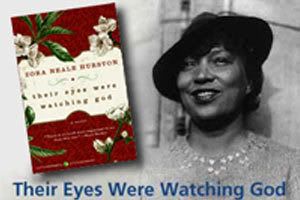
Set in Florida, Zora Neale Hurston’s Their Eyes Were Watching God is the story of Janie Mae Crawford, who tries to break free from the roles assigned to the women of her generation and prove her worth. Considered the first African-American feminist novel, it set the tone for a new generation of women writers in search of their black identity in the 1960s.
Friday, February 22nd at 5 p.m.
Miami Dade Public Library Auditorium
101 W. Flagler St., Downtown Miami
Free and open to the public.
Students with proper ID will receive a free audio CD with excerpts from Their Eyes Were Watching God and literary comments on Hurston’s work.
February 15, 2008
Showcase of African American Authors at MDC
One of the little known secrets of Miami Dade College (MDC) is the wealth of literary talent that we have. For the past thirty years, MDC has hired many writers to work in English departments or has been an incubator of talent through the Florida Center for Literary Arts and the Miami Book Fair International.
On Monday, February 6, 2008, I was privileged to introduce Joseph McNair, Sam Grant, and Preston Allen, during our Showcase of African American Authors at MDC. The Black History Month Committee had planned to highlight many more of our authors, but many of them had conflicts with their teaching schedules. (Did I also mention many are committed teachers?)
The standing room only event was held at the Carrie P. Meek Entrepreneurial Education Center, named after one of the great heroes of Miami life and politics, Carrie P. Meek, who was also present at our ceremony honoring another Miami legend, Garth C.Reeves, publisher of the Miami Times.
The truly inspirational evening of stories about rebirth and transformation, as Professor Joseph McNair rightly noted, began with a reading from Ose Sango. But before he commenced, Professor McNair gave an introduction to African cosmogony and the work of scholars such as Cheikh Anta Diop and Ivan van Sertima. Professor McNair then gave a brief history of his novel which began as a series of short stories about the way that Africans look at the world. The students listened intently as Joe read from his coming-of-age novel about a young man who wakes up one day to discover that he is a reincarnation of the Orisha Sango.
To view photos of the event, please follow this link: Showcase of African American Authors at MDC.
February 3, 2008
It's Zora, Zora, Zora Day at Miami Dade College!
Live Feed of Dramatic Readings from Zora Neale Hurston’s Their Eyes Were Watching God
Celebrating the Spunk of Zora Neale Hurston with dramatic readings from Their Eyes Were Watching God
Miami Dade College will be hosting a live feed of dramatic readings of Zora Neale Hurston’s Their Eyes Were Watching God on Monday, February 4, 2008.
William & Joan Lehman Theatre, 11380 NW 27th Ave., Miami
11 a.m. (EST)– MDC Hialeah Campus, Rm. 1119, 1780 W. 49th St., Hialeah
11 a.m.(EST) – MDC West Campus, 3800 N.W. 115th Ave., Doral
***