Showing posts with label African-American writer. Show all posts

November 4, 2011

Soul of South Florida Book Expo


Genelle Guzman McMillan (Trinidad)- Last Survivor to Be Rescued from Ground Zero New York.
Trapped under the World Trade Center Building for almost 30 hours, Genelle has chronicled her story in time for     the 10th Anniversary of the 9/11 attacks with her book "Angel in the Rubble". Genelle's story has been featured in     Time Magazine, The Today Show, Good Morning America and has traveled the world to tell her miraculous story of hope, survival and transformation.  This will be her first appearance in South Florida.


Cedella Marley (Jamaica)- Eldest Daughter of Bob Marley.  Cedella will discuss and sign her new book One Love which is a children's book teaching about her father's life and Jamaican culture

Yona Deshommes (Haiti):  Yona is a Senior Publicist at Simon and Schuster Books.
Yona will conduct a workshop and Q & A Session on "Telling Our Stories and Publishing Our Books."  She will give inside pointers on how to get your book noticed, and how to promote your finished works.

Additional Authors include:  Taye Diggs, Isaiah Washington, Lou Gossett Jr, L.Divine and Victoria Christopher Murray.


***

April 27, 2011

21 Days/ 21 Poems: A Praise Poem

In Praise of Okra

No one believes in you
like I do. I sit you down on the table
& they overlook you for
fried chicken & grits,
crab cakes & hush puppies
black-eyed peas & succotash
& sweet potatoes & watermelon.

Your stringy slippery texture
reminds them of the creature
from the movie Aliens.

But I tell my friends if they don’t like you
they are cheating themselves:
you were brought from Africa
as seeds, hidden in the ears and hair
of slaves.

Nothing was wasted in our kitchens.
We took the unused & the throwaways
& made feasts;
we taught our children
how to survive,
adapt.

So I write this poem
in praise of okra
& the cooks who understood
how to make something out of nothing.
Your fibrous skin
melts in my mouth--
green flecks of flavor,
still tough, unbruised
part of the fabric of the earth.
Soul food.


“In Praise of Okra” by January Gill O’Neil. Underlife. CavanKerry Press, 2009.

“In Praise of Okra” reenacts the history of New World Africans in North America through praise of an often maligned fruit. From the opening lines, “No one believes in you/ like I do. I sit you down on the table/ & they overlook you,” the speaker establishes her connection through a shared history of Otherness, which culminates in the observation: “Your stringy slippery texture/ reminds them of the creature/ from the movie Aliens.”

Then, through a subtle reversal--reclamations of self and history--the speaker demonstrates the positive values associated with okra and New World Africans who have  have always "understood/ how to make something out of nothing.”

By the generous act of creating a poem, the fruit is transformed by the poet's recognition of its value, and in the act of naming, poem and fruit rightly become: “Soul food.”


About January Gill O’Neil

January Gill O’Neil is the author of Underlife (CavanKerry Press, December 2009). Her poems and articles have appeared in North American Review, The MOM Egg, Crab Creek Review, Ouroboros Review, Drunken Boat, Crab Orchard Review, Callaloo, Literary Mama, Field, Seattle Review, and Cave Canem anthologies II and IV, among others. Underlife was a finalist for ForeWord Reviews Book of the Year Award, and the 2010 Paterson Poetry Prize. In 2009, January was awarded a Money for Women/Barbara Deming Memorial Fund grant. She was featured in Poets & Writers magazine’s January/February 2010 Inspiration issue as one of their 12 debut poets. A Cave Canem fellow, she is a senior writer/editor at Babson College, runs a popular blog called Poet Mom, and lives with her two children in Beverly, MA.

***


Enhanced by Zemanta

April 26, 2011

21 Days/ 21 Poems: A Love Poem

You, Therefore
—for Robert Philen

You are like me, you will die too, but not today:
you, incommensurate, therefore the hours shine:
if I say to you “To you I say,” you have not been
set to music, or broadcast live on the ghost
radio, may never be an oil painting or
Old Master’s charcoal sketch: you are
a concordance of person, number, voice,
and place, strawberries spread through your name
as if it were budding shrubs, how you remind me
of some spring, the waters as cool and clear
(late rain clings to your leaves, shaken by light wind),
which is where you occur in grassy moonlight:
and you are a lily, and aster, white trillium
or viburnum, by all rights mine, white star
in the meadow sky, the snow still arriving
from its earthwards journeys, here where there is
no snow (I dreamed the snow was you,
where there was snow), you are my right,
have come to be my night (your body takes on
the dimensions of sleep, the shape of sleep
becomes you): and you fall from the sky
with several flowers, words spill from your mouth
in waves, your lips taste like the sea, salt-sweet (trees
and seas have flown away, I call it
loving you): home is nowhere, therefore you,
a kind of dwell and welcome, song after all,
and free of any eden we can name.

“You, Therefore” by Reginald Shepherd. Fata Morgana. University of Pittsburgh Press, 2007

When Reginald Shepherd visited Miami Dade College in 2007, I had the pleasure of hearing him read from this collection. During the brief time that we spoke, I discovered a very warm and generous man who was willing to share his gifts with our students and they were enamored by his brilliance. 


The speaker in the poem while contemplating his imminent death creates from fragments of memory a portrait of his lover: “strawberries spread through your name/ as if it were budding shrubs.” The lush descriptions of natural phenomena, “you are a lily, and aster, white trillium,” drive his relentless desire to define the relationship. It is a failed attempt. His love is beyond language, which metaphor can only suggest: “therefore you, / a kind of dwell and welcome, song after all,/ and free of any eden we can name.”


Reginald Shepherd (April 10, 1963 – September 10, 2008) was an American poet and born in New York City and raised there in the Bronx. He died of cancer in Penascola, Florida, in 2008.
Shepherd graduated from Bennington College in 1988, and received MFAs from Brown University and the University of Iowa, where he attended the prestigious Iowa Writers Workshop. He subsequently taught at Northern Illinois University and Cornell University. In his last year at the University of Iowa, he received the "Discovery" prize from the 92nd Street Y, and his first collection, Some Are Drowning (1994), was chosen by Carolyn Forché for the Association of Writers & Writing Programs' Award in Poetry.
His other collections are: Fata Morgana (2007), winner of the Silver Medal of the 2007 Florida Book Awards; Otherhood (2003), a finalist for the 2004 Lenore Marshall Poetry Prize; Wrong (1999); and Angel, Interrupted (1996).
He is also the author of A Martian Muse: Further Essays on Identity, Politics, and the Freedom of Poetry (published posthumously in 2010), Orpheus in the Bronx: Essays on Identity, Politics, and the Freedom of Poetry (2007) and the editor of The Iowa Anthology of New American Poetries (2004) and of Lyric Postmodernisms (2008).
His work has been widely anthologized, including in four editions of The Best American Poetry and two Pushcart Prize anthologies. His honors and awards include grants from theNational Endowment for the Arts, the Illinois Arts Council, the Florida Arts Council, and the Guggenheim Foundation. His 2008 book of essays, Orpheus in the Bronx, was a finalist for the National Book Critics Circle Award in Criticism.[1]

Source: Wikipedia

***


Enhanced by Zemanta

February 21, 2011

"1945" by Chris Abani


from DAPHNE’S LOT

1945
When the magic mushroom clouding Hiroshima cleared
on peace, Daphne was fourteen. Her imagination could
not measure the desert of death that was Normandy’s
beach or the oily cough of tanks through small dusty
Italian towns where everybody wanted to be Americano!
But she remembered waking to the siren of the air-raid
alarm, disoriented by blacked out windows.
The shelter; a family huddle under the stairs
with the musty smell and the tang of cleaning products,
face pressed into the familiar hardness of the ironing board.
There was the thrill of the gasmask and the free candy
she got at the local cinema on Saturdays if she
remembered to bring it along, and the ballerina in her
music box that lived only when she hoarded sweets.
2001
I pretend to smoke my pen, listening to Beethoven.
Moonlight Sonata. This is the thing.
Long hours, late hours, much of it tortured,
waiting for sense like patterns in the sand.
Or language poetry or conceptual art.
To say: Oh my craft and the time it is taking,
10
but Derek Walcott got there first and how
do you follow a poet like that?
I cannot call Mum. It is four a.m., this late,
the tone would be loud enough to touch.
I want to ask – did Granny brush your hair,
the moment fragile yet tensile as a strand of that hair?
I need the material, but this thing, this shape
cannot be found with her. Like the rabbi said,
never give up a good question for an easy answer.
And this much I know – the deeper art
is to follow where the shape leads,
but my fear needs a map. Lines, in couplets,
to contain the uncertainty. Still it mocks me.
Oh my craft, and the time it is taking!


Praise for Feed Me the Sun by Chris Abani

“In this eclectic and imaginative poetry book Chris Abani takes us on a time-travelling journey around the world. He explores history, war, myth, religion, relationships and a poet’s personal and philosophical musings. His versatile voice is, variously, audacious, energetic, visual, oblique and always, always, thought-provoking.” ~ Bernardine Evaristo

This collection of Chris Abani’s longer poems, some previously published, the majority new, displays his astonishing energy, beauty of expression and range of reference to contemporary life, history, art and literature. Having this work together in one volume enables us to see the dialogue between a sense of the personal and an engagement with the public and historical, from ‘Daphne’s Lot’ which explores the life of an Englishwoman (his mother) caught up in the madness of the Biafran civil war, or ‘Buffalo Women’, an epistolary sequence of poems between lovers caught up in the American civil war. 


The focus of Abani’s poems is frequently on extreme situations where the unspeakable becomes too readily the doable, but where against the odds compassion and love remain and the individual determination to resist public madness. In ‘Sanctificum’ there is a profound meditation on the sacred, whether reached through religious ritual or through art, and the narrow dividing line between the urge to reach for mastery and transcendence and the abuses of power whether personal, contemporary or historical.


Chris Abani is the author of 11 books, the recipient of numerous awards for his writing, and is currently holds the position of Professor at the University of California, Riverside.

Enhanced by Zemanta

November 19, 2010

My Ideal Schedule: Miami Book Fair International


The lineup of authors for the Miami Book Fair International will again present some logistical problems. Translation: I will have either have to clone myself in a hurry or borrow the Time Turner from Hermione Granger.

Here would be my ideal schedule:

Saturday

Michele Voltaire Marcelin on Lost and Found, Ruth Miriam Garnett on Chole’s Grief, Diana McCaulay on Dog-Heart and Mervyn Taylor on No Back Door.
Saturday, Nov. 20, 10:00 a.m., Room 3314 (Building 3, 3rd Floor)


Walter Mosley on The Last Days of Ptolemy Grey.
Saturday, Nov. 20, 10:00 a.m., Auditorium (Building 1, 2nd Floor, Room 1261)

Gideon Hanoomansingh, Merle Hodge, Lasana Kwesi and Raoul Pantin, Earl Lovelace with moderator Winston Maynard.
Saturday, Nov. 20, 11:30 a.m., Room 3314 (Building 3, 3rd Floor)

Michele Norris on The Grace of Silence: A Memoir
Saturday, Nov. 20, 12:00 p.m., Auditorium (Building 1, 2nd Floor, Room 1261)

Dr. Paul Farmer on Partner to the Poor
Saturday, Nov. 20, 1:30 p.m., Room 3314 (Building 3, 3rd Floor)

Kwame Anthony Appiah on Honor Code: How Moral Revolutions Happen and Thomas C. Holt on Children of Fire: A History of African Americans
Saturday, Nov. 20, 1:30 p.m., Presentation Pavilion B (N.E 3rd Street and 1st Avenue)

Lynn Emanuel on Noose and Hook, Chase Twichell on Horses Where the Answers Should Have Been: New and Selected Poems, Michael Hettich on Like Happiness and Lola Haskins on Still, the Mountain
Saturday, Nov. 20, 1:30 p.m., Room 3410 (Building 3, 4th Floor)

Les Standiford and Joe Matthews on Bringing Adam Home: The Abduction that Changed America
Saturday, Nov. 20, 1:30 p.m., Room 7128 (Building 7, 1st Floor)

James W. Hall on Silencer, Jeff Lindsay on Dexter is Delicious and Ridley Pearson on In Harm’s Way and Greg Rucka on Last Run: A Queen & Country Novel
Saturday, Nov. 20, 2:30 p.m., Room 7128 (Building 7, 1st Floor)

Heather Russell on Legba's Crossing: Narratology in the African Atlantic and Donna Weir-Soley on Eroticism, Spirituality and Resistance in Black Women's Writings
Saturday, Nov. 20, 3:30 p.m., Room 3315 (Building 3, 3rd Floor)

Carlos Eire on Learning to Die in Miami, Edwidge Danticat on Create Dangerously: Immigrant Artists at Work and Ngugi Wa Thiong'o on Dreams in a Time of War: A Childhood Memoir (free ticket required for admission)
Saturday, Nov. 20, 3:30 p.m., Chapman Conference Center (Building 3, 2nd Floor, Room 3210)

Tigertail presents A South Florida Poetry Annual: Selected Collective, Poetry, Prose and Projects by The Miami Poetry Collective
Saturday, Nov. 20, 4:00 p.m., Room 3410 (Building 3, 4th Floor)

Salman Rushdie on Luka and the Fire of Life (free ticket required for admission)
Saturday, Nov. 20, 5:00 p.m., Chapman Conference Center (Building 3, 2nd Floor, Room 3210)

Sunday

T Cooper on The Beaufort Diaries, Preston Allen on Jesus Boy and Vicki Hendricks on Florida Gothic Stories
Sunday, Nov. 21, 10:00 a.m., Prometeo Theatre (Building 1, 1st Floor, Room 1101)

Haiti Noir with Edwidge Danticat, M.J. Fievre, Mark Kurlansky, Marie Ketsia Theodore-Pharel and Josaphat-Robert Large
Sunday, Nov. 21, 12:00 p.m., Presentation Pavilion A (N.E 3rd Street and 1st Avenue

Geoffrey Philp on Dub Wise, James Brock on Gods & Money and Nina Romano on Coffeehouse Meditations
Sunday, Nov. 21, 1:00 p.m., Room 3410 (Building 3, 4th Floor)

C.K. Williams on Wait and On Whitman in conversation with Campbell McGrath
Sunday, Nov. 21, 1:00 p.m., Prometeo Theatre (Building 1, 1st Floor, Room 1101)

Norberto Fuentes on Autobiography of Fidel Castro, Earl Lovelace on Is' Just a Movie and Mark Kurlansky on Edible Stories
Sunday, Nov. 21, 2:00 p.m., Room 7106/7107 (Building 7, 1st Floor)

Roberto González Echevarría on Cuban Fiestas, Gustavo Pérez Firmat on The Havana Habit, Octavio Roca on Cuban Ballet and Mark Weiss on The Whole Island: Six Decades of Cuban Poetry
Sunday, Nov. 21, 3:30 p.m., Room 7106/7107 (Building 7, 1st Floor)


Jonathan Franzen on Freedom: A Novel (free ticket required for admission)
Sunday, Nov. 21, 5:00 p.m., Chapman Conference Center (Building 3, 2nd Floor, Room 3210)

Hope I'll see you there!

***
MIAMI BOOK FAIR INTERNATIONAL AND FLORIDA CENTER FOR THE LITERARY ARTS

Miami Book Fair International is the largest and finest literary gathering in America. It is the premier event of the Florida Center for the Literary Arts at Miami Dade College. The Center promotes reading and writing throughout the year by consistently presenting quality literary activities open to all in South Florida. Literacy projects target children of all ages—from kindergarten to high school—as well as college students and adults.

Established and emerging writers from South Florida and all over the U.S. read, lecture, and teach workshops. They work with K-12, MDC students, and diverse members of the community, helping to deepen their understanding of literature, and encouraging the work of writers at all stages of development. The Center envisions South Florida as a nexus of literary activity in the Americas and beyond, and will continue to champion its mission of promoting the advancement and appreciation of the literary arts in all forms.

Miami Book Fair International is made possible through the generous support of the State of Florida and the National Endowment for the Arts; the City of Miami; Miami-Dade County Department of Cultural Affairs and the Cultural Affairs Council, the Miami-Dade County Mayor and Board of County Commissioners; Miami-Dade County Public Schools; the Greater Miami Convention and Visitors Bureau; the Miami Downtown Development; and the Friends of the Fair; as well as many corporate partners.


July 21, 2009

Henry Louis Gates, Jr Arrested

Henry Louis Gates, Jr.Statement on Behalf of Henry Louis Gates, Jr. -- by Charles Ogletree

This brief statement is being submitted on behalf of my client, friend, and colleague, Professor Henry Louis Gates, Jr. This is a statement concerning the arrest of Professor Gates. On July 16, 2009, Professor Henry Louis Gates, Jr., 58, the Alphonse Fletcher University Professor of Harvard University, was headed from Logan airport to his home [in] Cambridge after spending a week in China, where he was filming his new PBS documentary entitled “Faces of America.” Professor Gates was driven to his home by a driver for a local car company. Professor Gates attempted to enter his front door, but the door was damaged. Professor Gates then entered his rear door with his key, turned off his alarm, and again attempted to open the front door. With the help of his driver they were able to force the front door open, and then the driver carried Professor Gates’ luggage into his home.

Professor Gates immediately called the Harvard Real Estate office to report the damage to his door and requested that it be repaired immediately. As he was talking to the Harvard Real Estate office on his portable phone in his house, he observed a uniformed officer on his front porch. When Professor Gates opened the door, the officer immediately asked him to step outside.

Read more here: The Root

***

This is an issue about which I've blogged before in "Fear of the Perp Walk," and incidents like this strike fear in the heart of every male of African descent in America. The larger implication of these actions are intended to say, "If we can do this to him, we can do it to you."


Reblog this post [with Zemanta]

July 18, 2009

Asili: Volume VIII-3 Online

Asili:the Journal

Volume VIII-3 of Asili: The Journal of Multicultural Heartspeak is now online and features fiction and poetry by the following writers:

Avotcja
Adrian Castro
Joseph McNair
Eugene B. Redmond
Preston Allen
CM Clark
Reginald Lockett
Rethabile
Al Young
Opal Palmer Adisa
Geoffrey Philp
devorah major
Quincy Troupe
Welvin Stroud

The editor of Asili: The Journal of Multicultural Heartspeak and the Asili: The Journal Blogspot, Joseph McNair, has also inlcuded the tribute poem for Michael Jackson "We Had Him" by Maya Angelou.

Here is the link to the site: Asili

***


Reblog this post [with Zemanta]

April 24, 2009

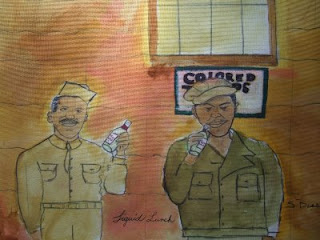
New Book: "Liquid Lunch" by Stephen Bess


One of the familiar tropes of the blues is that the ‘troubles of the world” (loss of a job or lover) can overcome us and the only forms of refuge are the arms of another lover (who will also betray) or in alcohol—the ultimate betrayer and bamboozler.


Yet we, like many of the speakers in Stephen Bess’s Liquid Lunch: Blues-Inspired Poetry, persist in this illusion because of the sweet, if ephemeral pleasures. Stephen Bess captures all of the anguish and the drama in poems such as “One Shot,” "Truth Serum," “My Baby Sue,” and my favorite, “Spoonful of Lovin’":

Please, please little baby

Run away with me


And I’ll show you just how sweet

life could really be


Stephen blogs at Morphological Confetti where you can purchase a copy of Liquid Lunch: Blues-Inspired Poetry.


***

March 13, 2009

New Book: "Liquid Lunch " by Stephen Bess

Stephen Bess
Stephen Bess is now a published author. Stop by his blog and BUY a copy of Liquid Lunch.
Liquid Lunch has arrived! I was smiling ear to ear when UPS showed up with my chapbooks. I felt like a proud Papa; I am a proud Papa! Well, if you wish to purchase just look to your right. There is a "Buy Now" button to click. It's easy and safe to use. If you don't have a credit or debit card, send me an email (for email address just click profile button). I guarantee excellent customer service. Meanwhile, please tell a friend or family member. We gotta move these chapbooks! Thanks for all of your support. *Big Smile*

blog it

February 17, 2009

2009 Cave Canem Retreat

Cave CanemAdult African American poets are invited to participate in Cave Canem's 14th annual retreat, June 21 - June 28, 2009, to be held at the University of Pittsburgh at Greensburg, Pennsylvania. Retreat residencies offer an unparalleled opportunity to study with a world-class faculty and join a community of peers. 2009 faculty members are Toi Derricotte, Cornelius Eady, Angela Jackson, Colleen J. McElroy, Ed Roberson and guest poet Natasha Trethewey. The deadline to apply is March 5, 2009. For more information, see our application guidelines or visit our website.
"Cave Canem is a hard place. Safe space is paradoxical. It doesn’t mean freedom to write anything without critique. Cave Canem is a place where you are free to risk."
— Toi Derricotte, Gathering Ground

blog it

January 9, 2009

Asili Celebrates Black Writers from 1711 to the present

A special thanks to the African American Library and Cultural Center, Ft. Lauderdale, Florida and the assistance of Pearl Woolridge and Wayne Draper of the special collections section, Deborah Keeler and Celia Suarez of the Miami Dade College North Campus library, Asili writers Geoffrey Philp for his input on English speaking Caribbean writers and Max Pierre for his input on Haitian-Creole and Francophone writers.
clipped from asilithejournal.com

The following tables presents a partial listing of Black writers, poets and playwrights (African Americans and those of African descent) who created, shaped and influenced Black literature in the United States and the world from 1711 to the present.


blog it

December 17, 2008

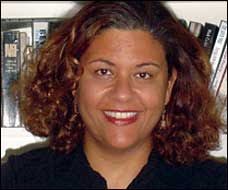
Elizabeth Alexander: Poet for Obama 's Inaugural Ceremony

Elizabeth Alexander
Elizabeth Alexander was chosen by the Joint Congressional Committee on Inaugural Ceremonies to read at the swearing in ceremony next month.

Over at the Guardian, Jay Parini muses about the reasons why Alexander was chosen:

In a sense, the Obama team remains pitch-perfect here. The choice of Alexander to read is brilliant. She represents black American culture, but she says to the audience: "We're here, and we're very smart and well-educated, fully aware of western European culture in all its complexity; yet we retain an allegiance to our own past, our roots, our needs, our vision."


Photo Source: Elizabeth Alexander Home Page


Update (1/21/2009: Text of the Inaugural Poem from The New York Times:

Praise song for the day.

Each day we go about our business, walking past each other, catching each others' eyes or not, about to speak or speaking. All about us is noise. All about us is noise and bramble, thorn and din, each one of our ancestors on our tongues. Someone is stitching up a hem, darning a hole in a uniform, patching a tire, repairing the things in need of repair.

Someone is trying to make music somewhere with a pair of wooden spoons on an oil drum with cello, boom box, harmonica, voice.

A woman and her son wait for the bus.

A farmer considers the changing sky; A teacher says, "Take out your pencils. Begin."

We encounter each other in words, words spiny or smooth, whispered or declaimed; words to consider, reconsider.

We cross dirt roads and highways that mark the will of someone and then others who said, "I need to see what's on the other side; I know there's something better down the road."

We need to find a place where we are safe; We walk into that which we cannot yet see.

Say it plain, that many have died for this day. Sing the names of the dead who brought us here, who laid the train tracks, raised the bridges, picked the cotton and the lettuce, built brick by brick the glittering edifices they would then keep clean and work inside of.

Praise song for struggle; praise song for the day. Praise song for every hand-lettered sign; The figuring it out at kitchen tables.

Some live by "Love thy neighbor as thy self."

Others by first do no harm, or take no more than you need.

What if the mightiest word is love, love beyond marital, filial, national. Love that casts a widening pool of light. Love with no need to preempt grievance.

In today's sharp sparkle, this winter air, anything can be made, any sentence begun.

On the brink, on the brim, on the cusp -- praise song for walking forward in that light.


Elizabeth Alexander is the author of four books of poems, The Venus Hottentot, Body of Life, Antebellum Dream Book, and American Sublime, which was one of three finalists for the 2005 Pulitzer Prize. She is also a scholar of African-American literature and culture and recently published a collection of essays, The Black Interior. She has read her work across the U.S. and in Europe, the Caribbean, and South America, and her poetry, short stories, and critical prose have been published in dozens of periodicals and anthologies.


September 29, 2008

Writers of Africando


On Saturday, September 20, 2008, I had the honor of reading with several writers of African descent at Africando 2008 at Miami Dade College, North Campus. Besides listening to new work by Preston Allen (All or Nothing), we were also treated to the life stories of Chief Adedoja Aluko (Sixteen Major Odu Ifa from Ile Ife ), Sam Grant (The Opposite Sex), and Joseph McNair (O Se Sango).


Here are some pictures from Africando: Writers of Africando

And an excerpt from Joseph McNair reading from O Se Sango:


Technorati Tag:

June 13, 2008

Black Enough?

Preston Allen, whose novel All or Nothing will be reviewed in the New York Times this Sunday (June 15th, 2008), writes a must-read post about race, ethnicity, and storytelling.
Yes, when I was a young writer, I used to feel self-imposed pressure when I did not write black stories. I had stuff that I wrote for myself, and then I had “serious” stuff that I wrote for the black community. Like I said, I was young. At the same time, I was very much interested in science fiction, thrillers, and classic American lit 101, most of which did not have much to do, thematically, with African Americans. Thus, many of my stories were already “roaming beyond the African American thing,” but I felt a little bit guilty about it. Like I was selling out my race. I was young. So young. When I grew up, I said, “I am going to write what I write and let the chips fall where they may. I will master my craft and become the best writer that I can be. Readers will like me because I am a good storyteller, not because I have a certain color skin.”

blog it
Reblog this post [with Zemanta]

May 22, 2008

OUP Remembers Claude McKay and Langston Hughes

clipped from blog.oup.com

Two African American literary giants died on the same day, nineteen years apart, Claude McKay, May 22, 1948 and Langston Hughes, on May 22, 1967. Both were poets, writers, and significant figures in the literary movement of the Harlem Renaissance.

blog it

March 21, 2008

Breaking the Silence: Obama's Speech

ObamaIn this season of growth, renewal, & reflection, it's hard for me to understand how people have missed this important part of American life….


For even if Rev. Wright was Obama's "father," look how much Obama has grown to the point where he can offer a disinterested analysis of race relations in America which calls for us to be honest, while others still prefer to posture. Isn't the point of growth to be able to say, "Whenever I gain power, I will never do that!" How many of us have done this with our teachers and mentors?

We look at the person and we say (and especially when it's a role model), and say, "He may have his faults, but that's what I want to be. But this is how I'm going to do it."

And I am sure Obama will never admit this, but what other pathway is open to a Black politician other than the church? How was he going to build his power base?

And I won't even get into "father"-"son" relationships (e.g. Richard Wright/ James Baldwin, Malcolm X/ Elijah Muhammad, Muhammad Ali/ Elijah Muhammad, Jesse Jackson/ Dr. Martin Luther King, Jr.) in the Black community and in America. Has everyone forgotten All the King's Men?

And finally on the issue of anger? Why do you think these young men have been wearing dreadlocks and their pants down to their knees? Why have they raided their "fathers" old vinyl records as the basis of rap/ hip-hop? Isn't that indicative of a rejection of the entire structure-- a passive aggressive reaction to their society? The less talented remain passive aggressive. Their fathers are either dead or in jail--"victims" of the system.

The more talented, (e.g. Ice-T, Chuck D/Public Enemy) built careers on anger and rejection of "the system."--"Fight the Power!"

But again we choose to be innocent (our government tortures people?) or pretend as if the systemic practice of institutional racism does not have consequences. Or better yet, choose to remain ignorant of the things our government has done abroad in the name of "American interests."

I do not believe Obama to be a hater and a careful analysis of his speech that is founded in the Constitution and in which he uses quotes from the Founding Fathers, James Baldwin, and Malcolm X, to name a few, shows that he has a deep understanding of America and that he offers a transcendent vision of America that we haven't had in a long time.

***