March 22, 2007

A Mother's Legacy: The Gift of Laughter

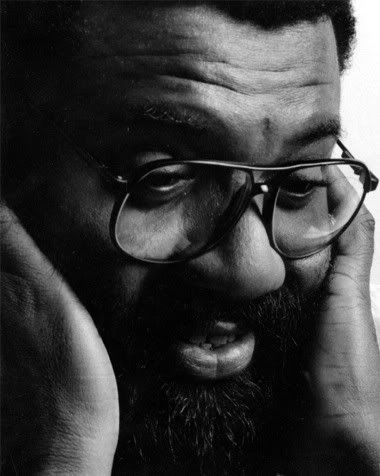
African-American writer Preston AllenIt had always been there, but I never saw it. Or perhaps I was too close. Although I can’t see why. No, a better answer is that I was focused so much on Preston’s talents as a writer and teacher, and it took a funeral for me to notice.


On Sunday, March 18, 2007, the funeral for Iris Eleanor Gale Allen, Preston’s mother (or Aunty Iris as her family called her) was held at Mount Pisgah Seventh-Day Adventist Church. Although she had been ailing for some time, her death came as a shock, for no one’s ever prepared for a parent’s death. It was especially hard on Preston’s son, Quinn, who had grown into a fine young man from the Yugio trading boy who had attended my twentieth wedding anniversary four years ago. Yet here he was, standing beside his father and three uncles, and when the time came for his reflection, a poem Preston had written, Quinn read with poise and eloquence beyond his twelve years. Although I never met her, I can say Aunty Iris (I am claiming this intimacy) would have been proud. For in a way, I did know her. She reminded me in many ways of my mother.


One of the main reasons for my friendship with Preston has been the remarkable similarities in our lives. Besides growing up in the Caribbean and trying to figure out our place in the diaspora, Preston and I were brought up by matriarchs who were grounded in fundamentalist religions. We both went to colleges in Florida, met our wives at Miami-Dade College, and we’ve both lived and worked as writers/teachers in Miami for the past twenty years. Sometimes when I stroll over to the English department, my former colleagues remind me of the afternoons when they’d eavesdrop on the conversations that Preston and I would have about O’Connor, Faulkner, Dostoyevsky, Joyce, Pushkin, and the Miami Dolphins.


We’d open the doors to our offices that faced each other, our brains still on fire from writing all morning, and grade papers, trade manuscripts, and crack jokes. In fact, that’s what I remember most about those conversations. Our laughter. Preston has a great sense of humor. He once told me about his starving student days (he still has to write about them) and how he “volunteered” to become a patient for some dentist interns on the condition that he would release the university from all indemnity. He signed the forms, got eighty dollars, and he’s been in pain ever since. Although he was describing a horrible experience, the way he told the story (I’m laughing even as I write this) was so funny, I had tears in my eyes from the laughter. We spent many evenings like this: telling jokes, trading stories, and laughing.


Late in the evening after the din and clamor, we’d settle into a pattern of quietly talking about our deepest fears and desires. Would we make it as writers? After so many rejections, should we try self publishing? Would we get a review in the Herald? Would we get promoted this year? Would we turn out like our fathers? For we wanted to be better than our fathers. We wanted to be generative, supportive, protective men for everyone in our lives.


Yet when I got the e-mail about the funeral at a Seventh-Day Adventist church, I was a bit hesitant. It had been a long time since I’d been to an Adventist meeting, and my wife, good Catholic that she is, had never ventured inside those Protestant doors. We sat in the pews and waited as the family and extended family filed in, and once the invocation was given, it seemed as if we were in a regular American church with readings from the Old and New Testaments. However, once the reflections began, it was clear that we were at a Caribbean/Honduran funeral with the requisite singing of every single verse of hymns such as “as “In Times Like These (You Need a Savior)” and sermon by fiery preacher--Jonathan Edwards with a West Indian accent.


As we sweated through the sermon that ended the service, what struck me more than the preacher’s exhortations was the deep sincerity and appreciation that the speakers and the audience had for Aunty Iris. Many had come from all parts of the world to honor a woman who had given assistance in any way that she could—sometimes opening her door to strangers who stayed days, weeks, months, or years in her home (another thing Preston and I have in common). Speaker after speaker commented on her kindness, and I couldn’t help but think, how many of us, as sophisticated as we are and locked away in the hermetic cells of academia, have touched lives in such as profound was as this simple woman from Roatan? How many people are going to show up at our funerals, not to talk about how our books, or ideas influenced their lives, but how we provided, food clothing, or shelter without thinking about the IRS deduction? And Aunty Iris went beyond that. The “fatherless boys" testified about how she drove around in her station wagon and took them to church on Sabbath. Many were thankful that Aunty Iris, despite the fact that they had sometimes fallen by the wayside, always loved them and stood by them in times of need: “Whenever she was in the room, we knew everything would be all right”.


And when the time came for Preston and his brothers to speak, in the midst of the congregation and although he was the shortest (“We got the height and he got the brains,” Cameron explained), Preston was slowly, before my eyes, assuming a gravitas that I had never seen before, and his wife, brothers, son, mother-in law, the entire congregation watched the transformation in awe. Preston spoke about his mother's legacy and her sense of humor. He reaffirmed the bond that a mother and son share, especially when a father is not present. He knew he could call her up at any time and talk to her about anything and she would listen. Even though she was a Christian woman, Aunty Iris would listen to everything because she, too, had lived. She knew about this world that breaks the heart of its lovers, and still she laughed. Whether she was in pain or nearly comatose, she taught him always “to be of good cheer.” It felt good to be in the midst of the congregation and to listen to Preston speak about the value of a life lived in the service of others and delivered with a gentle wit and compassion. Preston's homily had more of an impact on me than the preacher’s rant.


And when we came outside into the midday sun where the hearse waited to take his mother’s body to its final resting place, we could hear the laughter of Aunty Iris in the voices of her sons, grandsons and all the fatherless boys of Miami. Aunty Iris was probably smiling and laughing as we cried and laughed during the service. I know she was. I heard your laughter, Aunty Iris. I also saw your son transform into the man he always wanted to be--the man you knew he always was—that I and the host of witnesses now saw. And I knew you (and all the saints who were smiling and laughing) were proud.

***


Tags:

March 21, 2007

I Google, therefore I am

I GoogleI don’t know if the Latin is correct, probably, Googlo, ergo sum, but Kenneth Goldsmith’s post “If It Doesn't Exist on the Internet, It Doesn't Exist” highlights the central issues of the digital revolution and its implications for writers, scholars, and public intellectuals.


Here are a few highlights from Goldsmith’s post:


“If it's not networked, it doesn't exist; if it's not able to be shared, it doesn't exist. Older media needs to be digitized in order to exist.”


“What do publishing houses and magazines do for their authors? In our field, they generally don't make them rich; instead, they create a context, a framework for the work to exist. The benefits of academic publication are almost always oblique: credibility, speaking engagements, job credentials, etc. With the web, we can extend the benefits of book publishing to enhance both our careers and the institution with which we are affiliated.”


“Like publishing or academic affiliation, blogging creates another type of community: peer-based consensus garners credibility. Blogging opens up instantaneous discourse with a group of like-minded thinkers.”


And my favorite:


“It is our obligation as educators and intellectuals to make sure that the bulk of our production ends up there, preferably with free and unfettered access to all. This means not making materials available only for those affiliated with our institution, our students, or our colleagues, but giving free and unfettered access for all. Doing so means posting our works on the world wide web so that anyone, anywhere, at any time can have access to them. In this way, we will ensure that our work exists.”


This is true particularly in the case of minority writers whose subjects and work are frequently ignored by the mainstream media and the general public. Since I started blogging, the opportunities and threats of the new digital media have been clarified even as I engage in this highly recursive activity.


  • The media revolution is driven by stories of sex, power, and money. Sometimes the digital trinity transubstantiates into one. In the midst of the We Media Conference in Miami when we were talking about global warming, women’s rights, and Libyan jails, we watched the news about Anna Nicole Smith climb the Technorati charts like a newly discovered Elvis song. Some of the panelists were rightly disheartened. But as a teacher/ writer, I have chosen the vocation of educating the next generation and while some may lament the attention given to these subjects that will come and go, my attention remains fixed on those things that within the culture that are “grave and constant” and excellent. Instead of locking away and putting up more barriers to access, how can we preserve the legacy of our writers? How many books have we lost? How many books will we lose when the digital revolution is finally realized? I have a battered copy of Reel from “The Life Movie.” How many more exist?


  • I love the vision of Wikipedia and the language used to describe the subjects should remain that way. But the kind of dispassionate writing that we expect from an encyclopedia and academic writing (I hear you, Professor Zero) makes it seem as if the phenomenon was inevitable. For example, my post on dub poetry talks about the resistance that these poets met. The post came about via a question from a young writer/student. Our young writers and students need to know that there was a struggle and these facts cannot be glossed over. Sometimes our losses are amplified because we think NO ONE has ever struggled like we did. Then, we read about the previous struggles of our artists, and we realize that we need to press on with the efforts to preserve the digital memory of our writers. If we don’t do it, no one else will.


The digital revolution will change how we read and what we will read in the near future. We should also be asking, what will be preserved?


***

In case you missed it, here's Derek Walcott on NPR:

Derek Walcott: A Life in Poetry

***


March 18, 2007

Vote for Your Top Ten Caribbean Novels

Vote for Caribbean NovelsFirst, give thanks to all those who submitted your choices to the “Top Ten Caribbean Novels” which closed on Friday, March 16, 2007 @ 4:30 pm. The voting begins today and will end on March 30, 2007 @ 4:30 pm.


I’ve posted the list of submissions here and they are listed alphabetically here. I could have organized the voting based on the actual choices in each category, but I decided that the most equitable method was to list any book that received two or more submissions.


Now I realize that some caveats need to be listed:


1. The submissions were limited (as far as I can tell) to readers of Allyuh, Caribbean Beat, BlogWorld, and my blog.


2. Although I have problems with book polls and surveys (I agree with Eliot’s thesis in “Tradition and the Individual Talent”), there were two reasons why I decided to run this series:

a. Intellectual curiosity

b. Create expanded readership for the blog


3. In the post, which was a response to a meme, I should have said that my choices were based on the direct influence that these books had on my own work. Those aside, I submitted the names of twelve books that were not included in that post.


4. I did not submit any of my work nor the work of my friends. We’re big people. We can take care of ourselves.


These are the final choices from the submissions. I am very interested in any comments about this process and especially about the books that made the final cut.

Coda (3/19/2007): You can now make up to 10 choices.

Please do not be intimidated by the list or if you haven't read all 12. Vote for what YOU got!


Vote for Your Top Ten Caribbean Novels

A House for Mister Biswas by V.S. Naipaul.
Annie John by Jamaica Kincaid
Breath, Eyes, Memory by Edwidge Danticat
Brother Man by Roger Mais.
In the Castle of My Skin by George Lamming
Midnight Robber by Nalo Hopkinson
Miguel Street by VS Naipaul
Minty Alley by CLR James
The Bridge of Beyond by Simone Schwarz-Bart.
The Children of Sisyphus by Orlando Patterson
The Dragon Can't Dance By Earl Lovelace
Wide Sargasso Sea by Jean Rhys
Free polls from Pollhost.com


***


March 16, 2007

Dub Poetry: A Primer

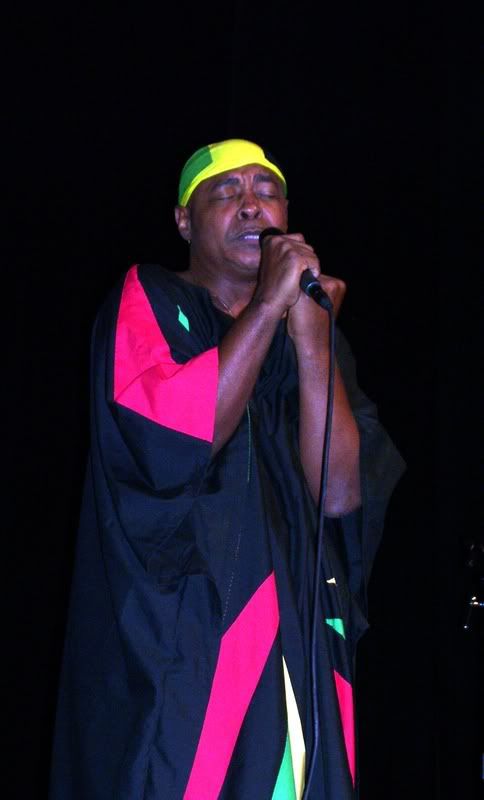
Malachi SmithThe origins of dub poetry begin somewhere between the dancehalls of Kingston and London and the work of poets such as Kamau Brathwaite. Unlike traditional poetry, dub poetry emphasizes sound (repetition, rhyme, and word play) rather than sense (imagery, metaphor, simile) to convey themes of social (in)justice. Besides the subtle racism and class warfare that greeted their work, the earliest pioneers of dub poetry, Linton Kwesi Johnson, Oku Onoura, Benjamin Zephaniah, Malachi Smith, Mutabaruka, and Mikey Smith, confronted resistance, especially in Jamaica, because it was thought that sense (imagery, metaphor, simile) was sacrificed to sound. However, in the best dub poetry there is a fusion of sound and sense that is emotionally stirring, and many who have been trained to mistrust their emotions often find these sensations uncomfortable. At its worst, there’s a monotonous obedience to sound that produces the same effect as poems that rely only on sense—boredom in the audience. In many ways, dub poetry resembles the chanting style of dancehall deejays, but whereas the deejay is bound to the riddim track, the dub poet experiments with words/sounds (almost like a jazz musician) and transcription to the page aims at reproducing the effect of the beat.


As Malachi Smith explained in the dub-u-mentary, Dub Poetry: The Life and Work of Malachi Smith, his dub poems usually come from a beat suggested by the cadence of the refrain which is repeated throughout the poem and acts as a mnemonic device in long compositions. From the first composition to the performance, the poem is revised primarily to the demands of the rhythm. This process can take anywhere from a few hours to several months before the poem is ready for performance on the stage, in a recording studio or publication in a book or magazine.


Several dub poets such as Oku Onoura have been successful with CD sales, stage performances, and book publication. In this excerpt from “Reflection in Red” Onoura demonstrates some of the devices he has frequently used: repetition, rhyme, and word play with the word, “red” which assumes multiple meanings associated with blood, allusions to the music of Peter Tosh, and Babylon the Great of the Apocalypse. These poetic devices are controlled by the theme of a lack of social justice and the rhythm and rhyme reinforce the theme.


Reflection in Red


an de beat

well red

an de scene

well dred

an de man

dem a loot

an shoot

an de fia

a bun

an de blud a run

an some people

doa’ know

weh fi tun


By the use of “nation language,” enjambment, rhyme, repetition, and inventive use of the word, “red,” Onoura creates with sound and imagery, the experience of dread during the seventies in Jamaica. The staccato lines build throughout the poem and sometimes with the use of repetition, similar to the echo of an old tube amplifier, he emphasizes one of the main ideas of the poem;


no peace

no peace

until

until

dere’s equal rites

equal rites

an/ justice

tice

tice

tice

tice…


Dub poetry has evolved from the early years of being dominated by male poets and in recent years, dub poets such as Dibi Young and Lillian Allen have risen to prominence and are widely praised within the genre for expanding the concerns of dub poetry to broader and more inclusive themes that deal with injustice against women and the empowerment of women.


***

Today is the last day for submission: “The Top Ten Caribbean Novels”


***

Tags:


March 14, 2007

I am Pi

I am Pi

I am Pi truncated by forty-nine decimal points


***

For the past three days, I’ve been on vacation (I hadn’t taken one in three years), and I’ve fallen back into the old rhythm of writing that I’d practiced when I taught five, six, sometimes seven classes at Miami Dade College. I’d get up in the morning, shower, help my wife to fix breakfast for the kids, drive our eldest child to elementary school, and then come home at around nine and write until about noon.


I’d then take a walk around the neighborhood, come back home, pick up the kids from school, fix dinner, wait with the kids until my wife came home, and then go to the college where I’d grade papers, meet with my students, and teach until about nine o’clock. On the drive home, I’d think about what my characters would be doing, what the next poem would be about, would I be able to pay the light bill, afford braces for the kids, or did my wife still love me? I’d come home, shower, watch Johnny Carson with my wife, fall asleep, and begin the day all over again.


I did this for many years and experienced this rhythm most acutely during the year when I was writing hurricane center, which was a response to Derek Walcott’s Midsummer. In order to write hurricane center, I set myself the task of writing at least one poem per week for I was trying to mimic the yearly cycle of those who have chosen to live in the direct path of hurricanes. You see, hurricanes have always fascinated me, and what better place to live than in South Florida where the responses to hurricanes range from fear to morbid curiosity? The hurricane was not only a physical threat, but also became a symbol of the existential crisis that Camus (my favorite philosopher) described in The Myth of Sisyphus.


Those were the good old days. And all things grow and change.


As the family and I grew older and more responsibilities came, the old rhythms were disrupted. I adapted to them, including the most recent—being a chairperson of a department. I’ve had to use a whole new range of skills and discover ways of dealing with colleagues in a unionized environment where roles are delineated by a contract, but the day-to-day tasks rely on human trust and motivations which are not mentioned in the contract.


I had to create a new rhythm that would take into account my family, my creative life, and my role as a supervisor in a department of over 2,500 students and seventy employees.


In many ways, blogging has helped me to find this new rhythm. But sometimes I wonder, how long will this last? Will I be able to adapt to Web 3.0 and all the other changes that are bound to come? Who knows? The task at hand is to find meaning in pushing these words across the page. Some days it’s difficult and some days it’s exhilarating. But writing can't be done while waiting for applause. I’ve learned that the hard way.


And what’s left at the end of the day? Perhaps a good meal with my wife and family, sipping a glass of wine, watching Jeopardy with my wife while the kids watch anime, listen to God Smack, or rail about Dick Cheney, and finally falling asleep on the sofa.


Ah, glorious day!

***


March 13, 2007

New Book Social News Site: Wordsy

WordsyWordsy, a new social news site, is still in beta, but looks great for book lovers. For those of us who couldn't get "a comma in edgewise" over at Digg, this is a great alternative.

Give thanks to John Baker's Blog for the news about this.


New Book: Unburnable by Marie-Elena John

Marie-Elena JohnHaunted by scandal and secrets, Lillian Baptiste fled Dominica when she was fourteen after discovering she was the daughter of Iris, the half-crazy woman whose life was told of in chanté mas songs sung during Carnival: songs about a village on a mountaintop littered with secrets, masquerades that supposedly fly and wreak havoc, and a man who suddenly and mysteriously dropped dead.


After twenty years away, Lillian returns to her island of birth to face the demons of her past, and with the help of Teddy, a man who has loved her for many years, she may yet find a way to heal.


Set in both contemporary Washington, D.C. and Dominica, and switching back and forth between contemporary and historical stories, Unburnable traverses literary genres and defies an easy label: page-turner, love story, historical fiction, and murder mystery. The story -- richly textured and lushly rendered--weaves together Caribbean history, African culture, and American sensibilities, and the revelations of its final pages bring to light an important, but little-known aspect of Caribbean history.


Unburnable by Marie-Elena John


Unburnable


Hardcover: 304 pages


Publisher: Amistad


ISBN-10: 0060837578


ISBN-13: 978-0060837570


***

Tags:


March 12, 2007

Literary Immortality

Books from Geoffrey Philps LibraryIn two recent posts at the Poetry Foundation’s blog, “Inspired to Last” and “Poems that Last Take Two,” Kwame Dawes tackled the very difficult subject of literature and longevity, or to put it in the form of the interrogative, what makes a poem, play or novel memorable? What makes literature great? Besides the quality of the work itself (which is the only thing over which the writer has any control) memorability resides within the community.


Of course, the a priori assumptions of memorability are that the community has the interest and confidence to believe that it can produce something memorable and that there is a strong sense of continuity. In other words, are there citizens who are committed to the preservation of cultural artifacts? Are they asking questions such as, should this work be preserved? Who is currently producing memorable work? What makes this work worthy of preservation? What are the qualities in the work that warrant preservation? The criteria for preservation should grow organically out of the community’s sense of identity and its desire to extend that identity into the future. If these conditions are not present, then the questions are moot.


But without extending the dialogue into the future, what makes a work of literature memorable right now? If the writer has done her work (interesting characters, startling imagery, excellent word choice—a combination of sound and sense that engages the emotional and intellectual centers), then the quality that must be present within the community is empathy—the ability of the readers to be able to say, this is me or this could be me. The ability to empathize or to put oneself in someone else’s place arises from the imagination and compassion.


It may be argued that these are innate human characteristics, but within a work of literature, the application of these qualities is shaped by the act of reading. First, the reader has to be willing to enter the work compassionately and imaginatively, and then read or discern patterns within the work. If the writer has done her job, the clues are buried in the text. They are always buried in the text. So when Mabrak in Dream on Monkey Mountain, surrounded by Baron Samedi and the sounds of African drums, begs for a bottle of rum and is rebuffed, and he says, “You call yourself a Catholic?” we realize that Walcott is invoking a search for identity within the communion of the Caribbean. This kind of reading produces a kind of excitement that prickles the senses.


But reading is not only an elaborate detective game. It’s also about the pleasure of words. That indescribable feeling that is produced from the right placement of words that not only describes the subject, but allows entry into a wider range of feelings and emotions. Sometimes the first sentence of a novel begins the evocation. Nicholas Laughlin has written an excellent post about the most memorable opening lines in Caribbean literature: Great First Lines. Finally, reading a memorable text allows us to experience those things around us that we don’t see or sometimes take for granted. We can laugh or cry, but we have experienced our world. Reading also gives us a sense of who we are and an experience of meaning.


This is perhaps why the poetry, plays, short stories, and novels of writers such as Walcott, Brathwaite, Scott, McNeill, Goodison, Senior, Mordecai, Kincaid, Lovelace, Morris, Naipaul, Lamming, Hopkinson, and Danticat, to name a few, have stuck with me. Because every time I pick up their work, I can say, this could be me. This is me!


***

Related post: Desire, the Secret, and Literary Fictions

This is the final week for submissions: Name Your Top Ten Caribbean Novels.


***

Via Francis Wade @ Moving Back to Jamaica: “Miss Jamaica” @ “Miss Universe”


***

March 10, 2007

The Ten Commandments of Blogging

Ten Commandments Blogging Google

The Ten Commandments of Blogging


  1. I am Google and you shall use no other platform but Beta Blogger.

  2. You shall not think that Problogger, Seth, nor Lifehacker have the final word on blogging. They don’t!

  3. You shall not use the name of Google nor any of its related products (AdSense, AdWords) in vain.

  4. Remember your Sitemap index and keep it clean for bots.

  5. Honor your meta element.

  6. You shall not delete your blogs nor move them to Word Press.

  7. You shall not mix CSS, XML, nor any invalid, potentially dangerous script.

  8. You shall not steal (republish) thy neighbor’s text, images nor any content.

  9. You shall not spam about lottery prizes in England and Nigeria, nor use rumor, hype, and false promises in linkbaiting.

  10. You shall not covet thy neighbor’s Google, Technorati, or Alexa ranking, his Feedburner subscribers, nor shall you covet thy neighbor’s blog design.


Amen.

***


March 9, 2007

New Book: Journey Into My Brother's Soul

Maria DowdOne of my posts, “Behold the Lilies of the Fields” will be published in Journey Into My Brother’s Soul, a collection of essays, prose, and poetry about the varied experiences that men of color face throughout their lives.


The collection of stories, prayers, affirmations and meditations, edited by Maria Dowd, shares many of the powerful lessons we’ve learned.


Regular readers of this blog will recognize a few familiar names who have also contributed to the collection:


“Things You Should Know – A Letter to My Son” by Opal Palmer Adisa

“And Their Hearts Beat On” by Maria Dowd

“Ode to our Fathers” by Eunice Heath-Tate


Journey into my Brother’s Soul will be available @ Amazon in May.

Journey into my Brothers Soul


Paperback: 256 pages

Publisher: BET (May 1, 2007)

Language: English

ISBN-10: 0373830297

ISBN-13: 978-0373830299

$14.95


***


March 7, 2007

New Book By Kwame Dawes: She's Gone

Jamaican writer Kwame DawesKofi, a Jamaican reggae musician, and Keisha, a social researcher from South Carolina, meet at a club where Kofi's band is playing on the tail end of a United States tour. Kofi and Keisha come together that night, seeking relief from the uneasy circumstances of their life--Keisha still trying to make up her mind about an ex-lover who keeps coming back into her life, and Kofi realizing that he is teetering on depression and the tyranny of his older lover in Jamaica. Something happens in their first meeting and Kofi convinces Keisha to take a chance and follow him to Jamaica.

She's Gone
delves into the psychology of desire
and need as it contends with issues of culture and class. If it is a love story, it is one marked by the harsh realities of human existence that we see if the most revealing of Bob Marley's love songs, or the cool sensual intelligence of the best of Milan Kundera. Dawes is a poet but he never lets his poetry detract from the sheer pleasure of storytelling.
***

Kwame is also a contributor to the blog at the Poetry Foundation’s blog, and he will be reading at the following venues:


Sat., March 24, 1pm
Barnes & Noble
1125 Woodruff Road
Greenville, SC

Sat., March 31, 7pm
Hue Man
2319 Frederick Douglass Blvd.
New York, NY

Fri., April 13, 6pm
Embassy of Jamaica
1520 New Hampshire Ave. NW
Washington, DC

Sat., April 14, 3pm
Politics & Prose
5015 Connecticut Ave. NW
Washington, DC
*with Amiri Baraka and Juan de Recacoechea

Fri., May 4, Time TBA
A Different Booklist
746 Bathhurst St.
Toronto, ONT
*with Colin Channer

Sat., May 5, 7-9pm
Library and Archives Canada
Salon A
395 Wellington St.
Ottawa, ONT
*with Colin Channer

Mon., June 18, 7pm
Eso Won
4331 Degnan Blvd.
Los Angles, CA
*with Colin Channer

Wed., June 20, 7pm
City Lights
261 Columbus Ave.
San Francisco, CA
*with Colin Channer

Kwame Dawes is an award-winning Ghanaian-born Jamaican author of several books of poetry, nonfiction, and fiction. He teaches at the University of South Carolina, where he is Distinguished Poet in Residence and director of the USC Arts Institute and the SC Poetry Initiative. Dawes is the programmer for the annual Jamaican Calabash International Literary Festival.

March 5, 2007

In My Own Words: Mikey Jiggs

Miley JiggsOn Thursday February 22, 2007, in Miami, Florida, the dub-u-mentary, Dub Poetry: The Life and Work of Malachi Smith, had its premiere. Geoffrey, who appears in the film, asked me to write about the process of creating it.


The Beginning


In 2003, I invited Malachi to perform on a show I was doing in Baltimore, Maryland. In the dead of winter, Malachi arrived in Baltimore, several inches of snow on the ground, and delivered a dynamic show. The feedback I received, gave me the idea that a documentary on Malachi’s life and work might be a step in the right direction in order to introduce the world to him. Malachi’s story is unique and I wanted to capture it.


You see, there is more to Malachi than his writing/performing poetry-- especially, the kind of poetry that he does, dub poetry. Malachi is also a police officer and most dub poets are extremely critical of law enforcement. In Jamaica, he would be called Babylon. I found this a strange yet compelling contradiction.


Film Making


Film making is hard work. It is brain work. It takes extraordinary organization, planning and coordination to pull off a successful production. The concept of teamwork is an integral part of this process. Skillful multitasking is important, especially in independent film making. However, without a budget, one will only have the organization and planning to work with. I had my own money. Not a lot, but enough to get going. My partner’s draw was going to be my seed money. Initial approaches to possible sponsors were rebuffed for several reasons, among them the appearance of the word “revolution” in the early treatment for the film.


After the filming ended, I made a sojourn to my studio in Maryland to log over fifteen hours of footage, compile and scan pictures and I had countless discussions with Malachi via telephone and e-mails. Because of my meticulous preplanning, post production was supposed to run smoothly. However, from this early stage it was evident that I had a problem. We had used limited lighting indoors and that caused some shots to be darker than desired. I had to tweak them to get them to acceptable broadcast levels.


I also found that most of the tracks were noisy. This was because we were trying to shoot mostly outdoors in inner cities or in locations that were convenient, given our limited budget. The sites, however, were not friendly to filmmaking and our very sensitive microphones. First lesson, (sound recording mistakes cannot be fixed in the mix) get it right on location.


Shooting outdoors was consistent with the look we wanted for the film. Our objective was to show the poet in outdoors and how these environs contributed to his life and work. We also did not want the program to be overproduced with clean clear cuts settings. Instead we wanted to highlight the aggressive harder edges of the artist. Besides, shooting indoors would be more expensive to light and to make more attractive.


Locations


Our first location was in NYC at the International Reggae and World Music Awards. We then trekked to Toronto, Canada, to film at the Dub Poetry Festival. Great vibe artistically. However, I was spurned by the promoters over the filming of the event. I tried to convince them about the aims of the film and I even gave them one of the tapes I shot. Nothing worked. Personally, it was a bit upsetting to see and hear our own people so mistrustful of each other. They must have thought that I was going to film the whole festival, sell the tape and make a whole bag of money without compensating them. I had no such intentions. I filmed Malachi at the early venues, did an interview on Lake Ontario and left town with my heart broken and my spirit way down. On the drive back to Maryland, I had enough time to decide that I was not going to let anything get in my way. I was going to proceed in spite of everything.


Next stop Miami, Florida. I arrived in Miami to do the interviews and those went without any problems. By then I had some seed money from my partner’s draw, so I was a little more relaxed. I interviewed Geoffrey, Sidney Roberts, Marta Burke and Malachi. I was not satisfied, so I came back a second time to cover the other people and do a second interview with Malachi, his family members, and Karla Gottlieb.


The Jamaica shoot was great. We had a great time in Kingston with Mervyn at home, Oku at work and Calvin and Tomlin at the Drama School. The performance in the amphitheatre was great. The crowd was not that large, but they were excited about the event. Tommy Ricketts was great. He provided me with enough lights to cover the event. I hired a cameraman to shoot while I tried to take care of the other duties. On the second day we went to Port Royal, White Marl School and Central Village where Malachi grew up. I shot these scenes myself with Nabbi working as my assistant.


The next day we left for Milk River and had a great day. Then it was onto St. Elizabeth, and Westmoreland, I then traveled overnight to Montego Bay and returned to Kingston with stops in Discovery Bay, Ocho Rios and Spanish Town. In Westmoreland, we stopped in Delveland and briefly at Peter Tosh’s home. We visited with Peter’s mother and visited his grave.


With shooting completed in Jamaica, I headed for the airport to collect my money from Customs. They took a deposit from me to guarantee that I did not leave my equipment on the island. When I arrived, I had to wait for two hours to collect my deposit I was amazed that they did not have any money to return to me. They wanted to pay me in Jamaican currency. I hit the roof. I demanded to see a supervisor and eventually I was driven to Harbor View to get my money in US currency. I was the last one to board the flight back to Miami. (Love Jamaica, but we will have to do something about this professionalism thing).


Editing


The documentary was edited on a Sony PC using the Sony Vegas 5 and later Vegas 6 software. This program costs less that the MAC and AVID editing programs. I like it because of its sound editing capabilities. It was standalone sound software before it became a film editing software. Sony products also give me confidence. I used Sony monitors exclusively. One drawback of editing on PC is the many crashes one can experience. I experienced one such crash when the program was almost complete. I lost some data and had to re-digitize a substantial portion of the footage.


Over the next eleven months, I edited and shaped the footage into a manageable program. I showed pieces of it along the way and solicited comments. I discovered that the speed of the Jamaican dialect was a bit fast for the American audience. (I am prepared to make a cut with subtitles if needed.) After discussing that issue with my partners, we decided that the European market may be a better bet for the film, since they are more accepting of the Jamaican dialect


What I would change?


Here are some of the things I would have done differently:


Hired a larger crew if I had more money—the final cost was about $21500 to $25000 on the conservative side.

Shot with three cameras.

Recorded the sound on a back-up recorder.

Shot more of the Jamaican countryside.

Spent more money and time doing some final sound work and additional color correction

Shot for two weeks in Jamaica rather than three days.


Anyway, I think we did we best we could with what we had. I think that I have communicated with my audience and have told a story that needed to be told.


I have done justice to my subject and that that is all that I can hope for.


L. Michael Bryan (Aka Mikey Jiggs) is the founder Reggae Concepts and the filmmaker behind Dub Poetry: The Life and Work of Malachi Smith. He lives in Baltimore, Maryland.

***


March 2, 2007

Fear of Stones by Kei Miller

Kei MillerKei Miller's first collection of short stories, Fear of Stones, has been nominated for the Commonwealth Writers' Prize. Miller, whose poetry collection, Kingdom of Empty Bellies, was published by Heaventree in 2006, has been praised in the Caribbean for his warm portrayals of religion, his sensuous use of Jamaican Standard English, and his courageous discussions of homosexuality and femininity.

Alongside Willie Chen, he is one of two Caribbean writers nominated for the prestigious international award. Their presence on this year's shortlist is particularly exciting for the Caribbean since the winner will be declared at Jamaica's Calabash Festival in late May.

Both Chen and Miller are published in the Macmillan Caribbean Writers series, which Jonathan Morley, editorial director at Heaventree, now coordinates, having recently taken over from the critic and dramatist Judy Stone. Stone is said to be "delighted" at the news, while Morley adds, "Kei's reading tour of the West Midlands in the August of 2006 proved a delight with English audiences."


Praise for Kingdom of Empty Bellies


"Raise high the roofbeams, here comes a strong new presence in poetry. Kei Miller's is a voice we will hear much more of for it sings with a rare confidence and authority."--Lorna Goodison


"There is a startling sophistication about these poems, suggesting a poet of striking promise."--David Dabydeen


"Radiant utterance that speaks of island experiences and gender politics from a deep well of understanding, with empathy, humour and insight."--Olive Senior


Kingdom of Empty Bellies is divided into three sections and illustrates various aspects of island life, notably the experience of Baptist women and of traditional African religious forms, of dreams and spirituality and of the “rum shop.”


To order Kingdom of Empty Bellies, please follow this link: Heaventree Press.

Kingdom of Empty Bellies

£7.99


***

On Monday, "In My Own Words: Mikey Jiggs," founder of Reggae Concepts and the filmmaker behind Dub Poetry: The Life and Work of Malachi Smith.

***