September 22, 2006

Five Questions With Malachi

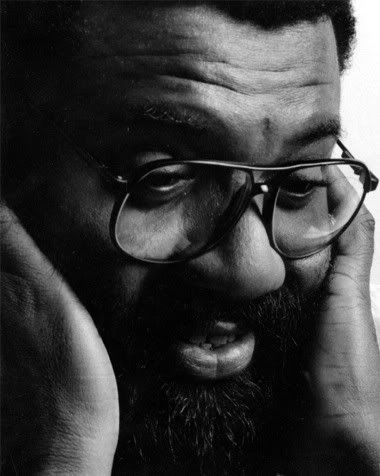
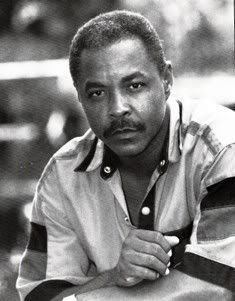
Malachi SmithBorn “the son of a preacher-man” in Westmoreland, Jamaica, Malachi has become an icon in the world of reggae/performance/dub-poetry. Performing from an early age, his first three poems were written while still attending White Marl Primary School. An alumnus of Florida International University, Miami-Dade College, and Jamaica School of Drama, Malachi was one of the founding members of Poets In Unity, a critically acclaimed ensemble that brought dub-poetry to the forefront of reggae music in the late 70s and carried it forward for a decade. Malachi has also performed as an actor and poet, and is an accomplished writer, publishing and performing his own plays and poetry. He has won several medals, prizes, commendations, and certificates for his growing body of work: Black Boy Blue, Middle Passage, Blacker the Berry, and Throw Two Punch. Malachi lives in Miami, Florida

1. One of the most striking themes in your work is a call for justice. You have been a policeman in Jamaica where one of the names for the police is “Babylon.” Has this affected your work in any way?


There are certain things that happened to me early and later on in life that shaped and indeed, influenced my scope on the whole theme and question of "equal rights and justice."


I grew up in Westmoreland, Jamaica with my step-father, Mr. Rogers, and as a boy, I used to love because stoning the mango trees that grew in abundance on his property. I didn't know about my biological father until that day when I missed the mango tree and the rockstone hit a child. I was then trucked from Westmoreland to Central Village in St. Catherine via Milk River, Clarendon and Treasure Beach, St. Elizabeth This early separation from my mother and Mr. Rogers, both of whom I loved dearly, caused me a lot of pain.


When I got to Milk River, I was called a "jacket” —an illegitimate child. Auntie Dina, my stepmother's aunt, hated everything about me and took out her daily frustrations on me with whatever object she could find. Her sister, Granny Margie, was quite the opposite. She was like a God sent angel who spared my hide from the Philistines. It was during this period of my young life, I was about four years old, that I began to rebel in my own small way. I had more love in Treasure Beach from my grandfather Pappy James and my aunts and uncles. However, this was short-lived as I was soon on the move to Central Village, St. Catherine.


I was the blackest person in the house and time to time my grandmother would utter "that anything too black nuh good." The whole question of me being a “jacket” came up regularly until my father had his second daughter with his wife, Jennifer, and she was born with the same flat nose like me. Perhaps the most important thing that happened to me in Central Village though was meeting my sick, frail, old grandfather, Santie. He had immigrated to Cuba and spent many years there. He returned to Jamaica the year before Fidel Castro took power.


Santie suffered from a stomach disorder. His diet was limited to just a few things and he would regurgitate after each meal. I was the closest person to him in that home--so much so that we became best of friends. He even gave me a nick name "Trupance”--the amount that he gave me whenever I gave him a bath. I was the only person, a young child, still too young to attend elementary school who cared for him. I still remember how badly he was treated—from the time we discovered his illness until the evening before he passed—it was so wrong.


But Santie wasn’t the only one who was treated badly. My grandmother had mini-buses and I would have to wake up early in the mornings and act as a conductor (collecting fares) on the buses before going to school. I would also have to do this after school while my older brother and my older aunt weren’t given such chores. This greatly affected my education. I loved school, but my grandmother had other plans for me that had nothing to do with school.


When I was 16 plus years old, I was forced into the police force. I was awakened by my grandmother who commanded me to get out the bed to go with my cousin Pearl to the police depot in Kingston to do the police test. When I took the test, I had no ambition of being a cop. Pearl failed and I passed the test. It was the same day I received a letter from the Ministry of Education stating that I had passed the JSA Entrance exam. Of course, I didn't get the opportunity to pursue my educational goals because my grandmother forbade it. I became a police officer instead.


After graduating, Montego Bay was my first station. The journey to the west end of Jamaica was a long and painful one for me. I realized that I was the youngest person in that group of 33 officers in Montego Bay. As the group chatted and carried on, I was lonely and I started asking myself questions: How was I going to survive in this big city so far away from home and not knowing anyone there?


I decided to use two things to get by to make friends : love and making good first impressions. Both worked. I ended up in the general office, accounting section, and very early I realized that I had made a mistake in accepting the assignment. Older officers would tell me that the officer clerk, Sgt. Anderson was a wicked man. I soon found out for myself. The superintendent, Donald Perkins, called me into his officer one day and told me that he had heard that I was a good writer. I told him I was doing a journalism course with Aldermaston College in England. He told me that he was a member of the International Association of Police Chiefs and he had to write an article for a publication. He gave me the topic and asked me to write something. I did and he was most impressed. He combined some of what I wrote with what he wrote and the article got published. The superintendent started bragging about me and said that I was going to be the boss of all these “worthless policemen.” This didn't sit well with Sgt. *** who felt jealous and insecure. He made several comments behind my back and he hatched a plan.


I went for breakfast early one Monday morning and when I got to the office, there was a large crowd inside. I asked what had happened and much to the surprise of everyone present, Sgt. *** shouted, "Them bruck de office last night and yuh kno who do it!" I was speechless. I looked at the office staff and they all shook their heads in disbelief. That day he brought down "Babylon" on me.


Deputy ***, Area One Crime Officer, interrogated, verbally and physically abused me. After asking me about my journalism course and how I paid for it, he accused me of setting up the break-in. When he told me I was quite feisty, I stood up to him. Then, he told me he was going to," Lock up my back side." They searched my locker and threw my suit case to the floor, busted it open and said they were looking for the stolen money. They didn’t find anything.

I then told them the story about growing up as a bus conductor with bags of money from the mini buses stored all over the house, and that I never took a penny that wasn't given to me. This convinced them that I was an honest man, but I saw firsthand how injustice can come from those who have been entrusted to uphold justice.


This incident, in addition to others, that I later witnessed galvanized me and since then I have always stood up for rights and justice for it dread out deh.


2. Which writers have had the greatest impact on your work?


Kamau Brathwaite has the greatest impact on me. I was told during elementary school when I really started to write that my writing was like Claude McKay’s. I was given books of Claude’s poetry, but it was hearing Kamau reading the first time on JBC’s “Grounding” that captivated me. It seemed that the poem could never end. The poem had height, it had depth, it was a journey, and it took me on the journey. Of course, I would later discover Michael Manley, Peter Tosh, Miss Lou, Dennis, Oku, and Mikey Smith and they all had some influences too.


3. There is a strong religious element in your work and also a very strong sexual element. Do you see a contradiction in this?


Because of my formative years, I believe that I lived through what I did so I could understand the plight of the oppressed and dispossessed, so when I speak for/on behalf of them, my voice isn't pompous and empty, but real. One half of me is the advocate, and the other half is the lover. How they work in the same body I don't know, but I love, love. Maybe it is because of the early separation from my mother. I don't know, but I always crave love. I take trips in beautiful eyes. They light my soul. I also like to share love. I believe it is a blessing to have it, so I share it with those who don’t know how to love or know of love.


4. Many of the writers from Jamaica were born in Kingston. You were born and raised in the country—Westmoreland. Has this influenced your work in any way?


Growing up in rural and semi-rural Jamaica hasn't affected me much as a writer. I attended school in Kingston and before then, I would go to market and supermarket in Kingston, I was the one my grandmother took along to carry the load.


5. Has moving/living in South Florida affected your writing in any way? How?

Moving to South Florida has definitely affected my writing. Although while in Jamaica, my writing had international themes, I would like to think that my focus has widened.

***

, , , , , , , , ,

*
Next week: Adrian Castro, author of Cantos to Blood & Honey and Wise Fish.

PS. Adrian is also featured in the daily "Caribbean Poet of the Day." And, Doris, it does change daily.

Autumn Poem

Photo by Stephen Bess

It is Autumn and this road,
familiar and dry, where ferns crouch
like expectant children
under live oaks fanned by the wind
that rustles through the faded blossoms,
whispers your name;
soon there will be the welcome noise
of rain climbing over the hills
down into the villages of thatch
and mortar held in an embrace
of music, laughter, and tears
for this season of want and plenty,
for this brief time beside you.

*


September 20, 2006

Ooh, Jamaica

Geoffrey Philp's NegrilA few years ago, I was invited to St. Thomas to give a reading from Benjamin, my son and I had the pleasure of being driven around the island by a young lady--we'll call her Doris to save her and me from slander and su-su. Doris was one of the drivers for the conference, so when she picked me up, she only knew that my name was Geoffrey Philp and that I would be by the American Airlines ticket counter, etc.


After I got into the car, we began talking, and Doris asked me, "So, where are you from?” I said, "Jamaica", and she said, "Ooh, Jamaica?" I didn't fully understand the tone at first, but as the weekend progressed, I would soon learn the different meanings associated with the phrase, "Ooh, Jamaica".


As Doris and I continued to talk, she told me that her ex-boyfriend was from Jamaica, and one of the reasons they had broken up was because of his big island attitude. I was perplexed because I know that Jamaicans love to big up themselves and I, too, am in favor of bigness. In Doris’ mind, however, her boyfriend's big island attitude carried a certain arrogance--a charge that is often leveled at many Jamaicans. Doris didn't like that he loved to big up himself, and that was only one of the problems in their relationship. So when she said, "Ooh, Jamaica,” she suspected that I, too, would be guilty of bigness.


Doris took me to the hotel where I learned that a Jamaican dancehall posse would be performing that night. I went to the nightclub expecting to see my fellow yardies. I was disappointed. I soon discovered that there wasn't a single Jamaican in the band. Apparently, the one Jamaican who had started the band had left, and the rest of the band, rather than breaking up--they knew they had a good thing going-- kept up the illusion that they were the real thing,--live and direct from Trench Town, Jamaica. I would later learn, that they were many Jah-fake-ans (and perhaps all over the world) making a good living-- selling Jamaican culture and people were lapping it up.


As I made my way through the club that night, I heard the words, "Ooh, Jamaica,” every time I told anyone where I was from, but the meaning had now changed to a tone of respect. It seemed as if anyone from Jamaica demanded respect. Jamaicans had given the world Bob Marley, Peter Tosh, Burning Spear, and Buju Banton. We knew the real thing. We grew up with the real thing. They were only getting fake or diluted versions and sometimes they knew it. So when a real, live Jamaican was around, all they could say was, "Ooh Jamaica,” with a touch of envy.


I gave the reading and later that day there had been some delay in the payment of my services--a disagreement that Doris overheard. Later in the car, she said to me. "Mr. Philp, I know you are an English professor and all of that, but don’t be afraid to go Jamaican on them for your money!" Luckily, I didn't have to "Go Jamaican on them,” as Doris had suggested because it seems as if their fear of me, "Going Jamaican on them" had gotten the better of them and by the next morning my check was handed to me at the hotel: "Screw face know a who fe frighten,” as Bob Marley said. I got my check. But it also confirmed something that Jamaicans are also viewed as warriors and we are looked upon with not only respect and admiration, but also with a little fear.


So what does all of this mean? Well, we are in the arena of perceptions. Perceptions can either limit us or open new possibilities. We can use perceptions, and we can have perceptions used against us.


But that, too, in the end is irrelevant. For what really matters is how we see ourselves or as Micky Dread of JahLove Musik used to say to me, "The I haffi know oneself.” For we cannot control what other people think about us. That is a losing, almost adolescent, game.


Jamaicans are a complex people— something that our fiction has not yet managed to capture. The popular stereotypes from Sean Paul, “From you look inna me eye gal I see she you want me/ When you gonna give it up to me,” and also "Stepping razors,” as Peter Tosh claims are only fractions of the complete picture. As a friend of mine once said, "Put two Jamaicans in a room, and you'll have three different opinions". She was very stush.


The question that we should be asking ourselves is, "How can we better know ourselves? What are the methods, the means by which we can better know ourselves? I've chosen books, literature, and art. It's an old fashioned idea, but I believe art holds “a mirror up to Nature.”


But what do we see? Shadowy versions of ourselves at best. Jamaicans are dreadlocked, weed smoking, have “tree job” and still “lazy Lima beans.” The rest of the Caribbean doesn’t fare too well either. Many people in Miami, the gateway to the Caribbean, can’t tell the difference between a Jamaican, Trinidadian, Barbadian and Guyanese accent. And what about Nevis?


Whenever films like Marked for Death or Pirates of the Caribbean are released there is a lot of furor about the portrayal of Jamaica or the Caribbean. But what happens in the downtime? Despite Christopher Hitchens’ diatribes against Mother Teresa, I agree with her sentiment when she was asked to join a march against war, she said she would join if they would have a march for peace.


A similar question can be asked today. Instead of protesting against negative images of Jamaica and the Caribbean, what are we doing now to promote well-rounded images of Jamaica and the Caribbean? And I don’t mean the girls from Yardflex.


***


Reblog this post [with Zemanta]

September 17, 2006

Can Blogging Effect Change?

Mad Bull asked a question that I've decided to follow up with this poll:


Can Blogging Effect Change?
No
Yes
Powered by JahGeoff Ink - Create and Share Polls
I stated this over at Mad Bull, but it's worth repeating. Because I live in Florida--land of the pregnant Chads and indiscreet Bettys, this poll is totally unscientific and should not be used in the next presidential elections.

But we'll see how this goes. Send this as far and wide as you can. I'll be posting the results at the end of the month.
***

, , , , , ,

September 15, 2006

Five Questions With Preston Allen

Preston AllenPreston L. Allen is the author of the novels Hoochie Mama, Bounce, Come with Me, Sheba, and the short story collection Churchboys and Other Sinners. His stories have also appeared in several of the Brown Sugar series. Preston is the winner of the Sonja H. Stone Prize in Literature and a recipient of a State of Florida Individual Artist Fellowship in Fiction. He lives in Miami, Florida.


1. The main character in your novel, Hoochie Mama, is anything but a hoochie. Why the name?

One of the things I was going for in that book (as well as in most of what I write) is to explore the idea that we have two identities—an outward one defined by those who know us because of our profession or avocation, and an inward one defined people who know us more intimately. Thus, appearances can be deceiving. We see an African American woman, who is a police officer, and she has platinum blond hair, gold teeth, she wears flashy jewelry and tight fitting clothing. If we are on the outside, we guess at how this came to be. We say, aha, she is a hoochie mama playing at being a cop. On the other hand, if we are on the inside, we do not guess at how it came to be; we see its development from the beginning and, rather, we guess at where it will all end. We say, aha, here is M, a smart, tough girl, perhaps struggling with her sexuality—now she is dressing like that woman she used to have the crush on, now she is trying to be a cop, are these two aims compatible? Where will it all end? The captain, too, and Lambert, are also drawn in such a way that we can see them from both the outside and the inside and compare how these two views clash—but they are the more traditional types of this model we often find in thrillers, the average man on the surface with the perverted secret life, whereas M has no secret life, or is at least not trying to keep something a secret—you simply do not know the real M because, well, you do not know her. All you can do is judge her by her conspicuous dress. And the fact that it is the hyper-masculine world of cops, and you are male and she is female, and you are white and she is black—all these factors are going to play into how you judge that platinum blonde hair and big booty of hers, never mind that she is pretty good at solving murders.

2. Many of your characters struggle with religion and faith. Why do these subjects interest you so much?

I am going to have to attack your question at its core because in attempting to answer it I just now realized that there is something interesting implied in it, something implied in many questions of this sort, that I simply do not hold to be true—the struggle with religion and faith.

I have read many books in which characters struggle with religion and faith. These characters are no longer sure what they believe, and thus you get your tension. Yeah, I know books like this. And I think it is the sheer prevalence of books and stories of this sort (The Thorn Birds, the classic, rip-roaringly humorous Lutheran kid’s rebellion episode written almost exclusively in footnotes in Garrison Keillor’s Lake Wobegon Days, even Langston Hughes’ Salvation) that have created a kind of genre of struggle against religion (if you will) which my works are then thrust into and/or judged against. But now that I think about it, my characters do not struggle with religion or faith. My characters do just the opposite. They have almost absolute faith. My characters are true believers. Their struggle is in seeing the world as it is without losing their faith. Elwyn, my classic true believer, a born again Christian, never doubts his faith; in all of his stories, Elwyn struggles to reshape the world to make it fit with his Christian beliefs. Perhaps that’s where the humor comes from. The cynicism. I don’t know . . . when I read sections of the Elwyn stories to church folk, they enjoyed it immensely. They do not read it as cynical at all. Hmmmmm.

I am reminded of the movie The Gods Must Be Crazy, and how the little bush man, exposed more and more to the modern world, remained yet a bush man by simply expanding his old ideas to include these new experiences. Never once did he think, “Gee, the things I used to believe are wrong. I must now start to believe in this new way.” No, as far as he was concerned, his Bush was still the center of the universe and all of these experiences were simply a sort of mystical journey that the Gods had sent him on to rid his people of the evil thing that had fallen into it (the evil thing being a Coca-Cola bottle dropped by a pilot from a plane passing overhead).

I understand that little bush man perfectly. I am a churchboy. I know of these things. I have childhood friends who hold Ph. D’s in chemistry, physics, and biology. They are still churchboys (and a churchgirl, too) despite all of their higher education. Can you dig it?

3. Your work also has many lost boys and weak men. Is there a common thread that binds these characters?

The boys will be lost if the men are weak. Are the men weak? Well, they are selfish, ineffectual, childish, okay weak. In my thrillers, such men give birth to psychopaths. In my romance novels, such men give birth to the bad boyfriends or bad husbands. My good men, on the other hand, give birth to the heroes and heroines in all of my novels. You know how it goes—the fathers have eaten the sour grapes and the children’s teeth are on edge.

4. Unlike many of your stories, your recent story, “The Lucky Kiss,” seems to suggest that sex can almost have a redemptive value. Why the change?

That story is actually a chapter from my novel, I Am a Lucky Gambler, in which the woman Missy first meets the gambler P. Can sex redeem you? Well, gambling certainly puts you in bondage. So it’s like this, it’s a fairytale, you are kind of a princess, the evil gambling ogre has imprisoned you, along comes a prince who gives you a magic kiss (and a magic roll in the hay) which frees you from the ogre. You live happily ever after. The end.

Sex does redeem. Couples fight and then make love. Teenage angst is often cured by the loss of one’s sexual virginity. A large number of psychos in literature also have sexual problems—it almost seems that the books are saying, if he could only get laid, then he wouldn’t have to kill people. Hitler, they say, died a virgin. I don’t know . . . in Thomas Harris’ Red Dragon, the Tooth Fairy killer changes for the better (at least for a while) when he falls in love and has sex with that blind woman). One of the things I do a lot of in my romance fiction is try to pair people up with their perfect sexual match. I think this changes them for the better. At any rate, the book usually ends right after that.

5. How do you juggle the roles of son, father, brother, uncle, and teacher and yet remain so productive?

You mean productive as a writer? Well, it’s like this, I remember being in graduate school on one of those typical South Florida evenings in the fall. It was some sort of tropical storm—driving rain, crashing thunder, wind strong enough to shake the little Mazda I was driving to campus that night. The trip usually took a half hour, but that night because of the storm, it took like an hour and a half. When I got to campus, finally, the place was shut down. Classes were cancelled because of the storm. I was pissed. How dare these people cancel class for a tropical storm! What’s a little wind and rain when I have a story to workshop? I stayed there for another half hour hoping a few people in the class would show up and we could maybe huddle somewhere that was dry and talk about our stories. On another occasion I heard some of my classmates talking about which professors they would register for next term—who was hard, who was easy, and so on. I remember thinking, what difference does it make. Hard? How can it be hard? It’s just what we do. We’re writers.

I guess what I’m saying is that I have a passion for this thing. It is the thing that I do. So I make time to write in my schedule of things to be done—kinda like those guys who make time for the gym—one hour a day, everyday, come rain, come shine. But writing is also my default mode. In other words, when I’m not doing anything else, I am writing, or thinking about writing. So when you see me between classes and it seems like I’m doing nothing but walking to my office, trust me—I’m thinking about a story. When you see me stuck in traffic . . . .

***
Next week: Malachi Smith
*
, , , , , ,

Happy Birthday, Claude McKay

Claude McKay (September 15, 1889[1]May 22, 1948) was a Jamaican writer, humanist and communist. He was part of the Harlem Renaissance and wrote three novels: Home to Harlem (1928), a best-seller which won the Harmon Gold Award for Literature, Banjo (1929), and Banana Bottom (1933). McKay also authored a collection of short stories, Gingertown (1932), and two autobiographical books, A Long Way from Home (1937) and Harlem: Negro Metropolis (1940). His book of poetry, Harlem Shadows (1922) was among the first books published during the Harlem Renaissance. His book of collected poems, Selected Poems (1953), was published posthumously.

From Wikipedia

***
, , , , ,

September 14, 2006

Happy Birthday, Mikey Smith


The first time I met Mikey, I was attending a poetry workshop at the Jamaica School of Drama in Kingston, Jamaica. As we read, discussed, and critiqued each other’s work, a slender stranger wearing a knitted cap, and a khaki pants with an exercise book in his back pocket limped into the room. He went quietly to the rear of the room and sat on one of the benches. As the evening progressed, one of the writers asked if anyone had heard the poem, “Mi Cyaan Believe It,” on JBC’s “Grounding” and if we did, what we thought about it. A lively discussion ensued. It was during the discussion that Mikey opened his mouth and said, “Ah me write de poem.” We asked him to read the poem and he obliged. It was pure magic. He lived the poem as he read/performed it.

A few months later, I enrolled as a part time student at the drama school because the police force wouldn’t grant me study leave to attend full time. I studied with Oku Onoura, Mikey Smith, Noel “Godfather” Walcott, Jean “Binta” Breeze, Mata, Eva Gordon, “Poets in Unity” members (Chris Bailey, Tomlin Ellis, Clive ‘Uzo’ Anderson, Roy Rayon, Clyde Walcott, Delores Robinson, Hope Blake, Anita Stewart, Calvin Mitchell, Peter Sutton, Buxton Shippy, Oliver Smith and Tommy Ricketts), Orville Simmons, and Kenny Salomon. Drama school was a beehive of intellectual and political discourse. Mikey was at the forefront of this movement of young writers, theatre personnel, and political activists--mostly left-of-center--who mingled and argued about national and international events. The energy of the period was generated primarily by the election of Michael Manley to the office of Prime Minister. As a programmatic, socialist democrat, Manley’s elevation created an environment for radical political change and transformation of the Jamaican society.

It was during this time that the newfound liberation that Mikey Smith and other contemporary poets discovered became a part of our poetry. The dub poets, as we came to be called, emerged as social commentators and advocates for the dispossessed and oppressed of Jamaican society and the world, and particularly for our African brothers. We became voices for change and of resistance to downpression. Mikey became one of the leading and true voices of the movement.

What made Mikey so special was/is that he was a powerful voice driven by a passion for real changes of the status quo. He also was very conscious and preoccupied with the plight of underclass and exploited women, particularly domestic helpers and women who found themselves in the constructs of tenement yards. Unlike some dub poets who had tendencies of sounding alike and setting for low-level rhyme, he took the art form of dub poetry to a higher level with his brilliant metaphors while not losing the language of his constituents. His rhyme, rhythm, and delivery were all deliberate--just right--and he had the uncanny ability to enter an area and exploring it totally and poetically before departing. Sometime in 1982, Mikey released his only album, Mi Cyaan Believe It, for Island Records and toured England and other countries successfully. Unfortunately, when he returned to Jamaica, many thought he was mentally ill or had suffered a nervous breakdown. To the best of my knowledge, no one is sure what happened to him on tour that caused his illness, but many in our community became concerned for his well-being. A meeting was held with Dr. Freddy Hickling, Ibo Cooper of Third World, and others to discuss the best way to approach Mikey’s illness. We wanted him to get some kind of treatment because a few days before our meeting, a passing musician had rescued him from an angry mob that was threatening to beat him. Still, despite all his adversities, Mikey Smith gave a masterful performance at Reggae Sun Splash that year.

The last time I saw Mikey alive, I was standing at the entrance to the drama school. I watched Mikey limping along the concrete walkway. I was waiting to congratulate him on his Sun Splash performance. He appeared lost. I said to him, “Mikey, mi hear seh yuh mash up Sun Splash!” Mikey replied, “Ah so dem seh. Gi mi a money, Malachi, mi waa go watch a movie.” All this time, he kept on snapping his fingers as if performing to keep his timing. I gave him $5.00 and watched him limp away. At his funeral, Ibo Cooper played a bawling piano as Dr. Freddy Hickling in his eulogy asked out loud: “What type of society are we that stone our poets to death?” At the cemetery, I gave him a gun salute.

When that brutal rock-stone fell from johncrow sky that midday and fractured Mikey’s skull on that old Stony Hill Road, he was chanting his best known poem, “Mi Cyaan Believe It.” When I heard the newsflash that day, I was standing in the yard at the Half-Way-Tree Police Station, and mi couldn’t believe it.

Malachi Smith, Miami, Florida

Image: http://www.57productions.com/artist_info.php?id=163

September 13, 2006

One Book Meme

Geoffrey Philp's libraryMichael J. West tagged Stephen and I got into this book meme because it looked like fun. So here goes!

1. Book that changed your life:

Another Life by Derek Walcott made me realize the grandeur of verse and the power of poetry. He also mythologized the Caribbean and dignified the lives of common folk. More importantly, he wrote about growing up as an artist in the Caribbean and his trials and tribulations as a young man grappling with the big issues of friendship, art, death, and love. Walcott made me realize that I could live the life of an artist, but I would have to be tenacious and daring.

2. Book you've read more than once:

There are so many! The top ten would be these:
  1. A Portrait of the Artist as a Young Man by James Joyce

  2. The Power of Myth by Joseph Campbell

  3. King James Version of the Holy Scriptures

  4. Uncle Time by Dennis Scott

  5. Reel from the “Life Movie’” by Tony McNeill

  6. Awakening the Heroes Within by Carol Pearson

  7. Shar by Kamau Brathwaite

  8. The Art of Fiction by John Gardner

  9. The Star-Apple Kingdom by Derek Walcott

  10. Love in Time of Cholera by Gabriel Garcia Marquez

3. Book you'd take to a desert island:

Boat Building for Dummies.


4. Book that made you laugh:

VS Naipaul’s, The Suffrage of Elvira, made me laugh so hard my sister, Judith, came rushing outside to the verandah because she thought something was wrong with me. Well, Judith always thought something was wrong with me. Let’s just say, what else was wrong with me.

5. Book that made you cry:

There are two books that made me bawl: The History of Tom Jones: A Foundling and Tess of the d’Urbervilles by Thomas Hardy. I read Tom Jones when I was eighteen, and although I was hardly a libertine, when Tom thinks that he has slept with his own mother, or in Tess when she prostitutes herself to support her family—that was it for me! They registered a shock to my nervous system and pulled me out of my naïve world. Could the world be like this? Yes, these books seemed to say. My sense of justice was outraged and because the characters seemed to near to me (fatherless, poor, or powerless) that made these fictional stories even more real.


6. Book you wish you had written:

My first choice a couple of years ago would have been, Miguel Street by VS Naipaul. For although Miguel Street is funny, The Duppy by Anthony Winkler is hilarious and sublime. Many non-Jamaican may not get the humor (some Jamaicans don’t get it either), but Winkler is one of the finest, funniest writers I’ve ever read. My favorite chapter in the book was when Baps gets to heaven and begins talking to God about the universe and the goings on in Jamaica.


7. Book you wish had never been written:

I generally don’t deal in regret because once the milk is spilled, there’s no use crying. Clean up the mess and move on. I also believe that everything that happens to us shapes us in every way, so if you pull one string of causation, then the present reality fall apart. And right now, everything is irie. So I will deal with this hypothetically. There is an e-book dedicated (I mean this in the Rastafarian sense of the word) to bashing my first book of short stories, Uncle Obadiah and the Alien. It’s from a World Literature review of Uncle Obadiah that was then made into an e-book: Uncle Obadiah and the Alien: An article from: World Literature Today by A.L. McLeod. I mean, it’s one thing to write a bad review about a book, but to follow it up with an e-book? And a first book of short stories? C’mon, man! I’m not saying that as a reviewer, I haven’t met my fair share of bad books, but I’ve usually passed on reviewing the book without putting bile into print.

8. Book you're currently reading:

Cinema Nirvana: Enlightenment Lessons from the Movies by Dean Sluyter. If you have any interest in Buddhism and the movies, this is a great book filled with interesting insights about movies and aikido. For example, Sluyter asks in the preface” “What can Casablanca teach us about bodhichitta, selfless commitment to the enlightened happiness of others?” I’m on the chapter, “Dare to be Dopey.”

9. Book you've been meaning to read:

The Odyssey: A Modern Sequel by Nikos Kazantzakis is still sitting on my shelf. I’ve read about 100 pages, but it’s slow going. I’m not averse to epics, but Walcott showed in Omeros that epics can also be funny and daring and wise.

10. Tagging: In the spirit of democracy, if you’ve read this, you’ve been tagged. So, go ye forth and write your own book memes. You’re on the honor code. If you continue the meme, good luck will happen to you in the next 48 hours. If you break the meme, I don’t even want to think about what may happen to you. But it’s your life. My hands are clean.

***
, , , , ,
, ,

September 11, 2006

Why Do I Write?


When I first heard the song "Natty Dread," with Bob Marley's revolutionary exhortation, "Children get your culture/ and don't stay there and jester," I knew I had a lot of work to do. For if I wanted to "follow my bliss" as Joseph Campbell states in The Power of Myth, there would be many challenges to overcome in order to pursue my vocation as a storyteller.

I grew up in Mona Heights, Jamaica with my mother--a single mom as they are now called--who was a truly Christian woman. I was surrounded by brothers, sisters, cousins, and friends of the family who passed through our home because my mother was the type of woman who would always try to help any child who was in need of help. I went to Seaward Primary where my mother worked as teacher and then moved to Mona Primary, passed my Common Entrance and went to Jamaica College, an all boys' school modeled on the traditions of English boarding schools.

My love for reading and writing showed up at an early age, and one of my primary school teachers at Mona Primary, Mrs. Pennycooke, once predicted that I would become lawyer based on my verbal skill and fictive abilities regarding my tardiness in school. "Mr. Philp," she said, "you bound to become a lawyer for you have you own way of looking at the truth." She was also impressed with my ability to recite whole sections from the Psalms and I was entered against my wishes in the annual festival competition in Jamaica where I won bronze and gold medals for recitation of poetry. When I took the medals home, my mother who didn't show any Christian modesty on this point, bragged to aunts, uncles and neighbors about me and was especially pleased that I was also continuing in my Bible studies.

For the Bible was the cornerstone of our family life. My mother was a lifelong seeker and student of religion. She was married as an Anglican and later converted to Jehovah's Witnesses. During this time, she accumulated many books on Rosicrucians and Mormons while sponsoring orphans in Africa. She was also a lover of the words. She instilled in me a love for reading and writing and she made me appreciate the value of words and the imagination. She made me realize that reading and writing involve the most sacred faculty of a human being--the imagination. My mother gave me the space to grow and to develop my talents as a writer and to expand my love for my craft--the rapture, excitement, and discovery that comes with writing. My mother did all this for me.

Yet for all the wonderful and courageous things my mother taught and did for me, she could not--no mother can-- teach me how to become a man. She could only show me one side of the equation, for which I am eternally grateful, but she could never help me to become a man without seriously maiming me-as some of my brothers have been maimed by their devouring mothers.

As a fatherless boy, I wanted to know, how does boy become a man? In my personal life, several mentors and role models such as Melvyn Smith, Dennis Scott, and Jimmy Carnegie helped me along the way, and my work as a poet, fiction writer and critic has been an exploration of this question of mentoring and manhood. For neither the African nor Europeans models really work in the Caribbean, and how we answer this question is of paramount importance given the historical decimation of the black family and black manhood. What values/ ideas of manhood are Caribbean people, individually and collectively, acting out either consciously or unconsciously? 

This question is especially pertinent in fiction because a novel or short story is the about the clash of ideas—an attempt to consciously examine ideas through character and plot. The protagonist and antagonist in fiction embody certain ideas that will either triumph or fail. What do we mean when we say, "I love you"? 

Given our history of slavery, colonialism, migration, and exile, how can we heal our individual, familial, and societal wounds? What are these wounds? What is the influence of Rasta in all of this? How would Rasta affect the mentoring roles between men and boys? The gender roles between men and women? For Rasta upheld some of the most patriarchal and male chauvinistic ideas from the Old Testament which didn't match the reality of the women of the women I knew-women who were clearly capable, intelligent and sometimes to a powerless boy, formidable.

And then there was Bob Marley and reggae. My mother loved Bob Marley's music--that is, until he became a Rastafarian and because of her religious beliefs, she stopped listening to him. I continued. But the only place I could listen to Bob Marley was at the homes of my older brother's friends. There I also learned at lot more than just listening to records. At Danny Morrison's house, I first heard Last Poets and other truly progressive writers; at Michael Witter's, Hugh Masekela, and jazz; Jah Mick's, Lee "Scratch Perry and hardcore dub. Reggae, and especially Wailers flavored reggae, became the means by which I interpreted the world.

Yet the older I got and the more I looked around, no one was willing to answer my questions. In my youthful ignorance, I didn't know that writers such as Kwame Dawes, Edwidge Danticat, and Colin Channer would be coming along. I'm a bit older than they are, so I can be forgiven my despair. I am not discounting the work of writers such as Oku Onoura, Mikey Smith, Linton Kwesi Johnson, or Mutabaruka. But at the time, it seemed that they were still closely linked to the musical aspect of reggae. These writers also interpreted the world from a socially conscious, sometimes Marxist point of view. I was interested in a socially and politically conscious viewpoint, but I was never a Marxist and I wasn’t going to adopt a position with which I disagreed just to get published. A sense of outrage and anger also permeated their poems. This is not to say that the condition of black people was not and is not abominable. But what about joy? Is anger more important than joy? I would grow to learn as W. B. Yeats said in "Easter 1916": Too much sacrifice can make a stone of the heart."

For I was searching for a way to do what I heard in reggae, something that Kwame Dawes has explained in an interview: [Reggae] allows us to explore the intensity of religious faith in a musical form that is at once politically conscious, historically aware and deeply and uncompromisingly sensual."As I saw it then and as I see it now, many of the writers and critics had failed us. For despite the work of writers such as Derek Walcott, Kamau Brathwaite, Una Marston, Dennis Scott, Mervyn Morris, Tony McNeill, V. S. Naipaul, Wilson Harris, Jean Rhys, Austin Clarke, Orlando Patterson, Roger Mais, Edgar Mittelholzer and George Lamming, the epiphanies of Caribbean literature had not filtered through the culture to give us an accurate picture of ourselves. 

We didn't have a literature that paid homage to the insights of these elder writers, but at the same time, maintained its own vision of the future. The work of many writers still lamented the effects of the slave trade, and, yes, we still suffer from its effects. But what about the scoundrels and politicians who, even now, are creating the Caribbean diaspora by their political warfare and mismanagement of their economies so that we've become wage slaves and economic slaves to the World Bank and IMF? 

We believed and wrote narratives that portrayed us as the victims of history. When would we write stories that liberated us from such narrow vision of our past and ourselves? When would we write stories that portrayed us as shapers of our future and not merely passive agents in our own existence? 

When would we begin to explore the philosophical implications of InI, perhaps one of the most interesting religious ideas to emerge from the Caribbean? We still buy and sell novels with characters that are locked into the stereotypes—characters who don’t look anything like us, but it’s what we’ve come to expect. When will we fill in the gaps in Caribbean life instead of remaining locked in a vision of outdated stereotypes?

It was a time of silence as Colin Channer has noted in his keynote address at the Carifesta VII Conference in St Kitts. There was also silence concerning Caribbean sexuality, the treatment of Haitians and mother daughter relationships in Haiti. None of the issues were being dealt with until these writers came along. Indeed, there continues to be great deal of denial about these issues-a behavior that is neither healthy in life nor in literature.Many of our contemporary writers, critics, and publishers also continue to fail us by ignoring these issues by concentrating on the work of the elder writers, meta-fictions and deconstructions, and other cerebral word games and word play (for their own sake) that are brilliant, incisive, and useless. This may earn them kudos in Northern academic circles, but are superfluous to Caribbean life and letters because they are not reflecting the reality of Caribbean life. 

The greatest challenge of any artist is to simply describe what's happening outside her window and many of our writers and critics are not doing this. We still have to fully develop an aesthetic that concentrates on Caribbean life the way the early novels of Naipaul, while admitting the outside world existed, focused on the lives of Caribbean people. Why do I write? is an important question. For whom do I write? is equally important.

Over these twenty-five years, I've realized I wasn't the only one trying to figure out these questions and in Uncle Obadiah and the Alien, xango music and Benjamin, My Son, I explore these ideas. I also know that many of my contemporaries such as Kwame Dawes and Colin Channer are involved in asking similar questions, but from slightly different perspectives. Within Jamaica, we are the “Rasta/Reggae generation,” and given our individual backgrounds we are coming up with slightly different answers. One thing is clear however, these issues have shaped our lives and continue to shape our lives and all we are trying to do is to decipher the many meanings of all these events even as we grow and change our perspectives. But most of all, it's the deeply satisfying act of creating stories that keeps me going.

In Natural Mysticism: Towards a Reggae Aesthetic, Kwame Dawes notes that Bob Marley provided model for many young writers to write themselves into relevancy (42). I was one of those writers. Marley's example is useful and we will have to suss out for ourselves our responses to these questions of audience and vocation. However, one thing has been clear to me from the start. I knew I would have to, given the faith of all my mother, teachers, mentors, friends and family, use all of my talents to become the best writer that I could ever become. If I remained true to that faith and trust, then being the man I wanted to be would be easy.

This essay was first published in Caribbean Tales.

***

September 8, 2006

Five Questions With Kwame Dawes

Kwame DawesBorn in Ghana in 1962, Kwame Dawes spent most of his childhood in Jamaica. As a poet, he is profoundly influenced by the rhythms and textures of that lush place, citing in a recent interview his "spiritual, intellectual, and emotional engagement with reggae music." His book Bob Marley: Lyrical Genius remains the most authoritative study of the lyrics of Bob Marley, and his groundbreaking collection of essays, Natural Mysticism: Towards a New Reggae Aesthetic, describes the experiences and modalities of Jamaican postcolonial writers who are embracing an aesthetic which unites body, emotions, and intellect and brings into a single focus the political, the spiritual and the erotic.” An author of twelve collections of poetry, Dawes’ most recent collections are Impossible Flying (Peepal Tree, 2006) and Wisteria (Red Hen, 2006). In 2007, Akashic Books will publish his novel She’s Gone. His awards include The Forward Poetry Prize, the Hollis Summers Poetry Prize, a Pushcart Prize, and the Poetry Business Award. Founder and director of the USC Poetry Initiative, Dawes is the programmer for the Calabash International Literary Festival held in St. Elizabeth, Jamaica, each year, and is the Director of the Calabash Writer’s Workshop.

1. How have you managed to remain so prolific over the years?

To be honest, it is only when I look at the raw facts of the matter that I concur that I have been prolific. I have published twenty books in twelve years. Okay. And that is not all I have been doing. But as I go through my day, I feel like a man who is not doing what he should be doing. I feel I have been slack about my writing, I feel I should be writing more. So there is a strange contradiction at work here. And it simply leads me to the fact that I am not sure I can answer your question. I can say, though, that I have always said that I feel no assurance that I will always have something interesting and compelling to write and so while I am still having ideas that seem engaging to me, I will continue to write. I have never experienced what people call writer's block. I do believe it exists, and I suppose I live with the anxiety that at some point it will overtake me. So while I have managed to avoid it, I will work at what I need to be working on. I have been blessed with the capacity to write a very quick and competent first draft. As a result I have a lot of first drafts lying around. I come to them whenever time allows. But the effect is that I have many projects on the go at the same time. This is both a blessing and a curse, I suppose. Still, the bottom line is that I am doing what I enjoy doing, and so I will simply accept that I produce as I produce as a condition of who I am. I will enjoy is benefits and accept its challenges. It has occurred to me (and has been said to me) that I probably write too much and that this has affected the quality of my work. I do think that this is nonsense. One may quarrel with publishers who publish me, but not with me for writing. After all, writing is a practice, and one can't be blamed for doing too much of it to get better at it. Anyway, I do think that my work continues to grow, to improve and I am grateful for this.

2. What did you learn in the translation of Bob Marley: Lyrical Genius into German? Why German?

Nothing much. I was not involved with the translation. Actually, the publishers did not even inform me that the book was translated. My thirteen year old son was surfing the net and came up on this news. I then ordered a copy to make sure that it was true. So it remains a peculiar thing to me. I do know that German books are longer than English books. I have gained almost two hundred additional pages in the translation. Even when I don't want to be, I am constantly prolific.

3. How has the experience of now living and working in South Carolina changed your writing?

I have always said that at least four of my books of poetry would not have been possible without South Carolina as my home. Midland, Jacko Jacobus, Wisteria, and Requiem. These are works that entirely rooted in this space. And in other books, South Carolina features greatly. But why wouldn't it? I write from where I am and what I have seen and experienced. I have lived here for fifteen years and I have some roots here. I remain an alien, but I also am a happy southerner at the same time. I am glad I landed here, though. The richness of the history, the sophisticated presence of Africa in the culture, the complexities of American life at its most basic and direct--these are all part of the rich realities that have sharpened my sense of the world. I write to understand the world around me. I therefore write the world around me.

So there is, at some level, something quite unremarkable about my writing so much about South Carolina. Having said that, I should add that I do see myself carrying out an important work here as a writer and I think South Carolinians agree with me. I suppose it is so much easier for me to identify with this state because it is such a Third World space in terms of ethos and sensibility and it has its own quarrels with the larger American idea as do many people from developing countries, from the southern hemisphere. Finally, I should say that the need to understand, the need to give voice to the unvoiced stories of this space, and the fact that buried in this soil are the bones of so many Africans--people I like to call my relatives--makes me feel a strong connection with this place.

4. You frequently wear the "hat" of editor. Is there a difference between selecting poems for Red vs. Wheel and Come Again?

Not really. Here are the points that are constant: One is looking for the best work. One is looking for work that is consistent with the theme of the anthology. One is trying to create a work that is readable for the general reader--one is not trying to do an academic exercise.

The difference, of course, is that with Red, I am engaged in an anthology that is rooted in a larger idea of showcase the new work by black writers in Britain. This is a quite basic impetus for an anthology, and yet it is one that I responded to by trying to impose an arbitrary theme on the process. I chose Red out of a hat. I am not sure if it will work, but we shall see. The proof will be in the kind of work I receive. Fingers crossed. Wheel was a work based on a hunch. I had a hunch that since the arrival of reggae, more poets than one would imagine were actually engaged deeply in the reggae ethos even at times beyond themselves. The insidiousness of reggae in the world and especially in the Caribbean has ensured that an aesthetic has emerged and has seeped into our creative psyche. I wanted to demonstrate this in the anthology. I missed some crucial works--two amazing early poems by Walcott and a few others--but the larger project was quite successful. Yes, I was consciously trying to give credence to a theory, to an idea, to a hunch, and I think this worked out well. It is also a cool anthology with a splendid preface by Colin Channer.

5. Some of your more recent collections take their inspiration from the work of artists. How do you go about writing poems based on an artist's work?

I must say that this process has seemed to me like stealing. But stealing is no sin when it comes to art that is inspired, yes? I simply try to write what happens to my brain and heart when I see a work of art. I really try to avoid simply re-describing the work of art. After all, to do that would be so redundant and a disrespect to the artist. Instead I respond. I bring my baggage or my discourse if you will. I vamp off the art. I create "vershans" in the old reggae sense of finding a dub vershan of some master text to create a counter master text. I enjoy this kind of work because in sense I am given a distilled series of images, tough, well-conceived a concentrated, and then I am to use that to spark poems. The effect is inevitably surprising for me. I am taken to places that I would not normally enter. So while it is true that a lot of my recent work has grown out of this dialogue, the greater truth is that this has been a feature of my work from the beginning. I am in good company, of course. Maybe we are all trying to write "Musee de Beaux Art" all over again--yes, I am being ironic.

***

Next week: Preston Allen, author of Churchboys & Other Sinners.

September 4, 2006

Homage to Seaside, Florida

About fifteen years ago, I lived what is every writer’s dream: waking up in a windswept villa by the sea, writing, having breakfast while watching whitecaps, then writing some more after lunch and a bike ride along the beach; finally, dinner and delightful conversations with friends who were also writers, musicians, painters or dancers.


The dream happened in Seaside, Florida (the film location of the Truman Show) when I was an artist-in residence in the “Escape to Create” program at the Seaside Institute. For one whole month, we were given a small stipend and allowed to live free of cost in one of the multi-million dollar houses, and all we had to do was give a reading or showcase our work at the end of the month. It was a time of deep introspection and there were several challenges: our families could not be with us during the month. This was a source of anxiety, especially for the newlyweds and first-time parents, but we all had family reunions at the end of the month. It was also a time to rediscover ourselves and our commitment to our vocation.


It was a glorious month. I met other artists/writers from all around the world and many of us are still in contact with each other and some of us are even friends. But it didn’t all begin that way.


After the initial meet-and-greet, we retreated to our mansions to begin work on our paintings, poetry, fiction, music or choreography. That lasted for about a week until Phyllis McEwen suggested that we have a party at her place. When we got there, Phyllis had laid out a modest meal of cheese, bread, olive oil, and of course, wine. We talked and hashed things out, especially the notion that we knew was lingering in the back of the heads of some of the artists/writers that Phyllis and I were the “minority” babies. Phyllis and I had been in similar situations where we first had “to prove ourselves,” but we realized that to get what we wanted, we had to play by the “rules of the game.” As Jimmy Carnegie, my history teacher at Jamaica College, used to say, “It hot, but hush.”


After we “proved” ourselves to each other (they now had to “step-up” to us), we all decided to make our meetings a weekly habit, so every Friday after picking up our stipends, we’d go the grocery store, buy our contribution to the meal and meet down by the beach or in the houses along the beach, especially the ones with lookout towers where we could see the entire town.


It was a time of happiness, but there were also moments that I felt excluded from the “American Dream” because of class, race, history, and country of origin. I sometimes asked myself, Why can’t we do this in the Caribbean? The poem, “Seaside, Florida” from hurricane center grew out of those feelings.

Few artists/writers achieve the fame or recognition or earn the money that we think we deserve, and the ratio of success to failure (rejections) is about ten to one. But there are those times, like the ones I experienced at Seaside, that if we can enjoy them in the moment, then as the song says, “Every little thing” is all right.

***


September 1, 2006

Five Questions With Ricardo Pau-Llosa

Ricardo Pau LlosaRicardo Pau-Llosa was born in La Habana, Cuba in 1954 and, after the age of six, grew up in exile in the United States. He is the author of five books of poetry: The Mastery Impulse (Carnegie Mellon, 2003), Vereda Tropical, (Carnegie Mellon, 1999), Cuba (the 100th title in the Carnegie Mellon Poetry Series, 1993), Bread of the Imagined (Bilingual Press, 1992), and Sorting Metaphors (Anhinga Prize, 1983). His forthcoming collection, The Parable Hunter, will be published by Carnegie Mellon in 2008. Pau-Llosa has published extensively on the visual arts, particularly 20th century Latin American painting and sculpture.

1. Which author and/or book has most influenced you?

Aside from the classics and 'canon' writers. Influence occurs mostly in one's early maturity (college years)--so the modern writers I read with most enthusiasm at that stage and to which I return with fondness to this day (this may or may not translate into 'influence') were: Wallace Stevens, Pablo Neruda, Jorge Luis Borges, Richard Wilbur, Rainer Maria Rilke, Federico Garcia Lorca, Derek Walcott, Ted Hughes, James Dickey--these are not in any order of importance. Philosophers and historians were just as important--Empiricists, Edmund Husserl, Martin Heidegger, Paul Ricoeur, C.S. Peirce, Fernand Braudel, Frances Yates, Otto Rank, Elias Canetti, Mircea Eliade.

2. How has living and working in South Florida shaped your work?

As a Cuban-American who identifies entirely with the exile experience, I'd say it has impacted me quite a lot. Miami had, may still have, the potential to combine epic and theater, if it took consciousness of it--no theater without self-awareness of theatricality. Exile, not nostalgia, was the driving plot, for exile is a battlefield and nostalgia a tea room. Miami refuses to assume this invitation to greatness.

3. Unlike many other Cuban-American poets, your poems about Cuba are rarely nostalgic. Indeed, they sometimes seem combative. Do you agree? If so, to what do you owe this difference in tone and style?

The poet is always an advocate--in the legal sense. Sometimes you prosecute, sometimes you defend your client. But you're always arguing with images and against them.

4. “Poetry is nearer to vital truth than history.” ~Plato, Ion. How would you apply this to your work, especially to the sense of history that informs most of your work?

Never cared for Either/Or's. If truth is a city, it can be arrived at by air, sea and land. And abandoned just as easily. In fact, even easier. It is the city you can abandon and think you're still residing in it.

5. Over the years your poems have undergone a transformation from the cryptic lines in Sorting Metaphors to a looser, expansive style in The Mastery Impulse. To what do you attribute this change?

Got older, read more, wrote more, got less energy with which to struggle with the erotic obscurity of cryptic lines.

(Optional) What makes you laugh?

Reading my old poems. And they get old pretty quick, too.

***

Tags:


*
Next week Friday: Kwame Dawes, author of Natural Mysticism: Towards a New Reggae Aesthetic in Caribbean Writing.