Showing posts with label Henry Louis Gates. Show all posts

July 24, 2009

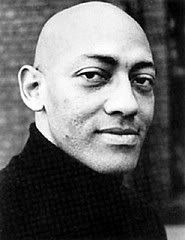
The Arrest of Henry Louis Gates, Jr.: A Father's Perspective

Henry Louis Gates, Jr. ArrestThe incidents surrounding the arrest of Henry Louis Gates, Jr. outside his home have led to some troubling questions that I, as a father, have a hard time answering. On the one hand, I've taught my children, especially my son, that he should have respect for the law and that he should never permit any kind of abuse, verbal or physical, to threaten his self-esteem. Yet, on the other hand, I know there are some police officers who seek every opportunity to humiliate black males in America.


This is not a wild claim. I know about these kinds of police officers from accounts from my friends and personal experiences: being rousted every week by the police at the University of Miami when I’d be walking back late from the Rathskellar to being humiliated a few years ago in front of my son for a minor traffic violation.


I had received a call late at night from my daughter who was in an unsafe neighborhood. She needed a ride home. I jumped in the car and in my rush to pick her up, I rolled (after looking both ways) through a four way stop. An officer in a patrol car about a hundred yards away, lights off, was waiting underneath a tree. Soon there were lights behind us and when I was signaled to pull over, I complied. The officer approached the car and looked me up and down. Despite my explanations, the officer while dispensing a fair amount of verbal abuse, ordered me to turn around, drive back to the stop sign, and stop. I did exactly as I was told and then, I was allowed to go on and pick up my daughter. I guess I was lucky I did not get a ticket and that my daughter was okay when I picked her up.


My story is inconsequential to some of the stories that my friends have told me about beatings and even worse verbal abuse than I suffered.


Should I have been a “man” and shown the officer and my son that I wasn’t going to stand for that kind of abuse? Or should I have done (as I did) listened to the officer, apologized, and moved on? Or was I just being saaf, as usual?
I think I did the right thing, but it still stuck in my craw. For as I listened to the tirade, I kept wondering if my actions were in direct contradiction to my lectures about building self esteem in children and my work as a writer in writing books such as Grandpa Sydney’s Anancy Stories and Who’s Your Daddy? that address these issues.


I want my son to be a man who has enough self confidence to think that he can overcome any obstacle and that he will not permit any kind of violence, physical or verbal, to become a part of his life.


I also want him to stay alive.


My son and I have talked about the incident and he’s told me that the officer was out of line. He knows good officers. His granduncle is a retired detective, his cousin is an active police officer, and Malachi Smith, our good friend, is also a police officer. Many of my students at Miami Dade College now work with correctional services or have graduated as police officers. In fact, on some dark nights as I’ve left the parking lot to go home, I’ve heard the rookies—out of the earshot of their instructors—practicing how to take control of a situation where there is an armed suspect: “On the ground, m****rf****r!”
Their language or behavior doesn’t scare or offend me. I have no illusions about the conditions that police officers face everyday. I’ve had guns pointed at my head and chest during armed robberies in Jamaica and Miami by criminals who seemed to think that they had a greater claim to my personal property. I often remind my son about a statement by Richard Pryor after he had done a comedy tour of prisons that many of the those “brothers need to locked up.”


So, what’s a father to do?


I cannot speak for other fathers. I cannot speak for all males of African descent in America. I can only repeat what I’ve told my son: if you follow basic rules of decency (“Do unto others, etc.), you stand a greater chance of never being involved in the legal system or jails—a future I would never wish on anyone.
Also, because I want my son to live, I can also say: be “properly deferential” to the police, especially at night. They carry big stick and guns—and some are always too ready to use them. From all the official police report, it seems as if Dr. Gates had not treated the Sgt.Crowley with the “respect” he thought he was due. But this begs several other questions: Was Sgt. Crowley deferential to the renowned scholar as he should have been? Or do we only respect men with guns and badges and not those with doctorates—even if it’s only in literature? And haven’t we seen enough of what a lack of “respect” or “rispec”—as we say in Jamaica--can lead to? Was this incident another incident of machismo and/or hubris-- a face-off between two proud men-- that has been conflated with racism?


Finally, I can only hope that the police departments will begin to review their policies, their training methods, and the records of few officers who tarnish the reputation of the men and women who put their lives on the line everyday to protect and serve all of us.


Our children deserve no less.
***
Related article: Skip Gates, Please Sit Down


Reblog this post [with Zemanta]

July 22, 2009

Aftermath of the Arrest: Henry Louis Gates, Jr.

Henry Louis GatesThe arrest of Henry Louis Gates Jr. on that old canard, "disorderly conduct" has revealed once again the racial divide in this country--the fears of injustice of black men at the hands of the police and the unquestioning support of white men for the police/law enforcement. The blogosphere reflects this divide. White bloggers say Dr. Gates is playing the "race card" and Black bloggers claim racism.


I trust my intuition and how men behave.
When Dr. Gates and Sgt. James Crowley met in that room, it could have been merely the confrontation between two men: a proud professor and a wary police officer.


But things are never that simple.


I can understand the plight of the Sgt. Crowley. He had received a credible call from a neighbor who had seen these men breaking into a house. When they got there, Dr. Gates was simply an old black guy standing in house in the middle in Harvard? What was he doing there? Dr. Gates had to prove who he was. And no sudden moves.


Dr. Gates was tired. He had just come back from China. At every step of the way, he probably had to prove who he was (as he has done for all his life--as all pioneers have to do) and now he was home and being confronted in his own kitchen, in his own house by a white police officer who was asking him, "May I ask what you're doing here?"


There was, I suspect, no "Sir," no respect for the white hairs on the old man's head. There's a different tone that white officers use for white old men. And tone doesn't show up on a transcript.


Now things weren't simple. Now they weren't just man to man. They became black and white. And if I believe Dr. Gates' version of the events, it's not because I'm defending a "brother," it's because the police, who have guns, are always in charge and I simply cannot imagine Dr. Gates being a threat to anyone--except intellectually.


For this is a part of life in America that many whites do not understand--the daily humiliations of black men at the hands of the police. So what looks like a simple situation that could have been remedied by Dr. Gates being thankful for the police doing their job was probably exacerbated by the words and actions of a man who has every reason to be proud of his accomplishments, and a police officer, who once Dr. Gates spoke, should have realized that he was not dealing with just "another black man." I won't use the shorthand version of that phrase.


Then, everything blew up. What could have ended like this:


"Thank you, officer."
"Don't worry, Dr. Gates, these things happen every day. Have a nice day."
Both men laugh.


Ended with Dr. Gates being arrested.


No one will ever know what happened in that room between those two men. But I suspect the history of race relations (fear, mistrust, anger) came to a head, and Dr. Gates was hauled off to jail, as Michael Eric Dyson has said, for being "uppity." For it is perfectly reasonable for a white person, a white professor to ask for a name and a badge. But a black man? Go straight to Jail. Do not collect $200.


So what are we going to do?


There are no grand solutions to racism and the fears on both sides. It can not be done away with by laws or any other grand social schemes.
No, the solution in still waiting in that room where Dr. Gates and Officer Crowley met. Where we all meet every day to eat, drink, stand around the water cooler and look out at the each other--with fear in our eyes.


***


Reblog this post [with Zemanta]

July 21, 2009

Henry Louis Gates, Jr Arrested

Henry Louis Gates, Jr.Statement on Behalf of Henry Louis Gates, Jr. -- by Charles Ogletree

This brief statement is being submitted on behalf of my client, friend, and colleague, Professor Henry Louis Gates, Jr. This is a statement concerning the arrest of Professor Gates. On July 16, 2009, Professor Henry Louis Gates, Jr., 58, the Alphonse Fletcher University Professor of Harvard University, was headed from Logan airport to his home [in] Cambridge after spending a week in China, where he was filming his new PBS documentary entitled “Faces of America.” Professor Gates was driven to his home by a driver for a local car company. Professor Gates attempted to enter his front door, but the door was damaged. Professor Gates then entered his rear door with his key, turned off his alarm, and again attempted to open the front door. With the help of his driver they were able to force the front door open, and then the driver carried Professor Gates’ luggage into his home.

Professor Gates immediately called the Harvard Real Estate office to report the damage to his door and requested that it be repaired immediately. As he was talking to the Harvard Real Estate office on his portable phone in his house, he observed a uniformed officer on his front porch. When Professor Gates opened the door, the officer immediately asked him to step outside.

Read more here: The Root

***

This is an issue about which I've blogged before in "Fear of the Perp Walk," and incidents like this strike fear in the heart of every male of African descent in America. The larger implication of these actions are intended to say, "If we can do this to him, we can do it to you."


Reblog this post [with Zemanta]

February 16, 2007

Fear of the Perp Walk

A few weeks ago, I was visiting one of my older friends who works in downtown Miami. As I walked around his office that overlooked Biscayne Bay and glanced at the photo of his wife, children, and grandchildren that adorned his desk, I felt a tinge of admiration for him.

Here he was, a man from the Caribbean, who had come to Miami with nothing, and had built his career to the point where he was one of the most respected men in the community. Because of his position and income, he and his family had been shielded from some of the more virulent forms of racism in Miami—unless, of course, he decided to go to 7Eleven in shorts and a T-shirt, which is another issue. But by all appearances, everything was irie. I told him as I peered through yet another magazine with his picture inside that when I grew up, I wanted to be just like him. He laughed.


And then he said it.


“Yeah, I keep those pictures for my mother, so that when the time comes, she’ll remember those and not when I’m handcuffed and doing the perp walk.”


I couldn’t believe my ears. If even he was vulnerable to that fear that I had felt so often but never breathed, what about the brothers on the streets far down below us, crossing the street, eating hot dogs, and waiting for the light to change?


And with one in three black men involved in the legal system in Florida, it’s a permanent fear.


And it’s not because I would ever think that he was involved in anything illegal. I don’t think he is. Nor am I naïve enough to think that he couldn’t be involved in illegal acts. We all have a Shadow. But from what I’ve seen of him, he has always been ethical and just in his dealings. So that even he at the height of his acclaim could still be afraid sent chills through my body.


But the sad fact is that he has every right to be. It’s part of American life.


Dave Chappelle has a routine about his white friend, Chip, who defies the law and police officers, but he is never punished. The audience usually laughs and that is a measure of truth. Chip does things that Dave, as a black man, could never get away with. No mayter how simple the run in with the police, the fear is always there that the police will overreact and you’ll end up dead. Yet Dave’s friend, Chip, is always allowed to slide. Black men rarely slide. Everything is a major crime. And never thumb your nose at police officers like Chip. That’s what the McDuffie riots were all about.


For no matter how high you’ve climbed (it’s better when you’ve succeeded, the fall is even more delicious; so if you’re thinking about climbing, this is how you’ll end up, kid), we’re coming to get you and you won’t be able to hide your face to save your family from embarrassment. We want everyone to see it was you. And it was you, wasn’t it? It was you!


Lights, Handcuffs, Action!


And it’s not just that it’s a fear of failure that’s been magnified by our minority status. And its not that our lives are immune to the archetypal Destroyer and Trickster whose job it is to disrupt everything whenever we need to move to a higher level of understanding. I’m not talking about that. What I’m talking about is the almost Kafkaesque fear that rightly or wrongly and, unlike our white counterparts, there will be an undeniable assumption of guilt and there will be unequal treatment under the law because we can’t all afford another lawyer like Johnny Cochran. It’s that added layer that we all have to deal with. We must not only win the race while starting twenty yards behind and running with one hand behind our back, but run with the fear that once we get to the finish line, the cops will be there to lead us away because no one can run that fast unless they’ve been doing something illegal, right?


And those days when you did win the race are always in doubt because one day the police and reporters will appear at your front door. They will lead you away in handcuffs with all kinds of lights—white, blue, red—in your face and cameras everywhere.


Doing the Perp Walk


It’s the one element of black life in America that eats way at the psyche of very black man in America. No matter how much he has walked the straight and narrow path. And if I could with this post banish it away from the minds, hearts, and bodies of all my brothers, I would.


I would.

***


Related Post: Henry Louis Gates, Jr. Arrested.


Reblog this post [with Zemanta]

July 5, 2006

Genesis (of Benjamin, My Son): Part 1 of 2 Parts

Standing between Mahoney and Pearson Halls at the University of Miami, I watched the lights flicker in the apartments above my head, playing what seemed to be an ethereal game of tic-tac-toe over which I had no control. The tamarinds were motionless. Campus security, who regularly checked my friend Dennis Martin and I on our walks back from the Rathskellar, pulled up in a cruiser and drove away. But I was alone that night after class. Dennis had graduated while I continued as a teaching assistant in the Caribbean, African, and African-American Studies (CAAAS) and an adjunct at Miami Dade Community College. Changes were occurring all around us. Ronald Reagan’s administration had altered the political climate of the nation and the conservatism that he preached resulted in budget cuts in education. The University of Miami needing a fresh inflow of money turned to Tad Foote, who began eyeing programs like CAAAS that were becoming increasingly unpopular across the nation.

The budget cuts started coming and Dr. Dathorne began fighting. He was one of those men that institutions like UM fear. Fiercely intelligent and one who did not suffer fools lightly (he considered them all fools and racist fools to boot), Dr. Dathorne was formidable, physically and intellectually. And at that time when the smoking temperance campaign was just beginning to take root, he would often let many of the professors in the English Department know exactly how he felt when he had to stub his cigar before one of their tedious meetings. He was fearless and many of the football players who signed up for his classes would shout out to him as he crossed the bridge to the cafeteria, “All right, Dr. D! You show them.”

And Dr. Dathorne was always on the move which meant I was always trailing behind his frenetic schedule. As his teaching assistant, I was no more than his personal gofer. I would do rough edits on the Journal of Caribbean Studies, look over his revisions on some of his stories, or pick up his friends at the Miami International Airport. I loved it. He would throw me the keys to his monster Cadillac and I would have to maneuver through Miami traffic and the congestion at the airport to pick up some of his friends: Cheddi Jagan, Ivan Van Sertima, Selwyn Cudjoe, John Figueroa, or Sam Selvon. As an added bonus, he would also invite me to dinner at some of the most expensive restaurants in Miami or we would have catered meals at his home in South Miami. I was even part of Michael Manley’s entourage when he came to give a lecture and witnessed firsthand his charisma with the ladies and the respect he commanded among the men with his knowledge of sports, including American football.

But then Dr. Dathorne left under a cloud and many of us were left to fend for ourselves. The English Department was not exempt from the changes. A new set of scholars committed to deconstructionism (George Lamming called it “deforestation”) took over.

I switched from the program in CAAAS and despite the advice of Lester Goran, who was starting a fledgling creative writing program at UM, I decided to become a critic. An MFA to my mind just didn’t cut it and given my history with exams and literature, I wanted to prove myself. During my first year, I took classes in British and American literature and studied primarily Pope, Dryden, Hemingway, Fitzgerald, and Faulkner. I continued to publish poems such as “Exodus” in The Apalachee Quarterly, but I needed to break away from the style of “Exodus” because they were more imitations of Scott and McNeill. I’d also published a long poem, “Florida Bound” in Caribbean Review as answer to Derek Walcott’s “The Star-Apple Kingdom,” but that poem was not the kind of poem that I wanted to write. I had grown up with reggae and I belonged to the generation that invented dub poetry, so I had to find my own voice.

Goran had tried to persuade me to join the writers, but I was determined to become a critic because the prospects for employment seemed more promising. Besides, the rejections were also piling up. But I hadn’t yet learned the rules of graduate school which meant that students asked questions to which they already knew the answers and they were always be ready to genuflect to their professors. They were the authority on the subject they taught, so when some one from like me, “from the islands” suggested an alternate reading of Faulkner whom I saw as belonging to Plantation America—, well, I just didn’t know what I was talking about. And the more they tried to show me their genius by the fact that they spoke Latin or Greek, I remained unmoved. I knew real men of genius such as Jimmy Carnegie, Dennis Scott, and Rex Nettleford. In fact, I once told Professor Nettleford that even though many of my professors at UM were brilliant, I remained unimpressed because despite their intelligence, they couldn’t dance to save their lives.

As a critic, however, I wasn’t going to write dissertations as some of my colleagues had done on scatological references in Shakespeare’s plays and then annotate every reference to bodily functions. Nor was I going to find Christ images in every work of a Western author. Luckily, a friend of mime introduced me to Joseph Campbell’s, The Hero with a Thousand Faces, and I began reading all of Campbell’s books. I had also borrowed, The Signifying Monkey by Henry Louis Gates from Dr. Dathorne’s library before he left. I began re -reading Kamau Brathwaite and the African writers that I read under Dr. Dathorne’s tutelage and saw the Eshu/ Anancy/Trickster paradigm emerging. I also began to realize why we were fascinated consciously and unconsciously by men like Michael Manley and Fidel Castro because they embodied Shango/Xango--the warrior/poet.

I had found what I wanted to write and research, but it was all coming too late. My transition to graduate school was not as smooth as I had planned. I was newly married to Nadezka, the Colombian girl, and I was fighting the banks because of a mistake they had made in calculating my “grace period” before I entered graduate school. I had to get a job as an adjunct at Miami Dade and take graduate classes. I was falling behind. I earned two C’s in two semesters. Just before Valentine’s Day in 1985, I got called in to face the chair of the department who told me that they were not going to extend my contract for another year. I didn’t know what I was going to do. I didn’t have the money to continue paying for credits at UM, but I was too deep in credits with them to transfer to another school—I would lose a year. My stomach was churning when I left the Ashe Building. I was beginning to feel like Ralph Singh in VS Naipaul’s’, Mimic Men, and felt that no one was going to be surprised by my "inevitable failure."

Benjamin, My Son: Caribbean Literature Textbook


Technorati Tags:


Part 2 on Friday