July 29, 2009

Am I a Writer? (Part Tres)

Am I a Writer?"But why do I have to read the work of all these writers to learn about rhythm and metaphor or character and plot? I don't want you to change my style." This is the third most common question and statement that I encounter in my creative writing workshops and it springs from a misunderstanding of art and originality.

Art results from the combination of artist's creative imagination and craft (technical/foundation skills and concepts). An original artist re-imagines his/her chosen art form through the influences on his/her imagination, and to the extent that s/he has mastered the technical/foundational skills and concepts, she creates a new work of art.* For example, Pablo Picasso's creative imagination influenced by African, Micronesian and Native American art, combined with his technical skill re-imagines the Western artistic tradition and creates Cubism.

Using the same principle, one could apply the standard to writers from the Caribbean:

Derek Walcott's creative imagination influenced by his paintings of Caribbean landscapes, St. Lucian/Trinidadian/Caribbean history and folklore, and British/ American poetry, combined with his mastery of rhythm and metaphor, re-imagines modern poetry to create modern Caribbean poetry.

Kamau Brathwaite's creative imagination influenced by Barbadian/Caribbean history and folklores, African history and folklore, jazz, Western philosophy, and British/American poetry, combined with his mastery of rhythm and metaphor, re-imagines modern poetry to create modern Caribbean poetry.

VS Naipaul's creative imagination influenced by Trinidadian history and folklores, Indian heritage and experience in the British colonies, British literature (particularly comedies of manners), combined with his mastery of plot, character and setting, re-imagines the modern novel to create the modern Caribbean novel.

George Lamming's Naipaul's creative imagination influenced by Marxism, Barbadian history and folklore, British literature (particularly the coming-of-age novel), combined with his mastery of plot, character and setting, re-imagines the modern novel to create the modern Caribbean novel.

From these seminal writers, these inheritors added breadth of the Caribbean novel and poetry.

Robert Antoni's creative imagination influenced by Trinidadian history and folklore, the modern Caribbean novel, and the post-modern novel, combined with his mastery of plot, character, and setting, re-imagines a post-modern Caribbean novel in Divina Trace.

Edwidge Danticat's creative imagination influenced by feminism, Haitian history and folklore, the modern Caribbean novel, the post-modern novel, combined with her mastery of plot, character and setting, re-imagines a post-modern Caribbean novel in Breath, Eyes, Memory.

Junot Diaz's creative imagination influenced by science fiction, the history and folklore of Santo Domingo, the modern Caribbean novel and poetry and the post-modern novel, combined with his mastery of plot, character, and setting, re-imagines a post-modern Caribbean novel in The Brief Wondrous Life of Oscar Wao .

Kwame Dawes' creative imagination influenced by fundamentalist Protestantism, British and American poetry, modern Caribbean poetry (Walcott, Brathwaite, et al ) and Reggae, combined with his mastery of rhythm and metaphor, re-imagines post-modern Caribbean poetry in Progeny of Air.

I could continue by mentioning the importance of other writers such as Austin Clarke, Lorna Goodison, Olive Senior, Michelle Cliff, Julia Alvarez, and Nicolas Guillen or the younger writers such as Adrian Castro, Tobias Buckell, and Nalo Hopkinson (see It's All About Love for a list of Caribbean authors) who are creating new forms and definitions within post-modern Caribbean literature.

It is important to note that the new ideas that the writers introduced were filtered through the particular medium that s/he chose to express his/her ideas, and his or her originality was enhanced by the mastery of craft. Without a mastery of metaphor or character, Derek Walcott and Edwidge Danticat respectively, would have merely been an interesting poet and novelist and would not have garnered the respect and admiration of their peers.

Also worth noting is that their artistic growth has been due to their ability to incorporate new ideas into their latest work without sacrificing metaphor or character development. In Walcott's case, one may compare Sea Grapes to The Arkansas Testament and his ability to move from a Caribbean to an American landscape and to capture the metaphors that are unique to each setting. Or Danticat's movement from the innocence of the protagonist in Breath, Eyes, Memory to the jaded voice in The Dew Breaker.

So, here's the question that I ask my students or whenever I am reading a book of poems: Within the poet's tradition, what are the novel influences on his/her creative intelligence and has the poet been able to capture through word choice these new variations in rhythm and metaphor? In fiction, the question is slightly different: Has the writer been able to convey a new, plausible perspective through character, setting, and plot?

Originality and growth in an art form requires a simultaneous ability to continue learning about original influences and adding to that knowledge while honing one's craft--the exact word to convey and capture, rhythm, tone, meaning, and character. These synergistic processes usually give birth to inspiration, best described by Wislawa Szymborska in her 1996 Nobel Lecture:

Inspiration is not the exclusive privilege of poets or artists generally. There is, has been, and will always be a certain group of people whom inspiration visits. It’s made up of all those who’ve consciously chosen their calling and do their job with love and imagination. It may include doctors, teachers, gardeners – and I could list a hundred more professions. Their work becomes one continuous adventure as long as they manage to keep discovering new challenges in it. Difficulties and setbacks never quell their curiosity. A swarm of new questions emerges from every problem they solve. Whatever inspiration is, it’s born from a continuous ‘I don’t know’


It is with this wanting to know and armed with only our intuition, ideas, and craft that we push forward into the great unknowing, where the Jamaican novelist, Anthony C. Winkler says, "we must trust the darkness." It is the only way how I know to become a writer.


***

*“Every good poem begins in language awake to its own connections – language that hears itself and what is around it, sees itself and what is around it, looks back at those who look into its gaze and knows more perhaps even than we do about who and what we are. It begins, that is, in the body and mind of concentration.”

- Jane Hirshfield, Nine Gates: Entering the Mind of Poetry (HarperPerennial, 1998)

(Thanks again, Peony Moon)

Reblog this post [with Zemanta]

July 28, 2009

My Ideal Reader: Opal Palmer Adisa

Read Me and Be Roused: You Are the Audience for My Work

Opal Palmer Adisa

I am the first audience for my work. I am always writing out of knowing, fettering out some deeper meaning, seeking to understand whatever has piqued my interest, that has arrested my attention, and that has captured my imaginings. I really wanted to understand what was it about a mother’s hatred of the man who impregnated her that she would take out her sorrow and unforgivingness on the child she carried in her womb for nine months. What did his father do that burned her so deeply that she could not let go of the pain and be free to love and live again?

That was the major question that nudged me while writing Until Judgment Comes: Stories About Jamaican Men (Peepal Tree Press). I was faced with characters, mostly women, who were cruel to their children as a result of some lost love. These women carried with them a weight of defeat and hurt – being stuck—that determined their entire life even though the men to whom these emotions were attached had long gone and they were not even thinking about the women they had left behind. What wasted energy! What non-living! What a woeful baton to pass on! But unfortunately, it gets passed on far too often, by far too many of them, of us.

My need to understand made me the ideal audience for that collection. Only after I completed writing it, did it become clear that the audience was primarily women, mothers specifically. I was talking to them, to say, “Hey, I understand you have been hurt, but look at the lives you are destroying. Look at how you have shattered your own life. Enough already! Give it up and move into love. Bequeath love.” Moreover, I was also talking to those boys and men and children in general who have been the victims of their mothers’ unrequited or misguided love, saying to them, forgive your mothers, have compassion for them, don’t continue the cycle of bitterness, resentment, treadmilling the past.

Now, as I write this, I am at Soul Mountain Retreat revising a poetry collection entitled, 4-Headed Woman, which I anticipate being out next year. Only now, two years working on this manuscript, with more than half of the poems dating between ten and five years earlier and the other written in the last two years, have I pondered for whom is this collection? Who am I writing to and for? Only yesterday, I dedicated it to my two daughters and grandniece, yet they, these young adults, are not necessarily the audience.

Audience is such a worrisome affair, and I believe preoccupation with audience at the beginning stages of a manuscript can get in the way of one’s creativity, and even alter the tenor and tempo of the work if the gaze at a nebulous audience is too keen. I am always writing for an audience.

The goal of writing is to share, to communicate, to impact, is always conscious during the process, but who that specific audience is, never really gets defined until the final editing of the manuscript and even then I can’t imagine who might find the work and be moved by it.

If anyone had told me that my first collection, Bake-Face and Other Guava Stories (1985), recently reissued under Mango Press classical series, 2007, would resonate with a Swedish woman, who wrote to me, saying how affected she was by the stories and how much she identified with Bake-Face, especially, I would have said no way. However, it has and people from disparate places still email about how much they enjoy those stories and how they cry when Perry died, and grieved with June-Plum. These are stories about rural, semi-educated Jamaican women, ordinary, yet extraordinary women. Primarily, the collection is about dogged determination, unconditional love, and letting go of fear and as a result, that collection has been around the world, taught in South Africa, Germany, throughout the USA and elsewhere. But, in truth, when I wrote it, the audience I had in mind was insular: Jamaica, and maybe the wider Caribbean. So thank goodness the work is bigger than me, and has a life of its own, and thankfully has found its way in places I could not have imagined.

If you write the truth, even if you started out telling a lie; if the work is suffused with love and integrity, it will find an audience. Who is the audience for 4-Headed Woman? Well, I have in mind debonair, urbane women like my college educated daughter. But it might, no, I am certain will, appeal to a wider, more diverse audience than I can fathom. Since my goal is to share my ideas and sell 10,000 books monthly, I dare not limit or say who I think my audience ought to be.

My latest collection of poems and stories, I Name Me Name, (Peepal Tree Press), 2008 is for all people who are toying with identity, considering lineage, and exploring legacy and familial connections. I guess that is everyone, people of African descent, Europeans and Caucasians, Asians, Latinos and every other nationality, gender, sexual orientation and unnamed population. Who in the world today isn’t faced with the question of identity, self-affirmation, alignment, and situating the self within the context of family, and the self within the context of i-ness in the world?

As a writer, my job is to write something, anything that arouses and causes another to reflect and identify and if I do that half-way well, then I have accomplished my task and I don’t have to worry about an audience. The audience will find the work and tell me more about it than I initially envisioned. According to the United States Census Bureau, there are 6.77 billion people in the world. I just want 1% of the world to buy and read my books. Once they do, I know they will keeping coming back because I am talking to each and everyone of them. My stories are the flies buzzing by their ears, my poems are the memories shadowing their steps, and my tales are the rhythms tuning their hearts.

My words connect us as family, the entire global community where language intersects all of life’s intricacies and complexities, making us “Out of Many, One People.” i-and-i-i-ness, i-and-i-audience.

***


Reblog this post [with Zemanta]

July 27, 2009

A Look Back @ the BBC's Caribbean Voices

Caribbean Voices

Modern West Indian literature was born on the BBC's Caribbean Voices. The careers of many writers whose names are now synonymous with Caribbean writing, Sam Selvon, Derek Walcott, Andrew Salkey, and V.S. Naipaul began with the pioneering efforts of Una Marson and Henry Swanzy. In a two part series Colin Grant "draws listeners back to the 1940s where in the midst of war an indomitable Jamaican, Una Marson caught the attention of BBC bosses and was given the job of reflecting life in Britain to people in the Caribbean and vice versa."

For anyone interested in Caribbean writing, this program should not be missed. Here is the link to the series: Caribbean Voices.

***

Photo Source: BBC

Reblog this post [with Zemanta]

July 26, 2009

Review of Who's Your Daddy? in The Gleaner

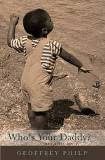
Who's Your Daddy?The first review of Who's Your Daddy?:And Other Stories has been published in The Gleaner: "Philp is Funny and Fearless."

Criss-crossing the Atlantic Ocean, Philp spins tales of teenage homophobia, infidelity, religious hypocrisy, betrayal, impending death, father/son relationships, vengeance, egomania and greed in this 161-page paperback, his second collection of stories.

Philp writes without fear or favour. He tells his stories with honesty, throwing away the pen of pretentiousness to weave simple, but poignant plots with a down-to-earth style, which is refreshing. No apology is in order for graphic phrases and words that the stories are replete with

Here's the link to The Gleaner: Philp is Funny and Fearless.


***


Reblog this post [with Zemanta]

Video: Dancehall Music and Jamaican Society: Which Influences the Other?

Does Jamaican Dancehall Music Incite Violence?

Here's the video from the discussion on WPBT's new public affairs program, PULSE, which was aired on these dates:

Sunday, July 19 @ 12:00 PM

Thursday, July 23 @ 7:30 PM


From the Pulse web site: Does Jamaican Dancehall Music Incite Violence?

I

uVu TV Episode 102Image via Wikipedia

n April, Gay and Lesbian rights groups called for a ban of Jamaican products and travel, claiming the country has had a long history of discrimination without proper repercussions. They cite Jamaican dancehall music as one example--this popular genre is known to have hit songs with lyrics advocating violence against gays. Is dancehall music an accurate reflection of Jamaican perspectives and culture? Did the music influence the culture or the other way around?

Guests:

Howard Duperly, 88.9 FM WDNA
Tim Padgett, TIME Magazine
Geoffrey Philp, Miami Dade College


Click here to follow the link: Does Jamaican Dancehall Music Incite Violence?

***


Reblog this post [with Zemanta]

July 24, 2009

The Arrest of Henry Louis Gates, Jr.: A Father's Perspective

Henry Louis Gates, Jr. ArrestThe incidents surrounding the arrest of Henry Louis Gates, Jr. outside his home have led to some troubling questions that I, as a father, have a hard time answering. On the one hand, I've taught my children, especially my son, that he should have respect for the law and that he should never permit any kind of abuse, verbal or physical, to threaten his self-esteem. Yet, on the other hand, I know there are some police officers who seek every opportunity to humiliate black males in America.


This is not a wild claim. I know about these kinds of police officers from accounts from my friends and personal experiences: being rousted every week by the police at the University of Miami when I’d be walking back late from the Rathskellar to being humiliated a few years ago in front of my son for a minor traffic violation.


I had received a call late at night from my daughter who was in an unsafe neighborhood. She needed a ride home. I jumped in the car and in my rush to pick her up, I rolled (after looking both ways) through a four way stop. An officer in a patrol car about a hundred yards away, lights off, was waiting underneath a tree. Soon there were lights behind us and when I was signaled to pull over, I complied. The officer approached the car and looked me up and down. Despite my explanations, the officer while dispensing a fair amount of verbal abuse, ordered me to turn around, drive back to the stop sign, and stop. I did exactly as I was told and then, I was allowed to go on and pick up my daughter. I guess I was lucky I did not get a ticket and that my daughter was okay when I picked her up.


My story is inconsequential to some of the stories that my friends have told me about beatings and even worse verbal abuse than I suffered.


Should I have been a “man” and shown the officer and my son that I wasn’t going to stand for that kind of abuse? Or should I have done (as I did) listened to the officer, apologized, and moved on? Or was I just being saaf, as usual?
I think I did the right thing, but it still stuck in my craw. For as I listened to the tirade, I kept wondering if my actions were in direct contradiction to my lectures about building self esteem in children and my work as a writer in writing books such as Grandpa Sydney’s Anancy Stories and Who’s Your Daddy? that address these issues.


I want my son to be a man who has enough self confidence to think that he can overcome any obstacle and that he will not permit any kind of violence, physical or verbal, to become a part of his life.


I also want him to stay alive.


My son and I have talked about the incident and he’s told me that the officer was out of line. He knows good officers. His granduncle is a retired detective, his cousin is an active police officer, and Malachi Smith, our good friend, is also a police officer. Many of my students at Miami Dade College now work with correctional services or have graduated as police officers. In fact, on some dark nights as I’ve left the parking lot to go home, I’ve heard the rookies—out of the earshot of their instructors—practicing how to take control of a situation where there is an armed suspect: “On the ground, m****rf****r!”
Their language or behavior doesn’t scare or offend me. I have no illusions about the conditions that police officers face everyday. I’ve had guns pointed at my head and chest during armed robberies in Jamaica and Miami by criminals who seemed to think that they had a greater claim to my personal property. I often remind my son about a statement by Richard Pryor after he had done a comedy tour of prisons that many of the those “brothers need to locked up.”


So, what’s a father to do?


I cannot speak for other fathers. I cannot speak for all males of African descent in America. I can only repeat what I’ve told my son: if you follow basic rules of decency (“Do unto others, etc.), you stand a greater chance of never being involved in the legal system or jails—a future I would never wish on anyone.
Also, because I want my son to live, I can also say: be “properly deferential” to the police, especially at night. They carry big stick and guns—and some are always too ready to use them. From all the official police report, it seems as if Dr. Gates had not treated the Sgt.Crowley with the “respect” he thought he was due. But this begs several other questions: Was Sgt. Crowley deferential to the renowned scholar as he should have been? Or do we only respect men with guns and badges and not those with doctorates—even if it’s only in literature? And haven’t we seen enough of what a lack of “respect” or “rispec”—as we say in Jamaica--can lead to? Was this incident another incident of machismo and/or hubris-- a face-off between two proud men-- that has been conflated with racism?


Finally, I can only hope that the police departments will begin to review their policies, their training methods, and the records of few officers who tarnish the reputation of the men and women who put their lives on the line everyday to protect and serve all of us.


Our children deserve no less.
***
Related article: Skip Gates, Please Sit Down


Reblog this post [with Zemanta]

July 23, 2009

Remix Tonight: Does Jamaican Dancehall Music Incite Violence?


From the PULSE web site:

Thursday, July 23 @ 7:30 PM

In April, Gay and Lesbian rights groups called for a ban of Jamaican products and travel, claiming the country has had a long history of discrimination without proper repercussions. They cite Jamaican dancehall music as one example--this popular genre is known to have hit songs with lyrics advocating violence against gays. Is dancehall music an accurate reflection of Jamaican perspectives and culture? Did the music influence the culture or the other way around?

Guests:

Howard Duperly, 88.9 FM WDNA
Tim Padgett, TIME Magazine: "The Most Homophobic Place on Earth?"
Geoffrey Philp, Miami Dade College

***
More on Dancehall: Caribbean Beat: http://www.meppublishers.com/online/caribbean-beat/current_issue/index.php?pid=1000&id=cb98-2-50

Reblog this post [with Zemanta]

July 22, 2009

Aftermath of the Arrest: Henry Louis Gates, Jr.

Henry Louis GatesThe arrest of Henry Louis Gates Jr. on that old canard, "disorderly conduct" has revealed once again the racial divide in this country--the fears of injustice of black men at the hands of the police and the unquestioning support of white men for the police/law enforcement. The blogosphere reflects this divide. White bloggers say Dr. Gates is playing the "race card" and Black bloggers claim racism.


I trust my intuition and how men behave.
When Dr. Gates and Sgt. James Crowley met in that room, it could have been merely the confrontation between two men: a proud professor and a wary police officer.


But things are never that simple.


I can understand the plight of the Sgt. Crowley. He had received a credible call from a neighbor who had seen these men breaking into a house. When they got there, Dr. Gates was simply an old black guy standing in house in the middle in Harvard? What was he doing there? Dr. Gates had to prove who he was. And no sudden moves.


Dr. Gates was tired. He had just come back from China. At every step of the way, he probably had to prove who he was (as he has done for all his life--as all pioneers have to do) and now he was home and being confronted in his own kitchen, in his own house by a white police officer who was asking him, "May I ask what you're doing here?"


There was, I suspect, no "Sir," no respect for the white hairs on the old man's head. There's a different tone that white officers use for white old men. And tone doesn't show up on a transcript.


Now things weren't simple. Now they weren't just man to man. They became black and white. And if I believe Dr. Gates' version of the events, it's not because I'm defending a "brother," it's because the police, who have guns, are always in charge and I simply cannot imagine Dr. Gates being a threat to anyone--except intellectually.


For this is a part of life in America that many whites do not understand--the daily humiliations of black men at the hands of the police. So what looks like a simple situation that could have been remedied by Dr. Gates being thankful for the police doing their job was probably exacerbated by the words and actions of a man who has every reason to be proud of his accomplishments, and a police officer, who once Dr. Gates spoke, should have realized that he was not dealing with just "another black man." I won't use the shorthand version of that phrase.


Then, everything blew up. What could have ended like this:


"Thank you, officer."
"Don't worry, Dr. Gates, these things happen every day. Have a nice day."
Both men laugh.


Ended with Dr. Gates being arrested.


No one will ever know what happened in that room between those two men. But I suspect the history of race relations (fear, mistrust, anger) came to a head, and Dr. Gates was hauled off to jail, as Michael Eric Dyson has said, for being "uppity." For it is perfectly reasonable for a white person, a white professor to ask for a name and a badge. But a black man? Go straight to Jail. Do not collect $200.


So what are we going to do?


There are no grand solutions to racism and the fears on both sides. It can not be done away with by laws or any other grand social schemes.
No, the solution in still waiting in that room where Dr. Gates and Officer Crowley met. Where we all meet every day to eat, drink, stand around the water cooler and look out at the each other--with fear in our eyes.


***


Reblog this post [with Zemanta]

My Ideal Reader: Barbra Nightingale

Barbra NightingaleMy ideal reader is someone who loves the taste of words. Who reads aloud to him or herself (or to others, of course!) just to be able to roll the words around in the mouth, tasting each one of them, enjoying the sweet, the tart, yes, even the bitter. My reader says to him or herself: “I felt just like that, but I just didn’t how to say it!” Or, “That’s exactly how I feel now!” I want to speak for those to whom words might not come as poetry or prose, I want to speak for those who want to share my words with others, and passes around copies of my poems, or tucks them in gifts or private notes. Most of all, I want to be able to sing, and since I’m tone deaf, I offer my poems instead, even though I sing in key of L. As I say in my first book, “All songs are poems, but not all poems can be sung.” My reader will not only read, but listen as well.

Barbra Nightingale’s newest book of poetry, Geometry of Dreams was just published by Word Tech Editions. Her first book, Singing in the Key of L won the 1999 NFSPS Stevens award. She has had over 200 poems in various journals, anthologies, and online, and resides in Hollywood, Florida, where she is a full professor of English, literature, and Creative Writing at Broward College.


***


Reblog this post [with Zemanta]

July 21, 2009

Henry Louis Gates, Jr Arrested

Henry Louis Gates, Jr.Statement on Behalf of Henry Louis Gates, Jr. -- by Charles Ogletree

This brief statement is being submitted on behalf of my client, friend, and colleague, Professor Henry Louis Gates, Jr. This is a statement concerning the arrest of Professor Gates. On July 16, 2009, Professor Henry Louis Gates, Jr., 58, the Alphonse Fletcher University Professor of Harvard University, was headed from Logan airport to his home [in] Cambridge after spending a week in China, where he was filming his new PBS documentary entitled “Faces of America.” Professor Gates was driven to his home by a driver for a local car company. Professor Gates attempted to enter his front door, but the door was damaged. Professor Gates then entered his rear door with his key, turned off his alarm, and again attempted to open the front door. With the help of his driver they were able to force the front door open, and then the driver carried Professor Gates’ luggage into his home.

Professor Gates immediately called the Harvard Real Estate office to report the damage to his door and requested that it be repaired immediately. As he was talking to the Harvard Real Estate office on his portable phone in his house, he observed a uniformed officer on his front porch. When Professor Gates opened the door, the officer immediately asked him to step outside.

Read more here: The Root

***

This is an issue about which I've blogged before in "Fear of the Perp Walk," and incidents like this strike fear in the heart of every male of African descent in America. The larger implication of these actions are intended to say, "If we can do this to him, we can do it to you."


Reblog this post [with Zemanta]

July 20, 2009

Am I a Writer? (Part Dos)

Am I a Writer?In my creative writing classes, the frequent follow-up to the question “Am I a writer?” is “Do you think I have what it takes to be a writer?”

Beyond developing patience, perseverance and a thick skin, the two essential qualities that a writer should have are the ability to generate ideas (a creative imagination) and to transform these ideas into a recognizable form (Art vs. Craft Gap--A Writer's Paradox).

The creative imagination can be nurtured by reading, meditating, or as Walt Whitman said, “I loaf and invite my soul.” The ability to transform an idea into a recognizable form can be taught in a workshop or in any educational setting. In my short story workshops I teach students how to create a set-up with compelling characters--their motivations (what's at stake?) and histories; pace dialogue and narrative to reveal the conflict between the main characters and advance the plot; develop subsequent scenes as a result of the inciting incident and the characters reactions; plot the change that occurs in the protagonist and antagonist during the ordeal, and to conclude with a satisfying ending.

When the creative imagination and the craft of writing (technical/foundational skills & concepts) come together, the magic of art occurs. In other words, whenever the imagination is focused on a subject through the medium of craft, something new is created. And depending on the expansiveness of the imagination and the technical ability of the artist, the more remarkable the work of art. For example, in "Forty Acres: A Poem for Barack Obama" Derek Walcott brings together Barack Obama’s inauguration, the historical legacy of "forty acres and a mule," the work of Jasper Johns and Hart Benton with sensuous metaphors and a stentorian voice to match the gravity of the occasion (Derek Walcott @ CABA). Walcott’s poem matches Coleridge’s definition of poetry: “The best words in the best order.”

In this case, the “best” words would be the metaphors and imagery that illuminate the ideas and the “best” order would be the arrangement of the sounds through diction and rhythm to enhance the poet’s intention. It may be useful to think of poetry as a contemplation that uses language, primarily rhythm and metaphor, to convey ideas, emotions, actions, or a state of being.*

The skill that Walcott displays takes time because no one is born a poet. One may be born with certain characteristics that may help the would-be poet with writing “the best words in the best order," but it takes enormous discipline be able to pull off this kind of performance.

For there are so many writers who have mastered the craft of writing verse or writing short stories, but they have not developed their creative imaginations. Similarly, there are those who have many ideas, but lack the skill to communicate through rhythm and metaphor. These are usually the kinds of poets against whom GM Palmer fulminates and they are worth mentioning because of our culture’s fascination with originals and the avant-garde--which has its appeal, but has nothing to do with the practice of poetry.

For these poets, their logic goes something like this: “I am a poet; therefore anything that I write or do must be poetry.”

This, of course, is arrant nonsense. If one were to follow this syllogism, then anything that anyone (who calls himself a poet) writes, a supermarket list or a doodle during a meeting, becomes poetry to which, if we cannot find the nearest exit, we are subjected for hours of endless declamation. The only problem with that line of reasoning is if everything is poetry, then nothing is poetry.

But this is not anything new. Gore Vidal in Homage to Daniel Shays: Collected Essays 1952-1972 offered this sage advice:

For every Scott Fitzgerald concerned with the precise word and the selection of relevant incident, there are a hundred American writers, many well regarded, who appear to believe that one word is just as good as another, and that anything that pops into the head is worth putting down. It is an attitude unique to us and deriving, I would suspect, from a corrupted idea of democracy: if everyone and everything is of equal value, then any word is as good as any other to express a meaning. Or to put it another way, if everyone is equally valuable, then anything the writer (who is valuable) writes must be valuable, so why attempt another selection?


The line of reasoning, "if everyone is equally valuable, then anything the writer (who is valuable) writes must be valuable, so why attempt another selection?” also betrays a misunderstanding of being and doing. Our default position is human being: I am. To that we may add an infinite amount of combinations: I am writing this post for my blog, etc. I am not a blogger. When I am not blogging, etc., I revert to being a mere mortal: I am.

The sad truth is that there art no shortcuts in creating art. We must nurture our creative imaginations with the kinds of activities that should spark an idea and continue to hone our craft by learning how to write the “best words in the best order.” And even then, the rewards that we may be expecting, publication, a prize, or that girl going out with us, may never happen.

Perhaps the most fulfilling way to look at writing is as a kind of Jnana yoga that will lead one beyond doubt and fear into a realization of oneself or that beatific state that Abraham Maslow called self-actualization.

***

*There are always qualifications. For as Kwame Dawes has pointed out, there are many types of poetry. And genius, which is as subversive as love, will always shatter our plodding, calculated categories. So let's just say that I have a preference for poetry that succeeds at creating an aesthetic event which as Reginald Shepherd (emphasis mine) said, "...poems are, or should be, experiences in themselves, and not just accounts of or commentaries on experience; they should be additions to the world, not simply annotations to it"

***


The Top 10 Things Every Writer Should Know.

Reblog this post [with Zemanta]

July 19, 2009

Today on PULSE: Does Jamaican Dancehall Music Incite Violence?


Sizzla:"Nah Aplogize"


N.B. This video contains lyrics that some may deem objectionable.


South Florida' s PBS affiliate, WPBT2, will be broadcasting today on PULSE, a new public affairs program, a discussion that Howard Duperly, Tim Padgett, and I had about the topic: Does Jamaican Dancehall Music Incite Violence?


Sunday, July 19 @ 12:00 PM

From the PULSE web site:

In April, Gay and Lesbian rights groups called for a ban of Jamaican products and travel, claiming the country has had a long history of discrimination without proper repercussions. They cite Jamaican dancehall music as one example--this popular genre is known to have hit songs with lyrics advocating violence against gays. Is dancehall music an accurate reflection of Jamaican perspectives and culture? Did the music influence the culture or the other way around?

Guests:
Howard Duperly, 88.9 FM WDNA
Tim Padgett, TIME Magazine
Geoffrey Philp, Miami Dade College

***


Related Posts: Homophobia in Jamaican Culture & Music

"Jamaican Gays Live and Die in Fear" by Stacey-Ann Chin

Reblog this post [with Zemanta]

July 18, 2009

Asili: Volume VIII-3 Online

Asili:the Journal

Volume VIII-3 of Asili: The Journal of Multicultural Heartspeak is now online and features fiction and poetry by the following writers:

Avotcja
Adrian Castro
Joseph McNair
Eugene B. Redmond
Preston Allen
CM Clark
Reginald Lockett
Rethabile
Al Young
Opal Palmer Adisa
Geoffrey Philp
devorah major
Quincy Troupe
Welvin Stroud

The editor of Asili: The Journal of Multicultural Heartspeak and the Asili: The Journal Blogspot, Joseph McNair, has also inlcuded the tribute poem for Michael Jackson "We Had Him" by Maya Angelou.

Here is the link to the site: Asili

***


Reblog this post [with Zemanta]