September 8, 2006

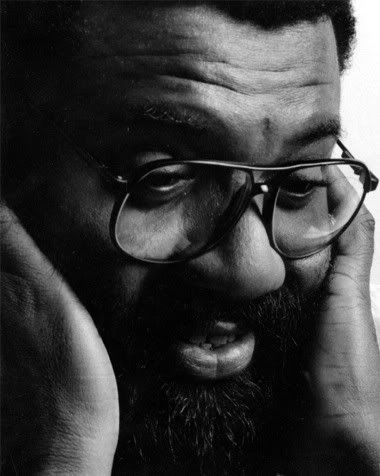
Five Questions With Kwame Dawes

Kwame DawesBorn in Ghana in 1962, Kwame Dawes spent most of his childhood in Jamaica. As a poet, he is profoundly influenced by the rhythms and textures of that lush place, citing in a recent interview his "spiritual, intellectual, and emotional engagement with reggae music." His book Bob Marley: Lyrical Genius remains the most authoritative study of the lyrics of Bob Marley, and his groundbreaking collection of essays, Natural Mysticism: Towards a New Reggae Aesthetic, describes the experiences and modalities of Jamaican postcolonial writers who are embracing “an aesthetic which unites body, emotions, and intellect and brings into a single focus the political, the spiritual and the erotic.” An author of twelve collections of poetry, Dawes’ most recent collections are Impossible Flying (Peepal Tree, 2006) and Wisteria (Red Hen, 2006). In 2007, Akashic Books will publish his novel She’s Gone. His awards include The Forward Poetry Prize, the Hollis Summers Poetry Prize, a Pushcart Prize, and the Poetry Business Award. Founder and director of the USC Poetry Initiative, Dawes is the programmer for the Calabash International Literary Festival held in St. Elizabeth, Jamaica, each year, and is the Director of the Calabash Writer’s Workshop.

1. How have you managed to remain so prolific over the years?

To be honest, it is only when I look at the raw facts of the matter that I concur that I have been prolific. I have published twenty books in twelve years. Okay. And that is not all I have been doing. But as I go through my day, I feel like a man who is not doing what he should be doing. I feel I have been slack about my writing, I feel I should be writing more. So there is a strange contradiction at work here. And it simply leads me to the fact that I am not sure I can answer your question. I can say, though, that I have always said that I feel no assurance that I will always have something interesting and compelling to write and so while I am still having ideas that seem engaging to me, I will continue to write. I have never experienced what people call writer's block. I do believe it exists, and I suppose I live with the anxiety that at some point it will overtake me. So while I have managed to avoid it, I will work at what I need to be working on. I have been blessed with the capacity to write a very quick and competent first draft. As a result I have a lot of first drafts lying around. I come to them whenever time allows. But the effect is that I have many projects on the go at the same time. This is both a blessing and a curse, I suppose. Still, the bottom line is that I am doing what I enjoy doing, and so I will simply accept that I produce as I produce as a condition of who I am. I will enjoy is benefits and accept its challenges. It has occurred to me (and has been said to me) that I probably write too much and that this has affected the quality of my work. I do think that this is nonsense. One may quarrel with publishers who publish me, but not with me for writing. After all, writing is a practice, and one can't be blamed for doing too much of it to get better at it. Anyway, I do think that my work continues to grow, to improve and I am grateful for this.

2. What did you learn in the translation of Bob Marley: Lyrical Genius into German? Why German?

Nothing much. I was not involved with the translation. Actually, the publishers did not even inform me that the book was translated. My thirteen year old son was surfing the net and came up on this news. I then ordered a copy to make sure that it was true. So it remains a peculiar thing to me. I do know that German books are longer than English books. I have gained almost two hundred additional pages in the translation. Even when I don't want to be, I am constantly prolific.

3. How has the experience of now living and working in South Carolina changed your writing?

I have always said that at least four of my books of poetry would not have been possible without South Carolina as my home. Midland, Jacko Jacobus, Wisteria, and Requiem. These are works that entirely rooted in this space. And in other books, South Carolina features greatly. But why wouldn't it? I write from where I am and what I have seen and experienced. I have lived here for fifteen years and I have some roots here. I remain an alien, but I also am a happy southerner at the same time. I am glad I landed here, though. The richness of the history, the sophisticated presence of Africa in the culture, the complexities of American life at its most basic and direct--these are all part of the rich realities that have sharpened my sense of the world. I write to understand the world around me. I therefore write the world around me.

So there is, at some level, something quite unremarkable about my writing so much about South Carolina. Having said that, I should add that I do see myself carrying out an important work here as a writer and I think South Carolinians agree with me. I suppose it is so much easier for me to identify with this state because it is such a Third World space in terms of ethos and sensibility and it has its own quarrels with the larger American idea as do many people from developing countries, from the southern hemisphere. Finally, I should say that the need to understand, the need to give voice to the unvoiced stories of this space, and the fact that buried in this soil are the bones of so many Africans--people I like to call my relatives--makes me feel a strong connection with this place.

4. You frequently wear the "hat" of editor. Is there a difference between selecting poems for Red vs. Wheel and Come Again?

Not really. Here are the points that are constant: One is looking for the best work. One is looking for work that is consistent with the theme of the anthology. One is trying to create a work that is readable for the general reader--one is not trying to do an academic exercise.

The difference, of course, is that with Red, I am engaged in an anthology that is rooted in a larger idea of showcase the new work by black writers in Britain. This is a quite basic impetus for an anthology, and yet it is one that I responded to by trying to impose an arbitrary theme on the process. I chose Red out of a hat. I am not sure if it will work, but we shall see. The proof will be in the kind of work I receive. Fingers crossed. Wheel was a work based on a hunch. I had a hunch that since the arrival of reggae, more poets than one would imagine were actually engaged deeply in the reggae ethos even at times beyond themselves. The insidiousness of reggae in the world and especially in the Caribbean has ensured that an aesthetic has emerged and has seeped into our creative psyche. I wanted to demonstrate this in the anthology. I missed some crucial works--two amazing early poems by Walcott and a few others--but the larger project was quite successful. Yes, I was consciously trying to give credence to a theory, to an idea, to a hunch, and I think this worked out well. It is also a cool anthology with a splendid preface by Colin Channer.

5. Some of your more recent collections take their inspiration from the work of artists. How do you go about writing poems based on an artist's work?

I must say that this process has seemed to me like stealing. But stealing is no sin when it comes to art that is inspired, yes? I simply try to write what happens to my brain and heart when I see a work of art. I really try to avoid simply re-describing the work of art. After all, to do that would be so redundant and a disrespect to the artist. Instead I respond. I bring my baggage or my discourse if you will. I vamp off the art. I create "vershans" in the old reggae sense of finding a dub vershan of some master text to create a counter master text. I enjoy this kind of work because in sense I am given a distilled series of images, tough, well-conceived a concentrated, and then I am to use that to spark poems. The effect is inevitably surprising for me. I am taken to places that I would not normally enter. So while it is true that a lot of my recent work has grown out of this dialogue, the greater truth is that this has been a feature of my work from the beginning. I am in good company, of course. Maybe we are all trying to write "Musee de Beaux Art" all over again--yes, I am being ironic.

***

Next week: Preston Allen, author of Churchboys & Other Sinners.

September 4, 2006

Homage to Seaside, Florida

About fifteen years ago, I lived what is every writer’s dream: waking up in a windswept villa by the sea, writing, having breakfast while watching whitecaps, then writing some more after lunch and a bike ride along the beach; finally, dinner and delightful conversations with friends who were also writers, musicians, painters or dancers.


The dream happened in Seaside, Florida (the film location of the Truman Show) when I was an artist-in residence in the “Escape to Create” program at the Seaside Institute. For one whole month, we were given a small stipend and allowed to live free of cost in one of the multi-million dollar houses, and all we had to do was give a reading or showcase our work at the end of the month. It was a time of deep introspection and there were several challenges: our families could not be with us during the month. This was a source of anxiety, especially for the newlyweds and first-time parents, but we all had family reunions at the end of the month. It was also a time to rediscover ourselves and our commitment to our vocation.


It was a glorious month. I met other artists/writers from all around the world and many of us are still in contact with each other and some of us are even friends. But it didn’t all begin that way.


After the initial meet-and-greet, we retreated to our mansions to begin work on our paintings, poetry, fiction, music or choreography. That lasted for about a week until Phyllis McEwen suggested that we have a party at her place. When we got there, Phyllis had laid out a modest meal of cheese, bread, olive oil, and of course, wine. We talked and hashed things out, especially the notion that we knew was lingering in the back of the heads of some of the artists/writers that Phyllis and I were the “minority” babies. Phyllis and I had been in similar situations where we first had “to prove ourselves,” but we realized that to get what we wanted, we had to play by the “rules of the game.” As Jimmy Carnegie, my history teacher at Jamaica College, used to say, “It hot, but hush.”


After we “proved” ourselves to each other (they now had to “step-up” to us), we all decided to make our meetings a weekly habit, so every Friday after picking up our stipends, we’d go the grocery store, buy our contribution to the meal and meet down by the beach or in the houses along the beach, especially the ones with lookout towers where we could see the entire town.


It was a time of happiness, but there were also moments that I felt excluded from the “American Dream” because of class, race, history, and country of origin. I sometimes asked myself, Why can’t we do this in the Caribbean? The poem, “Seaside, Florida” from hurricane center grew out of those feelings.

Few artists/writers achieve the fame or recognition or earn the money that we think we deserve, and the ratio of success to failure (rejections) is about ten to one. But there are those times, like the ones I experienced at Seaside, that if we can enjoy them in the moment, then as the song says, “Every little thing” is all right.

***


September 1, 2006

Five Questions With Ricardo Pau-Llosa

Ricardo Pau LlosaRicardo Pau-Llosa was born in La Habana, Cuba in 1954 and, after the age of six, grew up in exile in the United States. He is the author of five books of poetry: The Mastery Impulse (Carnegie Mellon, 2003), Vereda Tropical, (Carnegie Mellon, 1999), Cuba (the 100th title in the Carnegie Mellon Poetry Series, 1993), Bread of the Imagined (Bilingual Press, 1992), and Sorting Metaphors (Anhinga Prize, 1983). His forthcoming collection, The Parable Hunter, will be published by Carnegie Mellon in 2008. Pau-Llosa has published extensively on the visual arts, particularly 20th century Latin American painting and sculpture.

1. Which author and/or book has most influenced you?

Aside from the classics and 'canon' writers. Influence occurs mostly in one's early maturity (college years)--so the modern writers I read with most enthusiasm at that stage and to which I return with fondness to this day (this may or may not translate into 'influence') were: Wallace Stevens, Pablo Neruda, Jorge Luis Borges, Richard Wilbur, Rainer Maria Rilke, Federico Garcia Lorca, Derek Walcott, Ted Hughes, James Dickey--these are not in any order of importance. Philosophers and historians were just as important--Empiricists, Edmund Husserl, Martin Heidegger, Paul Ricoeur, C.S. Peirce, Fernand Braudel, Frances Yates, Otto Rank, Elias Canetti, Mircea Eliade.

2. How has living and working in South Florida shaped your work?

As a Cuban-American who identifies entirely with the exile experience, I'd say it has impacted me quite a lot. Miami had, may still have, the potential to combine epic and theater, if it took consciousness of it--no theater without self-awareness of theatricality. Exile, not nostalgia, was the driving plot, for exile is a battlefield and nostalgia a tea room. Miami refuses to assume this invitation to greatness.

3. Unlike many other Cuban-American poets, your poems about Cuba are rarely nostalgic. Indeed, they sometimes seem combative. Do you agree? If so, to what do you owe this difference in tone and style?

The poet is always an advocate--in the legal sense. Sometimes you prosecute, sometimes you defend your client. But you're always arguing with images and against them.

4. “Poetry is nearer to vital truth than history.” ~Plato, Ion. How would you apply this to your work, especially to the sense of history that informs most of your work?

Never cared for Either/Or's. If truth is a city, it can be arrived at by air, sea and land. And abandoned just as easily. In fact, even easier. It is the city you can abandon and think you're still residing in it.

5. Over the years your poems have undergone a transformation from the cryptic lines in Sorting Metaphors to a looser, expansive style in The Mastery Impulse. To what do you attribute this change?

Got older, read more, wrote more, got less energy with which to struggle with the erotic obscurity of cryptic lines.

(Optional) What makes you laugh?

Reading my old poems. And they get old pretty quick, too.

***

Tags:


*
Next week Friday: Kwame Dawes, author of Natural Mysticism: Towards a New Reggae Aesthetic in Caribbean Writing.

August 30, 2006

I Can See Clearly Now

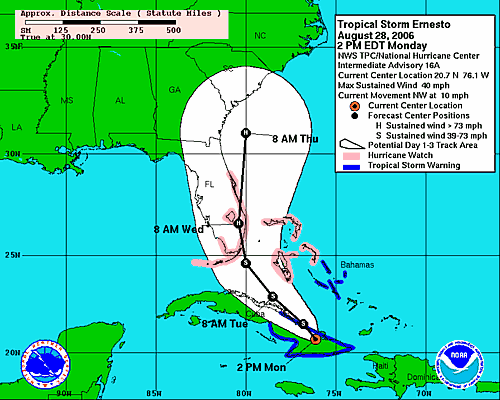
One year after Katrina and while we are going through Ernesto, I look back on this poem that I livicated to Kalamu ya Salaam. I remain optimistic about New Orleans despite the ongoing tragedy. But as the poet Joy Harjo has said, "The sun is a mentor.It has taught me that tomorrow will come, no matter what. No matter failure, no matter clouds, no matter sorrow, no matter slaughter, no matter, or happiness. And each sun is differently received in turn by us, as we carry on our celebrations of living and dying. Yet the sun remains quintessentially the same, a shining star, a dynamic power, ushering our journey from one breath to another, one drama to the next.”

It was this belief that has sustained me through the years--like the turbulent one during which I wrote the collection, hurricane center, which in times like this give me comfort.


Dancing with Katrina
For Kalamu ya Salaam

Paddling through New Orleans,
past a shotgun house up to its threshold
in brine, a dog, paws folded, waits
on the roof of his owner’s drowned
home, and stares across the river
at splintered houses in the shade
of pines, swaying in the wind
that keeled those sailboats
in the bay, leaning on each other
like partygoers after Mardi Gras,
when music filled the streets
like the laughter of those Creole
ladies, bright as Louis Armstrong’s horn
that gave birth to this city,
dredged in the blues,
that hour by hour,
rises from her despair,
and puts on her favorite torn stockings,
so when the waters go, as they will,
she will be ready to work
as she has always worked
with style, she will be ready to live
as she has always lived
with love, so she’ll be ready
to welcome all of God’s wayward
children into her arms again,
and dance with her stilettos in the mud.


September 10, 2005

Livicated to Kalamu ya Salaam, who despite the hurricane and his own losses, continues to inspire and lead.


Blessings,
Geoffrey Philp

"Overcome the devils with a thing called love.” Bob Marley

***
Tags:


August 28, 2006

Here We Go Again!


How to get NHC RSS Feed: http://www.nhc.noaa.gov/aboutrss.shtml

Other good links: Storm Information, Hurricane Awareness, Historical Information,Tropical Analysis and Forecasting Branch,

***
Other Miami Blogs to read until the lights go out:
http://www.criticalmiami.com/
http://miami.metblogs.com/archives/2006/08/get_ready.phtml

***
On the lighter side, we’re stocking up on the gas and hoping the lights don’t go out and all the usual drama surrounding a hurricane. I’ll be getting the usual hurricane supplies: Appleton, water, bully beef, hard dough bread, crackers, candles, and matches. And in that order.


And Now for Something Completely Different


PS. Based on Jason Boog’s Five Easy Questions, beginning this Friday, I’ll be featuring 5 Questions for Caribbean/ South Florida writers.


***

August 25, 2006

Accepting Submissions: The Caribbean Writer

The Caribbean Writer is currently seeking submissions for its 21st (2007) issue. The 20th Anniversary Volume of the annual anthology, which features the work of writers in the Caribbean and literature with a Caribbean focus, was recently released. Editor and UVI Professor Marvin E. Williams said that the longevity of the anthology speaks to the continued need of an outlet for writers of the region and literature about the Caribbean.

"It is not easy to keep these types of magazines alive, Prof. Williams said. “ It demonstrates that "The Caribbean Writer" is indeed performing its mission."

The international anthology published each summer features the work of writers in the region and abroad, including writers and artists from the Virgin Islands. In its continuing mission to encourage creative writing and criticism in the region, "The Caribbean Writer" publishes book reviews, drama, personal essays, poetry, short fiction, translations, and special sections that celebrate the work of acclaimed writers.

Among the highlights in the Volume 20 anniversary issue are poetry and prose of the renowned Jamaican writer Opal Palmer Adisa. The poetry and fiction components include work by Delores Gauntlett, Berkeley Wendell Semple, Tregenza Roach, Ian McDonald, V. Corso, and Lelawatee Manoo-Rahming. The journal features art from the Virgin Islands – portraying festive dance and musical scenes typical of anniversary celebrations. It also contains book reviews by an international gathering of critics and intellectuals. The cover artwork is by artist Sue Snow. The volume also includes an index of all work published in Volume 16 through Volume 20.

Looking towards the future Prof. Williams, editor for the past four years, plans to build upon the anthology's solid foundation built largely by its founder and first editor Dr. Erika Waters. "We always want to be fresh," he said. As the editor, his goal is to accept writing and discover writers that "break new ground."

Writers are encouraged to submit poems, short stories, personal essays and one-act plays. Only previously unpublished work will be considered. (If self-published, give details.) Include brief biographical information and put name, address, telephone number, email address (if any) and title of manuscript on a separate sheet of paper. Only the title should appear on the manuscript.

All submissions are eligible for the following prizes: The Canute A. Brodhurst Prize for best short story; The Daily News Prize for best poetry; The David Hough Literary Prize to a Caribbean author; The Marguerite Cobb-McKay Prize to a Virgin Island author and The Charlotte and Isidor Paiewonsky Prize for first time publication in The Caribbean Writer.

Mail submissions to The Caribbean Writer, University of the Virgin Islands, RR 1, Box 10,000, Kingshill, USVI 00850-9781 or submit electronically to qmars@uvi.edu or submit@thecaribbeanwriter.com. The deadline for submissions is November 30, 2006 (postmarked).

Tags:


August 24, 2006

Happy Birthday, Linton Kwesi Johnson

Linton Kwesi Johnson (aka LKJ) (born 24 August 1952, in Chapelton, Jamaica) is a British-based Dub poet. He became only the second living poet to be published in the Penguin Classics series. His poetry involves the recitation of his own verse in Jamaican Creole over dub-reggae, usually written in collaboration with renowned British reggae producer/artist Dennis Bovell .

Most of Johnson's poetry is political, dealing mainly with the experiences of being an African-Caribbean in Britain. However, he has also shown himself more than capable of writing about other issues, such as British foreign policy or the death of anti-racist marcher Blair Peach. His most celebrated poems were written during the government of Prime Minister Margaret Thatcher. The poems contain graphic accounts of the often racist police brutality occurring at the time.
Johnson's best known albums include his debut Dread Beat An' Blood, Forces of Victory, Bass Culture and Making History. Across these albums are spread classics of the dub poetry school of performance - and, indeed, of reggae itself - such as Dread Beat An' Blood, Sonny's Lettah, Inglan Is A Bitch and Independent Intavenshan.

When written, Johnson's poetry makes clever use of the unstandardised transcription of Jamaican Creole. Of late, Johnson has only performed live on an intermittent basis, perhaps a result of modern reggae's shift towards more spontaneous and rapid-fire performers of raggamuffin or dancehall. Others have speculated that he is aging and cannot keep up with the demands of a world tour.

Recently, a collection of his poems were published as "Mi Revalueshanary Fren" by Penguin Modern Classics. Johnson is one of three poets to be published by Penguin Modern Classics while still alive. Johnson's record label LKJ Records is home to other reggae artists, some of whom made up The Dub Band, with whom Johnson mostly recorded, and other Dub Poets, such as Jean Binta Breeze.

Johnson attended Goldsmiths College in New Cross, London, which currently holds his personal papers in its archives.

From Wikipedia.
***


August 23, 2006

Happy Birthday, Malachi (Belated)

Perhaps the most consistent, the boldest, the poet who remains true to dub poetry, Malachi is one of the best in his genre. As one promoter said recently, “One has to understand that when others were performing poetry full time, Malachi was a cop working the beat in Kingston.”


It is remarkable that after nearly twenty five years and three albums, various singles and a forthcoming DVD chronicling his life, Malachi remains fresh and as relevant as he was in the eighties when he joined some of the leading dub poets of the era on the landmark album Words, Sound 'ave Power. That groundbreaking album launched many careers and the poem "Victim," brought Malachi to the attention of the world. After many awards and performances later, Malachi is energized and ready to take on the world because his poetry remains raw and true to its roots.


Malachi is not just a voice from Jamaica, but a voice for oppressed people everywhere. From Africa to Central America from Trench Town to Johannesburg, the voice of the son of a preacher man remains strong, steadfast, and defiant.


He was a pioneering dub poet with Oku Onoura, Mikey Smith, Mutabaruka, Linton Kwesi Johnson, "Godfather" Noel Walcott and sister Jean “Binta” Breeze. Malachi was a member of Poets in Unity with Tomlin and other members of this seminal poetry combo. Malachi does not read a poem. He performs it. He has a beat, a rhythm, a certain kind of dance that makes him different. The drama, the anger, the romance. Yes, romance. Malachi can caress a poem ever so delicately.


I shot the first frame of a documentary on his life and work in NYC some time ago. In June 2004, I attended the Dub Poetry Festival in Toronto, Canada where Malachi was one of the headliners. Over the next few months I shot Malachi doing several interviews at his Miami home, and finally made a trip to Jamaica to visit and shoot some of the places that helped in shaping his life.


Initially, I wanted to tell the story of the bastard son of a light-skinned preacher who became a policeman and a poet. But I soon discovered that Malachi's story was the poetic journey of a flat nosed boy, too dark complexioned for the good of his Germanic descendants and too light skinned for his dark pigmented relatives. He was the boy with a deadpan sense of humor who could talk himself out of a good “ass whipping” and onto the pulpit of his grandmother's church in Back Land, Westmoreland.


He was the boy who courted a Justice's daughter. The girl in the shop with the nice smile--the same girl that all of the boys admired, but could not get themselves to ask for a date. He was the friend who got the girl, and two sons later he moved to Miami, Florida. The boy who became a cop--the testing officer knew was too short for the police force, but took him anyway believing that he would eventually grow to the "right height.” He was the boy who passed every JSC subject he ever took, and who romped on the dusty lane in Back Land, where rusted zinc, fenced every single yard. He was the same boy who swam in the canal that the short man we called "Bulldozer" used to clean until he drowned in it.


He was same little boy from Central Village whose grandfather was an overseer on the sugar plantation and who would not give him a job because he did not want the white plantation owners to know that he had a little dark-skinned bastard grandson. This was the same boy whose stepfather loved him very much, but because Malachi threw stones every day and got into so much trouble, he had to be shipped away to his biological father--the same man who had several other children and who lived with his mother who hated the Malachi because he was a "jacket." Malachi was the boy who Auntie Dina flogged because he "played" with the little girl underneath the cellar. He was the boy who would follow the footsteps of his favorite poet, Claude McKay, cop in Jamaica and cop in the USA.


This is a birthday tribute to a dub poet who is a law enforcement officer, humanitarian, a family man and genuine friend.

August 20, 2006

Mikey Jiggs
Owings Mills, Maryland
***

August 21, 2006

"Coward Men Keep Sound Bones"

Here is my latest short story that has been published in Asili. It may be a bit risqué for children, but in a world of Internet porn, it palls.

Still, I was brought up as a righteous young man and now that I have enough short stories that could be assembled into a collection, I worry about the kids (especially my kids) reading stories like this before they are ready for these kinds of relationships. The kind of concern that I have is similar to Edwidge’s when a youngster told her that she’d read Breath, Eyes, Memory and loved it. She was shocked and this is why she decided to write some books that she thought were more appropriate for adolescents.

So, this is my parental advisory for “Coward Men Keep Sound Bones.”

***
Tags: Arts & Culture, Authors, Caribbean, Caribbean writers, fiction, Jamaica, jamaican writers, Literature, Miami,

August 18, 2006

Interview with Jamaicansrus

How do you compare the current Caribbean writing to that of previousgenerations?

I love the new expansiveness, especially with writers like Colin Channer who has opened up Caribbean writing and has made us aware of the places that Caribbean writing can go. Colin really reminds me a lot of Bob Marley and the phenomena of reggae. After reggae was introduced, a musician had two choices. She/he could either go back to the past with ska, and mento --no disrespect to either form -- or she/he could go forward with reggae. The choice was clear. With Colin, a similar a choice is clear to writers from the Caribbean. Either you can continue to write books that are in praise of Babylon or you can go forward by writing about your people, your time, and your landscape. Write about us or write about the metropolis. James Baldwin once said, “Black people need witnesses in this world that thinks everything is white.” Caribbean people desperately need witnesses in this world that thinks everything is Babylon. Yes, Babylon is great. But it has fallen!

To read more of this interview, click here: http://www.jamaicansrus.com/a2z.asp?test=articles&name=gphilps&sidemenu=yes

Other Interviews

Podcast of Parts One & Two Xango Music interview

http://archive-a01m01.libsyn.com/aXdteJ12bHqcfWt7ZHluqWqqk3eX/podcasts/geoffreyphilp/first_part_of_interview.mp3


Remix of Interview with Ariel Gonzalez
http://ia300140.us.archive.org/2/items/GeoffreyPhilpInterviewwithArielMP32/interview_with_ariel_mp3.mp3


Tags: Authors, Bob Marley, books, Caribbean, Caribbean writers, diaspora, fiction, Jamaica, Jamaican writers, Literature, Miami, Podcasts, Poetry, Rastafari, Reggae, Short Stories, South Florida Writers, Writing.

August 17, 2006

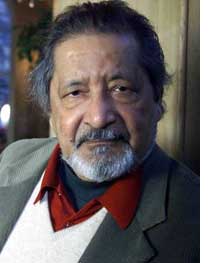
Happy Birthday, VS Naipaul

VS Naipaul still remains the best novelist of his generation and this reputation is based firmly on his talent for telling a good story. From his earliest work such as Miguel Street where he examined the stunted lives of his elders; A House for Mr. Biswas with the comic failure of Mohun Biswas whose goal is to own a house, and Mimic Men, Ralph Singh’s tale of disillusionment related during the waning years of his life, Naipaul’s gift has been to reveal the truths about postcolonial life that many are still not willing to face. His ability to understand characters such as Mister Popo, B. Wordsworth, and Harbans demonstrates a quality one hardly associates with Naipaul—empathy. Yet how could he have created such memorable characters such as Leela, Biswas, and Man-Man without this gift?

Naipaul has his detractors and this is due mainly to most of his work since In a Free State which signaled his growing pessimism with countries that were still in the throes of post colonialism. Many of the characters in the absence of indigenous values that were not cultivated nor encouraged under British rule, succumb to cowardice, inconstancy and vice. Indeed, many of Naipaul’s’ comedies of manners and his social criticism may be due to his disappointment with the results of how the struggle for national independence in the Caribbean has turned out. But as Sean Penn’s character in The Interpreter says about disappointment: “That’s a lover’s word.” But I may be wrong.

The one thing that I’m sure of is that even now when I pick up my battered copies of Miguel Street, The Suffrage of Elvira, Mimic Men, Biswas and The Mystic Masseur with Ganesh's improbable ambitions and Leela’s outlandish devotion, I can still laugh because—flawed and outrageous as they are— I can identify these characters. I see them not as deserving of scorn, but as worthy of honor. For despite having nothing or “lowly” ambitions and many times not knowing what they really want, they still struggle, like Biswas, to have a semblance of self-worth.

Give thanks, Sir Vidia.

Happy Birthday, Marcus Garvey


One of the great pleasures I’ve had over the past five years is teaching a course at MDC where I use the book, Awakening the Heroes Within. After teaching the elementary rules of essay writing, my students and I explore the biographies of historical and cultural figures such as Gertrude Stein, Simone de Beauvoir, and Dr. Ben Carson and assess the archetypal significance of their life and work. I usually try to steer my students toward writing papers on Zora Neale Hurston, James Baldwin, or Marcus Garvey, but invariably, they end up writing about Nelson Mandela, the Warrior or Pablo Picasso, the Creator. I’ve often suspected the reason why they have not written about Hurston, Baldwin, or Garvey, and I finally had a group with enough courage to tell me the truth. They didn’t know enough about Hurston, Baldwin, or Garvey to write a research paper that would be graded. And they need good grades, especially now since the Florida legislature has imposed new academic standards and has threatened to limit the amount of credits for which the state will pay even though approximately 82% of our students enter our college academically under prepared.

Yet as a teacher who encourages intellectual risk, it’s disappointing when my students refuse to confront an academic challenge. It is even more disheartening that despite Oprah’s efforts, Zora Neale Hurston, a Florida native, remains in virtual obscurity. And in these times of increased hurricanes, Hurston’s, Their Eyes Were Watching God, should be a must read, for she was one of the first writers who explored the metaphorical meaning of a hurricane.

James Baldwin, author of Go Tell it on the Mountain, The Fire Next Time and Blues for Mr. Charlie and one of America’s finest writers, has also suffered a similar fate. These are two great African-American writers who have been relegated to the margins of American cultural life.

It is also painful, but not surprising, that none of my students know anything about Marcus Garvey. In fact, I once taught a class in which Garvey’s great, great grand____ put up his hand and said he knew the name Marcus Garvey. My ears perked up. But when I probed further, he said he really didn’t know much about his great relative’s accomplishments—he only knew that he’d done something. For the first time in my teaching career, I assigned a mandatory subject to a student. He passed the class.

As we neared the end of the semester, my students asked me why I was so interested in Marcus Garvey. I explained that my interest in Garvey was not merely because I am a secular Rastafarian, but the type of leadership that Garvey embodied still holds relevance for us today, and his life holds many lessons for us in the twenty-first century. Garvey, despite his flaws, was one of the first Black leaders in the Western Hemisphere to articulate a vision of greatness for people of African descent, and through the power of his words re-imagined the future of Black people. But words were not enough for Garvey. He put his words into action, faced the adversity that came with being a pioneer, and thus modeled the greatness, integrity, and excellence that he desired to see in the world.

A few weeks later, I showed my students the video, Look for me in the Whirlwind. The film traced Garvey’s birth in St Ann’s, Jamaica (1887) to his death in London, England (1940). What emerged from the video was a figure who from his earliest days was fascinated by the power of words: “As a boy, Garvey imagined himself delivering speeches to adoring crowds. He spent hours reading, and even bet his friends they couldn't pick a single word from the dictionary that he didn't know” (Whirlwind). So, by the time he was forced under the colonial system to leave school, he became a printer’s apprentice and “quickly earned the status of master printer. In the print shop, he learned the power of controlling the written word and published his first newspaper, Garvey's Watchman” (Whirlwind).

Then, using the skills he had mastered in his youth, “Garvey started The Negro World newspaper with a cover price of 5 cents. The paper carried essays, poetry, and articles on Black history and world events… By the end of 1919, Garvey claimed over three-quarters of a million followers and The Negro World was the most popular black newspaper in the United States” (Whirlwind).

Ironically Garvey’s quest began in his adolescence when one of his closest friends and white neighbors, Joyce Rerrie, was told never to speak to Garvey again and she was sent away to England because her father said Garvey was a “nigger”: “[It was] the first time that he heard and became aware of this idea of being black and what it meant.” (Whirlwind).

Then in 1914, Garvey after reading Booker T. Washington’s, Up From Slavery, traveled through Central America, and concluded: “the situation facing black people was a global one…. I was determined that the black man would not continue to be kicked about, as I had seen in Central America, and as I read of it in America. Where is the black man's government? Where is his King and his kingdom? Where is his President, his country, his men of big affairs? I could not find them, and then I declared, 'I will help to make them.' My brain was afire” (Whirlwind).

Thus, Garvey commenced on the monumental task of reversing the negative thinking, images, and stereotypes associated with Blacks in the Americas (I mean this in the widest sense). As Charles Mills, explained: “To begin with, Africa was called the "Dark Continent". And the pictures that, we got of Africa in those days were cannibals running around in the jungles, puttin' people in pots. Garvey changed all of that” (Whirlwind). Estelle James addressed the issue more cogently, “You was oppressed and depressed and disgusted that you were born in the wrong race of people because of your color. Whatever was left, that's what you got. Only what was left. And we were at the lowest ebb at that time” (Whirlwind).

Garvey also began honing his oratorical skills, “And all of a sudden this golden voice from the Caribbean came and stood on the corners in Harlem and began to talk about self-esteem, holding up your back bone, you know, no wish bones” (Whirlwind). In 1920, Garvey gave a speech in Madison Square Gardens to twenty-five thousand people where he told Europeans to give Africa a wide berth because “We are coming home” (Whirlwind).

In abandoning the Eurocentric view of race and color, Garvey dismissed the idea that the history of Black Americans began in slavery. Like all great leaders, he located himself and his people within a historical continuum and realized that if Black people were capable of great things in the past, they could do even greater things in the future: “Be as proud of your race today as our fathers were in the days of yore. We have a beautiful history. And we shall create another in the future that will astonish the world. I can advise no better step toward racial salvation than organization among us. We have been harassed, trampled upon, and made little of because of our unfortunate condition of disorganization. Our racial program of today is a united, emancipated, and improved people” (Whirlwind).

Then, to paraphrase one of his spiritual descendants, Garvey "put his vision to reality" (Marley). He empowered people of African descent not only with ideas, but also through the United Negro Improvement Association (UNIA), he funded businesses so that Black people could have a stake in their economic future. This led to many other enterprises, including the ill-fated Black Star Line. At the turn of the twentieth century when North America was divided by racial segregation, Garvey was expanding the level of expectancy for people of African descent and moving beyond the negative self-images.

Long before the New Age evangelists with their chorus of self-acceptance as the prerequisite for psychological wholeness, Garvey announced to his followers, “Always think yourself a perfect being…and be satisfied with yourself” (Whirlwind). Sister Samaad reported on change that Garvey’s words had on his audience, “You would almost see them -- metamorph into something else. You would see it. They'd suddenly get very tall because the smallest man in the uniform still looked like a giant. I can tell you that from experience. They were gorgeous. The black men were gorgeous” (Whirlwind).

Garvey early on realized that success had to be taught, and he used the UNIA to do this: “Garvey's idea of the UNIA was that it would teach success. It was going to be a vehicle to communicate and demonstrate that black people could be successful. This idea of success was now translated into a whole series of commercial ventures, laundries, restaurants, newspapers” (Whirlwind). These are timeless values and principles that have to be taught and modeled within a community by the teachers, elders, mothers, and fathers. Otherwise, hopelessness sets in. People within the community may have all the book knowledge and skills in the world, but if they don’t believe that they will be successful when facing adversities that surely will come, they may just conclude, “What’s the point?” and give up. This is one of those timeless lessons that Garvey’s leadership ushered into the Black community. And those who doubt the relevance of Garvey’s message should not be surprised at the length of time that Jamaican economic recovery has taken because of the exodus of the middle class during the seventies. Nor should they be shocked that the current generation of young Black men, who have grown up largely fatherless and listening to the LPs their fathers left behind, have chosen bling-bling over becoming.

Realizing that Black nation could only be healed through the imagination—the same power that held Black people captive would be the same power that liberated them--Garvey never succumbed to the belief (sometimes reflected in American blues) that the troubles of the world can overwhelm an individual. He believed that he was greater than any circumstance and never gave his consent to anything that would lead him to adopt a victim mentality. In the midst of one of the harshest adversities that he faced as prisoner #19359 in the Atlanta Federal Penitentiary, he urged his followers in song to “Keep Cool. Keep Cool”

From this principled stand that was grounded in his historical viewpoint, Garvey had a real sense of his value. He exuded a sense of integrity that was reflected in his dress (sometimes to excess when he appeared in public like a governor-general and called himself the “Provisional President of Africa”), in his speech and actions. Garvey never acted in a manner that would denigrate himself or his people. Rather, he systematically changed how Black people thought about themselves and from that transformed consciousness taught them how to manifest their vision.

This is not to say that Garvey was not a severely flawed man. His excesses, his almost megalomaniacal ambition, and stubbornness were nothing compared to his most serious defect. Garvey trusted no one. In the PBS video, there are some reasons that are given for Garvey’s mistrust of others, but they belong more to pop psychology than to the realm of serious inquiry. There was and is a serious lack of trust in the Black community. It is this lack of trust based on ignorance that continues to tear the Black nation apart. An example of this is found in an exchange between the Jamaican journalist John Maxwell and an African American man over fifty years ago.

Nearly 50 years ago, on my first visit to the United States I was challenged by a black shoemaker in Washington DC, literally within the shadow of the Capitol. He was puzzled by my accent and wanted to know where I came from. When I told him he asked me:


"They got anybody like me where you come from?"
I didn't understand him. Yes, they
had shoemakers in Jamaica, I said.
“No man, they got any niggers there?"


I was totally flabbergasted. He and I could easily have been blood brothers; our hair was the same, our skin colour was the same. If anything he was a shade or two lighter-skinned than I. We even looked a little bit alike, I thought. We settled the historical and ethnic questions over a pitcher of beer in a nearby bar. Why, I asked him, didn't he think I was a nigger?


"Because you don't talk like a nigger, man, and you don't walk like a nigger." (Jamaica Observer)

Being a nigger, clearly, was a social construct so deeply embedded even in blacks that they could not recognise a fellow soldier even when we wore the same uniform. (Jamaica Observer)


Yet, paradoxically, Garvey’s betrayal came from within his circle of confidantes: “Garvey was betrayed by the few people he trusted to get the Black Star Line afloat. The man he asked to inspect the Yarmouth turned out to be an informant for J. Edgar Hoover. And his hand-picked Captain, Joshua Cockburn, convinced Garvey to pay six times what the ship was worth -- and then took a kickback from the purchase price” (Whirlwind).

Then, the FBI under the leadership of J. Edgar Hoover hired some of its first Black field agents who reported all of Garvey’s activities to the Bureau: “Edgar Hoover had long relied on casual informants. But now, in his determination to go after Garvey, Hoover hired the first full-time black agent in the Bureau's history….He was known by a code number. All his reports were signed, ah, "800". That was his code. And his job was to go into Harlem and to infiltrate the Garvey Movement to try and find evidence that could be used to build the legal case for ultimately getting rid of Garvey”(Whirlwind). Hoover was determined to stop this “notorious Negro agitator”. Garvey was trapped by the judicial system on one side and by conspirators on the other: “As things spun out of control, Garvey confided in Herbert Bowlin, the owner of the Berry & Ross Doll Company. To Garvey, Bowlin was one of a few real friends. To J. Edgar Hoover, he was Agent P-138” (Whirlwind).

Garvey was ultimately sacrificed to the American system of jurisprudence and he spent several years in prison before he was sent back to Jamaica where he was hounded again by the justice system and he ended up in England where he died.

Garvey’s message still fuels the hope for personal and political liberation. Sister Samaad stated eloquently, “The organization left a legacy of "I am," simply, "I am", with no apology. “ I am." We had never had that up to that time. We belonged to churches where we sang, but Garvey made you stand tall and quiet, looking into the future. And that's a great legacy” (Whirlwind). This legacy is preserved in many ways. Garvey’s visage is preserved within the Jamaican monetary system, but his message needs to be broadened beyond the scope of Rastafari who regard him as a prophet.

For Garvey was also a model of leadership—its glories and pitfalls He diagnosed a problem (the lack of unity among peoples of African descent), acted upon his beliefs (creating an educational and entrepreneurial system that improved opportunity and choice), and his transformational leadership changed the consciousness of his followers from a victim mentality of learned helplessness to economic and educational empowerment. Garvey by his commitment to his beliefs gave himself totally to a cause greater than himself. According to the definition given by Joseph Campbell in The Power of Myth, Garvey should also be considered a hero (150).

Garvey, Baldwin, and Hurston and all the other Black heroes need to re-introduced into the consciousness of the Black community and American cultural life, so that as we approach another African American History Month, our children will not become caricatures, like those mentioned in the famous Chris Rock skit, who only know the names, Rosa Parks and Martin Luther King, Jr. We owe their memories more respect. And besides, we’re bigger than that.

First published in Jamaicansrus, 11/28/05: “Marcus Garvey Words Come to Pass.”

***

Related post @ Villager: Marcus Garvey