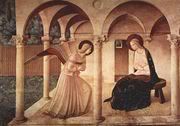
Mary was a young girl when she gave birth to a child in a strange place. She was not surrounded by women and midwives and probably went through her entire pregnancy with only Joseph by her side. How many days did she spend walking through fields, doing her chores in silence, and thinking about the child who was kicking and stretching inside her? For Jesus, like all other babies, demanded the full attention of his parents who did not have the traditional support systems.December 25, 2018
"Christmas Day": Twelve Poems and A Story for Christmas
Mary was a young girl when she gave birth to a child in a strange place. She was not surrounded by women and midwives and probably went through her entire pregnancy with only Joseph by her side. How many days did she spend walking through fields, doing her chores in silence, and thinking about the child who was kicking and stretching inside her? For Jesus, like all other babies, demanded the full attention of his parents who did not have the traditional support systems.December 21, 2018
"Joseph" : Twelve Poems and A Story for Christmas
flurries of snow melted on his beard.
The poems describe the journey of a newlywed couple, Mary and Joseph, to their ancestral homeland where they are to be registered in a census decreed by a tyrant. Mary is pregnant and Joseph knows that the child she is carrying is not his. As they travel through the harsh landscape, they are joined by strangers who have been summoned by dreams, visions, and supernatural events to bear witness to a child whose birth they are told is destined to change the course of human history.
In A Miami Christmas Story Raymond Allen, a despairing musician and family man, wrestles with his pride that is both the source of his sorrow and redemption.Twelve Poems and a Story for Christmas explores the inner lives of characters that surround this perennial story and reveals a human dilemma: to find meaning behind the events in our lives.
July 18, 2010
Self-Publishing & E-Books: Revenge of the Gatekeepers
Here's his appraisal :
"Unless I'm reading this wrong, a lot of authors believe that the only worthwhile writing is the writing that has earned the stamp of approval by a NY Publishing House. If an author is selling a lot of self-published ebooks, that is only because the gullible public doesn't know any better. Soon, a flood of pure shit will saturate the ebook market (some say this has already happened) making it impossible for "real" authors to sell their books.
Sorry. You're wrong."
For more, here's the link to his blog where you will find more information about self-publishing from this prolific author: http://jakonrath.blogspot.com/2010/07/with-change-comes-anger.html
July 9, 2008
The Top 5 Reasons Why I Blog
The following article was part of a writing workshop "Paths to Publication" hosted by Janell Agyeman and the Florida Center for Literary Arts at Miami Dade College, Wolfson Campus on July 8, 2008.
“A man’s work is nothing but this slow trek to rediscover, through the detours of art, those two or three great and simple images in whose presence his heart first opened.”
~Albert Camus
Blogging and storytelling go hand in hand.
Just below the masthead of my blog is the phrase, “Every blog is telling a story. What’s your story?” I really believe that, and blogging is definitely a part of my storytelling.
My blog is an extension of the non-fiction narratives about my identities (husband, father, son, brother, teacher, writer), my life within my communities (Jamaica, South Florida and the Caribbean) and my concerns (the dilemmas facing fatherless children in the Caribbean, the disruptive effects of the Jamaican Diaspora on family and community life, and the spiritual and political dimensions of Reggae and the Rastafari movement). And I apply the same principles of writing as I do when I am working in other genres: inspiration, selection, distillation, and revision.
I also practice three important parts of storytelling:
Capturing the reader’s attention
Maintaining the reader’s interest
Creating a resolution
The main difference between blogging and other forms of storytelling is the openendedness of blogging. At least for now my blog does not have an ending, so the narrative (while it does have certain themes) is episodic. This is an idea that I have been pursuing in my hypertext novel, Virtual Yardies, which uses a series of connected blogs to tell a story about a group of Jamaican bloggers who are being murdered one-by-one by a religious maniac who threatens to “kill all battymen and fornicators.”
Blogging is merely another means of expressing ideas, some of which should only be expressed through a non-fiction narrative.
I really hate the word “submit.” It sounds too much like begging. I also hate work that has no integrity.
One of the things that annoys me is when I see and hear commercials with Jah-Fake-an accents and Jah-Fake-an actors. And this has been going on now for at least thirty years. We have worked too hard and suffered too much for our voices to be abused by people who have no respect for our culture. Jamaica has a particular sound, a particular rhythm, a particular world view that is expressed through the people. And just as a visual artist must be true to the light that she is trying to capture, a storyteller must be true to the accents, the particular way that stories are told within her culture. Without that consideration, the work loses its integrity.
This is one of the problems that Bob Marley, whom I consider to be the quintessential example of the "reggae aesthetic," faced and overcame through the formation of his own recording label, Tuff Gong. Through his company, Bob released songs such as "Jah Live" and “Simmer Down” which at the time of the recording were thought to have limited commercial appeal and therefore unsuitable for Island Records.
Bob as a Rastafari was merely following the example of Marcus Garvey who preached a gospel of self-reliance, and to back up his word gave seed money through the UNIA to many small businesses during the Harlem Renaissance. If Garvey could have had his way, every black family would have owned a small business.
This is the legacy that I inherited and for a writer like me who grew up in post-Independence Jamaica, I view it as my responsibility to capture the way that Jamaicans tell stories. It’s like the music. The reader has to suspend his or her beliefs of “what is” in order to encounter a different reality that is only a fingertip away. Because the stories are different.
The stories are not burdened by the “double-consciousness” of African-American fiction or the glamorized view of the “islands” with happy-go-lucky natives who at the drop of a hat will break out into, “Day-O, Mi say Day-O, daylight come and mi waan go home.” As Mervyn Morris said in “Valley Prince”: “my world/ don' go so, that is lie.”
But an artist must eat and we live in a world of traders, many of whom live in the capitals that try to silence other sounds or they only want to listen to their versions of what they consider to be the “island sound.” It’s like how they try to pass of “Electric Avenue” or “Caribbean Queen” on cruise liners as authentic reggae.
So, I continue to submit my work to editors, many of whom have a cookie cutter template in their minds about what represents “island culture” and if the work doesn’t match that template, then the work isn’t published. I’ve even encountered some of the criticism that my friend Preston Allen has gotten—that the characters aren’t black enough.
But writing is about persistence, and throughout my writing career, even though I’ve frequently received handwritten rejection slips from editors: “This is well-written, but it doesn’t meet our needs,” I’ve continued to publish in many venues.
I’ve published poems and short stories with Peepal Tree Press, self-published with I-Universe (Twelve Poems and A Story for Christmas), and then, formed my own company, Mabrak Books. LLC when I self published Grandpa Sydney’s Anancy Stories. I am also one of the few Caribbean writers whose work has been anthologized in both the Oxford Book of Caribbean Short Stories and Oxford Book of Caribbean Verse.
Blogging changes the equation with publishing and allows us to take some of our power back. As I stated in an early post, Liming in Cyberspace”: “blogging bypasses the gatekeepers of Caribbean culture who control the importation of books and publicity.”
And the gatekeepers are real. Children of Sisyphus, a cornerstone of Caribbean fiction, was once banned in Jamaica.
Blogging also allows me to publish work that I think is good, but has been rejected elsewhere: “Warner Woman.”
This does not mean, however, that I’ve given up on other publishing outlets. I still publish short stories in Avocado and poems in Canopic Jar. Later this summer, The Caribbean Writer will publish two of my poems, “Erzulie’s Daughter” and “Poetry Woman,” as well as a review of There is an Anger That Moves by Kei Miller.
As a teacher and writer, this has had enormous implications. One of these its that many minority and women writers who were already marginalized with print media, may now disappear from the literary landscape.
There is an African proverb that says, “When an elder dies, a library burns to the ground.” I've seen too many libraries burn without a memorial to their passing.
And I didn’t see anyone else doing it, so I’ve had to learn new ways of preserving voices and images of my literary elders who have been important to my development as a writer. According to Google, I’ve become an authority on these topics:
“Mass Man” by Derek Walcott
“Epitaph” by Dennis Scott
“Colonial Girls’ School” by Olive Senior
“Little Boy Crying” by Mervyn Morris
And there are two images (Dennis Scott & Anthony McNeill) and one podcast (Ramabai Espinet) of which I am extremely proud because they either didn’t exist or were extremely rare.
Ramabai Espinet's reading is one of the many podcasts that I’ve done of important Caribbean writers whose work needs to be preserved and I’m glad that my blog has played a part in preserving a small part of our cultural heritage. And now that I’ve moved in video, who knows what the future will hold.
Besides being activity in which only free people can truly participate, blogging has created a worldwide community of readers. In the nearly two and a half years of its existence, my blog has had over 84,000 visitors, and this has been due to the existence of blog aggregators such as Global Voices and other bloggers such as Maud Newton and Dave Lucas. Some readers stay for a few seconds and some stay for as long as an hour. Sometimes two. Some are from as far away as India and some as near as North Miami Beach.
This has had enormous advantages. Through my blog, here a few of the things I’ve been able to do:
Advertised my books
Kept in contact with my readers
Made contact with literary groups and organizations
Showcased the work of Caribbean and South Florida writers
Published announcements for literary events and workshops
Alerted writers to opportunities for publication
In addition, I've met a few blog friends (Rethabile Masilo, Fragano Ledgister, Nalo Hopkinson, Stephen Bess, Kyra Hicks, Guyana, Professor Zero, MadBull, Jamaican Dawta and Crafty Green Poet). We comment on each other’s posts and offer constructive criticism--a sort of writers roundtable on the Net.
Also, the publication of Grandpa Sydney’s Anancy Stories would not have been possible without the invaluable input of Rethabile, Stephen, and Kyra, to whom I am eternally indebted.
The ability of other writers and readers to comment on the blog completes the healthy circle of call and response in writing and creativity. You could say that it is InI creating this blog.
Last night, my wife, the family matriarchs, and I watched The Bucket List and I was struck by the Egyptian legend about the two questions you are asked before you can enter heaven:
“Have you found joy in your life?”
“Have you brought joy to others in your life?”
When I was younger, playing football (North Americans call it soccer) gave me an incredible feeling of joy. Playing shirtless down at the Bottom Park in Mona Heights and organizing/creating a play that ended up in a goal for our side made me feel alive.
Now writing gives me joy. Writing is my way of “being in this world” As I said on John Baker’s blog a few months ago, “We write because of the pleasure. We write when no one is looking. We write even when the world is sleeping. To mangle Gertrude Stein's aphorism: A writer is a writer is a writer.”
Writing and blogging are synonymous with the pleasure I get from observing an idea move from the unmanifest to the manifest. The big difference between blog and writing in other fora is that I don’t have to wait six months to a year to see something in print. Once a piece of writing has met my standards of excellence, I will post it.
I dream it, write it, publish it and it’s done. It's free to take on a life of its own with my other creations, which I hope have given others joy.
(I'm still working on bringing joy to my family, friends, and especially my students.)
Blogging has also increased my sense of discovery and I’ve learned about RSS so that readers can subscribe to the blog, and basic html to create my own favicon.And there’s always more to learn from other blogs such as Darren Rowse, Peter Chen, or Liz Strauss.
As a lifelong learner, I couldn’t ask for more.
Technorati Tags: caribbean writing blogs Jamaican writing blogs
July 18, 2007
A Caribbean Harry Potter?
But a Caribbean Harry Potter? And I don’t mean a parody or anything like that. I mean an authentic hero in a children’s book whose foundation is the myth and folklore of the Caribbean and whose protagonist practices the magic and rituals of the Caribbean.
In other words, while not discounting the vision and stamina of J.K. Rowling in creating Harry Potter and the subsequent support of her publishers and readers to see the project to its end, what other factors would be needed to create a Caribbean Harry Potter? For the challenge that any Caribbean writer would face in creating a series such as Harry Potter in the Caribbean would be what Coleridge has called the “willing suspension of disbelief” which is essential in creating any fiction. Let me explain.
Besides being firmly entrenched in the world of English boarding schools (a world that I know only too well), the foibles of British life (read any novel by Sam Selvon or the other exiled Caribbean writers from the fifties), and the British civil service (Monty Python or The Hitchhiker's Guide to the Galaxy), Harry Potter is firmly grounded in the milieu of Grendel, Narnia, Lord of the Rings and the folklore that predates the imposition of Christianity on the Celtic and Germanic tribes in what is now known as the United Kingdom. Much of British literature and indigenous nature religions such as Wicca share this common mythological background that is viewed by many, sometimes on purely nationalistic terms, as an alternative to Christianity. The existence of Wicca legitimizes a character such as Harry Potter because an a priori assumption of the Harry Potter series is the existence of “good” wizards. This would be the main challenge for a Caribbean author in writing a children’s series in the manner of Harry Potter. For although the nature religions of Great Britain and West Africa share many archetypal similarities, if an author were to draw on the myths of the Caribbean that derive from the religion of the Yoruba people of West Africa (Lukumi, or Voudoun ), she would have no problem creating a credible “evil” houngan or wizard. She would, however, have an extremely difficult challenge in dispelling in her reader’s mind that there could exist a “good” Voudoun wizard to which parents from the Caribbean (or anywhere else for that matter) would want to expose their children -- never mind that Harry wears the mark of the warrior Xango.
This is not to say that J. K. Rowling books have not been mired in religious controversy and that the Harry Potter series has not been accused of being the gateway to practicing witchcraft and devil worship. But Harry Potter’s magic is perceived as a benign practice. And even Lord Valdemort as bad as he is would be no match for Baron Samedi. In other words, Wicca may be have a little “good,” but Voudoun is thoroughly evil. And this has always been the puzzling factor for a writer, like me, who is interested in archetypal/mythological themes in literature. For while it is possible to write a children’s book using the nature religions of Great Britain, it is unthinkable to write a children’s book using the nature religions of the Caribbean. Or you could write it, but who would buy it?
But enough of this idle speculation. On July 21, my children, who have all grown up on the Harry Potter series long before it became popular and was only sold in independent book stores like Books and Books, will join in the Harry Potter celebrations. My eldest will wear her Gryffindor regalia; the younger will wear her T-shirt that says, “Hagrid is my Bitch,” and my son, who is waaay too cool for all of this hoopla will probably hold out until he realizes how much fun we’re having. And as the pattern has gone for the last six releases, my eldest will begin reading the book as soon as we get home and finish it by about eight or nine o’clock. She will then hand the book over to her sister or brother, and no matter how much we probe and beg, she will never reveal the ending. And with this release, I’m sure she will never tell even if we threaten her with a spell of cellulite in unwanted places. And for what it’s worth, given J.K. Rowling’s incredible gift to this generation and many more to come, Harry will live.
***
December 19, 2006
"Christmas Night": Twelve Poems and A Story for Christmas
“Christmas Night” tells the story of Jesus’ birth from the viewpoint of the newlywed couple, Joseph and Mary, and describes how their lives and loves changed once the child had been born.
Mary awakens from her sleep and she thinks about the sacrifices she has made to bring the child into the world. But then she sees Joseph cradling and caring for Jesus as if he were his own son and her love for Joseph deepens because she knows what he has been through and the fate from which he has saved her.
The poem ends with Mary’s growing love for Joseph and Jesus, something that she was previously unable to feel because of her pride and her preoccupation with the things she had lost. The birth of Jesus was not the only miracle in Mary’s life.
Christmas Night
When she awakened,
she saw him by the mouth of the cave
cradling her son, and in that moment,
she knew she would cherish the rest
of her life with him. For he held the child
to his chest so tenderly, as if he were
his own son, warming him by the small
flame’s heat, shielding him with his body
from the cold that eased itself
between the joints of her back
and fingers—cold that killed the last green
flowers near her home, robbing her
of her father’s beard against her cheeks,
her mother’s hands on her shoulders.
(ii)
She bowed her head and a tear
fell from her cheeks, splattered into a star
in the dust between her sandals
and the fire. He had saved her.
Saved her from the taunts
of the young men sauntering home
after temple, saved her from the snickers
of the young women winnowing wheat
in the fields, saved her from the laughter
of the old women who now shunned her—
she who had driven so many
suitors away and held on to her pride
as a sacrifice to her god who had now forsaken
her to the judgment of old, bitter men,
their calloused hands smoothing the rough
skin of stones they were ready to hurl
at her head, the way their curses rained
on her, before Joseph covered her
and one night took her away from the village.
(iii)
Joseph looked down at the strips of white
cloth that bound the child’s feet and arms,
came over to her side, brushed away
her tears, and held her trembling hands.
She believed him when he said
he knew their son was a miracle.
And for once, despite the snow
that buried the town and all her cares
under layers of ice, she believed
that everything, even love, was possible,
for it now filled her heart.
From Twelve Poems and A Story for Christmas.
***
Caribbean Christmas poems Jamaican Christmas poems Twelve Poems and A Story for Christmas Books Caribbean Caribbean writers Jamaican Christmas stories and poems Jamaican Christmas in Jamaica nativity story Christmas Nativity Xmas Caribbeanjamaican xmas
December 14, 2006
A Jamaican Christmas Story
Terry knew it had been a bad idea from the start, but yet this is where his journey had taken him. He looked down at the flat tire on his broken and battered car and was about to curse in the tongue of his Gaelic youth when he felt the cold nuzzle of a revolver against the back of his skull.
“White boy, don’t move.”
The nuzzle was colder than the December wind that rattled the zinc roofs of the shanties and stirred the stagnant pools of sewage on the sides of the road. He hadn’t noticed it before, but as he slowly bent his knees to touch the ground and raised his hands over his head, he could hear Handel’s “Messiah” bleating over the noise of pot and pans, the shouts and screams of women in the tenements, and the occasional pop-pop of a revolver punctuating the hallelujahs that mocked the twilight gloom of Standpipe.
“If you move, you dead.”
He had asked for this he supposed, and yet, in a way, it was inevitable. Sooner or later he would have been spotted; for here he was he was the whitest man in Jamaica in one of the blackest garrisons in Kingston.
Terry looked at the flat tire and wondered if this was how his life was going to end staring at a broken down car in a urine soaked lane. And to die in the dirt? Such a contrast to the endless green of Ireland. He had left one war and stepped right into the middle of another. Two cities, two islands, two countries that resembled each other in so many ways: cramped bars, fratricidal battles, big hearts, and terrible tempers.
Better to die in the gutter in Dublin than a lane in Kingston. But then, he knew better. For he had also fallen in love with this country where, down in the bush, as they said, people still used the language of the King James Bible with words like, “peradventure” and “artificer”.
A flash of anger rushed through his body, but he quickly calmed himself for he did not want to die with a mortal sin in his mind, but wasn’t it a mortal sin that brought him here in the first place?
He quelled all the thoughts and concentrated on what was happening to him right now. Terry began whispering to himself, “Hail Mary, Mother of God, pray for us sinners, now, and at the hour of our death," and then he broke off. He couldn’t go on. It wasn’t right. He knew whatever he said to God would be heard, but in his heart he knew he was the one estranged from God.
“I don’t have much money. I am…was a priest.”
“Don’t lie, white boy, you about to dead.”
“I don’t lie.”
That was one sin Terry knew was not in his character, yet it was his biggest fault He should have lied to the bishop, kept everything hush-hush, and remained in his parish , but he couldn’t. And he should have lied when Denise asked him if he loved her. But he didn’t.
“Turn around slowly.”
“No.”
Terry did not want to see the gunman’s face. He knew if he was to survive the he should avoid doing anything that would identify the gunman in front of him. He dropped his eyes to the dust.
The gun man tapped him on his head with the gun.
“Is me have the gun, you know. Is me in charge here, so turn around.”
“No.”
Terry wasn’t going to give the gunman the pleasure of humiliating him either. If he died, then, God to could add pride to his list of sins that was growing day by day, hour by hour.
“Don’t make me have to shoot you for you to turn around.”
Terry decided to take pride of God’s list and shifted in the dust. He kept his eyes on the ground.
“Look at me.”
Terry stared at the ground. He would not look up.
“Father, look at me.”
The sound of the word, Father, shocked Terry. It sounded almost obscene coming from the lips of this man who was about to kill him, but he raised his eyes as if summoned.
From what Terry could see, he was about six feet and very muscular. He probably didn’t need the gun to rob people. He could have robbed them with his bare hands.
“Do you know me, Father?”
The word weighed heavy on him, like a huge stone with which he was now burdened and would carry for the rest of his life.
“No, son”
He said the word, son, out of habit. He would have to learn to stop saying the word that way. It was a life he was now leaving behind.
“Father McDougall, it’s me, Rupert.”
Terry still didn’t recognize him. For twenty-five years he had been in Standpipe, and had baptized so many of these boys who then took first communion, presided over some of their marriages, and prayed over many more as they were lowered into the ground.
That was how he met Denise. The hours of counsel and comfort became something else. At first, he denied all the attraction and tried to bury his feelings in their differences of class and color and when all that failed he resorted to his final defense, St Augustine and the gap between his education and hers.
“I don’t recognize you, Rupert.”
Rupert began peeling off the tam and the rag that covered his face.
“No, no, no! Don’t do that.”
Terry knew he was dead now and tried to muster the courage to continue the Hail, Mary’.
Rupert stood over Terry. With his left hand, he placed the gun in the small of his back, and then lifted Terry to his feet.
“It’s all right, Father. It’s all right.”
Rupert patted Terry on the shoulder.
“What happen to you car?”
“Flat tire.”
“Let me help you. You have a jack?”
“Yes, in the trunk of the car.”
“Give me the keys.”
Terry threw the keys to Rupert and he went around to the back of the car, opened the trunk, and pulled out the jack and the spare tire. He put the keys in his pocket, then slipped the jack under the car and began cranking the lever. Terry tried to help, but Rupert wouldn’t let him.
“You just stand up there, Father, and let a pro do this.”
And Rupert was right. In a matter of minutes, he had taken off the flat tire and replaced the flat with the spare.
“You really are a pro.”
“Long time me doing this.”
“And how long you been a gun man?”
Terry knew he shouldn’t have asked, but he had to. Rupert had recognized him and until he gave up his vestments, he was still the priest for the area.
“I used to do this, but I stopped about ten Christmases ago when you got me out of jail. You remember now?”
“No.”
“My big brother was charged with murder and the police hold him, me and my little brother for questioning. My mother nearly dead when she hear that the three of we was going to be in jail for Christmas. Them was going murder we in jail with licks if we never testify against me brother.”
It was slowly coming back to Terry as he watched the darkness creep under the fences that leaned against each other and the one electric pole covered with posters of an Xmas dancehall: Sergeant Satta and Bunny Spliff in control. Security tight, tight, tight.
“But, Father, you come to the jail with a lawyer and you get me and my little brother out. And you make sure that everything was all right and you gave us a Christmas dinner when we never have nothing.”
“I am beginning to remember. What happened to your brother?”
“Dead.”
“How?”
“How else him to dead? Gun shot.”
From what Terry could see, Rupert’s eyes had the dead stare of a man who had seen death many times and he wondered if his eyes after working in Standpipe were becoming as dark.
“So what happened to you now? Why are you doing this?”
“Get fired. The boss come a month ago and lean under the car me was fixing and say him have to let me go.”
“Just like that?”
“Just so.”
“But you are a good worker.”
“I know that and him know that, but him say him have high overhead so me have to go. So, him let me go like me don’t have baby mother to feed.”
“Things got bad in the house between me and my woman and the children wanted some food, so me decide to try me hand at the gun business again.”
“So, you’re going to rob me.”
“No, Father. This is a sign. I have to find something else to do I don’t know what, but God only give so many chances you know.”
“God gives us as many chances as we need.”
“How you can say that? Look around you. And how come you not wearing you collar?’
Terry couldn’t answer him. He felt ashamed for the collar was the last thing he had torn off his neck when he left the bishop’s office and came to Standpipe to tell Denise about his plans. The collar still burned in his pocket.
“I’m not a priest any more.”
“Don’t lie, Father.”
“I don’t lie.”
Terry cautiously motioned to Rupert and they sat on the ground with their backs against the fence and watched the mongrels dig through the ruins of the grocery store. The evening star, Venus, blinked through the clouds. Terry told Rupert the whole long story of how he met Denise after her husband had died from leukemia and all his evasions of pretending not to love her.
“But you know, what made me fall head over heels in love with her was when she spoke about her relationships with God and how she knew, not believed, but knew she was going to get through her hardships. God for her wasn’t someone in the sky, but a real presence in her life, someone with whom she had a relationship and with whom she wanted to deepen the relationship. She ministered to me. She taught me. That was when I realized I wanted to spend the rest of my life with her. All that I had learned from all the books, all that I had read, Denise was just speaking from her heart. She had put all my homilies of faith to shame. And so I said to hell with it!”
“Easy, Father. Any way, she sound like she is a good woman. I say keep her.”
“She cost me my collar.”
“Sound like the collar was too heavy.”
“Yes, you may be right.”
“Father, you can either go with what you believe or with what you know. I say go with what you know.”
“You’re right, son. You’re right. So what are you going to do now?”
“I don’t know. I only know my baby mother want some food for the children.”
Terry went inside his pocket to give Rupert some money as if he too didn’t have a baby mother to care for.
“No, keep it, Father. I will find something.”
“No, you take it. If you’re going hold up someone else, then take it.”
“No, Father. Me done with the gun business tonight.”
“What about tomorrow?”
“Don’t know, Father. Me have to live one day at a time.”
“Promise me no more gun business.”
Terry stuck out his hand with the bills and shook them.
“Promise me.”
Rupert took the money.
“I promise, Father.”
The word pressed against his chest like the ragged edge of a stone and bruised his heart.
“I don’t know if you should still call me Father.”
“It don’t matter what them do or say about you, you will always be Father McDougall to me.”
Rupert rose to his feet and helped Terry out of the dust. He walked with Terry over to the car, opened the door, and handed him the keys.
“So what you going do now, Father?”
“The bishop says he can get me a job down at St George’s to coach the football team.”
“I never know you was a baller, Father?”
They stared at each other, and then laughed.
“I never mean it that way, Father.”
“I never took it that way, but I guess I will have to get used to it. Father McDougall, the baller from Standpipe.’
It hurt Terry to say it, but he saw the humor. He cranked up the engine and it made a grinding sound that echoed off the concrete pilings of the grocery store.
“I will come down to the church if you are still there tomorrow and fix that engine for you. But you need to get out of here fast. It not safe for you anymore.”
“How much you going charge me for fix it?”
“For you, Father, nothing. It’s all free.”
Terry put the car in first gear and waved goodbye. Rupert pulled down the shirt over the gun in his back and waved back.
As he shifted the car into second gear, Terry checked the rear view mirror, but Rupert had already disappeared into the darkness leaving only the curses and the benedictions, the hoots and the hosannas, in the darkened lanes of Standpipe.
Update (12/9/2008): "A Jamaican Christmas Story" will be published as a part of the short story collection, Who's Your Daddy?: And Other Stories, due out in May 2009.
***
Tags: Caribbean Christmas poems Caribbean Christmas book Christmas book Jamaican Christmas poems Twelve Poems and A Story for Christmas Books Caribbean Caribbean writers Christmas Caribbean poems Jamaican author Jamaican writers Jamaican Christmas Story Jamaican Christmas stories and poems Jamaican Christmas Christmas in Jamaica nativity story Christmasjamaican xmas
November 27, 2006
The Angel's Message: Twelve Poems & A Story for Christmas
When she realizes that she is pregnant, her world comes crashing down on her, for she knows that she is about to lose everything: Joseph and her “good name” in her family and village. But then, she grasps the enormity of her choice--her son would be the answer to the Roman occupation that had martyred her brothers and widowed her sisters, and her heart answers before the words can come out of her mouth.
Mary has found the passion to guide her life, which is one meaning of the “Virgin Birth”—the beginning of a spiritual life. She will give birth to a liberator of her people, and her life has now opened up to new possibilities because she has accepted the role of mother of the Messiah.
The Angel’s Message
This was the last thing she’d expected
to hear, for she had seen her own mother
birthed into old age by so many children
and a silent rage shuddered through her body.
Then the fear, would Joseph, her betrothed,
abandon her to the gossip of loose tongues
in the village that would one day, surely rise,
and tear her out of the story of her family, her people?
Was this shame worth the surrender of her pride?
But when the angel said he would be called
“Prince of Peace,” and she heard outside her window
Roman soldiers nailing another cross to the sky,
before she could say the words, her heart stuttered
her reply for all her sisters who had wept for their sons,
their brothers, who had died too soon, and bowed
her head to the new life that filled her body with joy.
To buy or to see more of the book, follow this link: Twelve Poems and A Story for Christmas.
***
Caribbean Christmas poems Caribbean Christmas book Christmas book Jamaican Christmas poems Twelve Poems and A Story for Christmas Books Caribbean Caribbean writers Christmas Caribbean poems Jamaican author Jamaican writers Jamaican Christmas Story Jamaican Christmas stories and poems Jamaican Christmas Christmas in Jamaica Christmas nativity story Caribbean Christmas poemsjamaican xmas
Jamaican Christmas poems
July 13, 2006
Negril or New York?
Marlon James’ post, Americans vs. Brits, got me thinking even more about publishing and the players: the conglomerates, the independents, and the agents. The conglomerates are only in publishing to make money. Period. Independent publishers, God bless ‘em, survive on the margins with a combination of love and good business sense. Which leaves the agents.Agents control publishing and the majority that I’ve met are in the business to make money. They make their living off the 15% (and upwards) commissions. They have to eat. Realistically, they are the final arbiters of who and what gets published. 95% of all publishers nowadays will not accept the work of unagented writers. Money is the force behind what agents do. In this respect, book agents are no different than any other kind of agent--they sell things: books, cars & pork bellies. For many of them, especially the younger ones, it’s just one of the things that they can do or will do in their lifetimes. If selling books works out, they can retire (before they are 35!) to a beach (it really doesn’t matter which beach) with their Blackberries (or whatever new gadget is in vogue) and drink mojitos (or whatever new drink is in vogue).
If selling books doesn’t work out, they can take a “long vacation” to a fashionable beach somewhere where they can meet and network with someone who’s been there and who can give then some tips on “selling.” It really doesn’t matter, for even if that doesn’t work out, they can always move on to something else.
I know. I’ve met them on the beaches of Negril or overheard their conversations that sound like “Sonny” in The Apostle when he rattles of his talents, “I can speak in tongues” and the other “gifts of the Spirit” as merely some of the things that he can do to make a profit for the church: “It's pay before you pray."
Here’s my dilemma. Writing is my vocation. Writing not one more thing that I can do. It’s like building a home in Negril. Your first concern as a homebuilder is to make sure that the foundation is secure, to use the natural beauty of landscape to enhance the attractiveness of the house, and to negate the natural threats of salt water intrusion and termites. You’ve built the house from scratch. You’ve lived here all your life and this is your baby that you’ve nurtured and protected against hurricanes and the harsh sunlight.
Enter the agent. If nobody’s buying houses in Negril (“It’s a seller’s market, baby!”), don’t call her. It’s not worth her time. If people are buying houses in Negril and she shows up, she is looking for one thing—how many units can she move? Negril is just another beach. She may even say, “Why don’t you spruce it up a little! You know, Negril could be the next New York!” You resist. You’ve done all that you can to make sure that this house has been true to the natural surroundings of Negril. All the additions that she’d like you to make, even if you had the time and the money to do so, don’t make any sense in Negril: “We could build a skyscraper, a bridge and a subway! The New Yorkers will love it!” The house has all the modern amenities such as indoor plumbing, electricity and a generator in case the lights go off in hurricane. You haven’t compromised on anything, and you say, “Negril should never be New York,” and then add some inanity by paraphrasing Gertrude Stein, “Negril is Negril is Negril.” And she says, “What ever! Suit yourself. It will never sell. But I have to admire you, it's well built!" To which you mutter something under your breath. But to be civil, as the British also taught us, you smile.
The house may or may not sell. Either way, you may find our agent, sad, lonely, and depressed in a small bar in Negril wondering where her life “went wrong” and why things aren’t “working out.” You sympathize with her and even though you’re dirt poor, you offer to buy her a drink. She says no because she knows she’s rolling in the moolah, and that you can’t afford it. Still, you say, “You’re a guest in my country,” and the bartender, whom you’ve known "from him was a bwai," cuts you some slack on the price of the drinks. You say “Cheers,” and you have a drink together while the blue waves crash against the dried roots of a coconut tree.
After the drink, you say it was pleasure and you say you’ve got to get back to work. “Just one more drink,” she says, “I’m here all alone.” You may or may not have that other drink that she is willing to pay for. Chances are you accept the drink because “Bird cyaan fly on one wing.” But then, you leave the bar. You’ve got work to do.
The last thing you hear was that she ended up drunk on the dance floor with a rent-a-dread and that the two of them were grinding on each other way into the night before she left for New York the next morning. Before leaving, she slurred something about she how empty her life was and that she needed some time to “sort things out.” Perhaps, find another beach.
The next afternoon as you walk along Negril with an Appleton on the rocks, in your hand, compliments of the bartender and the rent-a-dread, you look back at the house. It’s still not sold. It may never sell.
Still, you’ve done your job. And that's all you can do, for as Margaret Atwood once said, "Writing is work. It's also gambling. You don't get a pension plan.. Nobody is making you do this: you chose it, so don't whine."
![Reblog this post [with Zemanta]](https://img.zemanta.com/reblog_e.png?x-id=c164242d-8f0f-44e7-9e0b-f90066d84f37)