Showing posts with label Reggae. Show all posts

June 29, 2023

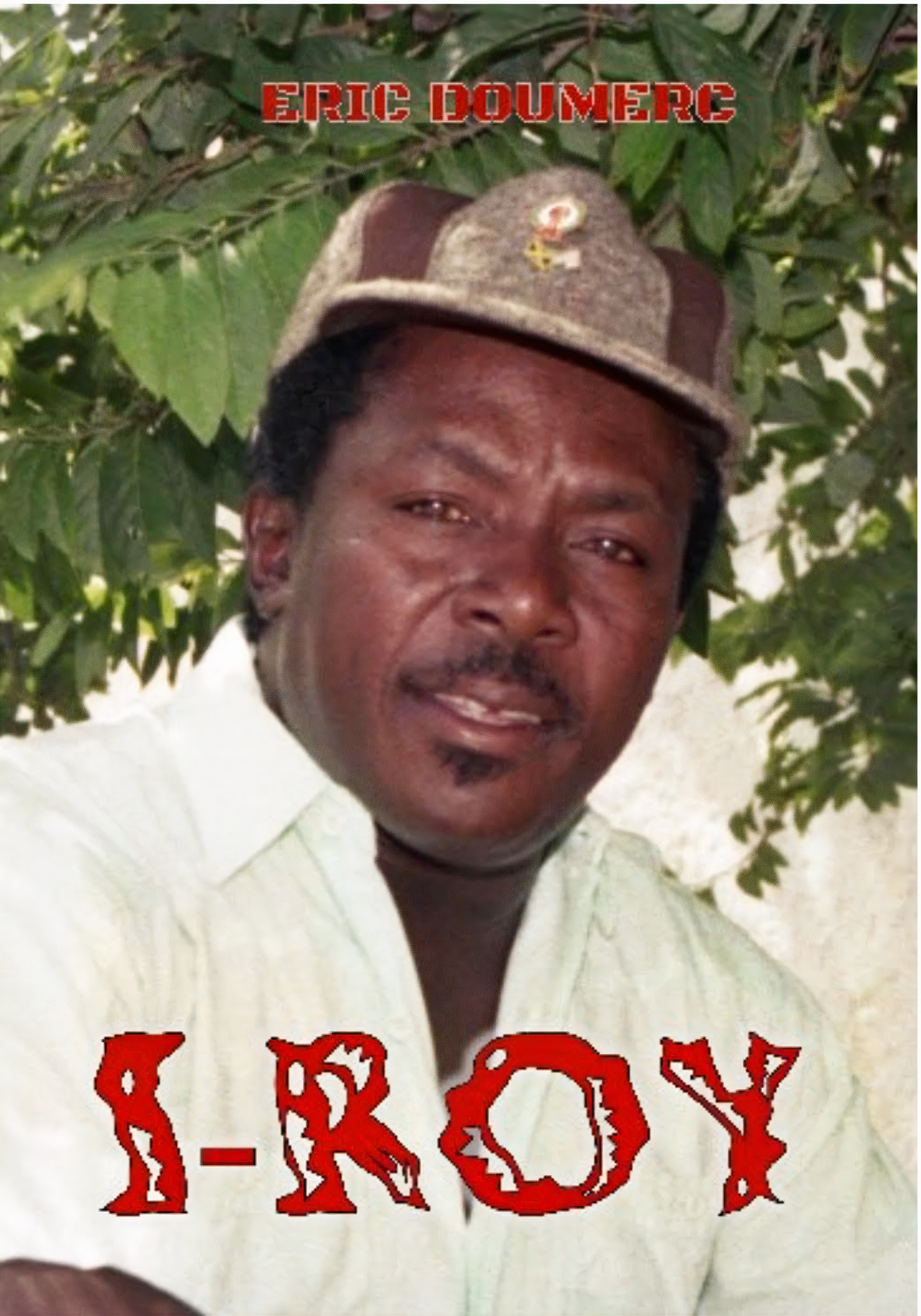
New Book: "I-ROY" by Eric Doumerc

Geoffrey Philp
I-Roy

“I Roy” is a tribute to the late great Jamaican deejay, who died in tragic circumstances in November 1999 and is rightfully considered one of the greatest Jamaican deejays and innovators in reggae.

The book delivers a history of the Jamaican toasting tradition, an overview of I-Roy's career, and the different aspects of his artistry.

It also includes chapters by the former Beat journalist and reggae enthusiast Michael Turner analyzing I-Roy's 45 rpm records, by James Danino, a reggae activist and deejay living in France on the Mento and Calypso roots of I-Roy's music, and the bawdy or smutty side of his toasts and by David Bousquet about the musical feud between I-Roy and another well-known 1970s deejay, Prince Jazzbo (Linval Carter).

’I-Roy’ is available in hardcover and paperback from APS Books (www.andrewsparke.com) and in hardcover, paperback, and Kindle editions from Amazon worldwide.

ERIC DOUMERC:

Eric Doumerc teaches English at the University of Toulouse-Jean Jaurès, southwestern France. His research interests include Caribbean poetry, music, and the Caribbean oral tradition. In addition to ‘I-Roy,’ he is the author of ‘Dub Poets In Their Own Words’ (2017), Jamaican Music In England From the 1960s to the 1990s (2018), and ‘The Life And Times Of Joseph Hill and Culture’ (201.9), all published by APS Books.

He is currently working on a critical examination of the recordings of Burning Spear.

For further information, please contact andrewsparkauthore@gmail.com

November 27, 2019

New Book: The Life and Times of Joseph Hill & Culture


Eric Doumerc

Joseph Hill created one of the finest Jamaican reggae vocal groups of all time – Culture – praised as such by artists as well-known as The Rolling Stones, The Clash, and Bob Marley. 

It’s unpardonable that until now no biography has appeared covering the man and a recording career terminated by his premature death in 2006. Eric Doumerc has now filled that gap with his new book published in November 2019 tackling the social forces which inspired and drove Hill’s music and analysing the records he chose to make.

About the Author

Eric Doumerc is a French academic working at the University of Toulouse. His two earlier books, both available from APS Books are Dub Poets In Their Own Words (2017) and Jamaican Music In England (2018).


November 17, 2019

Phonographic Memories by Njelle W. Hamilton


Phonographic Memories: Popular Music and the Contemporary Caribbean Novel
by Njelle W. Hamilton

About This Book

Phonographic Memories is the first book to perform a sustained analysis of the narrative and thematic influence of Caribbean popular music on the Caribbean novel. Tracing a region-wide attention to the deep connections between music and memory in the work of Lawrence Scott, Oscar Hijuelos, Colin Channer, Daniel Maximin, and Ramabai Espinet, Njelle Hamilton tunes in to each novel’s soundtrack while considering the broader listening cultures that sustain collective memory and situate Caribbean subjects in specific localities. These “musical fictions” depict Caribbean people turning to calypso, bolero, reggae, gwoka, and dub to record, retrieve, and replay personal and cultural memories. Offering a fresh perspective on musical nationalism and nostalgic memory in the era of globalization, Phonographic Memories affirms the continued importance of Caribbean music in providing contemporary novelists ethical narrative models for sounding marginalized memories and voices.

Njelle W. Hamilton's Spotify playlist to accompany Phonographic Memories: https://spoti.fi/2tCQRm8

Reviews

“Njelle Hamilton’s Phonographic Memories explores how a set of Caribbean novelists has foregrounded music as a locus for memory, nostalgia, and selfhood. Her study attests to the importance of music in the region in both personal and national senses of identity and suggests original ways of interpreting its representation in fiction.”

 ~Peter Manuel, author of Caribbean Currents: Caribbean Music from Rumba to Reggae.

“Njelle W. Hamilton’s Phonographic Memories is a resonant and remarkable contribution to the fields of Caribbean studies and literary sound studies. Her substantive interdisciplinary work interweaves critical insights from neuropsychology, ethnomusicology, and literary studies with meticulous close-reading and close-listening analyses of musical styles, performance genres, and recording technologies in a multiplicity of Caribbean contexts. In harmony with the practice of liyannaj that Hamilton relates in her analysis, this important and impactful work will appeal to audiophiles and bibliophiles alike."

~Julie Huntington, author of Sounding Off: Rhythm, Music, and Identity in West African and Caribbean Francophone Novels.

Here's the link for Phonographic Memories @ Rutgers University Press: https://www.rutgersuniversitypress.org/phonographic-memories/9780813596594


October 20, 2014

Book Review: A Brief History of Seven Killings

A Brief History of Seven Killings


When New York Times critic Michiko Kakutani described A Brief History of Seven Killings as “epic in every sense of that word,” I thought my reaction would be similar to Dr. Johnson’s response to another epic, Paradise Lost: “None could have wished it a word longer.” Coming in at just under seven hundred pages with a cast of at least seventy-six named characters from the laconic Josey Wales to the inscrutable Nina Burgess, A Brief History of Seven Killings spans three decades of Jamaican history during the post-independence era.

While A Brief History of Seven Killings could be reduced to the chronicle of Rolling Stone journalist, Alex Pierce, who stumbles on to information about the assassination of Bob Marley, which puts his own life in danger, that would be only one of the plots. And such a reductionist view would be a grave injustice to this monumental work. For Marlon James is updating many of the questions raised in Jamaican classics such as Brother Man, an exploration of the influence of Rastafari; Voices Under the Window, which captured the race, class, and colour conflicts of Jamaican culture, and The Children of Sisyphus, a Dantesque vision of a Jamaican ghetto. 

James is also asking questions that affect the life of every Jamaican at home and abroad: Why was the CIA involved in the destabilization of the Jamaican government from 1972-79? Why did the peace movement fall apart? Why would anyone try to kill the famed prophet of reggae and Rastafari? Only a writer with the prodigious talent and assiduous attention to the craft of storytelling that Mr. James possesses could have attempted such an ambitious project and created this spellbinding narrative. As someone who lived through those turbulent times and who is knowledgeable about many of the facts, rumors, and half-truths about the attempted assassination, I was impressed not only by James’s approach, but also with his treatment of the events surrounding December 3, 1976.

Perhaps, the most intriguing aspect of this novel is the shift in perspectives. Just when I thought I knew a character such as Josey Wales, the brutal leader of the Storm posse, I found myself in the middle of a tender scene between him and his son: “I smile with the boy so that he don’t feel like I threatening him too much, but he is sixteen now, and I still remember sixteen, so I know the hunger growing in him. All this talking back is moving from a little cute to a little threat. Part of it sweet me, seeing this little shit puff him chest out.” Or another killer, Weeper, who reads books such as Bertrand Russell’s The Problems of Philosophy and will not hesitate to murder and maim, yet still finds time to enjoy moments with his lover: “He thinking I going to be the one to look away first, but I not going look away and I not going to even blink.”

A Brief History of Seven Killings, which was dubbed the “Great Jamaican Novel” by Fader, has rightly earned this title. For even after six hundred and eighty eight pages, I was still concerned about the fates of Alex Pierce and the enigmatic changeling, Nina Burgess. Or whatever she calls herself these days.


November 6, 2013

Bob Marley and Bradford's iPod: Free Download

Bob Marley

As part of the Bob Marley: Messenger exhibition, Gerald Hausman and I will be reading Jamaican Tales at HistoryMiami on November 9, 2013.

To celebrate the reading, I am offering free downloads of my adult fiction ebook, Bob Marley and Bradford’siPod.

http://www.amazon.com/Marley-Bradfords-iPod-Geoffrey-Philp-ebook/dp/B005ERYIZC/ref=sr_1_13?ie=UTF8&qid=1383592152&sr=8-13&keywords=geoffrey+philp


You don't have to own a Kindle to read the book. Here is the link to download the app to your computer or any smartphone:

http://www.amazon.com/gp/feature.html?docId=1000493771

The offer ends at midnight on November 9, 2013.


Geoffrey Philp @Jamaican Tales

2:00—3:00 p.m
.
November 9, 2013

HistoryMiami

101 West Flagler Street

Miami, Florida 33130

***


Give thanks to Lindsay Oliver Donald, author of Portrait of a Legend and Other Folks.  Order your copy today!

One Heart.

June 18, 2013

Interview With Jamaica Diaspora on Blog Talk Radio: Geoffrey Philp

Listen to internet radio with Jamaican Diaspora on BlogTalkRadio


http://www.blogtalkradio.com/jamaican-diaspora-/2013/06/18/geoffrey-philp


***

The Coalition for the Exoneration of Marcus Garvey is petitioning Senator Bill Nelson, Representative Frederica Wilson, and the Congress of the United States of America for the exoneration of Marcus Garvey:

http://www.causes.com/actions/1722148-urge-congress-to-exonerate-civil-rights-leader-marcus-garvey

We are also petitioning President Barack Obama to exonerate Marcus Garvey:

http://signon.org/sign/exonerate-marcus-garvey?source=c.url&r_by=4631897
Thank you for your support..

August 17, 2012

Marcus Garvey's Words; "Redemption Song."


The history of Jamaica in the popular imagination does not begin with Christopher Columbus planting the standard of Queen Isabella and King Ferdinand in the wet sand of Discovery Bay while the indigenous Taino peer through thick, leathery leaves of sea grapes. Rather the story begins in overcrowded barracoons surrounded by human filth and waste, and this memory has always been an insult. 

The challenge for many Jamaican leaders such as Marcus Garvey whose movement began in Jamaica and eventually spread to Harlem, New York, has been to devise methods to overcome the trauma of slavery and colonialism. At the height of his popularity, Garvey’s admonitions, “Always think yourself a perfect being,” raised the consciousness of blacks in the Americas, but after his imprisonment on trumped up charges, the movement lost its impetus until Rastafari, spiritual heirs of Garvey, took up the mantle of black liberation.

The central tenet of Rastafari is the inviolability of the personal, indwelling God—the true “I” which is connected to the “I” of the universe or I-niverse. This mystic connection is expressed in the Rastafari concept of InI. (I have to do a little Rasta Speak here.) For Rastafari, the individual, “I” is at the center of all experiences. Therefore, if everything flows out of the individual I-consciousness, then “I” should not fear any experience, nor should “I” think of “I” as a victim because the individual, “I” working with the universal “I” consciously, unconsciously or by acceptance of the default agreement of whatever name we have given ourselves or others, I-rated “I” I-niverse.

In other words, one way or another we are creating our stories and we can either tell it as victims or victors. With this act of renaming, Rastafari created its own vocabulary and by relying on Old Testament narratives, changed the way that many of its adherents viewed history, I-story, and Bob Marley, one of the primary proselytizers of Rastafari, illustrates the complex mythology in Redemption Song”:

Old pirates, yes they rob I
sold I to the merchant ships
Minutes after they took I
from the bottomless pit.

From the first lines of the song, Bob not only recounts the memory of slavery, but he also inserts his story into the historical narrative. The double entendre of “old pirates,” refers not only to the slavers, but also to the recording merchants who “pirated” Bob’s songs throughout his career and drove him from Jamaica to abandon his musical career and work in a Chrysler plant in Wilmington, Delaware (Catch a Fire: The Life of Bob Marley). 

The "bottomless pit" may refer to Bob's appellation as a member of the Twelve Tribes of Israel, Joseph, the dreamer, who was sold by his brothers into slavery in Egypt. Or it may also refer to the despair of living in Trench Town’s “Concrete Jungle”: “No sun will shine in my day today; / the high yellow moon won't come out to play:/I said darkness has covered my light, / and has changed my day into night.” In the early days of his career, Bob was facing downpression everywhere, as he explains in “Duppy Conqueror,” which describes a brief time spent in jail:

The bars could not hold me;
Force could not control me now.
They try to keep me down, yeah!
But Jah put I around. Yeah!

Yes, I've been accused many a times
and wrongly abused, now.
Oh, but through the powers of the Most-I,
They've got to turn me loose.

Nothing could hold him back. The "I" and the “Most I” had I-rated the situation, so one way or another, it could be overcome. But the “I” must be strong as he proclaims in “Jammin'":

Ain’t no rules, ain’t no vow,
we can do it anyhow:
InI will see you through…
No bullet can stop us now,
we neither beg nor we won’t bow…
We jammin’ till the jam is through.

In the next few lines, Bob locates the source of his strength, “But my hand was made strong/ by the hand of the Almighty/ We forward in this generation triumphantly.” The ability to overcome the bottomless pit is credited to the hand of the Almighty and Bob’s identification with Haile Selassie, Ras-Tafari, almost childlike at times, “My father is the richest man on the earth,” (Talking Blues), yielded powerful results.

Also as a member of the Twelve Tribes of Israel and belonging to the tribe of Joseph, Bob felt a strong affinity with this Biblical character, who was also placed in a bottomless pit by his jealous brothers.

In the next stanza, Bob repeats Marcus Garvey’s words, “Emancipate yourselves from mental slavery/ none but ourselves can free our minds,” and he links his calling to the larger message of black liberation. In the philosophy of Garvey, which Marley adopted, the key to freedom lies in our minds, individually and collectively.

But fear keeps us from achieving freedom. Bob admonishes, “Have no fear for atomic energy.” Not even the bleakest fear of atomic annihilation should be contemplated, “for not one of them can stop the time.” This is not a fatalistic view about the end-of-times, but is in accordance with the tone of Ecclesiastes, “To every thing there is a season, and a time to every purpose under the heaven.” But then Bob displays one of the hallmarks of his songwriting career: he balances received beliefs against his own experience, so we have the very human cry, “How long shall they kill our prophets/ while we stand aside and look.”

Nearly every biography of Marley describes his daily habit of reading the Bible, but another habit becomes clear. Unlike many literalists who would accept a fatalistic point of view based on received beliefs, Bob never accepts anything on blind faith. It is these literalists who use the Bible to endorse nihilism, ethnic and deistic tribalism, and acceptance of the status quo, that he derides in the next line, “Some say it’s just a part of it/ we’ve got to fulfill the book.” Bob’s use of the word “some," is the equivalent to “they”--another of his favorite words when he chooses to distance himself from beliefs derived from “folk wisdom.”

Throughout his career of bringing “new wine,” Bob was often at odds with the commonly held beliefs of Jamaicans--“they,” who were chained to the beliefs of the plantation, “Today they say that we are free,/ Only to be chained in poverty” (“Slave Driver”). Although his songs are punctuated with folk sayings, “Every day the bucket a go a well/ One day the bottom a go drop out” (“I Shot the Sheriff”), Bob explores the tension between what we think to be real and what really is.

For if there is an inevitability to certain actions, then it is fruitless to complain. Change the situation. Like many Rastafari who are engaged in discovering the difference between the eternal and the ephemeral, Bob questioned the validity of commonly accepted beliefs, which are dependent on changing perceptions, against “knowledge” which is unchangeable.

Many of Bob’s songs wrestle with folk beliefs and the interpretation of collective memory. And as Bob demonstrated in the first stanza by his own life story, even the most debilitating memory and experience can be overcome. He repeats this idea in the line, “So won’t you help to sing/ these songs of freedom/ cause all I ever had redemption songs”

At the heart of the liberation theology of Rastafari is the knowledge that the individual, I-man, shapes and controls his destiny. By integrating his story and the Biblical narratives that have become part of the personal and collective story of Jamaicans, Bob demonstrated that the temptation to accept failure can be overcome by emancipating ourselves from the mental slavery of fear and fatalism.

Bob’s life, like the life of all heroes who convince us to live for purposes larger than our individual lives, showed that change is possible, but we have to change how we view these experiences. Rastafari teaches that we are equal to any experience, and no matter how horrific it may seem to be—it must be overcome. Only by giving up negative beliefs, will we be able to “forward in this generation, triumphantly.” It is an invitation to freedom.


***
We are petitioning President Barack Obama to exonerate the Right Honorable Marcus Mosiah Garvey.

http://signon.org/sign/exonerate-marcus-garvey?source=c.url&r_by=4631897
Enhanced by Zemanta