September 9, 2011
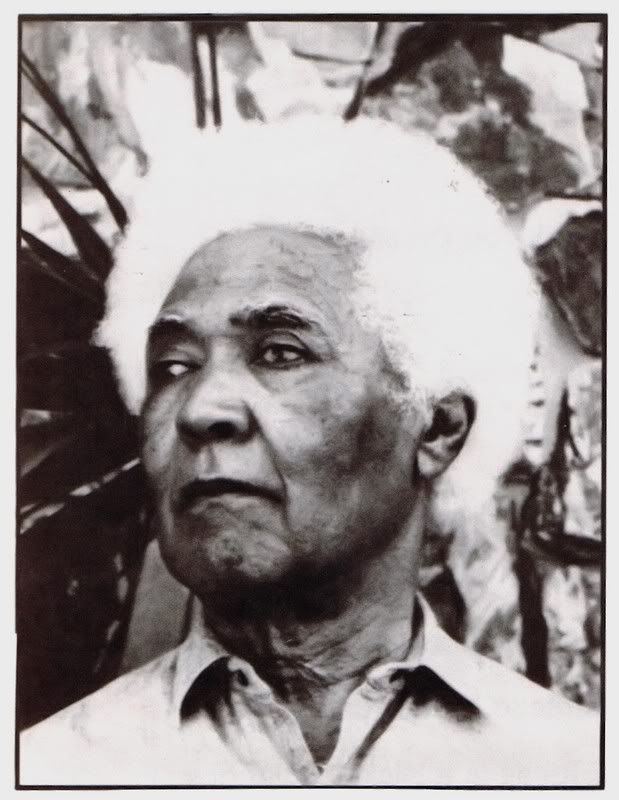
"Se Bon" by Felix Morisseau-Leroy
June 5, 2011
Upcoming Posts and Events
***
Related articles
- "Miss Sally on Politics" by Shara McCallum (geoffreyphilp.blogspot.com)
- New Book: This Strange Land by Shara McCallum (geoffreyphilp.blogspot.com)
- "Luck" by Shara McCallum (geoffreyphilp.blogspot.com)
- ACTION: Clear Marcus Garvey's Name (continued) > Geoffrey Philp's Blog Spot (kalamu.posterous.com)
- Marcus Garvey's Crime (Part One) (geoffreyphilp.blogspot.com)
- Petition: Clear Marcus Garvey's Name (geoffreyphilp.blogspot.com)
- Clear Marcus Garvey's Name (continued) (geoffreyphilp.blogspot.com)
- Clear Marcus Garvey's Name (geoffreyphilp.blogspot.com)
- ACTION: Clear Marcus Garvey's Name (kalamu.posterous.com)
- The Third Annual Anancy Festival (repeatingislands.com)
September 15, 2010
“Put Your Vision to Reality”:Citizen Journalism at Geoffrey Philp’s Blog Spot
About four years ago while listening to Bob Marley's "No Woman, No Cry,": "In this great future, you can't forget your past," I wrote my first post: "Why Do I Continue to Write?" Little did I know, 1176 posts later that my blog would become the "premier [blog] on Caribbean book and literary events."
The relative success of the blog has been surprising. In those early days, I thought the Internet’s promise was to be lauded, especially within the Caribbean where cultural gatekeepers decided who would be published, but there were also some dangers with the of the democratization of data. I realized that the media revolution would alter every relationship in publishing and blur definitions that had been taken for granted: publisher, journalist. And as with all revolutions, there were going to be winners and losers. But how would the "winners"--the voices to be preserved/privileged--be decided?
These were just some of the concerns that I had when I began my journey as a citizen journalist. For as a former book reviewer of The Miami Herald and Miami Times, I had seen the work of Caribbean writers disappear, column inch by column inch, from the pages of newspapers in Miami and the Caribbean. And coming from a region plagued by poverty, earthquakes and the yearly round of hurricanes that threaten to erase memory, and which had already lost so many writers either because of their inability to support themselves financially or who had given up because of critical neglect, I didn't want the voices of the elders or my generation to be silenced, for them to become the "losers" in the media revolution.
So before I wrote my first post, I began reading other book blogs, especially those written by author/bloggers, and I made critical choices that would distinguish my blog within my niche. And after attending the We Media Conference in Miami under the auspices of Global Voices, I initiated several innovations that would affect the direction of the blog.
Unlike other sites which charge a fee for a subscription and thereby prohibit the free flow of ideas, I decided that the blog would be a transparent data repository which would connect readers and writers in the community. Given the literacy rates in the Caribbean, it would also have to convince the occasional reader that writing was an important endeavor. Another strategy would be to use book reviews to introduce these readers to lesser known writers who did not have the support of multinational publishers. However, I didn't want the blog, although it bore my name, to be merely a list of by biases. I wanted to initiate a dialogue with readers that would broaden the scope of Caribbean writing and bring in as many voices as possible--even if I disagreed with the opinions or aesthetics. "Make it new," said Ezra Pound and I have always followed his sage advice in every aspect of my work. But where would I begin?
The first step was to make the design of the site as welcoming as possible and to transform the negative stereotype about bloggers: a lonely male geek dressed in a sweaty undershirt typing away in the basement of his mother’s home. For this, I had to learn basic JavaScript so that I could create a sidebars for sites such as The Caribbean Review of Books and to publish a wide range of articles about Caribbean life in the hope of attracting newer readers to the rich vibrancy of our literature. The second step, as I described in “Blogger and Me: A Three Year Journey” and “Caribbean Publishing in the Internet Age,” was to overcome the “digital divide” that still exists in the region and the resistance that many older Caribbean writers have toward technology.
Luckily, with a little help from my friends, I began a series based on John Baker's blog, Five Questions I interviewed Kwame Dawes, Marlon James, Adrian Castro, Sandra Castillo, and Barbra Nightingale. Then, I expanded the idea to include individuals such as Erika Waters, the founding editor of The Caribbean Writer, who had played an important role in developing Caribbean writing in the late twentieth century. I also interviewed bloggers who were expanding the boundaries of Caribbean blogging: Patrice Elizabeth Grell Yursik, Fragano Ledgister, Tobias Buckell, and Karel McIntosh. Another improvement was to offer the writers from nearly every Caribbean island an opportunity to speak about their work without the filters of editors or critics. Several writers such as Cyril Dabydeen, Diana McCaulay, Sasenarine Persaud, Opal Palmer Adisa, and Kamau Brathwaite responded to the invitation for In My Own Words.
Kamau Brathwaite's support from the inception was very important, for it gave the blog instant stature. From the first time I met him at the University of Miami, his example of reaching back to help unpublished writers demonstrated his engagement with the Caribbean and his efforts in his generation's mission: the "decolonization of the mind." And as an educator who had worked in Miami, the heart of the Caribbean diaspora, I had seen the effects of those soul/self destroying memes of racism/colonialism on my generation and "The Children of the Matrix."
"If it doesn’t exist on the Internet, it doesn’t exist," argued Kenneth Goldsmith in his post at Harriet. This is especially true for the Millennials. Their cultural amnesia became clear to me after a discussion with a group of high school students about the poetry of Félix Morisseau-Leroy. Even though a street in the middle of Little Haiti was named after the old griot, the students did not know who he was. This prompted me to write another birthday post for Morisseau-Leroy and I published "Boat People," one of his better known poems from Haitiad & Oddities. But the more I talked with children at other schools, the more I realized that they knew very little about their cultural heritage. Some had never heard about Anancy. Caribbean children who did not know about Anancy? Something had to be done.
Based on the interplay, I wrote a children's book, Grandpa Sydney's Anancy Stories, and read at various book fairs and elementary schools. For everything in my writing life would have been in vain if it did not benefit the children, who face daunting challenges even as they try to cope with being caught between cultures. Frequently they adopt novelty over the wisdom of the "older" culture. During the readings, I talked about Anancy, the Middle Passage, and writing. One of the biggest surprises for the children was when they discovered that I was the author of the book. They never imagined that an author who looked like them was writing about kids who looked like them. This was even more pronounced when I had the opportunity to speak to high school and college students about essay writing, the work of Caribbean women writers, and the use allusions. For another aim of the blog is to convince readers that the new "flatness" of the world affords opportunities which had previously never existed—that to the call, of ancestors such as Marcus Garvey, they are the answer.
As had become the pattern, live discussions led to posts that engaged the virtual community. One post led to another and soon the blog had become a learning resource for students as far away as India, Australia, United Arab Emirates, and South Korea who wanted to know more about writers such as Mervyn Morris, Olive Senior and Derek Walcott.
Pam Mordecai helped me to respond to the requests with "Letter to A Young Writer." And based on private e-mails from teachers, I posted critical readings of Walcott, Olive Senior, and Dennis Scott. I also hosted original podcasts by Kamau Brathwaite, Ramabai Espinet, Lawrence Scott, Deborah Jack, and Joanne Hyppolite, author of author of two popular middle-grade novels for children Seth and Samona.
This is another aspect of the blog about which I am extremely proud: the Caribbean children author series which has featured posts by Summer Edward and Joanne C. Hillhouse. I am also proud that this blog was the first to publish digital photographs of Dennis Scott and Anthony McNeill. Tony's sister, who had been searching the web, found my post about her brother and donated the photographs to the blog when she found out that her brother's image did not exist on the web. I could tell about similar stories, especially the ones having to do with Don Drummond, and other musicians from the Caribbean.
And this, perhaps, is one of the noteworthy contributions of the blog--the exploration of the connection between literature and music of the Caribbean with a special emphasis on reggae and Bob Marley.
However, my interest in Marley is not merely as a celebrity pop icon. Marley, as an adherent of Garveyite principles, owned his own recording company, Tuff Gong, and used legal and extralegal methods to safeguard his publishing rights, and any discussion of Bob Marley and reggae would be incomplete without the mention of Marcus Garvey and Rastafari. Again, writers such as Colin Grant, author of Negro With a Hat: The Rise and Fall of Marcus Garvey, have been more that gracious with their time and have written excellent guest posts, free of charge to the community.
And at its heart this is what the blog has become: a meeting place for the community to be informed about book events, read reviews and interviews with authors, and sometimes to sound the alarm whenever one of our institutions is threatened. But it's also more than that. It has expanded the role of the book blog to include conversations about homophobia, climate change, censorship, and future of publishing in a digital age. Part advocate, cheerleader, and critic, it has provided information to writers about venues for publication, published original poetry and fiction, initiated discussions about topics such as What Does It Mean to be a Caribbean-American and What is a Caribbean classic?
In this respect the blog is not only innovative, it is also useful as the comments of readers attest. And to quote Derek Walcott in "A Letter from Brooklyn": "For such plain praise what fame is recompense?"
Related articles by Zemanta
- I'm Applying for an AOL 25 for 25 Grant! (geoffreyphilp.blogspot.com)
- Jamaican Poet to launch new book, Dub Wise (repeatingislands.com)
- New Book: I and I Bob Marley (geoffreyphilp.blogspot.com)
- What Does it Mean to be a Caribbean-American?: Malachi Smith (geoffreyphilp.blogspot.com)
- Marion Pauw's "Caribbean" Novels (repeatingislands.com)
- New Issue: The Caribbean Writer, Vol. 24 (geoffreyphilp.blogspot.com)
- Trinidad and Tobago: The 2010 Allen Prize for Young Writers (repeatingislands.com)
March 13, 2008
Happy Birthday, Felix Morisseau-Leroy (2008)
In one of my favorite poems by "Moriso" or "Lewa," the poet shows his allegiance, and we are all better off for it.
I still remember the defiance and the fire when he used to read this poem, and especially when he said, "I don't want any priest/ To speak Latin over my head."
There was no room for genuflection to the metropolitan cities in Lewa's world, and it is sometimes sad to see the young Haitian men and women in Miami walking around with their heads bowed down because they lack the knowledge/memory that a great poet like Lewa came from among them and was the champion of their language for most of his life.
Give thanks, Lewa and Happy Birthday!
New Testament
In 1954
I wrote my will
I said I don't want any priest
To speak Latin over my head
I don't have that problem today
Because priests don't speak latin anymore
Even God
Had to learn Creole
Like any other white man
Coming here
To do business with us
Felix Morisseau-Leroy was born in Grand-Gosier, Haiti and had degrees from the University of Haiti, Columbia, New York City College, and the New School of Social Research. He was exiled in 1959 and lived in Africa, France, Jamaica, and the United States.
In Ghana, he served as national organizer of drama and literature at the Arts Council and in Senegal, as Technical Adviser of the Senegalese Federation of People’s Theater.
He wrote numerous books of poetry, novels, and plays including “Ravinodyab,” “Plenitudes,” “Recolte,” “Diacoute,” and “Antigone in Creole” which was performed at the Theater of the Nations in Paris. His works have been translated into French, English, Spanish, German, Russian, Fanti, Twi, and Wolof, and his plays have been performed around the world.
Although he was multilingual, Felix Morisseau-Leroy preferred to write in Creole, because he wished “to express the deepest feelings, emotions, and aspirations of the people for whom he claimed to be a mere “scribe.”
February 22, 2008
"Boat People" by Felix Morisseau-Leroy
I learned many things from Felix Morisseau-Leroy and one of the most important was his commitment to the Haitian Creole language.We are all in a drowning boat
Happened before at St. Domingue
We are the ones called boat people
We all died long ago
What else can frighten us
Let them call us boat people
We fight a long time with poverty
On our islands, the sea, everywhere
We never say we are not boat peopleIn Africa they chase us with dogs
Chained our feet, embark us
Who then called us boat people?
Half the cargo perished
The rest sold at Bossal Market
It’s them who call us boat peopleWe stamp our feet down, the earth shakes
Up to Louisiana, down to Venezuela
Who would come and call us boat people?
A bad season in our country
The hungry dog eats thorns
They didn’t call us boat people yet
We looked for jobs and freedom
And they piled us on again: Cargo—Direct to Miami
They start to call us boat people
We run from the rain at Fort Dimanche
But land in the river at Krome
It’s them who call us boat peopleMiami heat eats away our hearts
Chicago cold explodes our stomach
Boat people boat people boat people
Except for the Indians—
All Americans are immigrantsBut it’s us they call boat people
We don’t bring drugs in our bags
But courage and strength to work
Boat people—Yes, that’s all right, boat people
We don’t come to make trouble
We come with all respect
It’s them who call us boat peopleWe have no need to yell or scream
But all boat people are equal, the same
All boat people are boat peopleOne day we’ll stand up, put down our feet
As we did at St. Domingue
They’ll know who are boat people
That day, be it Christopher Columbus
Or Henry Kissinger—They will know
Whom we ourselves call people
***
In Ghana, he served as national organizer of drama and literature at the Arts Council and in Senegal, as Technical Adviser of the Senegalese Federation of People’s Theater.
Although he was multilingual, Felix Morisseau-Leroy preferred to write in Creole, because he wished “to express the deepest feelings, emotions, and aspirations of the people for whom he claimed to be a mere “scribe.”
***
January 13, 2008
Calling all Loas
Attibon Legba
Ouvri bayi pou' moi
Ouvri bayi pou' moi
One of my most memorable trips with Félix Morisseau-Leroy, who introduced me to many aspects of Haitian life and culture, was during a car ride in 1993 when we were scheduled to read at a Black History Month celebration at the Broward County Main Library. We'd been listening to the local news, and near the end of the announcements, the reporter made a brief mention of the sinking of the Neptune off the coast of Haiti. At first, I didn't pay much attention to the report. But when I glanced over at Morisseau-Leroy, I saw that he had been visibly moved by the news and was angry at the casual tone of the reporter. Morisseau-Leroy's anger made me realize my complicity in the disregard for the loss of Haitian lives at sea. I, like the reporter, had become so inured to the daily reports of bodies washing up on South Florida beaches that the loss of over a thousand lives in a single event barley registered in my mind. For Morisseau-Leroy, the news had a different effect. Those were his people who were dying on the high seas and when we arrived at the library, he made sure that all of us knew about what had happened.
Morisseau-Leroy loved his brothers and sisters and they repaid that love in a mural in Miami where he is seated with the loas in an imaginary village in Haiti. I repeat the story here not only as a cautionary tale about how easily our sensibilities can be dulled when faced with the daily loss of life, but also how Morisseau-Leroy's love for his people, even though he was living in exile, moved him to memorialize their lives.
Imagine, then, my concern after reading in The Gleaner about the lynching of goat thieves in Westmoreland (the birthplace of my mother and father) and reading a post by the influential Caribbean blogger, Francis Wade, about accepting the actions of what I like to call "immature warriors." I was surprised even more by the tone of his post because Moving Back to Jamaica is usually filled with practical ideas and contains many insightful posts about the Jamaican character and our "warrior spirit."
Now, I am not complaining about our propensity to "chuck badness." In the past, this "warrior spirit," identified in the Yoruba cosmology as Shango, served us well in the fight against British imperialism. It was this "warrior spirit" that Marcus Garvey evoked when he urged his followers to have "backbones and not wishbones,"and through the work of the UNIA transformed "immature warriors" into "mature warriors."
But now that the colonizers have been physically removed from our shores and this "warrior spirit" has not been channeled through education into the long-term fight against illiteracy and ignorance, we have turned this energy against ourselves and the results have been disastrous.Or as Moving Back to Jamaica says "we are a people itching for a fight, but .... we can't find a good one to fight."
So, every day we read in the newspapers, the effects of ignorance in the lives of "immature warriors" who use force and violence to gain narrow personal goals. And as they grow in numbers and our education systems fail us, all we can expect is a slow descent into a state of "red in tooth and claw" and where life becomes "nasty, brutish, and short."
But do we want to change? I can't even change myself, and as one of my dear friends always tells me, "People, without any kind of intervention never change."
So, I say,go with what we are: a nation of Xangos. But educate the young warriors. Show them the difference between "immature warriors" for whom every problem is a nail and they hold the hammer, and"mature warriors" who uphold ideas of honor and justice and who resort to the use of force as a last resort when all other options have failed. In other words, expand their sense of self--a little less Xango and more Eshu--whose world is ruled by shadows and light where intelligence prevails.
And if we insist on change, then we must believe. We must believe that ideas matter and that once these ideas are registered in the consciousness, they merely wait for an opportune time to manifest themselves. Anyone who has been seduced can attest to this.
But we must also refuse to accept any idea that does not hold every human life as priceless.I refuse to accept the loss of even one life to senseless violence. Every life counts.
For just as the epiphanies of poets such as Morisseau-Leroy, begin with the feeling that they are loved/supported n every cell by their brothers and sisters, so too the education of the young begins with the feeling that they are worthy and their lives count. Every single one should be able to say, "I am gifted." Then, Marcus Garvey's words will surely come to pass: "Rise, you mighty people."
***