June 4, 2009

Escape to Create: 2010

Escape to Create

Escape to Create
“A Celebration of Art, Life and Community”

What is the deadline?

Applications must by received by June 15, 2009. Artists will be sent confirmation by email upon verified receipt of complete application including fee payment. All applications are reviewed by professional peers representing each applicable discipline. Artists will be notified of the committee’s decision no later than August 1, 2009. Please note that application materials will not be returned.

How do artists apply?
We encourage on-line application and will also accept mailed applications. All applications must contain the following eight items:

  1. The completed 2010 application form

  2. A one page cover letter that includes artist statement, a brief description of your work and reasons why this residency would be beneficial

  3. A one page work proposal detailing the creative work to be accomplished during the residency

  4. A one page community service proposal that provides a detailed description with desired outcome.

  5. A professional resume

  6. Two professional letters of recommendation addressed to Escape to Create, Re: (your name) Application. Letters can be sent directly to Escape to Create.

  7. A non-refundable $50 application fee

  8. Work samples that are representative of recent work. Please send only the materials as requested below:
Writers of fiction, non-fiction, film, theatre and scholarship: Submit a manuscript of no more than 30 numbered, double spaced pages accompanied by a one page synopsis. Do not staple or bind pages.
Poets: Submit 10 poems of one page or less in length, can be single-spaced. Excerpts or longer poems are not to exceed 10 numbered pages. Please do not send published books. Scans or photocopies of no more than 10 consecutively numbered pages are accepted.
Visual artists: Submit 10 jpeg images no larger than 1,000 pixels on the longest side of each sample and no files larger than 1MB. Each sample should be numbered and identified by title, medium and size.
Performance and video art: Submit DVD or provide a link to a portfolio of your work sample that is no longer than15 minutes long with a one page written explanation.
Musical Composition: Submit CD or mp3 formatted sample of up to fifteen minutes accompanied by a one page written explanation.

TO APPLY ON-LINE:

Send completed application form via e-mail to

Malayne DeMars at escapetocreate@gmail.com


TO APPLY BY MAIL:

Send 3 copies of completed application with completed application form
(Letters of reference can be sent separately) to:

Escape to Create

ATTN: Malayne DeMars, Executive Director

PO Box 4725

30 Smolian Circle, 2nd Floor

Santa Rosa Beach, FL 32459-4725

All artists must submit a check or money order for the non-refundable $50 application fee made payable to Escape to Create.


* * * * * *

If you have questions about Escape to Create program, submitting application or would like to request more information, please contact:

Malayne DeMars

Executive Director, Escape to Create

PO Box 4725

Santa Rosa Beach, FL 32459-4725

850-534-0000

escapetocreate@gmail.com
***
Related Post: Homage to Seaside

June 3, 2009

NATIONAL CARIBBEAN-AMERICAN HERITAGE MONTH, 2009

Caribbean American Heritage Month
President Barack Obama's proclamation.
clipped from www.whitehouse.gov

THE WHITE HOUSE

Office of the Press Secretary

_______________________________________________
For Immediate Release June 2, 2009

NATIONAL CARIBBEAN-AMERICAN HERITAGE MONTH, 2009
- - - - - - -
BY THE PRESIDENT OF THE UNITED STATES OF AMERICA
A PROCLAMATION

Caribbean Americans have made lasting contributions to our Nation's culture and history, and the month of June has been set aside to honor their cultural, linguistic, ethnic, and social diversity.


Generations of immigrants have preserved the traditions of their homelands, and these traditions have defined our Nation's identity. Caribbean Americans bring a unique and vibrant culture. This multilingual and multiethnic tradition has strengthened our social fabric and enriched the diversity of our Nation.


blog it

Big Wheels Keep on Turnin' : Calabash 09 (Part 2)

Calabash 09

I was as nervous as one of the blue herons I’d seen on our Black River Safari. The moment was here and I still didn’t know which story I was going to read. I’d narrowed down the choice to two stories: “The Day Jesus Christ Came to Mount Airy” or “Cry to Me” from Who’s Your Daddy? : And Other Stories. It was going to be a difficult choice between stories which confront two important issues in Jamaican life: spirituality and fatherhood.


“Cry to Me” seemed an obvious choice because throughout the festival, the theme of fatherhood was a subtext in many of the readings. I was also moved by the sight of so many fathers and their children in the audience: sitting on the grass, cradling their children in their arms and one father watching attentively while his partner went to get a drink and the baby slept soundly in a makeshift crib. It was a beautiful sight to witness the protective side of Jamaican fathers, which is a theme in “Cry to Me”—a portrait of a Jamaican man who will do anything to safeguard his child.

On the other hand, “The Day Jesus Christ Came to Mount Airy” deals with fatherhood and spirituality, but in a more humorous way. It also incorporates something that I had learned from Rastafari, but has not been fully articulated in Jamaican fiction: the Divine moves in and through us. That despite the hardships and circumstances, faith and hope abide with us. It is part of our liberation. For if we can begin to think of ourselves and Jamaica as part of the Divine continuum, then we could see progressive changes in how we treat ourselves, others, and the environment. And considering the audience reaction to writers such as Anthony Winkler, whose story had what some considered “racy” content, I realized something essential in the Jamaican character: we love to laugh. And this, perhaps, is why the audience reacted favorably to Winkler even though he did use some “bad words” in his story.


So, I made a compromise. I used the hastily written introduction for “Cry to Me” as a preamble for my reading, and it worked. My wife, who was in the audience and watched me nervously as I stepped on the stage, told me that many of the fathers in the audience perked up when I livicated the reading to them.

I could feel it.


It made me more confident as I read about Macky’s adventure with a Jamaican Jesus in Westmoreland. The audience loved the idea and I was greeted by several roars of laughter and thunderous applause as I left the stage.

Later that night, after listening to readings by Terese Svoboda and Xu Xi and then to the sound clash of Colin Channer and Mutabaruka, my wife and I strolled down to the bonfires on the beach--the dull thud of the bass rivaling the incessant throb of the sea.


Thirty years before, I would have been alone at a dance like this and worrying if I would ever publish a book or a book of poems. Now I was with my wife, who has been with me from my first public readings in Miami and the publication of nine books, dancing under the stars that winked through the sea grapes.

Calabash had provided me opportunity and I give thanks I-tinually for this. The reading, judging by some of the shouts as we headed back to Jake’s, was a success: “Jesus Christ, good story!”


Full circle and more.

My doubts had been erased. My promise had been kept.

***

Related Post: Big Wheels Keep on Turnin': Calabash 09 (Part One)

***

Friday, June 5, 2009: Calabash 09: Reflections

***

This post has been included in Middle Zone Musings: What I Learned from a Mountaintop Experience.


Reblog this post [with Zemanta]

June 2, 2009

Amnesty International Report: Jamaica

Amnesty International
Jamaica

Head of State Queen: Elizabeth II, represented by
Kenneth Hall

Head of Government: Bruce Golding

Death Penalty: Retentionist

Population: 2.7 million

Life expectancy: 72.2 years

Under-5 mortality (m/f): 18/16 per 1,000

Adult Literacy: 79.9 per cent


In the context of the public security crisis, a reported 1,611 people were murdered. The majority of victims were from marginalized inner-city communities. A raft of so-called “anti-crime” bills – including extension of police powers of arrest, increases in bail periods and minimum sentences for gun-related crimes – remained before Parliament at the end of the year. National human rights organizations questioned the constitutionality of some of the bills’ provisions and expressed concerns that the proposed extra police and judicial powers could lead to abuse. The Inter-American Commission on Human Rights visited Jamaica in December. In its preliminary observations the Commission stated it had witnessed an “alarming level of violence” which affected all sectors of society, and pointed to continued shortcomings in the security forces and justice system as well as widespread corruption and poverty as the principal causes for the deteriorating public security situation.


blog it


***
Give thanks, Repeating Islands.

Who's Your Daddy @ Signs of Oneness

Signs of Oneness


Mark Your Calendar!

Saturday, June 6, 2009

Book signing of Who's Your Daddy?: And Other Stories

7 - 8:30 PM

Location: Sailboat Bend Artist Lofts

Street: 1310 SW 2nd Court

City/Town: Fort Lauderdale, FL

Phone: 9546627827

Email: art@artistswhowork.com

***

June 1, 2009

Big Wheels Keep on Turnin' : Calabash 09

Calabash 09
Thirty years ago, I left Jamaica with a promise. Although I had only published one poem in The Daily Gleaner and a short story in the Creative Arts Review, I listed my profession as “writer” on the immigration form. Since then, I’ve published nine books of poetry and fiction which have met with mixed reviews in Jamaica and the Caribbean. So when I was invited by the organizers of the 2009 Calabash International Literary Festival in St. Elizabeth, Jamaica, I was filled with the exhilaration of fulfilling a promise.


This is not to say that I had not read in Jamaica before. I had. But it was never on this scale. And the last time I read at Jamaica College, I was cursed out by a member in the audience for using “bad words.” I tried to explain that whenever I use “bad words” in a story, it is never gratuitous and it is usually a signal that a character in under extreme duress. The person didn’t want to hear any of it and she demanded an apology for “the sake of the children” in the audience. I hadn’t seen any children, but then, I was excited about reading at my alma mater, so for “the sake of the children,” I apologized. But it left a bitter aftertaste in my mouth.


Needless to say, however, when I received the official letter from the organizers that I would be a part of one of the most exciting literary festivals in the world, I was thrilled. And that it was happening in Jamaica where some people still behave as if I don’t exist, we’re now talking about ecstatic. Yes, I know, I know, according to Covey we should only focus on those things over which we have control. Still, it felt good.


It was even better that my wife, Nadia, was coming with me. And from the minute she and I settled into our seats on Air Jamaica, we sensed that big changes were on the way. As we thumbed through Skywritings, the in-flight magazine of our national carrier, on page 12 alongside other participants in Calabash such as Junot Diaz, Staceyann Chin, Joseph Boyden, and Selwyn Cudjoe, was my photograph and a brief caption. I had done the interview and sent the journalist all the material she had requested, but I never expected to be included in the magazine. When you’ve been writing for as long as I have, you learn to develop a thick skin and expect rejection as part of the journey. But there I was. I put a copy in my bag and as we were leaving, my wife picked up a few extra copies for her mother and our children.


As soon as we disembarked, we were ushered through customs by a member of the Jamaica Tourist Board. He introduced to our driver and our fellow passenger, Stephanie Black, who made the three hour drive to Treasure Beach seem like thirty minutes as I asked and she answered questions about her film, Life and Debt. We also struck up a conversation about Jamaica Kincaid, a writer whose work we have been following for a very long time, and discussed the new direction her work seems to be taking.


Once we arrived at the Treasure Beach Hotel, we unpacked everything, took a short nap, and then we were whisked away to Jake’s, where I made it a point of duty to thank Robert Pinsky for allowing me to use a quotation from his translation of The Inferno in my novel, Benjamin, my son. We talked briefly until Justine Henzell announced that our meal was ready. My wife and I chose one of the more secluded tables at Jake’s, but to our surprise, we were soon joined by the Hon. Edward Seaga, Anthony Winkler and their respective families.


If someone had told me thirty years ago that in the future I would have broken bread with Mr. Seaga and a few years earlier with the Hon. Michael Manley, I would have asked them if they had been partaking of Jamaica’s unofficial national plant. But then, politicians come and go. I was more keen on talking with, Anthony Winkler, the author of one of my favorite novels, The Duppy.


I floated through the rest of the evening as I met other writers whose work I respected and I was surprised that some of them had read and admired my work. Slowly, I began to feel myself as a part of that stellar group of writers who had been invited to the festival.


Later that night, as my wife and I walked along the beach gazing at the galaxies of star and listening to the clamor of the Caribbean Sea resounding off the seawalls, I could feel some of the self-doubt that has plagued me for so much of my career rising off my shoulders, drifting over sand, and disappearing into the surf.


And that was just the first day.


***

Wednesday, June 3, 2009: Big Wheels Keep on Turnin' : Calabash 09 (Part 2)

***

This post has been included in Middle Zone Musings: What I Learned from a Mountaintop Experience.


May 31, 2009

Caribbean American Heritage Month 2009

Caribbean American Heritage Month

In 2006 President George W. Bush issued a proclamation for the celebration of Caribbean American Heritage Month in June of each calendar year: “For centuries, Caribbean Americans have enriched our society and added to the strength of America. They have been leaders in government, sports, entertainment, the arts, and many other fields. . . . We are united by our common values and shared history, and I join all Americans in celebrating the rich Caribbean heritage and the many ways in which Caribbean Americans have helped shape this Nation.”

Throughout this month, I will be doing my part to help with this celebration by joining with fellow writers and artists in South Florida. I will be reading from my latest collection of short stories, Who’s Your Daddy?: And Other Stories at the following venues:


Saturday, June 6, 2009

7 - 8:30 pm

Sailboat Bend Artist Lofts

1310 SW 2nd Court

Fort Lauderdale, FL

Phone: 9546627827

art@artistswhowork.com

*


Tuesday, June 9, 2008 @ 8pm

Books and Books

265 Aragon Avenue

Coral Gables, Florida 33134

*


Caribbean Book and Art Fair

Celebrating Derek Walcott

1992 Nobel Literature Laureate

June 19, 20, 21, 2009

Miramar Cultural Center

2400 Civic Center Place Miramar, Fl 33025

For Information Call 954-357-7478/754-224-8150/786-537-5897


If you get a chance, stop by and see me, nuh?

***

Photo credit: Caribbean American Heritage Month

***


May 29, 2009

"Erzulie's Daughter" @ Peony Moon


Erzulie’s Daughter
Geoffrey Philp

It began with the usual insults
about her nose and hips,
and the belief that her true-true mother
lived on a coral island protected
by sunken galleys and man-o-wars.


To read the rest of the poem, please follow this link: Peony Moon.
Thanks, Michelle!

***
BTW, the photo was taken at the Calabash International Literary Festival. I''ll be writing about my xperiences next week. Stay tuned...

Geoffrey Philp's Blog Spot on Kindle

blog on kindle

Geoffrey Philp's Blog Spot is now available on Kindle.


***

May 27, 2009

Vote for the Top Ten Caribbean Theatre Classics

Top Ten Caribbean Theatre ClassicsFirst, give thanks to all those who submitted your choices to the “Top Ten Caribbean Theatre Classics” which closed on Monday, May 25, 2009, @ 4:30 pm.

The voting begins today and will end on Friday, June 5, 2009, @ 4:30 pm.

I’ve posted the list of with the number of votes here and they are listed alphabetically here. I have organized the voting based on number of votes. In the case of a tie, if a playwright was mentioned at least twice, then s/he was “bumped up” the list. I realize that some may disagree with the voting methods, but this is not a definitive list. Unlike the method for submission, the voting method does not give me the option of unlimited choices, and this just seemed to be the most equitable method of choosing the plays.

These are the final choices from the submissions. I am very interested in any comments about this process and especially about the plays that made the final cut.


Please do not be intimidated by the list or if you haven't read all 12 plays.


Vote for Your Top Ten Caribbean Theater Classics
Dream on Monkey Mountain by Derek Walcott
Ti Jean and his Brothers by Derek Walcott
School's Out by Trevor Rhone
Smile Orange by Trevor Rhone
Echo in the Bone by Dennis Scott
Dog by Dennis Scott
Pantomime by Derek Walcott
The Rapist by Pat Cumper
Fallen Angel and the Devil Concubine by Pat Cumper
In the Beautiful Caribbean by Barry Reckord
White Witch by Barry Reckord
The Joker of Seville by Derek Walcott
Free polls from Pollhost.com


May 20, 2009

Everything You Ever Wanted To Know About Rastafari


Professor Darren Middleton, who has written extensively about Rastafari, is interviewed by Rev. John Paul Roach: The Phenomenon of Rastafarianism.

Here's the url: http://www.podcast-directory.co.uk/episodes/the-phenomenon-of-rastafarianism-with-guest-dr-darren-middleton-12688179.html

In this wide-ranging interview, Professor Middleton covers the following topics:

The links between Rastafari and Hinduism
Core beliefs of Rastafari: InI
Diversity in Rastafari
Role of Marcus "Mosiah" Garvey and Leonard Percival Howell
Nazirite vows in Rastafari
Queen of Sheba and King Solomon
Use of marijuana
Kebra Nagast
Twelve Tribes of Israel
Christology and Rastafari
Symbolism of red, green, and gold in Rastafari
Reggae and Rastafari

And if you listen all the way through the commercials to the end, he mentions the work of Kwame Dawes and my novel, Benjamin, my son.
***

May 18, 2009

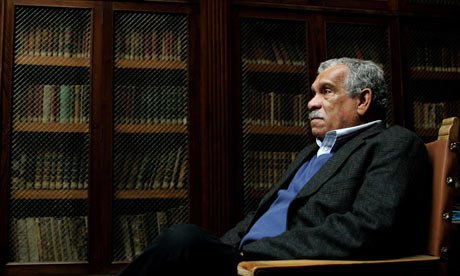
Walcott and Oxford: The Times Perspective

Derek Walcott
For the writer of "Profile: Derek Walcott: A smear silences the colonial bard" to suggest that Walcott's withdrawal from the race for Oxford's professor of poetry as a summative "final act," is at best reductionist thinking that borders on colonialist paternalism.

Walcott's greatness lies in the unrivaled body of work that he has created for the past fifty years. Nobel laureates, Oxford professorships and other awards are "loosely worn garments," and throughout this minor ordeal, Walcott has demonstrated the kind of dignity that I have always associated with his verse.


He is the modern world’s greatest living poet. Or a dirty old man who should
not be left alone with female students. Or both. Or neither. Of those four
options, only the last seems wholly unlikely in the case of Derek Walcott.
The winner of the 1992 Nobel prize in literature and the most widely
applauded writer to have emerged from the cultural stewpot of the Caribbean
could have woken up this morning as Oxford University’s professor of poetry.


This little tragedy may just be the final act.


blog it

Who’s Your Daddy? in Hialeah

Who's Your Daddy?I am always very careful about the things I say when I’m around teenagers because if they misunderstand tone, bias, or context, then a whole lotta people will have a lot of xplainin’ to do. So I approached with a with a bit of hesitancy my reading of “How do you tell?” from Who’s Your Daddy? at a local high school on May 8, 2009.

On the surface, “How do you tell?” and “First Love” from Who's Your Daddy? are stories about identity and fit in with the literature textbook themes of "Conformity and Rebellion." But “How do you tell?” is different from "First Love," in many ways.

“How do you tell?” exists on both literal and metaphorical levels. On a literal level, the story expresses difference, but there are several clues within the text that suggest that it could also be read as the attempt of a young man to understand with his sexual identity and to "come out" to his parents.

Of course, once we had deconstructed the story, I had to answer the question, “Are you gay?” which had the follow-up, “What made you want to write this story?” I didn’t have the time to go into the prejudices that male, Jamaican writers must confront, but I talked about the issues of difference that I’ve had to face in my personal and professional life—always being a kind of exotic whether I was playing football or in graduate school and being the only black person in the room when Absalom, Absalom was being dissected. I also talked about the devastation that I had witnessed because of AIDS during the early years when no one knew how the disease was spread and many of my friends were dying.

Teenagers have a hard enough time just dealing with growing up and when sexual identity is thrown in the mix, then I can only imagine the grief that they must face daily. I hope these stories will help with the discussion of this issue that has split families and torn communities apart.

***