March 25, 2009

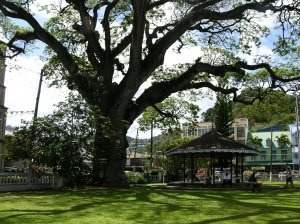
Derek Walcott's Square

Derek Walcott's Square, St. Lucia
So poetry made this happen--take that, W. H. Auden!
clipped from www.google.com
In the heart of the town of Castries, there is a small square with a long history dating back to the 18th century. It used to be the Place d’Armes when the island was under French control. In January 1893, it was rechristened Columbus Square in honor of the discoverer who never set foot on the island. One hundred years later—to the date-it was renamed to honor Derek Walcott’s 1992 Nobel Prize for literature. It has become, to judge by the number of cruise ship passengers that flock there every day, the second most popular tourist attraction in St. Lucia (after the duty-free shops).

blog it


Photo: Repeating Islands Blog.

Letter to a Young Writer: Bernardine Evaristo

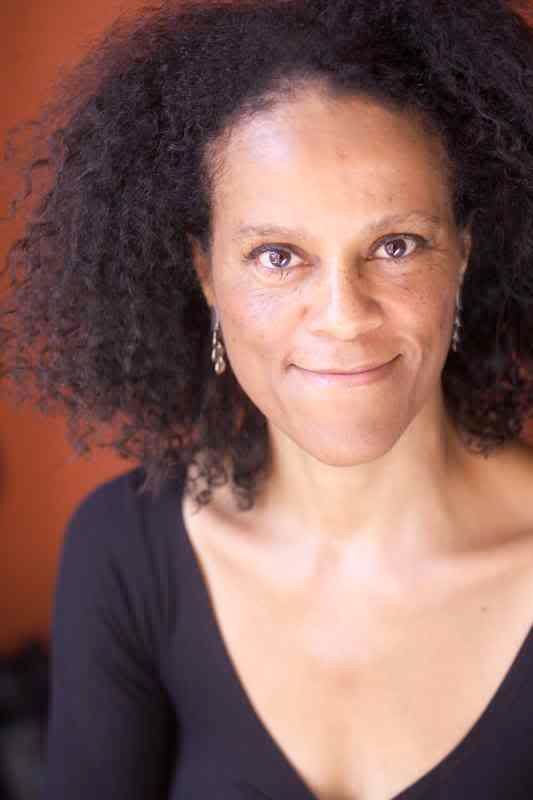
Bernardine Evaristo by KatieVandyckI frequently encounter talented students when I run creative writing workshops around the world, talent which may one day lead to publication, or not. As Thomas A. Edison famously said “Genius is 1% inspiration and 99% perspiration.” Without focus and hard work many a spark fizzles out. Sometimes this is what aspiring writers need to be told – that the craft of writing is something which has to be developed over many years and that you need tremendous drive. The first challenge is to complete a manuscript and get it published; the second is to keep doing it. It may appear that published writers are somehow just ‘lucky’, but the truth is that no one is going to publish a book that hasn’t been written. As the American motivational guru Anthony Robbins says, “The meeting of preparation with opportunity generates the offspring we call luck.”

Quite a few writers have passed through my workshops and eventually been published. I’m not saying this to take credit for their success, but to make the point that not all of them showed that special creative spark. But the other qualities they possessed: openness to learning and developing craft, determination, self-discipline, consistent hard-work, single-mindedness, and tenacity, were all major factors in their transformation into published writers of note. They also had self-belief. Over two thousand years ago the Roman poet Virgil wrote “They can because they think they can.” How true. When students cite lack of self-confidence as the reason why they’re not writing, or writing but not sending their work out to journals, agents or publishers, I suggest they go on motivational and confidence-building courses, or at least read the books (Feel the Fear and Do It Anyway is a good starter). I did. And yes, in true cringe-worthy fashion –it changed my life.


So it’s not about starting out fully-formed as a writer but working with what you have to grow your talents and give yourself the writing career you desire. I am a firm believer in taking responsibility and positive thinking at all times. This has led me to where I am today. If one door closes, I open another one – I don’t wait for someone to do it for me.


***


Bernardine Evaristo was born and raised in London where she still lives. Blonde Roots is her first prose novel. She has previously fused fiction with poetry in the novels, Soul Tourists (Penguin 05) and The Emperor’s Babe (Penguin 01). Bloodaxe Books will publish a new expanded edition of her verse novel Lara in 2009--the story of her family history with roots in England, Nigeria, Ireland, Brazil, and Germany. In 2007 she co-edited the Granta new writing anthology NW15. She has received several awards, her books have been a Book of the Year nine times for national newspapers and publications, and she is a fellow of the Royal Society of Literature and the Royal Society of Arts. For more information, please visit her website: www.bevaristo.net or her blog: www.bevaristo.wordpress.com.


Photo: Bernardine Evaristo by Katie Vandyck

March 23, 2009

Derek Walcott: Gros Islet


The connection between our writers and our landscapes grows even more tenuous because of the yearly migrations and the lack of publishing possibilities in the Caribbean.

And given the ecological disasters about which John Maxwell writes (http://www.jamaicaobserver.com/columns/html/20090321T220000-0500_147936_OBS_THE_ENDURING_CURSE_OF_BAUXITE.asp) there is a poisoning of the land that makes it difficult to reconcile any sense of the sacred with the painful history of the region.

If we have learned anything from our literature, it is that nothing is inherently beautiful. If is we who create beauty and unless we decide to preserve the land as ours, the poisoning and degradation will continue.


clipped from www.google.com

In his Nobel Prize address, Walcott wrote of his belief in the sacredness bestowed on places by the power vested upon them by being the settings of classic texts of Caribbean literature. He wrote of the possibility of those places made significant by our literatures turning into the loci of Caribbean nationhood and identity:


blog it

Photo: Repeating Islands Blog

Essay Contest:Jamaica Ex-Police Association of South Florida

The Jamaica Ex-Police Association of South Florida, Inc. is now accepting applications for its annual USA and Jamaican scholarships. Applications for the USA scholarship should be submitted to the scholarship committee of the association by March 31, 2009. Applications for the Jamaican scholarship will be handled by the Community Affairs Division of the Jamaica Constabulary Force.

The South Florida Scholarship will be awarded at the association’s annual ball on Saturday, April 25, 2009, at the Faith Tabernacle Banquet Hall, 7100 West Oakland Park Boulevard, Sunrise, Florida. The Jamaican Scholarship will be awarded on Monday, May 25, 2009, at the Negril Police Station in Westmoreland, Jamaica, at the conclusion of the association’s annual Jamaica Police Station’s Refurbishing Project at the station. A presentation of medical supplies and equipment will also be made to a health clinic in Westmpreland.

Both scholarships are awarded annually by the Jamaica Ex-Police Association of South Florida, Inc., in its effort to assist students in the South Florida community and in Jamaica. The scholarships are one time cash awards.


The criteria for the local USA scholarship are:

1. Applicant should be a legal resident in Broward, Miami-Dade or Palm Beach County, Florida.
2. Applicant must provide proof of residency in one of the listed counties.
3. Applicant should be currently registered as a student in a 2-4 year college, or has been accepted as such.
4. Applicants must submit, on line and via mail, a two-page essay (81/2 x 11), typed in 12 inch fonts and double spaced. In the essay, the entrant should articulate convincingly why he/she should be awarded the scholarship.
5. Applications should be submitted to the Jamaica Ex-Police Association, P.O. Box 8605, Fort Lauderdale, Florida 33310, by March 31, 2009.
6. Application packets must include the entrant’s full name, address, telephone number, and an email address if available.
7. The scholarship is a one-time cash award.
8. Students of Jamaican parentage are strongly encouraged to apply.
9. The financial need and scholastic aptitude of the applicants will be considered in the selection process.

Criteria for Jamaican Scholarship are:

1. Applicant must be a high school student or must have been accepted in a Jamaican High School.
2. Money awarded should be used only to purchase school supplies: books and uniform.
3. Over a one year period the funds will be disbursed by the principal or (the designee).
4. The principal (or designee) of the recipient’s school will administer the funds and submit an expenditure report to the Jamaica Ex-Police Association of South Florida, Inc., via the Community Relations Division of the Jamaica Constabulary Force.
5. The Community Relations Division of the JCF will select the recipient. No division of the police force will be excluded from participating in the selection process.
6. For the one-year period of the scholarship, the recipient must attend school regularly, maintain satisfactory grades and display good conduct.
7. The scholarship is a one-time award.


For further information contact: Malachi Smith, MSCJ, PR Director JEPA: (305) 302-5365; malismith@aol.com.

March 21, 2009

Derek Walcott's First Home

I'm following the Repeating Islands blog which is on a tour through the Caribbean and each island. They are now in St. Lucia, home of the great poet, Derek Walcott.

Our literary tour through Castries, St. Lucia, took us to Derek Walcott’s childhood home, located at #17 Chausée Road. The house, once described as a “quaint little gabled cottage with a portico that sported two benches with golden alamanda and poinsettias softening the harshness of the setting sun,” is now empty and forlorn. The air was scented with the irresistible smells of the bakery next door, but the house was sad and derelict. We left, like the poet with his father Warwick in Omeros, down Grass Street towards the port, amid the concern of neighbors, who worried about us being in what they considered a bad part of town.

blog it

March 20, 2009

New Book: "Blue Mountain Trouble" by Martin Mordecai

Martin Mordecai
Martin Mordecai has written a novel, Blue Mountain Trouble, for readers between the ages of 9-12, and so far, the reviews have been glowing:
clipped from carlbrandon.org
The story begins with a bang. A pair of twins, walking down a mountain to their village school, encounter in the morning mist a vision of a huge, disembodied goat's head. The vision fades, and seconds later the ground in front of them trembles and slides away. Was the goat a malevolent presence, or did it save them from injury or worse? Already, the book is a grabber.

blog it

Derek Walcott Reads "Sea Grapes"


***

March 19, 2009

Cuban American Writer: Ivonne Lamazares

Ivonne read from her newest short story "Hostal Jamil" published in The Southern Review for 2009.
On March 12th, in honor of Women's History Month, Miami Dade College hosted novelist Dr. Ivonne Lamazares who left her homeland of Cuba in 1962 at the age of thirteen.
blog it

March 18, 2009

Call For Papers: Going Caribbean!

ACT 22

CALL FOR PAPERS

International Conference

Going Caribbean!

New Perspectives on Caribbean Literature and Art


Centre for Comparative Studies.

University of Lisbon, November 2 – 3, 2009


In an age of intensifying globalization and interdependencies, «being Caribbean» means more than fashioning a particular identity. Being Caribbean refers to a complex, particular condition, which transcends regional boundaries. Who is Caribbean? And who is «going Caribbean»? Are we all Caribbean now because we live in «urban archipelagoes» (Clifford)? Around the globe, cultural archipelagoes are quickly emerging as a result of the complex process of creolisation, which is taking place in regions and nations far beyond Martinique, Aruba or Jamaica. In the heart of Europe, for instance, —something nobody would have thought of a few decades ago—where nations claim separate cultural identities, from Scotland to Cataluña and the Balkan.


In spite of this exciting and celebratory view of the Caribbean as the paradigm of creolisation, critics still lack a deeper understanding of the intra-Caribbean reality, for a simple reason: in approaching the Caribbean we have almost never crossed linguistic and national boundaries. Although there has been growing academic interest over the past few decades, Caribbean culture is usually studied according to the nationality or language: Cuban writers are part of Cuban or broader Spanish-American literature, Martinican novels belong to Francophone or French literature, Dutch Antillean poetry is part of Dutch literature. Whatever the writers or artists´ background is, they are rarely seen as the protagonists of a common Caribbean cultural identity. As a result, important parts of Caribbean literature and art, especially the multilingual «Dutch» Caribbean where writers express themselves in many languages (not only in Dutch), remain largely unknown. How to resolve the problem of this critical «insularism» so often entrenched in academic departments? Can we go beyond such a limited, artificial view on Caribbean culture?


This conference aims to open up new perspectives through the comparative study of Fiction and Art from the broader Francophone, Hispanic, Dutch, and Anglophone Caribbean as well as their respective Diasporas. A comparative perspective urges us to unveil hidden connections, influences and dialogues between writers, artists and intellectuals. How can a Caribbean nation be imagined beyond geographical and linguistic boundaries? What are the convergences between authors and artists that at first have little in common, like, for instance, Caryl Phillips, the incisive writer from St. Kitts, and Frank Martinus Arion, from Curaçao, who three years ago was the focal point of the Dutch publishing industry's "Holland reads!" campaign? Is there a literary connection between Edwidge Danticat, one of the fascinating voices of the Haitian diaspora, and Patrick Chamoiseau, the Goncourt winning novelist from Martinique? Are the «Puerto Rican» paintings of Arnaldo Roche in dialogue with the Dutch Antillean work of José Maria Capricorne? Finally, how does a transnational, multilingual, perspective on their work shed light on current processes of creolisation inside and outside the Caribbean? Beyond the possibilities, what obstacles and objections persist in undertaking a comparative study of Caribbean culture?


Keynote Speakers (Confirmed):


  • Mayra Santos-Febres (Puerto Rico)

  • Ineke Phaf-Reinberger (Humboldt Universität zu Berlin)

  • Kathleen Gyssels (University of Antwerp)

  • Aart G. Broek (Royal Netherlands Institute of Southeast Asian and Caribbean Studies)

  • Theo D´haen (Catholic University of Leuven)

  • Frank Martinus Arion (Curaçao)

Suggested topics for papers and sessions:

We welcome all comparative approaches to Caribbean Literature and Art in relation to the following areas and topics:

  • Representations of Caribbean Identity

  • Arts from the Caribbean Diaspora(s) and Exile

  • New Directions in Caribbean Studies

  • Influences on Dutch Caribbean Art and Literature

  • Translation of Caribbean literature (specially to Portuguese): problems and perspectives

  • Memory and Trauma

  • Visual Arts

  • Cultural Studies

  • Impact of circular migration on Caribbean culture

  • Caribbean Philosophy

  • Postcolonial theory

  • Cultural and Literary Reviews

  • Creolisation in the Caribbean in comparison to Cape Verde

Paper submission:


  • Papers may be presented in Portuguese, English, French or Spanish

  • Abstracts (max. 300 words) and a short biography (100 Words) should be sent electronically via attachment to: Caribbean@fl.ul.pt

Deadline for submission of papers: May 31, 2009.

For more information, please visit: http://www.comparatistas.edu.pt/actividades/2007-2010/act-22---going-caribbean.html


***
March 16, 2009

Fifteen Books That Have Influenced Me

15 Books MemeI was going to write a post similar to Monique Roffey’s, but then, I was tagged by Lisa, so the first five books on this list are My Pentateuch: The books that I carried with me from Jamaica when I had to make a real choice about which books would come with me to America.


1. Uncle Time by Dennis Scott.

The world of the fantastic surrounds us. Portrait of the Artist as craftsman.


2. Reel from “The Life Movie” by Anthony McNeill.

It’s the music of the line that matters.


3. Another Life by Derek Walcott.

Poetry is a vocation—a calling.


4. The Arrivants by Kamau Brathwaite.

Africa is an integral part of our culture and we denigrate the continent to our own psychic peril.


5. Mimic Men by VS Naipaul.

Naipaul’s cautionary tale about a man who is so consumed by the notion of “superior” colonial culture that he demeans the beauty around him.


6. The Pond by Mervyn Morris.

Make every word, every syllable, and every sound count.


7. Portrait of the Artist as a Young Man by James Joyce.

The life of an artist, especially those from colonized countries, is fraught with perils to conform.


8. The Myth of Sisyphus by Albert Camus.

Camus’s response to our collective existential condition.


9. The Inferno by Dante (trans. Robert Pinsky).

A poet’s response to the moral crisis in his culture. I also have to thank Mr. Pinsky for allowing me to use a quotation from his translation in my novel Benjamin, my son.


10. All the King’s Men by Robert Penn Warren.

Corruption, father and son relationships, the burden of Plantation America


11. As I Lay Dying by William Faulkner.

Lyricism, the burden of Plantation America


12. Love in a Time of Cholera by Gabriel García Marquéz.

What can I say? I’m a romantic.


13. Twenty Love Poems and a Song of Despair by Pablo Neruda.

See above.


14. The Children of Sisyphus by Orlando Patterson.

A Jamaican hell.


15. The Hero With a Thousand Faces by Joseph Campbell.

Myths are intertwined/hardwired into our DNA. It is the poet’s job to revise/ renew the myths and suggest new ways.

I’m not going to tag, anyone for this meme. However, if you read it, liked it and want to jump in, come forward! The virtual pool is irie.

***

March 15, 2009

Media Woes

Here's a snippet from a piece I wrote over at Groundreport:

Many of the media houses instead of offering a reasoned analysis of economics or politics have adopted an ESPN style programming: Two pundits face off in the intellectual equivalent of Fight Club, and battle for ten or fifteen minutes. Viewers decide the winner, thumbs up or thumbs down, via text messages or by Twitter. Cable news programs have reduced the search for objective truth by following the advice of twits.

blog it

March 13, 2009

2009 Short Story Competition

Nicholas Laughlin and I are the judges for this contest.

Short story competition updates: Judges & new deadline for submissions


1. Judges for the short story competition:

--Nicholas Laughlin; writer, poet, editor of the Caribbean Review of Books.

--Geoffrey Philp; writer, poet, literary critic.

2. As a result of a recently discovered conflicting schedule, I've changed the deadline for submissions to the competition. The new deadline is April 15, 2009. Thanks to those of you who have already submitted entries. Be reminded that each person is allowed up to three entries.

3. Included in my initial prize package were two US$50 prizes for outstanding participation in a workshop to be run by Ruel Johnson. Since that workshop has been postponed, I've added that money to the other prizes. Updated prizes:

--1st Prize: US$550 + publication (TBA)

--2nd Prize: US$325 + publication (TBA)

--3rd Prize: US$125 + publication (TBA)

4. Winners will be announced in May 2009.

Happy writing to you!


blog it