Showing posts with label Letter to a Young Writer. Show all posts

March 25, 2009

Letter to a Young Writer: Bernardine Evaristo

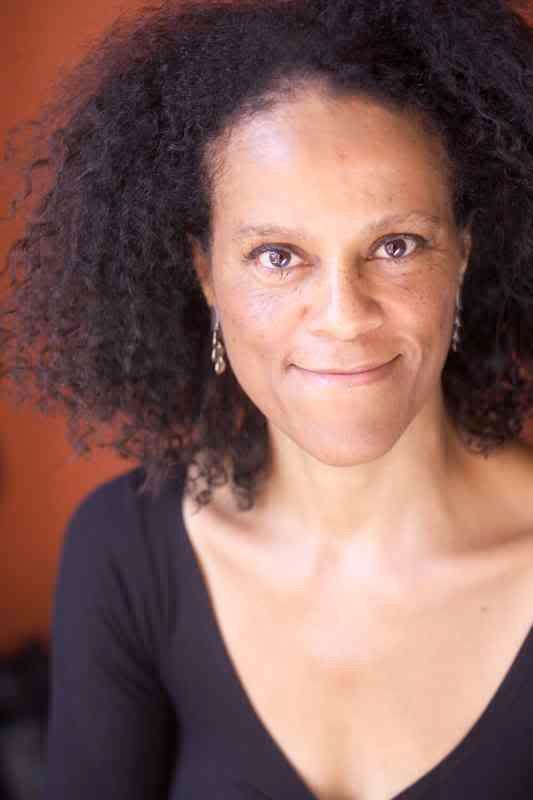
Bernardine Evaristo by KatieVandyckI frequently encounter talented students when I run creative writing workshops around the world, talent which may one day lead to publication, or not. As Thomas A. Edison famously said “Genius is 1% inspiration and 99% perspiration.” Without focus and hard work many a spark fizzles out. Sometimes this is what aspiring writers need to be told – that the craft of writing is something which has to be developed over many years and that you need tremendous drive. The first challenge is to complete a manuscript and get it published; the second is to keep doing it. It may appear that published writers are somehow just ‘lucky’, but the truth is that no one is going to publish a book that hasn’t been written. As the American motivational guru Anthony Robbins says, “The meeting of preparation with opportunity generates the offspring we call luck.”

Quite a few writers have passed through my workshops and eventually been published. I’m not saying this to take credit for their success, but to make the point that not all of them showed that special creative spark. But the other qualities they possessed: openness to learning and developing craft, determination, self-discipline, consistent hard-work, single-mindedness, and tenacity, were all major factors in their transformation into published writers of note. They also had self-belief. Over two thousand years ago the Roman poet Virgil wrote “They can because they think they can.” How true. When students cite lack of self-confidence as the reason why they’re not writing, or writing but not sending their work out to journals, agents or publishers, I suggest they go on motivational and confidence-building courses, or at least read the books (Feel the Fear and Do It Anyway is a good starter). I did. And yes, in true cringe-worthy fashion –it changed my life.


So it’s not about starting out fully-formed as a writer but working with what you have to grow your talents and give yourself the writing career you desire. I am a firm believer in taking responsibility and positive thinking at all times. This has led me to where I am today. If one door closes, I open another one – I don’t wait for someone to do it for me.


***


Bernardine Evaristo was born and raised in London where she still lives. Blonde Roots is her first prose novel. She has previously fused fiction with poetry in the novels, Soul Tourists (Penguin 05) and The Emperor’s Babe (Penguin 01). Bloodaxe Books will publish a new expanded edition of her verse novel Lara in 2009--the story of her family history with roots in England, Nigeria, Ireland, Brazil, and Germany. In 2007 she co-edited the Granta new writing anthology NW15. She has received several awards, her books have been a Book of the Year nine times for national newspapers and publications, and she is a fellow of the Royal Society of Literature and the Royal Society of Arts. For more information, please visit her website: www.bevaristo.net or her blog: www.bevaristo.wordpress.com.


Photo: Bernardine Evaristo by Katie Vandyck

March 6, 2009

Letter to a Young Writer: Pam Mordecai

Pamela Mordecai has published four collections of poetry, Journey Poem; De Man, a performance poem; Certifiable; and The True Blue of Islands and, with her husband Martin, a reference work, Culture and Customs of Jamaica.

Her first prose work, Pink Icing: stories, appeared in 2006 from Insomniac Press to enthusiastic reviews. Her children’s poems are well-known internationally and have for many years been used in textbooks and anthologies on all sides of the Atlantic. She has written five books for children as well as numerous textbooks. She blogs at http://jahworld-pmordecai.blogspot.com/


Dear Young Writer:


I’m using ‘young’ not to signify age, but to refer to how long you’ve been writing, which, I’m assuming, isn’t that long, even if you’re going to be a hundred on your next birthday. If you are looking at your first century, that’s cool, because you have so much more to write about when you put pen to paper. Old bones aren’t great for doing the hundred meter hurdles but they are exactly what writers need to sift around in as they look for a great story! If, however, you are a young-in-age as well as young-in-history writer, give thanks for time — time to do the things all writers must do and keep on doing: dream, research, draft, redraft, and most of all, and above all, read and read and read…All of which has been said before and all of which you have heard before. So this is not so much my advice to you as it is what I would wish for you.


I would wish the following things.


1. A Good Nose. This is necessary so you will not salivate at the enticing smell of every word you put down on a page, and also so that you will not be taken in by the spicy blandishments of words other writers have put down that are by no means a healthy literary meal because someone has decided to publish them. You want to save that mouth-water for the really good repast! A lot of poor entrées find themselves on to the book menu, while some of the healthiest literary consumables remain tucked away on dusty shelves or in bottom drawers, perhaps yours among them. A good writer sniffs out first, things that deserve to be put into the literary pot, and then, snout in the dirt like a pig hunting truffles, the best ways of saying them.


2. Persistence. There was an actor once. He was in his first role. It was a workshop production, in the round, of a play produced by the late Hugh Morrison. The actor had the part of a (Mexican, I think) peasant, and all he had to do was run in, throw himself to his knees, and say, “The rain! The rain!” (This was a not unimportant line, since the time was one of terrible drought.) Again and again he hurled himself upon the floor, and, try as he might, he could not get it right. But he kept going. I won’t tell you who it is, but he is one of the finest actors in the Caribbean, a veteran of stage, TV and the movies! Had he taken his earliest reviews to heart, our loss would have been enormous!


3. Thick Skin. I wish you the covering of the cascadura, since you must endure many disappointments and discouragements. Rejection slips are never welcome, and, unless you are very lucky, you will get many of these. Harder, though, may be the tossing-aside of people who dismiss your work, or folks, some of whom you may count as supporters or friends, who pigeonhole you. “A genre writer! Good at fantasy!” “Not bad at children’s stories.” “Good at travel writing — not much else.” This is where numbers one and two come in handy; married to five, they will take you where you need to go.


4. Pig-in-Mud Experience. Back with the pig again! This is the thing I most wish for you: that you are happy, consumed (ha! you’re the dinner now!) and content when you are engaged in the writing task. And I don’t mean that you are necessarily writing cheerful or funny stuff, or that it’s coming easily — far from it. Funny stuff is often the most heartbreaking, and the greatest exhilaration is to be had from the struggle to get it right. But there is a special high that comes from doing something that you want to do, and working hard at it, and a very special high when that something is writing, for it unites your senses and intellect, memory and imagination, art and craft in a unique way, a way that teaches you about the world, your fellow human beings, and yourself. Not all writers are happy when they are at work: some are anguished putting pen to paper or fingers to the keyboard. I have always been happy when I write, and I wish this for you.


5. Courage. Writing is not for the faint-hearted. Hang around with people who wish you well in the task. Go to places (workshops, readings, courses) that help build a stout heart and join others (writing groups, online or off) who can cheer you on and whose spirits you can help to buoy up.


6. A Solid Bottom Line. You will certainly enjoy this if Oprah buys the movie rights to one of your stories, but it is possible otherwise. You can earn your living from writing. Fame and fortune apart, it is satisfying to know that your writing is a bankable item, so much so that you need rely on nothing else for earning your living.


Blessings, then, on your aspirations, as an early writer named Luke, said, “pressed down, shaken together and running over…” May you ride on into a glorious sunset of many well-wrought books…


***