August 16, 2006

Rastafari and Renaming: A Model for Freedom

RastafariSince the inception of nation states in the West Indies, the process of “decolonizing the mind” has been the aim of many nationalist, artistic, and religious movements. As Rex Nettleford in an essay, “Caribbean Perspective: The Creative Potential and the Quality of Life” states, “West Indian society needs to restore the human being to the center of Caribbean life and society. Historically, he never was at the center of Caribbean life. The raison d’ etre of our existence has been commercial profit…The slave was at the center of the system not as human, but as property” (Nettleford, Caribbean Rhythms 314). 


In many of the nationalist, artistic, and religious movements, one of the most successful strategies has been the act of renaming, and Rastafari with the concepts of InI and I-man set a pattern in Jamaica that would dramatically re-order the thinking of the post-Independence generation.


The origin of I-man and InI are shrouded in the mystery. Joseph Owens in Dread argues plausibly that the “I” language of Rastafari was as a result of a misreading of the King James Version: “In referring to the King, for instance, the Roman numeral I, is read like the pronoun “I” and thus is best written as Haile Selassie-I” (45). Whatever the origins, Rastafari with the concept of InI revealed a system of thought that would sometimes resemble early Gnostic Christianity or Buddhism: “Traditional Buddhist meditation aims to transcend the subject-object barrier and realize the perfect oneness of the self and external reality” (Hochswender, The Buddha Your Mirror 84). Rastafari also extended the idea of oneness into their speech. So, incense became “I-shence” and creation became “I-ration.”(Owens 66).


 Rastafari also resembles the mystical forms of religious devotion that regard deity not as something to be addressed as “Thou” but as one with the divine. Oneness expressed in the symbolic language of InI represents the seamless integration of the human with the divine where it is hard to discern linguistically and conceptually where humanity begins and divinity ends. As Nettleford points out, “At the heart of his [Rastafari] religious system is the notion of his own divinity and the first person image of self. As if for emphasis the terms “I-n-I” and “I-man” are used as a constant reminder of the transformation of a non-person into a person”* (Nettleford, Dread xiv). Rastafari’s aims were no less than the redemption of Africans in the Americas. Nettleford continues, “God is in the world, not outside it…God is not only Man, he is a Man”(Nettleford, Dread xvi). Rastafari in a bold creative act of renaming themselves changed the story of Black people in Jamaica and in the Americas.


Renaming as a method of cultural liberation is not unique to Rastafari. In the poem, “Names,” by Derek Walcott, the speaker asks, “And when they named these bays/ bays/ was it nostalgia or irony?” (Walcott, Sea Grapes 41). And in Omeros, the meanings of names are echoed throughout the collection with the personae trying to define themselves despite the misspelling of names and things: “When he smiled at Achille’s canoe, In God we Troust, Achille said: “Leave it! Is God’ spelling and mine.” (Walcott, Omeros 8). Similarly, Kamau Braithwaite in responding to the colonialist attitudes in The Tempest bypasses all the “major” characters in the play and focuses on Sycorax, Caliban's mother, and develops his own “Sycorax style” as a methodology of artistic liberation-- a reversal of the initial obscenity of racist colonialism. Indeed, renaming or creatively misreading one’s antedcents has been argued by Harold Bloom as one of the methods that many writers have used to overcome the “anxiety of influence”—a condition that many artists/writers in the Caribbean must confront.


What is interesting about Rastafari, however, is that unlike other cultural movements when confronted with colonialism, Rastafari asserted themselves and refused to become the Other thereby ceding authority to the colonizer (e.g. Achebe’s Things Fall Apart). Rastafari placed themselves at the center of the I-niverse: “A sense of place, a sense of purpose are assumed to him who might otherwise be a captive in Babylon and barely exploited as the exploited of men. The assertive individualism of Rastafarianism is therefore a silent challenge to the propensity of secular political movements to freeze their kind into such categories as “the masses”…For to the Rastafarians each member of the masses or the proletariat has a personality, a divine dimension with direct routing to the Creator, Jah himself” (Nettleford, Dread xv).


“Rasta free the people,” is perhaps one of the truest lyrics that Buju ever sang and it mirrors the sentiments in “Redemption Song” by Bob Marley, “We forward in this generation triumphantly.” By the assertion of InI and I-man Rastafari changed the stories of victimhood punctuated by the trauma of slavery and colonialism into a call for immediate solutions, “So now you see the light, stand up for your rights” (Get up, Stand up). The former Negroes of Plantation America were given a new identity that had existed before time and if only they could recall their true names, they would know and overstand that they were children of the Most High, Haile- I, Selassie-I, Jah Rastafar-I. Even for non-adherents to the faith mired in cynical rationalism, it was a bold creative act and a model for freedom.


***


*InI is a visual and aural representation of inseparability of man and God.
Reblog this post [with Zemanta]

August 14, 2006

Frank and the Internet

More of our continuing saga in 60 words.

***

“Frank and the Internet”

Noises at 3 am in the computer room. I went downstairs to cuss. Frank had pushed the furniture into the middle of the room and was sitting calmly.

“This sounds like something out of The Matrix, but the Internet is like God--impersonal, always answering requests. But like Google, you gotta be persistent and specific.”

I went back to bed.

August 11, 2006

Happy Birthday, Roger Mais

Roger Mais was perhaps the most important writer to emerge from the nationalist movement which began with the labour rebellion of 1938. His play of that year, George William Gordon, which focused on the Morant Bay Rebellion of 1865, played an important role in the rehabilitation of the eponymous character, who was in conventional colonial history described as a rebel and traitor, and who would be proclaimed, on the centenary of the rebellion, a National Hero.

Mais became a writer for the weekly newspaper, Public Opinion, which was associated with the People's National Party. A column he wrote for the newspaper, entitled "Now We Know", critical of British colonial policy resulted in his imprisonment for sedition. This period of imprisonment was instrumental in the development of his first novel, The Hills Were Joyful Together, a work focused on working-class life in the Kingston of the 1940s. Mais's second novel, Brother Man, was a sympathetic exploration of the emergent Rastafari movement.

While Mais's first two novels had urban settings, his third novel, Black Lightning centered on an artist living in the countryside.

Mais was also known as a poet, and showed a fine command of lyricism, and a short-story writer. His short stories were collected in a volume entitled Listen, The Wind, thirty-two years after his death.

Mais's novels have been republished posthumously several times, an indication of his continuing importance to Caribbean literary history. He also had an influence on younger writers of the pre-independence period, notably John Hearne.

From Wikipedia
*
Roger Mais’s, Brother Man, opened the door for me to write about Rastafari and reggae. As the protagonist in “I Want to Disturb My Neighbor” says, “We accept the rastaman today. We see him and his fashion victims all around — the colors, the music, the hair, the food. But in those days in Jamaica decent people like my mother thought of them as cells of infection that had to be cut out. Decent girls were being seduced. Decent boys were dreading up their good, good hair and swearing their allegiance to Selassie, taking oaths. The disease was spreading, and music was both sperm and blood. They felt they had to stop the flow at any cost and the state already paid the police.”

I keep coming back to the courage of writers like Mais because despite his work and many others in forging a national identity, there are still people in Jamaica and in the blogosphere who still wish that Jamaica would have remained a colony and blame many of the social ills on Rastafari. In this time, in this year 2006 as Mikey Smith would say, “Mi cyaan believe it!”

Many writers of my generation owe a great debt to Roger Mais. His work made us realize the plight of the idren, of those living in the shanties around Beverly Hills, Jamaica. One of the first “brownings with a conscience” (Annie Paul), he pioneered a whole new way for us to look at ourselves.

Give thanks, Roger Mais!

Tags: Americas, Arts & Culture, Authors, books, Caribbean, Caribbean writers, fiction, Jamaica, Jamaican writers, Literature, Poetry, Rastafari, Writing.

August 9, 2006

Frank's Story

I’d said that I was going to stop with these 60 word short stories, but this is what happens when your crazy brother-in-law moves in with you. I realize now that I won’t get a lot of work that I want to get done, so I might as well just enjoy his company while he’s here.

“Frank’s Story”

When I found Frank, he was wasted.
“How much longer are you going to do this to yourself?”
“The universe,” he slurred, “once you recognize the building blocks is built on a series of yes/no switches. I’m just trying to find the right switch.”
I turned away in disgust, feeling less than pity.

***

Tags:


August 7, 2006

Jamaican Independence Day, 2006


Now is not the time to repeat the lies
that once made us happy, to dismiss
the subtle messages of winds that brought
human cargo to our island and exchanged
sweat for the sweetness of sugar cane—
a man’s worth measured in bundles
of rattoons, sprouting in a field of guns
carried by boys barely awakened
to the urgency of their dreams,
but would never see home,
girls who barely understood the demand
of blood, but would never see their daughters
grow old—betrayal of the Lignum Vitae’s
ever widening rings that survived hurricanes
and drought, our birthright bartered
for a few years of peace on a sliver of sand,
our toil put to rest in the pulse of the mangrove.


Here the podcast for the poem: Jamaican Independence Day, 2006

***


August 5, 2006

Fidel Castro and Hurricane Chris


I couldn't resist this one. Even Hurricane Chris is looking for Fidel.

There should be Technorati Tags like these:

Donde esta Fidel?
Fidel afuera
Buscando Fidel
Para donde va, Fidel?
Ay, Carajo!

But more importantly, the media should answer these questions:

Will Fidel be showing up on milk cartons?
Should we institute a Fidel Alert system for the highways?
Are Fidel, 2Pac, and Elvis planning a comeback tour in Las Vegas?
My trusted media sources, Jim Screechy and Van Doolu, tell me that they will be playing under the name, "The Three Amigos")


August 4, 2006

Reggae, Rastafari and Aesthetics

During the early seventies the music that came out of Jamaica shifted from the mellow, laidback rhythms of rocksteady to the grumbling bass lines of reggae. In many ways, the change reflected the growing anxiety of the post-Independence generation. The influence of reggae on verse (dub poetry) and fiction (reggae novel) has been considerable and the poet/critic Kwame Dawes in Natural Mysticism coined the term reggae aesthetic to describe the salient features which include religious, social, and archetypal models. Dawes also lists several examples of elder writers such as Dennis Scott and Kamau Brathwaite whose work falls into the category of the reggae aesthetic and several younger writers such as Opal Palmer Adisa and Colin Channer whose work reveal a “strong reggae grounding” (242). While it is not a manifesto of a literary style, the reggae aesthetic serves a useful function in describing the influence of reggae on the work of writers whose work is now at forefront of Jamaican literature.


In order to understand the dynamics of reggae, however, a clear understanding of Rastafari must be grasped. Reggae is an auditory representation of the experience of Rastafari which is based on the mystical union of the human and the divine. Rastafari, like many syncretized religions of the African diaspora seeks a unity (inity) of the personal, social, and intrapersonal aspects of being. This inity is expressed in the concept of InI, which depending on the context, could refer to the individual, the community, or divinity located in the personage of His Imperial Majesty, Haile Selassie I, Jah Ras Tafari. Everything begins and ends with InI. As Dawes explains, “Rastafarianism represents a fundamental break with traditional and conventional Judaeo-Christianity. It redefines the meaning of deity and recasts the figure of God in terms that are antithetical to colonial representations of the Christian godhead.

By establishing a god in Haile Selassie, Rastafarianism breaks away from the patterns of conventional Christianity that operate in Jamaica and brings into being a new and very elaborate series of modern myths” (98). Rastafari’s insistence on the validity of individual experience, the indwelling god, “I,” whose union with the ever living God, “I”, provided an intellectual and experiential basis to its claims. There was no difference between “I” and “I”. The Cartesian mind/body split and the “I” and “Thou” of Buber were obliterated. As Dawes further states, “This lends to reggae a defiant but complex mythology and offers the reggae influenced artist an approach to art that allows for a dialogue between the political and the spiritual. Essentially, this quality in reggae defies much of the binarism that characterises much of western discourse” (99).

In other words, the legitimacy of a reggae influenced artist’s work would be based on her depiction of the experiences of the landscape, peoples, religions and cultures of the Caribbean or Plantation America. Some of the earliest expressions of this claim can be seen in Brother Man by Roger Mais, the film, The Harder They Come,” and , the music of Don Drummond in “Addis Ababa.” The choice in the title of Drummond’s song as Dawes explains, “Presents a mythological shift in the Caribbean person’s relationship with Africa… for it redefines the terms in which our history is approached and represents a defiant critique of western historical practice. It does this not simply by attacking it and questioning it, but by replacing it with another mythological framework” (99). This shift would change the consciousness of a generation.


*
In my case, it was not an easy transition. I would be studying James Joyce in the upper rooms of Scott Hall in Jamaica College, then go home to listen to some reggae coming from my next door neighbor’s house, then play some football under the shadow of Long Mountain with the my friends and Gilly Dread, Garrick, and Seeco, then spend the rest of the night reasoning with the idren until it was time to go home and sleep. This was pretty much the routine except on Sundays when I went to the Kingdom Hall with my mother. And then it would be another Monday morning and back to Joyce.


It was very difficult for me to reconcile Joyce’s explanations of fleeing the “nets” of Ireland with what I was seeing around me. For as eager as he was to escape Ireland, I was just as ready to embrace Jamaica. And reading the work of writers such as Tony McNeill only served to heighten my sense of exhilaration--of being Jamaican: “This morning I chose to stay home, / To watch the cats and think of/ Columbus. And the grass is precious/ merely because it belongs to us” (Reel from ‘The Life-Movie). But Joycean aesthetics, especially as outlined in Portrait of the Artist as a Young Man, can be very seductive especially because Joyce’s ideas describe the experience of perception of an aesthetic object where “the mind is arrested and raised above desire and loathing” (Portrait of the Artist as a Young Man). It was an immediate problem that had to be solved. For while Joyce was interested in the reader achieving an epiphany or stasis of mind, reggae seemed to ask, what happens after you put down the book? It was almost like the old Zen saying, "Before Enlightenment chop wood, carry water; after Enlightenment, chop wood carry water." The problem was historically, it was InI who “chopped the wood and carried the water,” and I could not ignore the plight of the sufferers for Joycean hermeneutics. Joyce be damned, I would be on the side of the sufferers.


Yet not all of Joyce’s methods could be ignored, especially his use of archetypes from Homer’s Odyssey. For although I would not use western archetypes, the figures from Lukumi, Vodoun, Candomble and Xango proved to be a fertile ground. In Benjamin, My Son, and xango music, I used the figures from the syncretized Yoruba pantheon, Papa Legba, Xango, and Oshun. Papa Legba, the Haitian equivalent of Eleggua or as he is known in Jamaica as Anancy is an important loa in the African diaspora for he represents the ability to survive in a hostile environment by using one’s wits and language to outsmart the oppressor: “In the language of the deejays, toasters, and song writers, language is treated as a weapon of liberation.” (Dawes 98). Anancy far from being an object of pity or a victim is a sufferer who triumphs over the downpressors. Indeed, much of the current debate against the use of Jamaican misses this point: InI was paid for with blood. Anancy stories are the life stories of Bob Marley, Jimmy Cliff, Bob Andy and nearly every artist who has come out of Jamaica: the triumph of the sufferers.


It was also Joyce’s transformation of the Odyssey within the Irish landscape with thoroughly Irish characters that intrigued me. Finnegan’s Wake, which collapses all of human history an mythology into a cyclical tale that begins and ends in Ireland, paralleled my understanding of reggae and Rastafari. The circular bass line of Family Man mirrored the movement of the lyrics on songs such as , “Jump Nyabinghi” which saw the events of the Bible and modern events as contemporaneous: “It remind I of the days in Jericho/ When we trodding down Jericho walls/These are the days when we'll trod through Babylon/ Gonna trod until Babylon falls,” and elucidated the methodology of Rastafari reasoning: “The lyrics of many reggae artists explore the relationship between history and the present, an exploration that frequently redefines both past and present in a radical act of reinterpretation” (Dawes 99). The fusion of mythology and social realism which also informed the work of Kamau Brathwaite’s, The Arrivants, and Derek Walcott’s, Omeros, would become the touchstone for many writers who could not seek solace in the classics. Their situation was to James Baldwin’s realization after watching many Westerns: “After a while, you realized that you were the Indians” (James Baldwin: The Price of the Ticket).


For many of the writers who came of age when reggae and Rastafari had moved from the ghettos of Trench Town and into the living rooms of the Jamaican bourgeoisie, this potent mix along with the growing nationalism provided a philosophical, mythological, and aesthetic alternative to the colonial models of history and literature that were best exemplified in The Tempest. Rastafari and reggae stepped right into the middle of the debate by dubbing Prospero as downpressor and Caliban as a baldhead. Truth be told, Rastafari ignored the whole argument and told its own story. For the reggae influenced writer, Rastafari legitimized the experiences of Black people in the Americas and became the means of overstanding power and the privileging of one text or dialect over another. Drawing on these vast resources, s/he could champion the plight of the sufferers and use the archetypes, landscapes, images and characters of Plantation America to be authentic to the experience of the lives of Caribbean peoples.

Reblog this post [with Zemanta]

August 2, 2006

"Anna and the Hurricane"

Here is the last story (at least for now) inspired by Mad Bull’s & Pan in 60’s challenge. In some ways these short-shorts were harder and easier to write than most forms of writing. The short-shorts are similar to short stories with a beginning, middle, and end, but they have the compactness of poetry. Unlike free verse, however, which can be infinite, these short-shorts with their limitation of 60 words are similar to sonnets. And as Clint Eastwood said in Magnum Force: “A man’s gotta know his limitations.”


“Anna and the Hurricane”

After the hurricane, Anna and I were waiting in line at the store to buy ice and water.
As soon as the door opened, a woman rammed through the crowd with a shopping cart and entered the store ahead of everyone.
“If you can’t love the crazy people,” Anna said, “you can’t love yourself.”
We formed the line again.
***

Tags:


July 31, 2006

Frank's Heart Sutra

Just came back from a great 3 days on South Beach. Here is another story inspired by Mad Bull's & Pan in 60’s challenge:

“Frank’s Heart Sutra”

Frank sucked on the cigarette as if he were practicing Tong-Len.

“I told your son I’d left the money on the Buddha table—the table with the Buddha statue. Suddenly, I realized it was the Buddha table all by itself—all things were Buddha things and no thing was Buddha--my Heart Sutra.

Smoke hung lazily around his shoulders.

***

Tags:


July 28, 2006

A Fable of Freedom: "I Shot the Sheriff"

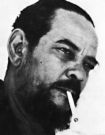
Bob MarleyWesterns and the King James Version are two of the main staples of the Jamaican imagination. This is understandable because both share a similar plot and a cast of recognizable characters. The King James Version and most Westerns begin with trouble (original sin or “bad guys” in Dodge City), a “good guy” or hero emerges in the middle of the feud (Samson or Wyatt Earp), and an alignment of forces leads to a final showdown (OK Corral or Valley of Megiddo). The bad guys (Satan or the Clantons) are annihilated; the good guys win and ride off into the sunset on their white horses. 

The fictions that have emerged from Jamaica also follow a similar pattern. But given the history of colonialism and racism in Jamaica, the stories sometimes parody the conventions. For example, in the classic Jamaican film, The Harder They Come, there are clearly discernible “bad guys” (record producers) and a “good guy,” Ivan, a singer who is willing to make any sacrifice for his music. Because of the unfair treatment by the record producers, Ivan’s crimes begin small, but then escalate when he takes the law into his own hands. This leads to a showdown on a North Coast beach. To a certain extent, the actions that lead up to Ivan’s shootout with the police are inevitable because Ivan was thrust into an unjust system and given his temperament, the resulting bloodbath was to be expected. Yet, what is made clear in the film is that Ivan’s original sin was being born Black.

“I was born with a price on my head,” said Bob Marley in a 1978 interview (Bob Marley in His Own Words by Ian McCann). It is interesting to note that Marley uses the language of the “Wanted” poster to describe an almost fatalistic viewpoint which seems uncharacteristic with his usual positive viewpoints and the teachings of Rastafari. Yet, both these themes are also evident in one of this most popular song, "I Shot the Sheriff.”

The song begins with the speaker already in trouble, “All around in my home town/ They are trying to track me down/ They say they want to bring me in guilty/ For the killing of a deputy/ For the life of a deputy.” The speaker knows the system is stacked against him because he is to be brought in “guilty” for a crime he would never deign to consider, “the killing of a deputy.” Deputies are not in his league. He knows he killed the “Sheriff” and it is a “capital offense.” But he has an explanation.

“Sheriff John Brown always hated me/ For what I don't know/Ev'ry time I plant a seed/ He said, "Kill it before it grows."/ He said, "Kill them before they grow." The anonymity of “Sheriff John Brown” makes it clear that the “Sheriff’s” influence is pervasive (almost like Agent Smith in The Matrix), and the speaker’s plight has been brought about not by anything that he has done, but by the enmity that “Sheriff John Brown” has towards him for a Kafkaesque crime for which the speaker knows there is only one possible ending: death. The "seed" is metaphorical and could stand for any on the "dangerous" ideas that Rastafari espouse: humans as god or each human as ultimately responsible for his/her choices. These ideas would be a threat to any sytem of dominance and control represented in the Bible as Pharoah, Herod, or Nebuchadnezzar or in the speech of Rastafari as Rome or Babylon and would have to be "killed" or stopped before they could spread among the populace who would embrace these ideas of freedom. Something has to give.

The key to understanding the lyric comes in the final stanza: “Freedom came my way one day/ And I started out of town/ All of a sudden I saw Sheriff John Brown/ Aiming to shoot me down/ So I shot, I shot, I shot him down/ And I say, if I am guilty I will pay.” This was not a fight that the speaker wanted, but the situation was created by the “Sheriff.” The speaker was willing to leave, but the “Sheriff” was about to kill him, so he acted in self-defense. The speaker concludes his ballad with a complex blend of Rastafari and Jamaican mythology and folklore.

"The Sheriff," then represents the antithesis of freedom--the repressive codes of conduct that have been codified into laws that serve the oppressors and have been internalized as the "proper" codes of conduct. In Western mythology, it's the dragon that must be slain.

“Reflexes had the better of me/And what is to be must be/Ev'ry day the bucket a-go-a well/One day the bottom a-go drop out.” The speaker’s defense rests on his claim: “Reflexes had the better of me.” It is to be noted that within Rastafarian mythology, for the Nya man of Africa, the natural, original man who lives in complete harmony with life and his surroundings, “reflexes” are not a crime (Rastafari: An Ancient Tradition). Reflexes are part of his natural makeup and his right to self-hood is expressed in the concept of InI—the mystical union of man with the divine. The Rastaman’s lifelong mission is to reflect the African Nya man in his choice of right foods and right actions (Iwa in the Yoruba religion). In Bob’s vocabulary, Nya man could also be substituted for “higher man” (“We are the children of the higher man”)—the idea of the indwelling god (the i-nity of InI) which is part of the West African religious continuum.

The speaker then says, “What is to be, must be,” and then counters with “Every day the bucket a go a well/ One day the bottom a go drop out.” Besides being another example of Marley’s lyrical balancing that is a trademark of his writing, “How long shall they kill our prophets/ While we stand aside and look/ Some say it's just a part of it/ We've got to fulfill the book,” he completes the circle with the folk wisdom of Jamaica, “Ev'ry day the bucket a-go-a well/One day the bottom a-go drop out,” and admits a kind of fatalism. However, it is a kind of fatalism that is driven by the actions of the persona. In other words, actions (desires) drive destinies. There are consequences to actions and any repeated action, “Ev'ry day the bucket a-go-a well,” is sure to bring about a certain consequence, “One day the bottom a-go drop out.” Is the hero’s destiny inevitable? We’re back to The Matrix: “Ohh, what's really going to bake your noodle later on is, would you still have broken it if I hadn't said anything?”

The song ends with the speaker’s insistence that he shot the “Sheriff” and not the deputy. This disdain for deputies is typical of heroes who even when their life is on the line recognize the greater enemy, “Go and tell that fox, 'Behold, I cast out demons’,” or “If my kingdom were of this world, then would my servants fight.” Underlings such as Herod and Pilate were the lapdogs of Rome. The real fight wasn’t with the “deputies”; it was with the “Sherriff” (or the Architect 0f The Matrix Revolutions)

In the framework of Rastafari mythology, politicians, the police and courts are lackeys of Babylon—the system of institutionalized racism/colonialism that values capital over labor. The “Sheriff,” then, would be the all encompassing externalized rules (in time, internalized which is where the real battle is fought) of Babylonian conformity--everything that if a Rastaman (Nya Man) is to be free, he must meet head-on and deny. The Rastaman asserts his dignity and right to live on moral grounds in a system that would deny his existence. The final showdown in the Valley of Megiddo or the town of Gibbeah is inevitable.

The actions of the protagonist also match the themes within Marley’s other work because the protagonist is willing to fight against an enemy that threatens his physical or moral integrity “Brother you're right, you're right/ You're right, you're right, you're so right/We gonna fight, we'll have to fight/ We gonna fight, fight for our rights” (“Zimbabwe”). The speaker is not cowering in the shadow of the “Sheriff” nor is he willing to become a martyr, “But if you know what life is worth/You would look for yours on earth/And now you see the light/ You stand up for your rights” (“Get up, Stand up’) and confronts the “Sheriff” because his life is on the line, ‘You want come cold I up/ But you can't come cold I up” (“Trench Town Rock”). He is willing to be branded as a criminal because he relies on the law of action and consequence, “For every little action/There’s a reaction,” (“Satisfy My Soul”). Or as Bob said in an interview with Neville Willoughby, “The only law is the law of life.” (So Much Things to Say)

In the symbolic language of Jamaica, an island beset on all sides by powerful forces, the identification with the “Children of Israel” has become part of the symbolic language of the nation (“The Israelites” by Desmond Dekker). Similarly, in the fictive imagination of Rastafari, the “Sheriff” is the equivalent of Babylon of which Pharaoh, Nebuchadnezzar, Herod, Pilate, Tony Blair and George Bush are “deputies.” For the Rastaman to survive, there can only be one outcome in the victory of “good over evil’ (‘War”). The hero must “shoot the Sheriff.”

***


If you are searching for posts about Bob Marley, Marcus Garvey, Rastafari, or Dennis Scott, please check the archives.

Reblog this post [with Zemanta]
Also, if you enjoyed this article, please visit my Author page @ Amazon.com 

July 27, 2006

Give Thanks, Miss Lou!

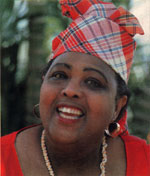
Mis LouWhen I began blogging and doing the livications of great Caribbean writers/artists, I told myself that I would not crowd this space with obituaries. Most of my adolescent years were spent in the company of Rastafari who believe in ever-living life. So, the word “death” or any homophone such as “ded”-dication is not in Rastafari vocabulary. I agree with that philosophy. It’s not a Pollyanna point-of-view. Death is a reality. It is companion that I know only too well. Jamaica has killed some of my dearest friends, but that doesn’t mean I’m going to walk with death.

I had planned to write a livication for Louise Bennett-Coverly on September 17, 2006, and I still plan to do so. And although I don’t want to write obits for Caribbean artists in the blog (I resisted writing one for Desmond Dekker), Miss Lou is greater than all of that. Her life is more significant than this belief (which I will have to rethink) because she has contributed so much to my life and the lives of Caribbean people. Jeremy Taylor over at Caribbean Beat has said it better than I ever could in the post: Miss Lou 1919-2006:

“In most Caribbean countries, you can identify an artist (sometimes a group of artists) who managed to engineer crucial cultural change in parallel with the movement for political independence. After long periods as colonies, these countries had to learn that it's all right to be yourself: to use your own language, sing your own songs, dance your own dances, and put them at the centre of your life, not hidden away as something to be apologised for. You don't have to mimic the colonial culture, speak like the colonisers, sing like the colonisers, or (heaven help us) dance like the colonisers.”

Miss Lou made many of us feel at home in our own skins. I may be giving some of the planned livication away, but I didn’t always feel this way about Miss Lou. As a youngster, I viewed Miss Lou as a embarrassment. Here was this “Mammy”-looking Black woman in a tie-head that looked like she just stepped off a banana boat. She appeared to be reinforcing every stereotype of the fat, Black woman that many of us were trying to eliminate from our consciousness. It was a shame! Then, I started reading her poetry and recognized the revolutionary stance behind poems such as “Colonization in Reverse.” Still, I wasn’t convinced and I read Mervyn Morris’ review of her work, and felt more confident about my estimation. Miss Lou was a poet of consummate craft.

The work of Miss Lou and artists such as Bob Marley, Sparrow, and Kitchener is the reason why so many Jamaican/Caribbean people can walk around as if they own planet.

Just being yourself. What a wonderful feeling.

Give thanks, Miss Lou.
***


Tags:


July 26, 2006

"Woman Hold Her Head and Cry"


“Woman Hold Her Head and Cry”

Anna, her face wet with tears, wiped her eyes.

“Think he’s hit rock bottom with this DUI?”

“I don’t know. He’s been treating these wake-up calls the way people treat their alarm clocks. They hit snooze and keep on sleeping.”

At the end of the hallway, a man she barely recognized as her son was escorted to the holding area.


***

On Friday, I’ll be posting “A Fable of Freedom: I Shot the Sheriff.”