Showing posts with label Peter Tosh. Show all posts

October 16, 2013

Human Rights in the Caribbean: Using Stories and Poems to Discuss Human Rights


When Christopher Columbus set foot on San Salvador, the struggle for human dignity that had begun with Cyrus of Persia (c. 600 BC or 576 BC–530 BC), and eventually spread across Europe assumed a different context. Out of that initial encounter of a colonizing nation and native peoples, the need to define human rights vis-à-vis the indigenous populations, who were perceived as the Other, became a preoccupation of the English, French, Spanish, and Dutch nations. As commerce developed between the colonial powers and the colonies, in the quest to increase the production of sugar cane and its byproducts, a cheap labor force was needed; this fateful encounter led to the genocide of native peoples.

The Slave Trade and the horrors of the Atlantic Holocaust ensued and in order to maintain colonial domination, a caste system based on race and class was enshrined into law, which effectively transformed New World Africans and indigenous peoples into non-persons. Simply put, in law and customs, New World Africans and indigenous peoples were less than human and therefore did not have any rights.

These patterns of behavior became part of the culture of the Caribbean and long after former colonies gained their independence from the "fatherlands," the legacy of slavery, patriarchy, and colonialism continued in many forms that have had disastrous effects on the psyche of the oppressed.

Jamaica, one of the earliest sites of rebellion against the inhuman legacy of slavery and colonialism, has had an enduring history of preserving human dignity in the figures of Queen Nanny, Sam Sharpe, Paul Bogle, and Marcus Garvey. In nearly every aspect of Jamaican culture, the struggle for human rights has become a raison d'être for the creation of art. In popular music, musicians/songwriters such as Bob Marley, Peter Tosh, Burning Spear, and Bob Andy, have made the cause of human rights an integral part of their work.

This is also true in the literary arts where writers such as Claude McKay, Roger Mais, and Orlando Patterson laid the foundation for many of the writers from the Caribbean Boomer generation to continue the struggle in poems, short stories, and novels.

Here is just a partial list of Caribbean writers (some of whom have been featured onthis blog) whose work explores the issues of human rights:

Robert Antoni
Opal Adisa
Julia Alvarez
Reinaldo Arenas
Edward Baugh
James Berry
Neil Bissondath
Dionne Brand
 
Kamau Brathwaite
George Campbell
Jan Carew
Patrick Chamoiseau
G. Cabrera Infante
Alejo Carpentier
 
Martin Carter
Adrian Castro
Colin Channer
Michelle Cliff
Merle Collins
Afua Cooper
 
Christine Craig
Fred D’Aguiar

Edwidge Danticat
Rene Depestre
Oscar Dathorne
Kwame Dawes
Junot Diaz
Zee Edgell
Garfield Ellis
Frantz Fanon
Rosario Ferre
Brenda Flanagan
Rawle Frederick
Marcus Garvey
Thomas Glave
Edouard Glissant
Lorna Goodison
Jean Goulbourne
Nicolas Guillen
Wilson Harris
John Hearne
Nalo Hopkinson
Slade Hopkinson
Cynthia James
Janet Jagan
 
Mutabaruka
VS Naipaul
Oku Onoura
Orlando Patterson
Sasenarine Persaud
Caryl Phillips
Velma Pollard
Patricia Powell
Jennifer Rahim
Jacques Roumain
VS Reid
 
Elaine “Jamaica Kincaid” Potter
Walter Rodney
Andrew Salkey
Dennis Scott
Mikey Smith
Malachi Smith

Virgil Suarez

Michael Ekweueme Thelwell
Ana Lydia Vega


***

July 9, 2012

One More Reason to Exonerate Marcus Garvey: Gratitude


What goes around…comes around. Both good and bad. In this case, it is my gratitude to Marcus Garvey, who has inspired my writing and the creation of this blog, which has fueled my desire for his exoneration.


I taught Marcus Garvey for many years and the typical response of my students, if they had heard the name Marcus Garvey, was similar to the scene Justin Hansford describes in "Jailing a Rainbow":


Garvey? Oh yeah, that Back to Africa guy, right? Didn’t he have some crazy scheme to put Black people on a ship and send them to Africa to create some empire in the jungle or something? Well, that’s pretty crazy! That’s why it never worked anyway.


The first time, I heard those words or similar sentiments, my blood boiled. But I learned "to keep cool." Marcus would have liked that. They were students--young, inexperienced, innocent. And I was their teacher, so I would have to teach them.


I'd have to teach them that Marcus Garvey's mission was more than the Black Star Line. That the Black Star Line was one of the expressions of Garvey's mission: the upliftment of Africans. I'd have to teach them that Garvey's quest began from an epiphany after he had witnessed the many injustices against New World Africans:


I was determined that the black man would not continue to be kicked about, as I had seen in Central America, and as I read of it in America. Where is the black man's government? Where is his King and his kingdom? Where is his President, his country, his men of big affairs? I could not find them, and then I declared, 'I will help to make them.' My brain was afire.


Garvey recognized the systemic nature of the oppression, which Rastafari would later name as Babylon. It was a s[h]ystem, as Peter Tosh would say that was founded on injustice because it excluded New World Africans from competing for the good and services in the national and world economy. This system was enforced economically and militarily to enslave the bodies of New World Africans. But the most effective method was the insidious propaganda: Africans were inferior to Europeans. In other words, White privilege  was the norm and anything else was, well...not proper.


Not only did Europeans and their descendants promote this propaganda (and why shouldn't they? They were rational agents acting out of self-interest), but Africans and their descendants also believed this and sometimes acted against their own self-interests. Hence, Malcolm X's observation about field slaves and house slaves.


Marcus Garvey sought to establish a counterculture of resistance of European values while at the same time building a solid economic base for New World Africans,which he hoped would increase their self-reliance, self-esteem, and sense of identity. Garvey rightly diagnosed the central challenge within the Black community, which is revealed in how we think about each other and ourselves: As Man Thinks So Is He.


Marcus Garvey's cause was justice, plain and simple. And it is ironic that unjust methods were used to malign his good name and to bring about his eventual imprisonment on fraudulent charges.


Yet, despite the calumnies brought against him, Marcus Garvey continued to work for justice and freedom of Africans. I imagine him every day putting on his suit and his hat and working for the liberation of his people. Some days it was glitzy and glamorous, like speaking to thousands of supporters in Madison Square Garden and on other days, it was dodging stones from misguided children.


But this is the nature of the struggle…a luta continua…. day-by-day, brick by brick…one mind at a time.


Marcus was fighting for something larger than himself and as a teacher who encounters on a daily basis the effects of this lack of identity, lack of self-esteem and self-reliance, the exoneration of Marcus Garvey's name, it is hoped, will  clear the name of a Black man who was unjustly convicted; honor the legacy of  a hero in the struggle for Black identity, and draw attention to the work of Marcus Garvey, especially his ideas about personal responsibility and success, which are sorely needed in our community.


Therefore, we are petitioning President Barack Obama to exonerate Marcus Mosiah Garvey and to clear his good name.


Here is the link to sign the petition:


SIGNATURES NEEDED BY AUGUST 17, 2012, TO CELEBRATE MARCUS GARVEY'S 125th BIRTHDAY: 5,000

June 25, 2012

Caribbean-American Values


Graphic by Don Rico Ricketts


By Geoffrey Philp


During this year's Haitian Flag Day ceremony at Miami Dade College, Beatrice Louissaint, CEO of the Southern Florida Minority Supplier Development Council, spoke eloquently about the values that have helped her to achieve her much deserved success. In her speech, Ms. Louissaint drew upon her experience of leaving Haiti "equipped with 6 words of English and a strong family heritage," and attributed her meteoric rise with the Caribbean-American community to her "Six Great Loves": "God, family, self, education, hard work, community and country."


It was a moving speech and for many Caribbean-Americans in the audience, it was a confirmation of the values to which many of us have committed our lives. These values have shaped our identity and have laid the foundation for our success.


Yet, the list is incomplete. For I would add justice.


Justice has been the cornerstone of the Haitian/Caribbean revolution, which began in Bois Caiman under the leadership of the Jamaican mystic, Boukman, and was guided by the Haitian general, Toussaint L'Ouverture. As C.L.R. James argued in The Black Jacobins, one of the first official acts of Toussaint L'Ouverture was to put an end to slavery, the greatest injustice of the era: "Slavery was forever abolished. Every man, whatever his colour, was admissible to all employments, and there was to exist no other distinction than that of virtues and talents" (263).


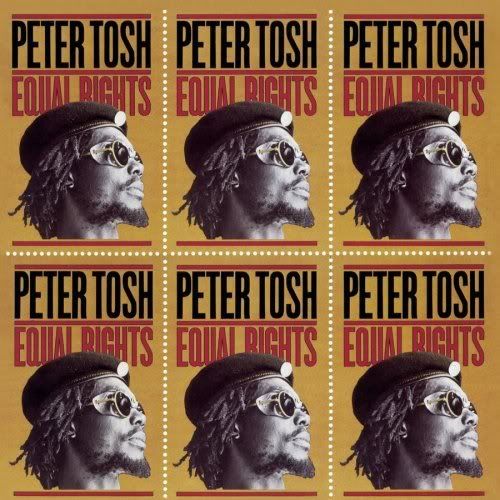
Justice is a human value and gives meaning to our lives. Without justice, we are reduced to existence that is "poor, nasty, brutish, and short." It is this love of justice that is echoed in many national anthems of the Caribbean and in the lyrics of beloved songwriters such as Peter Tosh: "I don't want no peace/I need equal rights and justice" ("Equal Rights").


It is because of the grave injustice that was committed against a leader of the first and largest economic justice movement in the USA, Marcus Mosiah Garvey, that many of us are petitioning President Barack Obama to exonerate Mr. Garvey and to clear his name of any criminal wrongdoing.


If you are a lover of justice, please add your name to the petition:


We are petitioning President Barack Obama to exonerate the Rt. Excellent Marcus Mosiah Garvey, leader of the first and largest economic justice movement in the USA and the world, and the first named National Hero of Jamaica.

On January 12, 1922, Marcus Garvey, founder of the UNIA, was arrested by the Bureau of Investigation and charged with mail fraud. In 1925, Marcus Garvey began serving a five-year sentence in the US penitentiary in Atlanta, Georgia. After several appeals, his sentence was eventually commuted by President Calvin Coolidge, and he was deported to Jamaica. It is now abundantly clear (and legal scholars agree) that Garvey did not commit any criminal acts, but as Professor Judith Stein has stated, “his politics were on trial."

We think the President will agree that this year, 2012, the 125th anniversary of Marcus Garvey's birth, is a most timely moment to correct this historic miscarriage of justice.


***

Blog Disclosure Policy


Geoffrey Philp’s Blog Spot receives a percentage of the purchase price on anything you buy through links to Amazon, Shambala Books, Hay House, or any of the Google ads or Google Custom Search.


***

Disclaimer of Endorsement


The documents posted on this Web site may contain hypertext links or pointers to information created and maintained by other public and private organizations. These links and pointers are provided for visitors' convenience. I do not control or guarantee the accuracy, relevance, timeliness, or completeness of any linked information. Further, the inclusion of links or pointers to other Web sites or agencies is not intended to assign importance to those sites and the information contained therein, nor is it intended to endorse, recommend, or favor any views expressed, or commercial products or services offered on these outside sites, or the organizations sponsoring the sites, by trade name, trademark, manufacture, or otherwise.


Reference in this Web site to any specific commercial products, processes, or services, or the use of any trade, firm or corporation name is for the information and convenience of the site's visitors, and does not constitute endorsement, recommendation, or favoring by this blog.

February 2, 2007

Equal Rights: Reggae and Social Change

Peter Tosh


Equal Rights: Reggae and Social Change
January 11 – February 28, 2007
Main Library, Auditorium
This traveling exhibition tells the story of 30 years of Jamaican art, music, and social change throughout the African Diaspora with words and amazing album cover art from landmark records by Ras Michael, Louise Bennett, The Skatalites, Bob Marley and the Wailers, Peter Tosh, and many more. Co-curated by Herbie Miller and Josh Chamberlain, and organized by Catherine Amidon and the Karl Drerup Art Gallery and Exhibitions Program at Plymouth State University.


***