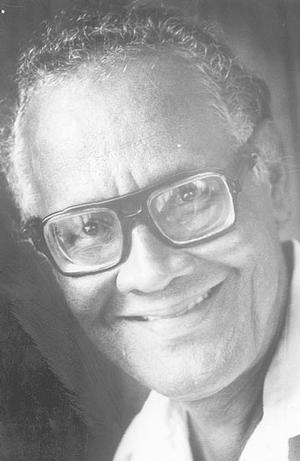
 Martin Carter is known primarily as a voice of protest against British colonialism. It is a well deserved distinction. Carter was not a poet who used his talents to merely showcase his fluency with words. His themes of freedom, defiance, and the power of the imagination are rooted in the people and the landscape of Guyana.
And yet, years after the revolution has been betrayed, his original vision bears witness against the racial animosities fueled by craven political aspirations. Martin Carter’s poems mock these ambitions by their insistence on the necessity of love which propels his work into the annals of the prophetic:
This is the dark time, my love
it is the season of oppression, dark metal
and tears;
it is the festival of guns
the carnival of misery;
everywhere the faces of men are strained
and anxious
from Poems of Resistance
Martin Carter belonged to that generation of writers whose vision of community in their respective homelands extended to the rest of the Caribbean, and represented the highest ideals of the region. If Carter’s poems could sink into our bone and marrow, we would not face the ecological disasters that are so prevalent in the Caribbean.
It is still a “dark time” for us in Guyana and the Caribbean, but Carter made us realize that there was a time when hope was brightest despite the obstacles that we faced. He was willing to be imprisoned and die for that hope. Carter’s hope was not a small flame, but a furnace. His poems endure because of his lifelong commitment to his country, his people, and his art.
Give thanks, Martin Carter.
***
For more information on Martin Carter, please visit, http://www.martincarter.blogspot.com/


