Showing posts sorted by date for query Bob Marley. Sort by relevance Show all posts

April 19, 2026

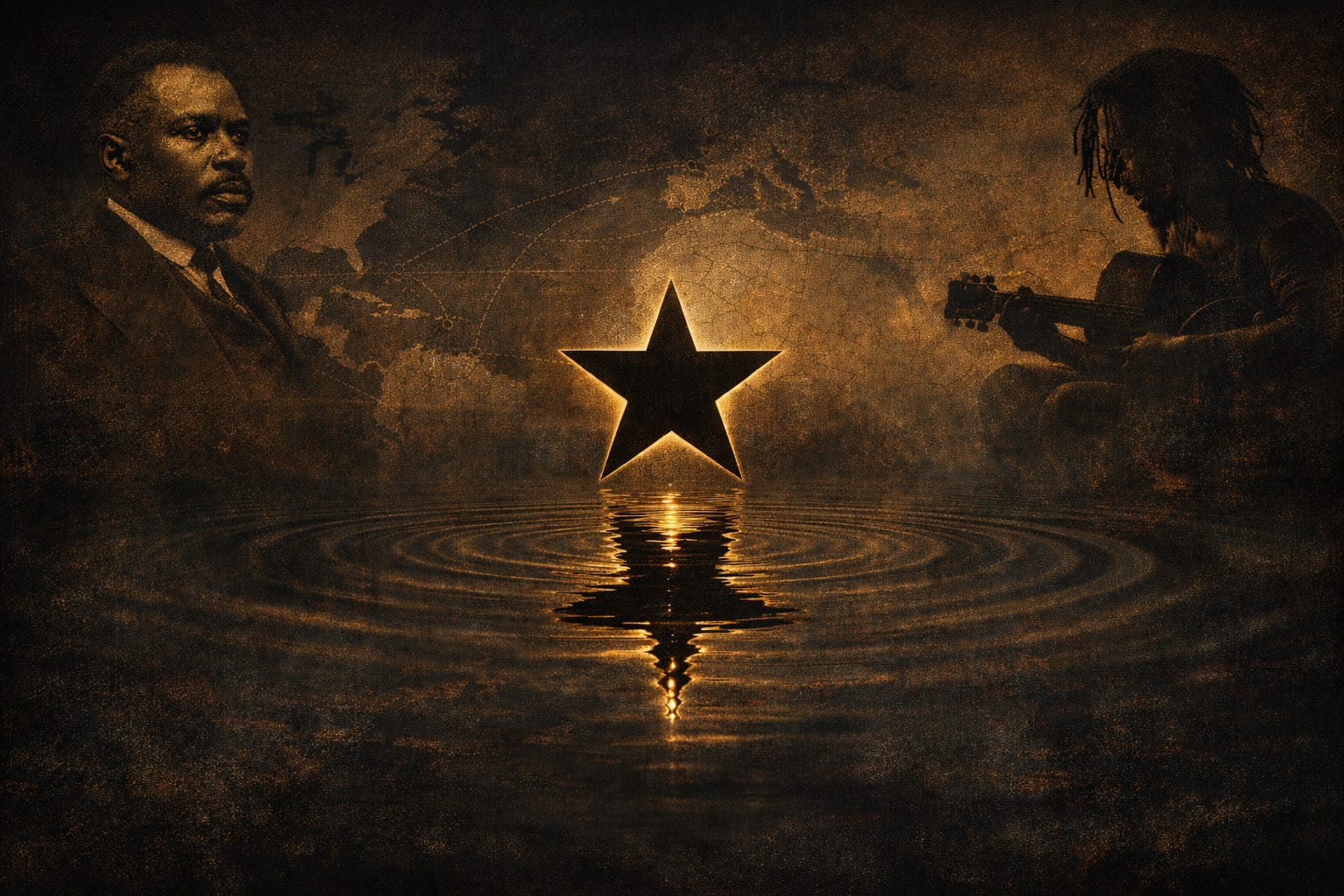
Garvey’s Map, Marley’s Music: Eight Stages to Mental Sovereignty

Somewhere between Toronto in 1937 and Trench Town in the 1960s, Marcus Garvey’s curriculum found a new teacher.

According to Mwariama Kamau, historian for the UNIA, Garvey’s work was a restoration of African consciousness, driven by what Kamau describes as “an ancestral imperative” to liberate his people from social, political, economic, and spiritual bondage (Kamau). In September 1937, Garvey assembled a small group of trusted organizers in Toronto and ran them through forty-two lessons with twelve hours of instruction a day for a month. He called it the Course of African Philosophy. The lessons mapped what I have distilled into eight stages of psychological liberation: Awakening, Confrontation, Reorientation, Continuity, Purpose, Discipline, Organization, and Individual Genius and Mental Sovereignty (Garvey, Message xv).

After Garvey’s death, the forty-two lessons survived in fragments that Tony Martin collected into Message to the People. But the transmission of Garvey’s teachings also ran through Jamaica. The herald was Rastafari. Bob was its voice.

Garvey had founded the UNIA in Jamaica in 1914, and his vision of African redemption never left the island. It moved into Rastafari, which took Garvey’s prophecy about the crowning of an African king as its founding theology. Bob was Rastafari. He did not encounter Garvey’s ideas as history. He absorbed them. Then, set them to music.

Across albums recorded between 1964 and 1980, Bob, like Garvey, transformed what was happening to us into what looks, in retrospect, less like coincidence and more like a mission. The two men never met. Garvey died in 1940. Bob was born in 1945. What passed between them was transmission, the kind that moves through a people who are still working out the same problem.

When Garvey’s words became music, four things changed. The reach expanded from twelve organizers in a Toronto room to every radio, every record player, every street corner on six continents. The access dropped from literacy and membership to nothing more than ears and a body that could feel rhythm. The memory deepened from intellectual retention to the cellular kind that outlasts everything the mind decides to forget. And the risk shifted: you can burn a pamphlet, you can arrest a man, but you cannot confiscate a song that three hundred million people already know by heart.

The curriculum grew roots when it became music. But the music also cost something. That reckoning comes at the end.

Stage One: Awakening

The first stage is the hardest. Garvey called the mental condition of colonized people a kind of enforced sleep. You cannot fight what you cannot see. His pedagogical project began with the insistence that seeing was possible, that the mind could be roused from the numbness it had been taught to call peace.

Garvey wrote in Lesson One of the Course of African Philosophy:

“Intelligence rules the world and ignorance carries the burden.” (Garvey, Message xv)

Bob answered that lesson with a command. In “Wake Up and Live” he sang: “Rise, from your sleepless slumber.” The instruction is identical. Only the instrument changed.

Stage Two: Confrontation

Noticing is not enough. Garvey was explicit: we had to look at the systems arrayed against us without flinching. He trained his organizers to analyze the methods of their opposition, and to understand the terrain. Confrontation in Garvey’s framework is an act of intellectual courage.

Garvey taught in Lesson One:

“Never swallow wholly what the white man writes or says without first critically analyzing it.” (Garvey, Message 1)

Bob enacted that instruction as refusal. In “Babylon System” he sang: “We refuse to be / What you wanted us to be / We are what we are / That’s the way it’s going to be.” Garvey teaches critical analysis. Bob makes it a declaration of identity.

Stage Three: Reorientation

Once a person has awakened and faced the structure built against them, the interior work begins. Garvey understood that the colonizer’s most durable achievement was the installation of the colonizer’s values, standards, and judgments inside the colonized mind. Reorientation means replacing that installed compass with one oriented by African history, African genius, and self-generated possibility.

Garvey named the colonizer’s method in Lesson One:

“Things that may not be true can be made so if you repeat them long and often enough. Therefore, always repeat statements that will give your race status and an advantage.” (Garvey, Message 1)

Bob named the return from it. In “Coming In from the Cold” he sang: “Why do you look so sad and forsaken / Don’t you know when one door is closed, many more is open.”

Garvey names the mechanism of mental colonization. Bob names the way back.

Stage Four: Continuity

Garvey diagnosed civilizational amnesia as a political tool. A people cut from their history could be given a replacement history designed to explain and justify their subjugation. The antidote was memory, specifically the recovery of a history long enough and deep enough to show that the current condition was recent, not eternal.

Garvey wrote in Lesson One:

“Read history incessantly until you master it. This means your own national history, the history of the world, social history, industrial history, and the history of the different sciences; but primarily, the history of man.” (Garvey, Message 3)

Kamau documents how Garvey enacted this stage inside the UNIA itself. At conventions, he hosted the Ancient Ethiopian Ceremonial Court Reception, inducted members into the Ancient Order of the Sphinx, and filled the hall with songs like the Universal Ethiopian Anthem. UNIA auxiliaries carried flags bearing West African Adinkra symbols. African royalty came and found sanctuary in what one member called “the African gospel” (Kamau). Garvey built institutions that practiced continuity with history.

Kamau makes a contribution here that the mainstream Garvey scholarship has not fully absorbed. He documents that the School of African Philosophy taught forty-two lessons, the same number as the forty-two declarations of Ma’at in the ancient Kemetic system. Garvey built that number in deliberately, connecting his curriculum to the oldest African tradition of moral and spiritual accountability on record. The School of African Philosophy was the oldest institution on record, restored.

Bob carried that same depth without naming it. When he sang about the mind, about judgment, about what we owe each other and ourselves, he was drawing from the same well Garvey drew from. The tradition was unbroken.

Stage Five: Purpose

Garvey argued throughout Message to the People that we had to stop drifting and claim a direction. He was relentless on this point. Purpose was a discipline cultivated against the grain of a world that had spent centuries telling Black people their ambition was dangerous.

He wrote:

“The greatest men and women in the world burn the midnight lamp.” (Garvey, Message xviii)

Bob declared the destination. In “Exodus” he sang: “We know where we’re going / We know where we’re from.” Garvey names the discipline of purpose. Bob names where that purpose points. “Zion Train” is the call to board. “One Love / People Get Ready” is the collective orientation toward a shared destination.

Stage Six: Discipline

Garvey had no patience for romanticism about liberation. He understood that sustained movement required sustained self-mastery. He wrote about character as the foundation of all else, the interior structure that determines what a person is capable of building (Garvey, Message 38). Discipline was the form that purpose takes in the body.

He stated plainly:

“The leader must strive to master his shortcomings.” (Garvey, Message xviii)

Bob translated that into street-level instruction. In “Simmer Down” he sang: “Simmer down / Control your temper.” Both men understand that the self is the first battleground. The battle outside cannot be won while the battle inside is lost. “War” is a declaration that the struggle requires total commitment. “Work” is unglamorous and necessary: “Every day is work.”

Stage Seven: Organization

Garvey understood that personal transformation had to become institutional. The UNIA at its peak had over six million members operating across six continents (Kamau). Six million members. Organization built that.

Garvey wrote in Philosophy and Opinions:

“The wonderful force of organization is today making itself felt in every branch of human effort. Whether in industry, society, politics or war it is the force of organization that tells.” (Garvey, Philosophy and Opinions)

Bob named both the force and the direction. When he sang “Africa unite / ’Cause we’re moving right out of Babylon,” he was in deliberate conversation with Kwame Nkrumah, whose book Africa Must Unite had been in circulation since 1963 (Nkrumah). Bob recorded “Africa Unite” in 1979. The title carries deliberate weight. Bob was reading the tradition and singing it back. “Zimbabwe” is the proof of concept. Bob recorded “Zimbabwe” before Zimbabwe was Zimbabwe. That is what organization in service of a vision looks like.

Stage Eight: Individual Genius and Mental Sovereignty

The final stage is the most radical. Garvey insisted that every person within the African world carried a genius specific to them, a capacity for contribution that the colonial system had been designed to suppress, deny, and punish. The recovery of that genius was the full destination of the curriculum. Mental sovereignty meant the absolute refusal to let another person’s assessment of your worth function as your self-understanding.

Garvey declared his ultimate aim in 1937:

“I am trying to make everyone a Marcus Garvey personified.” (Garvey, Message xv)

“Black Man Redemption” names what the journey has been building toward. “Forever Loving Jah” is faithfulness as practice. And then “Redemption Song.” An acoustic guitar. A voice stripped of everything except what it absolutely needs to say. The chains of the mind named and refused.

Bob recorded “Redemption Song” knowing that soon, he would not be with us physically He had already done the work. He was singing sovereignty from inside it.

Garvey had named the transmission long before it arrived. Writing from Atlanta Prison, he told his people: “Look for me in the whirlwind or the storm, look for me all around you” (qtd. in Kamau). Kamau reads that declaration as consistent with the ancient Kemetic belief that the spirit transcends death to continue the liberation struggle from within the forces of nature.

Garvey was always intentional. The forty-two lessons of the School of African Philosophy matched the forty-two declarations of Ma’at exactly. The curriculum drew its moral architecture from the oldest African tradition on record and carried it forward into 1937 Toronto, into Jamaican Rastafari, into Nine Miles, into every studio where Bob laid down a track. The tradition was unbroken across three thousand years. Kamau gives us the documentation. The continuity speaks for itself.

When Garvey became Bob, we gained the world and we lost the discipline. Bob carried the curriculum past every border Garvey’s deportation had drawn around him. He gave us the feeling of liberation before we understood what it meant. The melody got inside before the guard went up. That was the gift.

But Garvey’s lessons demanded something. Twelve hours a day. Examinations. Graduates sent out with specific assignments. The School of African Philosophy ran on rigor and accountability. When the curriculum became music, the urgency to build institutions softened. We received the Awakening and called it enough. We felt Stage One and mistook it for the whole course.

Bob never mistook it. He recorded all eight stages. He knew the distance between waking up and governing yourself. But we heard the music and stopped before the final lesson. We sang “Redemption Song” and went back to sleep.

Garvey would have failed us on the examination.

References

Garvey, Marcus. Message to the People: The Course of African Philosophy. Edited by Tony Martin, Majority Press, 1986.

---. Philosophy and Opinions of Marcus Garvey. Majority Press, 1986.

Kamau, Mwariama. “Marcus Garvey and the African Ancestral Sovereignty Imperative.” Unpublished manuscript, n.d.

Nkrumah, Kwame. Africa Must Unite. Frederick A. Praeger, 1963.

Marley, Bob. “Africa Unite.” Survival. Island Records, 1979.

---. “Ambush in the Night.” Survival. Island Records, 1979.

---. “Babylon System.” Survival. Island Records, 1979.

---. “Black Man Redemption.” Confrontation. Island Records, 1983.

---. “Buffalo Soldier.” Confrontation. Island Records, 1983.

---. “Coming In from the Cold.” Uprising. Island Records, 1980.

---. “Could You Be Loved.” Uprising. Island Records, 1980.

---. “Exodus.” Exodus. Island Records, 1977.

---. “Forever Loving Jah.” Uprising. Island Records, 1980.

---. “Guiltiness.” Exodus. Island Records, 1977.

---. “Heathen.” Exodus. Island Records, 1977.

---. “Jamming.” Exodus. Island Records, 1977.

---. “Natural Mystic.” Exodus. Island Records, 1977.

---. “One Drop.” Survival. Island Records, 1979.

---. “One Love / People Get Ready.” Exodus. Island Records, 1977.

---. “Positive Vibration.” Rastaman Vibration. Island Records, 1976.

---. “Rebel Music (3 O’Clock Roadblock).” Natty Dread. Island Records, 1974.

---. “Redemption Song.” Uprising. Island Records, 1980.

---. “Ride Natty Ride.” Survival. Island Records, 1979.

---. “Running Away.” Kaya. Island Records, 1978.

---. “Simmer Down.” The Wailing Wailers. Studio One, 1965.

---. “So Much Trouble in the World.” Survival. Island Records, 1979.

---. “Sun Is Shining.” Kaya. Island Records, 1978.

---. “Survival.” Survival. Island Records, 1979.

---. “Them Belly Full (But We Hungry).” Natty Dread. Island Records, 1974.

---. “Three Little Birds.” Exodus. Island Records, 1977.

---. “Time Will Tell.” Kaya. Island Records, 1978.

---. “Wake Up and Live.” Survival. Island Records, 1979.

---. “War.” Rastaman Vibration. Island Records, 1976.

---. “We and Dem.” Uprising. Island Records, 1980.

---. “Who the Cap Fit.” Rastaman Vibration. Island Records, 1976.

---. “Work.” Confrontation. Island Records, 1983.

---. “Zion Train.” Uprising. Island Records, 1980.

---. “Zimbabwe.” Survival. Island Records, 1979.


This Substack is reader-supported. To receive new posts and support my work, consider becoming a free or paid subscriber.


via The Garvey Classroom https://ift.tt/GMTpvEo Follow The Garvey Classroom on Substack for weekly lessons on mental sovereignty, Pan-African history, and the teachings of Marcus Garvey.

April 12, 2026

Riddim of Redemption

Before the song, there was the speech.

Marcus Garvey stood before crowds that numbered in the tens of thousands and told them something no one in power wanted them to believe. He told them the mind was sovereign territory. He told them that the first battle was interior, that a race schooled in shame could not build what a race standing in its own dignity could imagine. “Take advantage of every opportunity,” he wrote in Philosophy and Opinions, “where there is none, make it for yourself” (Garvey 18). The statement describes a people who must construct the conditions of their own freedom because no existing structure was built to hold them.

Garvey understood that political programs without a psychological grounding fail at the root. The Universal Negro Improvement Association was a counter-curriculum. It taught Black people to look at themselves differently before asking the world to look at them differently. The sequence mattered to him. Inner sovereignty first. Then the nation.

Bob Marley received this teaching the way the ocean receives rain.

He did not encounter Garvey as a historian encounters a subject. He encountered him as Rastafari encounter prophecy, as something already true before it was spoken aloud. What Bob did with that inheritance was not translation in the ordinary sense. He did not simplify Garvey’s arguments for mass consumption. He transmuted them. He moved Garvey’s program from the podium to the body, from the pamphlet to the marrow. A person who had never heard of the UNIA, who could not have located Kingston on a map, could stand in a field in Zimbabwe or a stadium in London and feel, in the music, the precise weight of what Garvey had written decades before.

The specific transformation is worth naming.

Garvey’s critique of colonial power was structural and documented. He named the systems. He identified the mechanisms. He argued from evidence, from economic analysis, from the historical record of the empire’s cruelties against weaker peoples (Philosophy and Opinions 18–19). Bob took that critique and gave it a sound.

In “Babylon System,” the colonial structure becomes a vampire that “suckin’ the children day by day” (Marley, “Babylon System”). Where Garvey wrote of systems, Bob built the word Babylon into something felt before it was understood. The concept passed through the ear before it reached the intellect. That is not a lesser achievement. It is a different instrument playing the same score.

The theme of African return demonstrates how the two men’s work interlocks.

Garvey’s “Africa for the Africans” was a political program with legal and economic architecture behind it. He wanted ships, land, governance, and sovereignty. He wrote in Message to the People that the race must build a nation as other nations are built, through organized effort and unified purpose (Garvey 9).

Bob heard that call and rendered it as spiritual yearning and cultural gravity. In “Africa Unite,” he declared the movement “right out of Babylon” and toward a father’s land (Marley, “Africa Unite”). In “Exodus,” the repatriation becomes the movement of a whole people, not a policy brief but a tide (Marley, “Exodus”). The political and the spiritual are not in competition here. They are different frequencies carrying the same signal.

And then there is “Redemption Song.” Bob sang, “Emancipate yourselves from mental slavery / None but ourselves can free our minds” (Marley, “Redemption Song”). Garvey had already said it. He had written that the greatest stumbling block in the way of progress was the mental lethargy of those who refused to think for themselves, who accepted the verdicts of their oppressors as truth (Philosophy and Opinions 18). Bob took that argument and stripped it to the bone. Two lines. No apparatus. Sung to an acoustic guitar at the end of a life. The simplest delivery is sometimes the most devastating.

What Garvey wrote in the early twentieth century, Bob sang to audiences in the late twentieth century who had never read a word of Philosophy and Opinions. And many of those audiences, having heard the music, went looking for the text. The song became the door. Garvey’s doctrine was what waited on the other side.

Bob was not a popularizer in the diminished sense. He was a maker working in a different form, bringing to his form the same rigor Garvey brought to his. The reggae cadence is not decoration. It is the argument. The space between the bass and the offbeat is where the meaning lives, in the pause, in the thing left incomplete because completion would be dishonest. Garvey’s speeches hold that same open space. He named the wound without pretending the healing was finished.

Two instruments. One doctrine. The liberation is still in progress.

References

Garvey, Marcus. Message to the People: The Course of African Philosophy. Majority Press, 1986.

---. Philosophy and Opinions of Marcus Garvey. Majority Press, 1986.

Marley, Bob. “Africa Unite.” Survival, Island Records, 1979.

---. “Babylon System.” Survival, Island Records, 1979.

---. “Exodus.” Exodus, Island Records, 1977.

---. “Redemption Song.” Uprising, Island Records, 1980.


This Substack is reader-supported. To receive new posts and support my work, consider becoming a free or paid subscriber.


via The Garvey Classroom https://ift.tt/UOwQdme Follow The Garvey Classroom on Substack for weekly lessons on mental sovereignty, Pan-African history, and the teachings of Marcus Garvey.
February 6, 2026

New on TikTok: What is 'Babylon'_ It's Deeper Than Just the Police Bob Marley's Story: https://ift.tt/P5vdy7L #BobMarley #TheGarveyClassroom

Watch our new video on Tiktok! https://ift.tt/0rnYELq

New on TikTok: The Secret History Behind Bob Marley's Most Iconic Lyric Bob Marley's Story: https://ift.tt/P5vdy7L #BobMarley #TheGarveyClassroom#TheGarveyClassroom

Watch our new video on Tiktok! https://ift.tt/D0wSs1F

New on TikTok: Bob Marley's Story: https://ift.tt/P5vdy7L #BobMarley #TheGarveyClassroom

Watch our new video on Tiktok! https://ift.tt/cR85hgZ

New on TikTok: Why Bob Marley Never Took a Day Off: https://ift.tt/I7U0rcm And the concert is two days away. The easy choice, the safe choice, the choice 99% of people would make is to leave. Go into hiding. Cancel the show. Who would blame him? He's wounded. The threat is still very active. The gunmen are still out there. They missed, which means they might come back. But he doesn't leave. Two days later, he's got bandages on. He's in pain. He's probably terrified, honestly. And he walks out onto that stage at National Heroes Park. In front of 80,000 people. He didn't just walk out. He performed for 90 minutes. Stood right there in the open. And there is that famous moment when someone asked him why. Why risk your life to play a gig? Why not just recover? And his response is the definition of a warrior's mindset. He said, the people who are trying to make this world worse aren't taking a day off. How can I? Wow, that hits hard. The people trying to make the world worse aren't taking a day off. It just reframes the whole struggle. ##BobMarley #TheGarveyClassroom

Watch our new video on Tiktok! https://ift.tt/jrGgOoA

New on TikTok: Why Bob Marley Refused to Stop After Being Shot: https://ift.tt/I7U0rcm Someone asked him why. Why risk your life to play a gig? Why not just recover? And the response attributed to him is the definition of a warrior's mindset. He said, the people who are trying to make this world worse aren't taking a day off. How can I? Wow, that hits hard. The people trying to make the world worse aren't taking a day off. It just reframes the whole struggle. He realized that stepping back, even for a moment, was a victory for the system. If he went silent, fear won. By standing on that stage, he wasn't just singing. He was showing that the bullet didn't work. The intimidation didn't work. #BobMarley #TheGarveyClassroom

Watch our new video on Tiktok! https://ift.tt/TgSmC9H

New on TikTok: Bob Marley's Story Bob Marley did not write “War.” He carried a voice across time. In 1963, Haile Selassie I named the conditions that make peace impossible. Thirteen years later Marley sang them so ordinary people could hear what diplomats refused to hear. Not theory. Not slogans. A diagnosis. Babylon is not a place. It is a pattern. Systems that change language but keep the same outcomes. Superiority dressed as policy. Violence dressed as order. After gunmen shot him in 1976, Marley walked onstage anyway. Bandaged arm. Eighty thousand witnesses. Prophecy is not commentary. Prophecy is testimony under pressure. “So Much Things to Say” names the lineage. Garvey. Bogle. Christ. The cost of telling truth is never negotiated by the one who must speak it. Then he grounds everything in four words. Hear the children crying. This is the measure. If the cry continues, the work continues. The war continues. #MarcusGarvey #Jamaica #BlackParents #BlackEducators #BobMarley

Watch our new video on Tiktok! https://ift.tt/PDMFyrv

November 2, 2025

New on TikTok: Why I do what I do Over the years working as a middle school teacher, professor at Miami Dade College, and poet in the schools across Dade County, I have seen what the educational system has done to our children, and it is heartbreaking. Many arrive bright and eager to learn but soon begin to doubt the value of their own voices. The lessons reward repetition over reflection. The tests measure obedience, not imagination. By the time they graduate, too many have been taught to mistrust their own brilliance. During those years, I tried to bring something different into the room. I introduced students to Marcus Garvey, Bob Marley, and other Black heroes whose ideas carried power and pride. I wanted them to meet minds that looked and sounded like theirs, to know that intellect and beauty are not borrowed. I remember the silence that followed when Garvey’s words landed for the first time: “None but ourselves can free the mind.” You could feel the shift. It was small, but it mattered. Now that I am retired, I have made a promise to continue that work in a new way. The classroom has expanded. The chalkboard has become a camera lens and a keyboard. Through The Garvey Classroom, I use the tools of writing, poetry, and social media to reach our people wherever they are. My goal is the same as it was on the first day I taught: to help our children and our communities remember who they are and what they carry. I do this because I have seen what happens when we forget. When young people grow up without seeing themselves reflected in knowledge, they spend years searching for a place to belong. Garvey’s teachings offer a mirror that restores dignity. Education, at its best, gives people back to themselves. That truth is what guides every story I write, every lesson I build, every video I record. Each piece of work is an act of repair. It is a way of preserving memory and restoring confidence. Whether it is a coloring book for children, a course for teachers, or a reflection shared online, the purpose is the same: to strengthen the mind and steady the spirit. My years in the classroom taught me that change rarely happens in a single moment. It comes through steady practice, through small encounters with truth. The Garvey Classroom continues that rhythm of teaching and remembering. It is my way of keeping the circle open for anyone willing to learn, to question, and to grow strong in identity and purpose. That is why I do what I do. #MarcusGarvey #TheGarveyClassroom

Watch our new video on Tiktok! https://ift.tt/29Hbejn

September 14, 2025

New on TikTok: Unstoppable You at Amazon { "@context": "https://schema.org", "@type": "VideoObject", "name": "Unstoppable You | Marcus Garvey Wisdom on Sale at Amazon", "description": "Marcus Garvey said, “The Black skin is not a badge of shame, but rather a glorious symbol of national greatness.” This TikTok clip presents Daily Garvey Wisdom and introduces Unstoppable You—Garvey’s words, his life story, and 50 Black heroes. Studies confirm: history builds confidence, perseverance builds success. Unstoppable You is on sale now at Amazon.", "thumbnailUrl": "https://ift.tt/xdtQFgW", "uploadDate": "2025-09-14", "duration": "PT1M20S", "contentUrl": "https://ift.tt/jor4Bh6", "embedUrl": "https://ift.tt/vKpz7mg", "publisher": { "@type": "Organization", "name": "The Garvey Classroom", "logo": { "@type": "ImageObject", "url": "https://ift.tt/8wDr9om" } }, "mainEntityOfPage": "https://ift.tt/jor4Bh6", "transcript": "Marcus Garvey said, “The Black skin is not a badge of shame, but rather a glorious symbol of national greatness.” Be proud of who you are. Every part of you matters—your language, your food, the stories your family tells. That is culture. That is power. On September 15, 2024, I began Daily Garvey Wisdom to give Africans at home and abroad a spark of inspiration each morning. Since then, I’ve drawn on three pillars of my life: teaching, activism, and writing. Thirty years in the classroom. Years of community work. Decades of storytelling. All poured into one book: Unstoppable You. Inside are the words of Marcus Garvey, his life story, and the examples of 50 Black heroes—figures like Nelson Mandela, Bob Marley, and Yaa Asantewaa. I’ve included these heroes because every major study confirms what I’ve seen first-hand: students who know their history gain confidence. And when they see perseverance in their heroes, they learn grit. That example of perseverance—refusing to give up—is the single most important factor in long-term success, personally and academically. Unstoppable You is on sale now at Amazon: https://ift.tt/jor4Bh6", "potentialAction": { "@type": "WatchAction", "target": "https://ift.tt/jor4Bh6" }, "interactionStatistic": { "@type": "InteractionCounter", "interactionType": { "@type": "WatchAction" }, "userInteractionCount": 0 } }

Watch our new video on Tiktok! https://ift.tt/AI5amuk

August 28, 2025

New on TikTok: What if there was a Black Heroes Video Library? Garvey, Mandela, Hurston, Marley, Parks, Douglass, Sankara. The Liberation Library. Their stories are yours. Q: What is the Black Heroes Video Library? A: It is the Liberation Library, a free collection of videos and films on Marcus Garvey, Pan-Africanism, African resistance, and the lives of Black icons across history. It is curated as a community resource to preserve memory, inspire clarity, and strengthen pride. It includes leaders of liberation, cultural voices of power, and thinkers who carried the flame of freedom. It is more than entertainment. It is a school of history and purpose. Q: Why does it matter? A: Because the stories of our heroes have been erased from textbooks, hidden by colonial lies, and silenced in classrooms. Without knowledge of self, there can be no clarity of purpose or perseverance in the struggle for liberation. Marcus Garvey warned that a people without knowledge of their history, origin, and culture are like a tree without roots. The Black Heroes Video Library restores those roots. It introduces students to Africa’s kingdoms, Pan-African unity, the fight against colonialism, the philosophy of Garvey, the courage of Mandela, the fire of Sankara, the brilliance of Hurston, the soul of Marley, the defiance of Rosa Parks, and the discipline of Frederick Douglass. It is a library of stories that refuse to be silenced. Q: How can I access it? A: At The Garvey Classroom, open free as a community resource. The library is online and available for all who seek knowledge, clarity, and inspiration. It can be used in classrooms, in homes, or in personal study. It is designed for students, teachers, families, and communities. It belongs to those who want to learn, reflect, and grow. The Liberation Library is not passive viewing. It calls for reflection. After each video, ask: Where do I see myself in this struggle? How do these heroes echo Garvey’s call for clarity, purpose, and perseverance? What truths in their lives still speak today? This is how film becomes a teacher, and how a library becomes a guide for liberation. #MarcusGarvey #BlackHistory #BlackPower #PanAfricanism #Garveyism #BlackLiberation #Heroes #AfricanHistory #LiberationLibrary {"@context": "https://schema.org", "@type": "VideoObject", "name": "Black Heroes Video Library | The Liberation Library", "description": "The Liberation Library is a free Black Heroes Video Library featuring Marcus Garvey, Nelson Mandela, Rosa Parks, Zora Neale Hurston, Bob Marley, Thomas Sankara, and Frederick Douglass. It is a community resource that brings together films and videos on Pan-Africanism, resistance, culture, and liberation.", "thumbnailUrl": "https://ift.tt/L46A2aT", "uploadDate": "2025-08-28", "duration": "PT30S", "publisher": {"@type": "Organization", "name": "The Garvey Classroom", "logo": {"@type": "ImageObject", "url": "https://ift.tt/awC8SDP"}}, "contentUrl": "https://ift.tt/M1OIz4q", "embedUrl": "https://ift.tt/TgZ7KEs"}

Watch our new video on Tiktok! https://ift.tt/RkzUdNW

August 24, 2025

New on TikTok: Garvey warned us. His Majesty named it. Bob sang it. So how are we going to protect our children? Q: What did Garvey warn us about? A: A global system that denies Black dignity and power. He called for unity, self‑reliance, and protection of the future. Q: What did Haile Selassie tell the world at the UN in 1963? A: That racism endangers peace and justice. He demanded equal rights, human dignity, and real accountability. Q: How did Bob Marley carry that warning? A: He turned Selassie’s message into the song War, making the struggle audible from Kingston to the world. #MarcusGarvey #BlackHistory #BlackPower #PanAfricanism #Garveyism #BlackLiberation #HaileSelassie #BobMarley #War #ProtectOurChildren {"@context": "https://schema.org", "@type": "VideoObject", "name": "Garvey Classroom — Garvey warned us. His Majesty named it.", "description": "A short lesson linking Marcus Garvey, Haile Selassie’s UN address, and Bob Marley’s War, ending with a call to protect our children.", "thumbnailUrl": "https://ift.tt/ilVPmFT", "uploadDate": "2025-08-24", "duration": "PT30S", "publisher": {"@type": "Organization", "name": "The Garvey Classroom", "logo": {"@type": "ImageObject", "url": "https://ift.tt/g1TAz6r"}}, "contentUrl": "https://ift.tt/ad9w27Z", "embedUrl": "https://ift.tt/59WEvlF"}

Watch our new video on Tiktok! https://ift.tt/K67gl1b

August 15, 2025

New on TikTok: Louise Bennett-Coverley_ The Voice That Reclaimed Jamaican Patwa Ever wonder what happens when one woman dares to speak the language they tried to erase? Louise Bennett-Coverley was Jamaica’s heartbeat. When colonial schools punished kids for speaking Patwa, Miss Lou put it on stage, radio, and TV. She called it our mother tongue — and made the world listen. The elites scoffed, called it “broken English.” She proved it was a full language, carrying history, humor, and pride. Her words gave us courage to claim ourselves. Without her, generations might have been ashamed of the language we dream in. With wit and warmth, Miss Lou helped us decolonize our minds. She taught us to value our roots and speak our language with pride. Louise Bennett-Coverley — this week’s Hero from Unstoppable You. What did Miss Lou mean by “our mother tongue”? She meant Patwa was the first language many of us learned — the voice of our grandmothers, our neighbors, our streets. It carried more than sound. It carried memory, resistance, and joy. Calling it a mother tongue reclaimed its dignity and placed it at the center of Jamaican identity. Why did colonial schools punish students for speaking Patwa? During British rule, Patwa was labeled inferior. Students were forced to speak “proper English” or face punishment. The goal was assimilation. Erasing Patwa was about erasing African cultural survival. Miss Lou pushed back with poetry, performance, and pride. Is Patwa still considered broken English today? Many still misunderstand it. But linguists recognize Jamaican Patwa as a full Creole language — with its own grammar, rules, and expressive power. It isn’t broken English. It’s a legacy of survival and adaptation. Miss Lou’s work helped secure that recognition. Where do we hear Patwa now? Everywhere — from classrooms to dancehalls, film to literature. It shapes how Jamaicans joke, mourn, praise, and teach. You’ll hear it in Bob Marley’s lyrics, street vendors’ calls, children’s playground chants. The language we dream in is alive and public now, because Miss Lou made space for it. #MissLou #PatoisPride #JamaicanLanguage #DecolonizeYourMind #NationLanguage ```json { "@context": "http://schema.org", "@type": "VideoObject", "name": "Louise Bennett-Coverley: The Voice That Reclaimed Jamaican Patois", "description": "Miss Lou helped us decolonize our minds, value our roots, and speak our language with pride.", "uploadDate": "2025-08-12", "creator": { "@type": "Person", "name": "You" } } ```

Watch our new video on Tiktok! https://ift.tt/jK5M2ke

August 1, 2025

New on TikTok: Haile Selassie_ The Emperor Behind Bob Marley's 'War' & Father of African Unity Picture this: One Black man, standing alone in front of the world’s empires — and telling them they were wrong. Meet Haile Selassie — the Ethiopian Emperor who became the father of African unity and is revered as Christ in his kingly character by Rastafari. In 1963, he brought together 32 African nations to create the Organization of African Unity, the foundation of today’s African Union. He said: “History teaches us that unity is strength.” That same year, at the United Nations, he warned the world: “That until the philosophy which holds one race superior and another inferior is finally and permanently discredited and abandoned… the dream of lasting peace and world citizenship and the rule of international morality will remain but a fleeting illusion…” Bob Marley turned those words into the song *War*. In 1966, when Selassie visited Jamaica, tens of thousands of Rastafari came to see him — not as a politician, but as the King of Kings, a direct descendant of King Solomon and Makeda. His image became a symbol of divinity incarnate. His words became an inspiration for their livity. And his legacy? Still alive in the African Union today. From emperor to global icon of Black unity. Haile Selassie, this week's featured hero from *Unstoppable You*. This video answers real questions about Haile Selassie, the African Union, Rastafari beliefs, and Bob Marley's War using Pan-African teachings and historical accuracy. #HaileSelassie #PanAfricanism #BobMarley #Rastafarian #AfricanHistory #BlackHistory #Ethiopia #HiddenHistory #Unity #Emperor #LionOfJudah ---BEGIN JSON-LD FAQ SCHEMA--- { "@context": "https://schema.org", "@type": "FAQPage", "mainEntity": [ { "@type": "Question", "name": "What did Haile Selassie say at the United Nations?", "acceptedAnswer": { "@type": "Answer", "text": "Haile Selassie warned that until the philosophy which holds one race superior and another inferior is discredited and abandoned, peace and world citizenship will remain a fleeting illusion." } }, { "@type": "Question", "name": "How is Bob Marley's 'War' connected to Haile Selassie?", "acceptedAnswer": { "@type": "Answer", "text": "Bob Marley's song 'War' is based directly on Haile Selassie's 1963 United Nations speech about racial equality and justice." } }, { "@type": "Question", "name": "Why do Rastafari revere Haile Selassie?", "acceptedAnswer": { "@type": "Answer", "text": "Rastafari believe Haile Selassie is the returned messiah and direct descendant of King Solomon and Makeda, revering him as Christ in his kingly character." } } ] } ---END JSON-LD FAQ SCHEMA---

Watch our new video on Tiktok! https://ift.tt/lwQpLz6

July 29, 2025

New on TikTok: He Chose Freedom Marcus Garvey said, “Chance has never yet satisfied the hope of a suffering people.” Garvey also said he could have been just as prosperous as the Black-whites he had grown up with— the ones who chose security over freedom. But he chose freedom. That’s what mental clarity looks like. You decide to build something no one can take away because it comes from what Bob Marley calls “the fire that’s burning down everything.” Clarity is the first step toward freedom. All you have to do is decide. #MarcusGarvey #MentalFreedom #DailyGarveyWisdom #ClarityIsPower #ChooseFreedom This Daily Garvey Wisdom reflects on Marcus Garvey’s declaration that chance never satisfies a suffering people. It explains how Garvey chose liberation over comfort and how clarity of mind is the first step toward building something untouchable. His example is paired with Bob Marley’s idea of inner fire—truth that burns away illusions. FAQ 1. What did Marcus Garvey mean by “Chance has never yet satisfied the hope of a suffering people”? 2. Why did Garvey say he could have been prosperous like the Black-whites but chose freedom? 3. What is the connection between mental clarity and freedom in Garvey’s teachings? JSON-LD FAQ Schema { "@context": "https://schema.org", "@type": "FAQPage", "mainEntity": [ { "@type": "Question", "name": "What did Marcus Garvey mean by 'Chance has never yet satisfied the hope of a suffering people'?", "acceptedAnswer": { "@type": "Answer", "text": "Garvey meant that freedom does not come by luck or waiting. For oppressed people, relying on chance only delays progress. Real change requires clear vision, strong belief, and deliberate action." } }, { "@type": "Question", "name": "Why did Garvey say he could have been prosperous like the Black-whites but chose freedom?", "acceptedAnswer": { "@type": "Answer", "text": "Garvey saw that many mixed-race or assimilated Black people gained comfort by aligning with colonial systems. He could have done the same, but instead, he chose to fight for collective freedom and Black unity—even if it meant struggle." } }, { "@type": "Question", "name": "What is the connection between mental clarity and freedom in Garvey’s teachings?", "acceptedAnswer": { "@type": "Answer", "text": "For Garvey, mental clarity meant knowing who you are and what you stand for. Once your mind is free of confusion and fear, you can take bold, purposeful action. That clarity is the foundation of real freedom." } } ] }

Watch our new video on Tiktok! https://ift.tt/emiR3d7

July 18, 2025

New on TikTok: Marcus Garvey TikTok Description – Part of Month-Long Series on Black Confidence & Resistance “We are going to emancipate ourselves from mental slavery… none but ourselves can free the mind.” — Marcus Garvey Before Marley sang it, Garvey declared it. True freedom begins where mental slavery ends. This quote reminds us that liberation starts within. Marcus Garvey understood that no system, no oppressor, no government could truly hold us—unless we surrendered our minds. That’s why he called for mental emancipation first. What did Marcus Garvey mean by mental slavery? What does “none but ourselves can free the mind” really mean? How did Garvey influence Bob Marley? What’s one lie you’ve stopped believing about yourself? Follow for daily wisdom from Marcus Garvey and Black heroes who still speak through us: https://ift.tt/lYyXrgN This video uses a Marcus Garvey quote to explore mental slavery, self-liberation, and inner transformation. #MarcusGarvey #MentalSlavery #GarveyWisdom #BlackLiberation #FreeYourMind #PanAfricanPower #UnstoppableYou ------------------------ JSON-LD FAQ Schema: ```json { "@context": "https://schema.org", "@type": "FAQPage", "mainEntity": [ { "@type": "Question", "name": "What did Marcus Garvey mean by mental slavery?", "acceptedAnswer": { "@type": "Answer", "text": "He meant the internalized beliefs, doubts, and fears imposed by colonization and white supremacy." } }, { "@type": "Question", "name": "What does 'none but ourselves can free the mind' mean?", "acceptedAnswer": { "@type": "Answer", "text": "Garvey taught that mental freedom can only be achieved through self-discipline, cultural knowledge, and inner truth." } }, { "@type": "Question", "name": "How did Garvey influence Bob Marley?", "acceptedAnswer": { "@type": "Answer", "text": "Marley adapted Garvey’s quote in 'Redemption Song,' spreading his message of mental liberation through music." } } ] } ```

Watch our new video on Tiktok! https://ift.tt/ClnA87v